La Esperanza – Marcala 

After a lovely stop over in La Esperanza, it was time to push on. Marcala beckoned, like a saucy siren, with promises of a large cave on its outskirts. Along with colonial history and an indigenous flavour, this solitary sailor was hooked. I got directions to the bus terminal and walked to catch a minibus to this much touted (in the guidebook) town. 
  
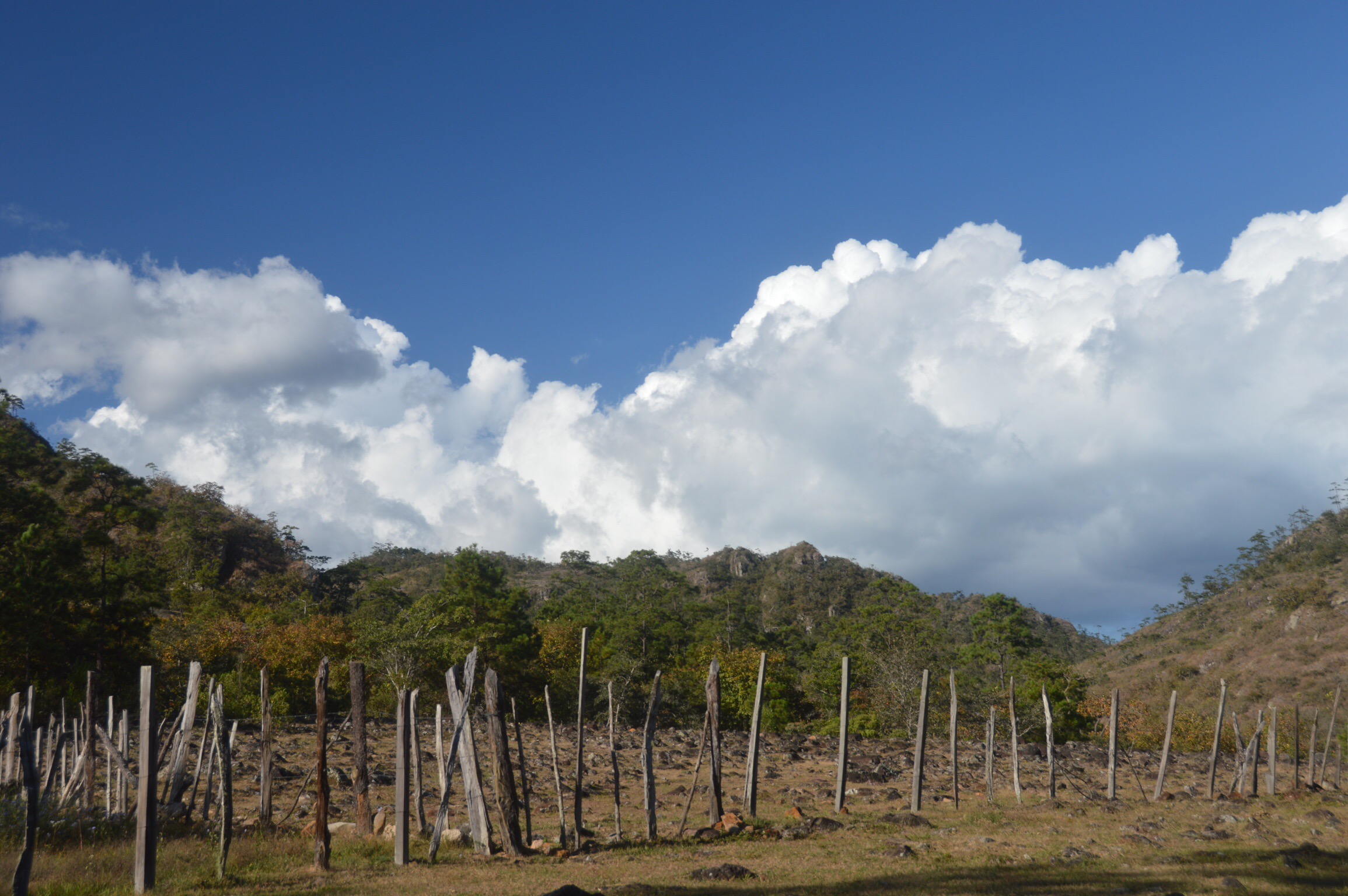
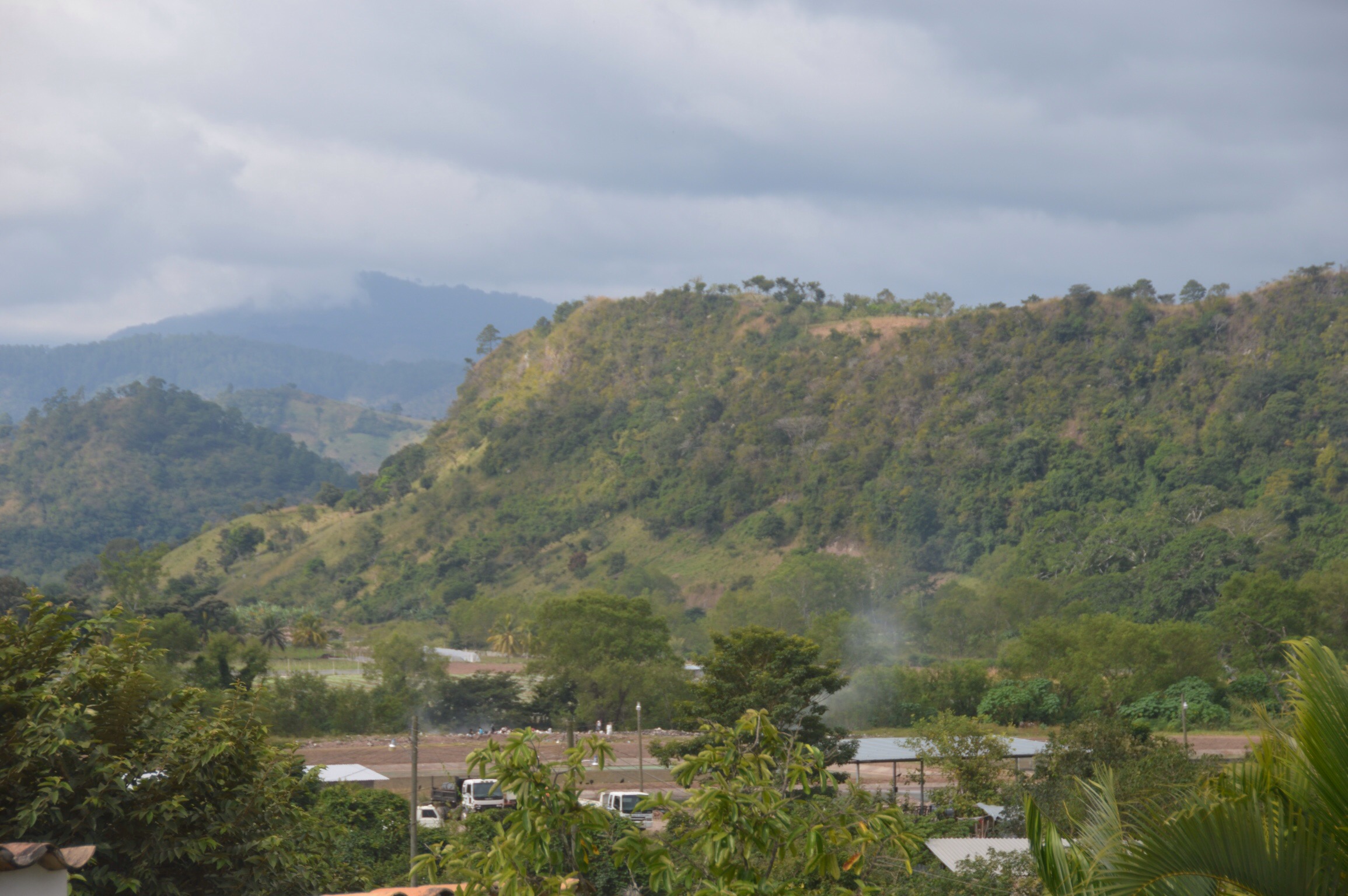
I was warned by the hombre at my hotel in La Esperanza that the road to Marcala was in poor condition, but compared to some roads I’ve driven on in Australia, it wasn’t really that bad. Though to a Landrover driver, what seems ‘not that bad’ could be seen as somewhat questionable to others… It was a beautiful drive through pine clad hills, past gullies where small streams gurgled ever downwards. As everywhere, farmers had carved their little niches into the countryside, with small crops nestled in the surrounding forest. 

  
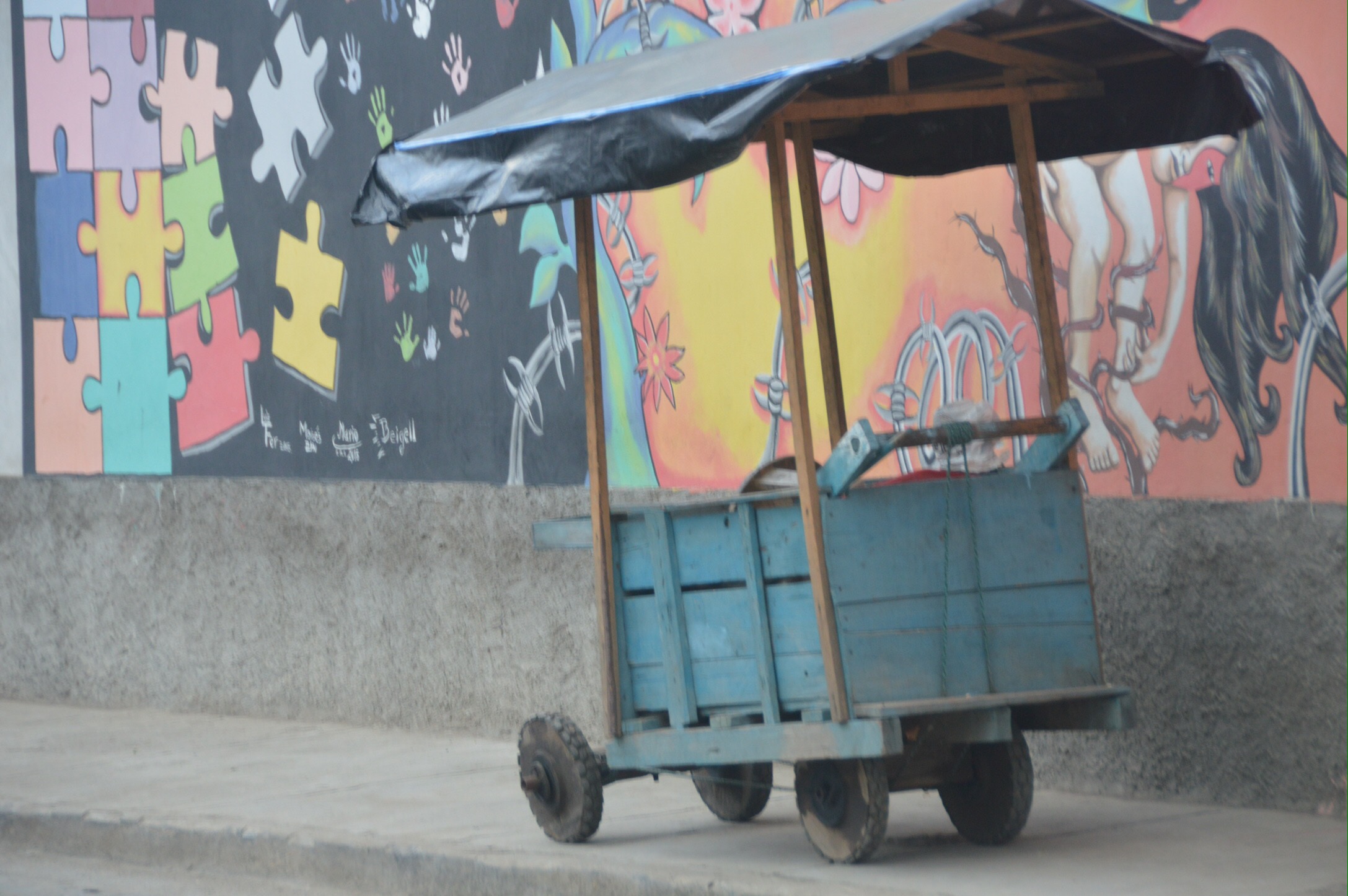
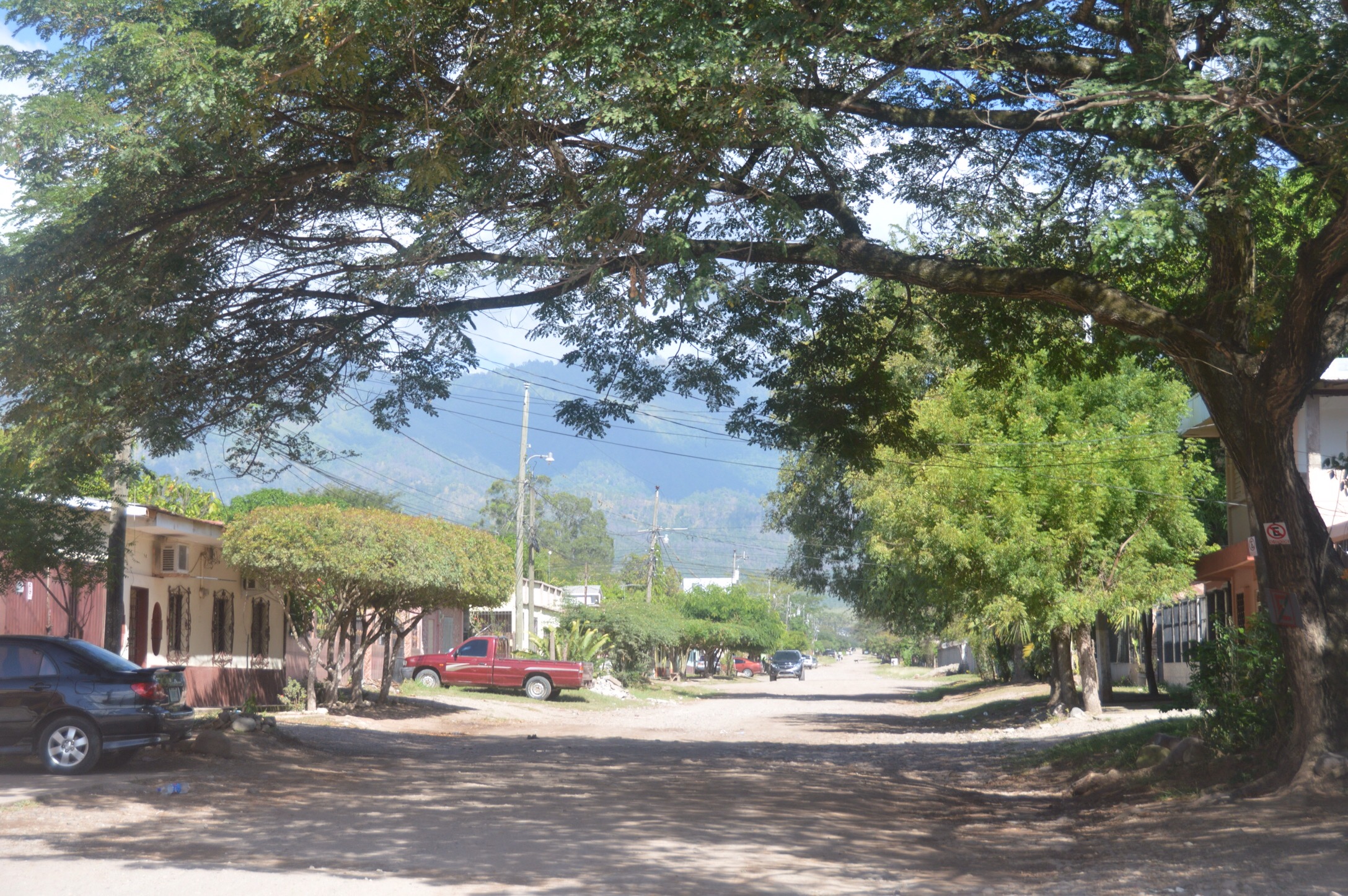
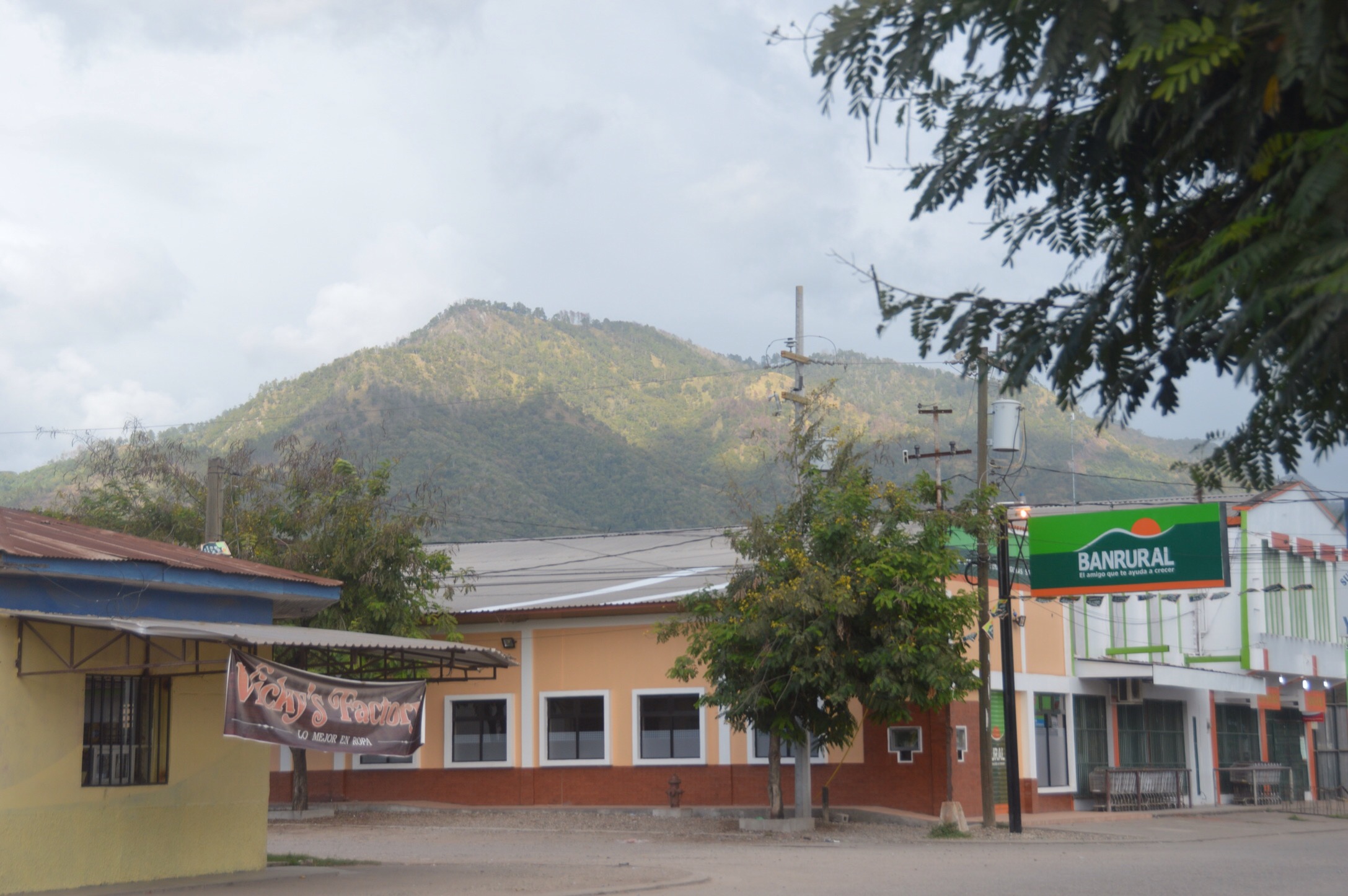
It was midday by the time I arrived in Marcala and got directions to the town centre. It was a hot, dusty walk, though it was pretty easy to find the main road into the centre – it was the only one paved! I eventually came to a large square sectioned off with shiny bright corrugated iron. No prizes for guessing that this was the town plaza. Closed for renovation. I got directions to the tourist office where I had been assured in my guidebook I would be able to secure good directions to my much lusted after cave. 

  
It appeared that the ‘tourist office’ was more like a ‘tourist officer’ who latched onto me with relish. I couldn’t have had more personalised attention. Even though I struggled with her thick accent, she assisted me as best she could and even escorted me to the hotel I had chosen out of the guidebook. Estheffany assured me that they got lots of tourists to this part of the country, but I had my doubts that they were of the foreign kind. After assisting me to check into the hotel (including coming up with me to check the room!), Estheffany told me to contact her if I needed any further assistance. I thanked her and bid her adios. 

  
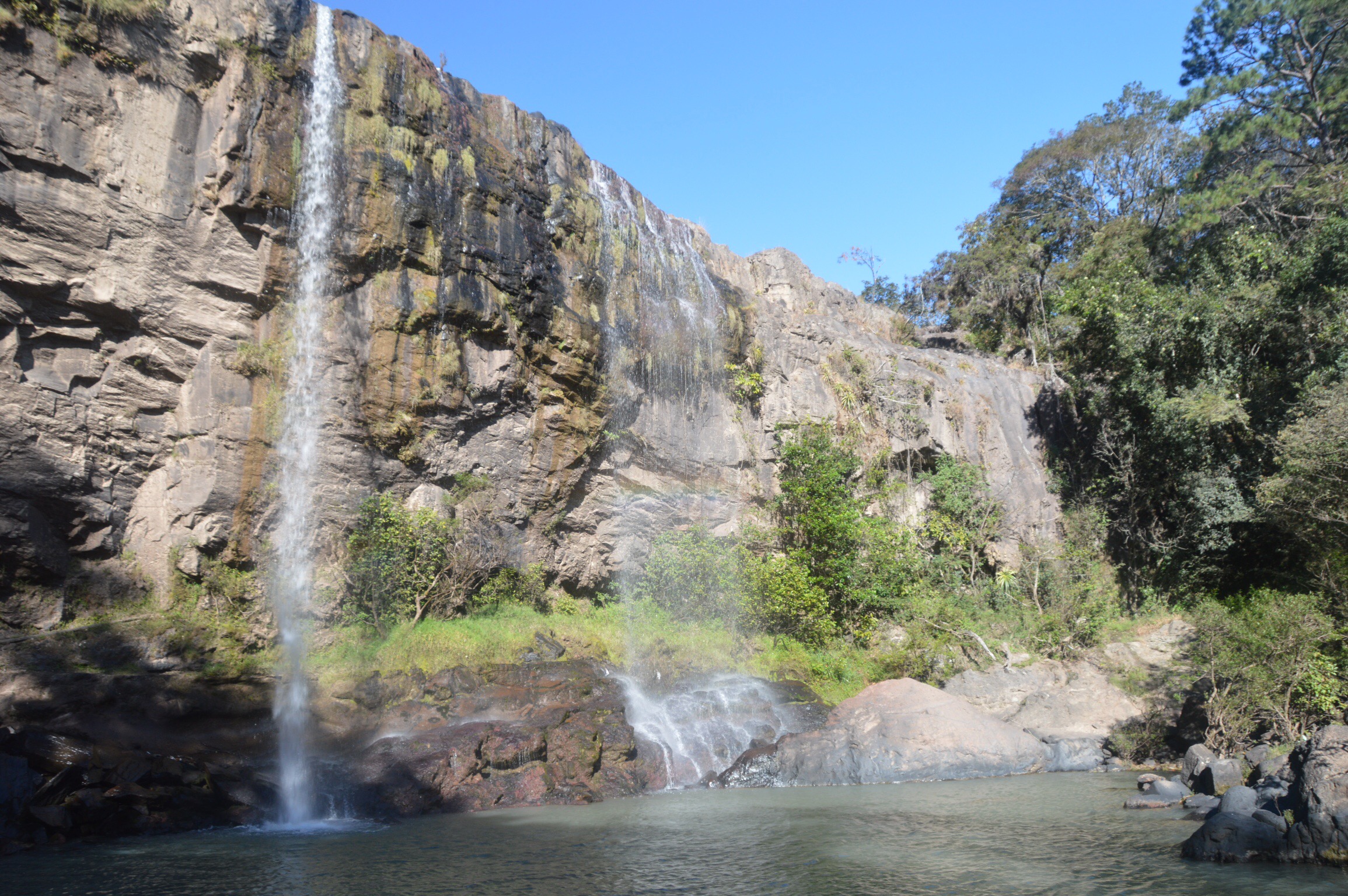
A quick bite to eat, then it was off to negotiate a taxi to take me out to the parque I needed to get to as it was several kilometres out of town. We drove past a tiny settlement and I was dropped off at a locked gate just beyond. I organised with my driver to return later in the afternoon and trotted off down the dirt road. It was lovely walking in the Honduran highland countryside without a soul to be seen. Even though my driver had instructed me to keep to the left, I spotted the river to my right and went to investigate. A very pleasant stroll along the river led to a large pool of water under a cliff where water was cascading down from a above. A small crevice was behind the waterfall but nothing of significance.

  
I made my way back out of the gully to the dirt road and continued my journey. The stream above the waterfall had been dammed and there was irrigation pipe going in every direction. Clearly this was a major irrigation point for the area. It was truly a tranquil area with a couple of horses quietly grazing on grassy banks leading to pine forests. There were a few small wooden structures suggesting stalls of some description, however, I saw no other person the entire time. 

  Looking for an obvious path to what I thought was a major tourist attraction, I followed a path along the stream for a further few hundred metres. Realising I had probably passed the cave, I backtracked and made my way up a precarious pathway up the side of the hill. When I reached the top, I met with the track I should have taken. From there, it was only a short stint to the cave. 

  La Cueva Gigante was a total misnomer in my eyes. From what I could gather, it was more a recess than an actual cave, but as I couldn’t access it, I couldn’t be sure. It was a major archeological site and the crumbling remains of a concrete bridge was a tantalising former means of entering the site. As it was getting time for me to return to meet my taxi driver, I cut my losses and made my way back to the tiny settlement where I had been dropped off. Even though, I didn’t get to go in a cave, it was still a magical meander through the local countryside.   

  
 My driver returned and we made our way back into Marcala. Hot and sticky, the cold shower didn’t seem like such a terrible option now. Freshened up, I found a restaurant overlooking Parque Central in the guidebook that had wifi and local cuisine. A well presented woman came over to me after I had eaten and introduced herself. She was the owner of the lovely restaurant and I found out that the Parque Central had been closed for four months and would be closed for another three. Even though the Parque was completely boarded up, one could see the trees which dominated it. I can only imagine it would be a beautiful little place for the locals to chill and enjoy. 

La Esperanza

I was glad for the extra blanket I had sequestered as it got decidedly chilly during the night. This was a pleasant change at least from the sweltering heat of the lowlands. I found a pretty little restaurant nearby to have breakfast and sample some of the region’s superb coffee.   
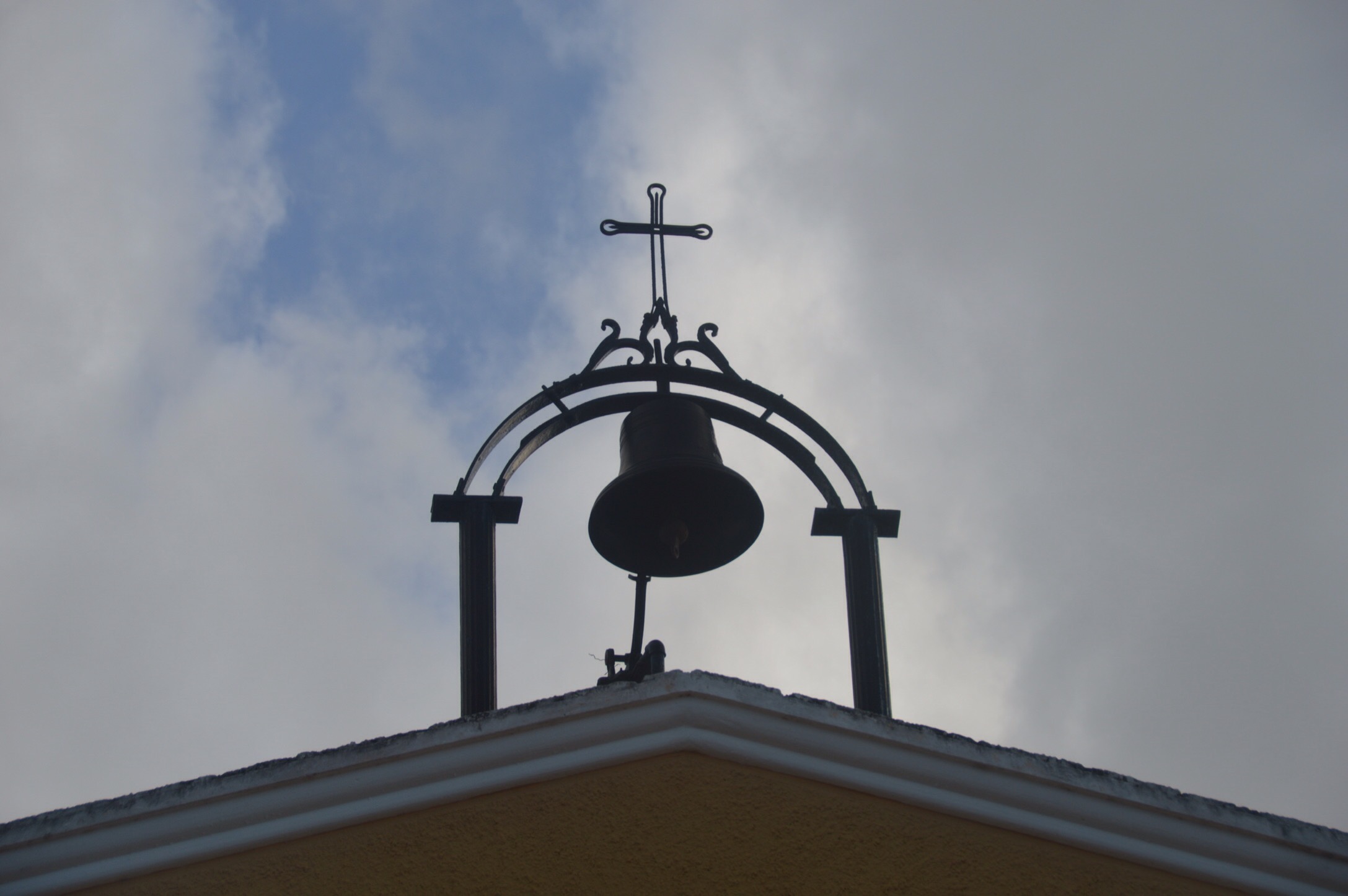
There was mention in the guidebook of a small cave converted into a grotto. It wasn’t hard to find; high up in the side of a hill, La Gruta overlooked the valley of La Esperanza. If there ever was a cave there, it is now indistinguishable as the little grotto completely takes its place as a concrete edifice of worship. Still, it is a pretty little colonial era chapel with an impressive view over the town. 

  
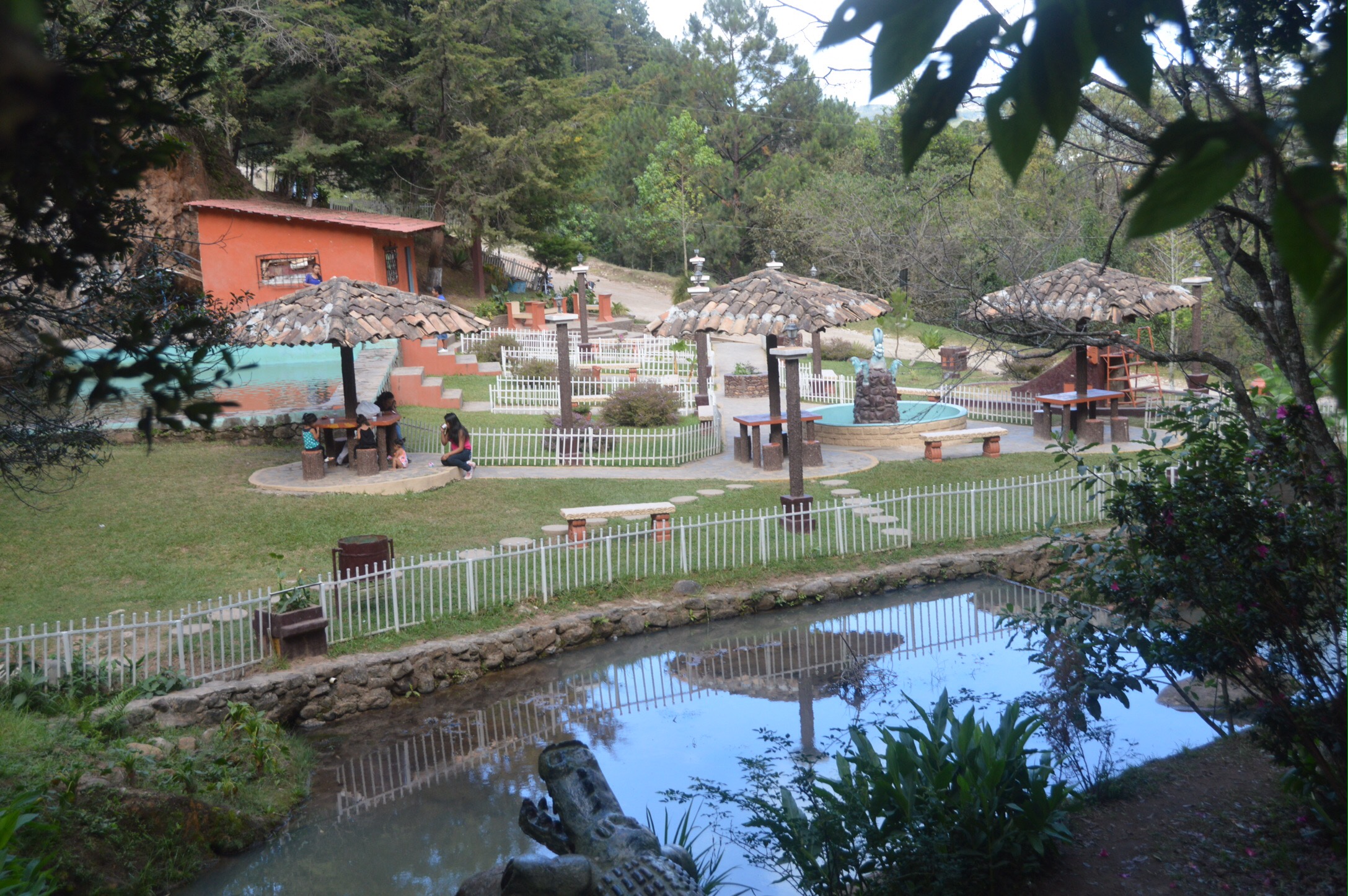
I found a small path meandering down the back of the hill to the main road into La Esperanza. My initial plan was to just walk back into town, but was surprised to find a public bath at the bottom of the hill. Several small streams cascaded into a series of pools and made their way further down the tiny valley. Water was siphoned up to some large troughs where several señoras were doing their laundry. There were also enclosed separate bathing pavilions for señors and señoras; water cascading out of a pipe in the centre. All set in tranquil gardens. 

  
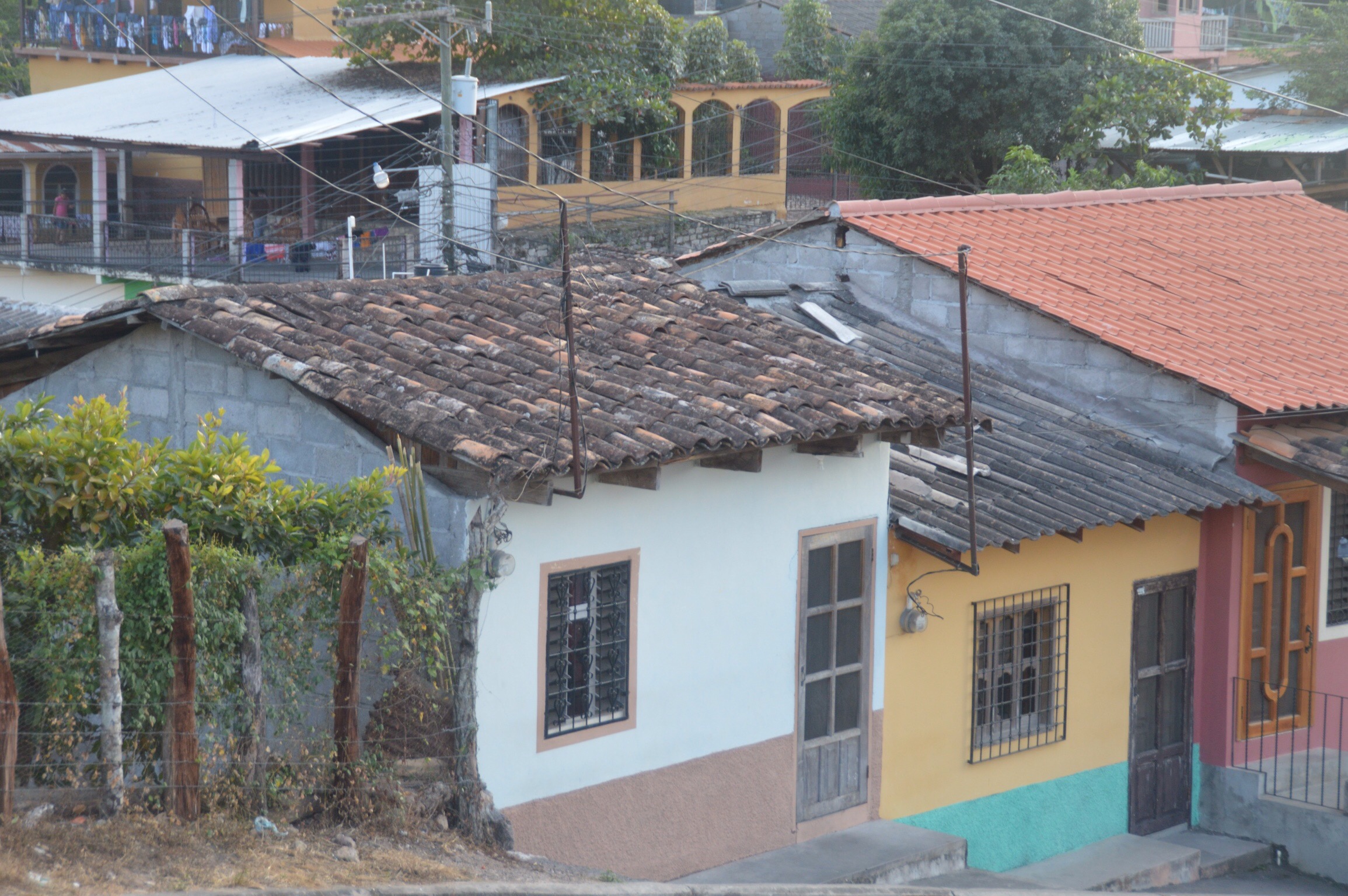
Walking back into town, I wandered around the cobbled streets. Many colonial era buildings line the streets and the Parque Central was one of the prettiest I have seen. When I passed the main church which faced onto the Parque, I noticed the local fire brigade hosing down the front of the building. Several people were also engaged in sweeping the area in front of the church. On further investigation, I found there were dozens of people inside and outside the church cleaning and repairing. It must have been Busy Bee time at the local parish. Pews were all set on their sides with local women polishing the worn surfaces. 

  
Further on, I reached the commercial part of town where the streets were lined with shops of all nature, including the ubiquitous second hand clothing stores. If you ever wondered what happens to the clothes you donate to charity bins, a lot of it ends up in the Central American (as well as other parts of the world) clothing market. It is sold to cheaply to the locals and it is a good form of recycling, but there is little transparency about who makes money out of your clothing donations. They also have stores here selling white goods and furniture, along with motorcycles! It seems odd to have a line of motorbikes parked up alongside a plush lounge suite. Perfectly normal here though. 

  
Dinner in a local Lenca restaurant, then hunkered down for another chilly night. I’m relishing these cool temperatures at the moment, though, as I know when I move on, I’m back into Sweatville. The oppressive heat and humidity can be quite tiring day after day so it’s nice to have a short break from it. 

Copan Ruinas – La Esperanza

A restless sleep brought about by my festering legs, came to an abrupt end with my alarm going off. Despite the monumental midge attack of the previous day, I returned to my favourite place in Copan Ruinas to chill over a tasty breakfast. This time, heavily marinated in bug spray. 

  
Back on the road, I walked to the bus terminal in the drizzling rain. Thankfully, I had found a route through town the previous day which was fairly flat and a final descent that was a little less steep than most. Cobblestone roads, though appealing on the eye, quickly lose their appeal in the wet. Safely down on the flat again without upending, I jumped in a minibus heading to my next destination. 

  
At La Entrada, I changed buses for one to Gracias. Or so I was told. It turned out that that particular bus only went as far as Santa Rosa de Copan, about half the distance. But I had paid an amount commensurate with the whole journey. I kicked up but was assured by the bus staff that it was ok, that I had paid for the whole way. My pack was handed to the offsider of the new bus I had to catch but I saw no money being exchanged. 

  
On board my new bus, I asked the señora in front of me what the price to Santa Rosa de Copan should have been and she confirmed what I thought. I explained what had happened, but also added that I wasn’t sure whether the driver of the other bus had passed on the fare for this leg of the trip. I soon found out. The ticket collector passed me by as he went through the bus collecting fares. I normally check price of fares with another passenger, but hadn’t on this occasion. 

  
The weather hadn’t improved and actually worsened when we got to Gracias. My plans of stopping off here and exploring this colonial town were reconsidered and I ended up continuing my journey onwards to La Esperanza. The bus didn’t actually go through town so I didn’t get to see anything but the outskirts of Gracias. The countryside on the way through to La Esperanza was magnificent though. La Esperanza is the highest town in Honduras and some of the best coffee in the world comes from this region. Pine trees clung to the sides of the hills we traversed through. 

  
It certainly started to get chilly as we climbed in altitude and I was glad I had pulled a jacket out of my pack. The journey to La Esperanza took forever as every time someone got on or off the minibus, the driver had to get out and open the side door. Eventually, we turned onto a dirt road and made our way down into the valley in which La Esperanza nestles. By this stage it was dark and the lights of the town lit the hollow like a spangly bolt of cloth. 

  
At the bus terminal, I caught a taxi to a hotel I picked out of the guide book. Unfortunately, the name in the book was incorrect, but my driver managed to work out where I wanted to go. My pack dumped, I changed into warmer clothes and headed out for something to eat. A little restaurant just down the road was still open and served wonderful local Lenca cuisine. By the time I returned to my hotel, the mist had settled in and swirled around the now deserted streets. I grabbed another blanket for my bed and settled in for a chilly night. 

Copan Ruinas

I had allocated the day to explore the famous Mayan ruins of Copan, after which this town was named. The view from the cafe next door bewitched me the previous evening, so I headed back there for a delicious breakfast topped off with a side of sumptuous scenery. Unfortunately, I wasn’t the only one dining as I discovered dozens of tiny dried dots of blood on both ankles and on the backs of both legs. I soon discovered the source of this mystery was tiny little midgies I had given little credence to at the time. By the time I left, the the dots had swollen into large, angry lumps which I knew would plague me for days to come. 

  
The weather had turned and it was drizzling when I left. Water on steep cobbled road is never a preferable option but I found a route through the town that only had one steep downhill section and gingerly made my way down that. After that, it was a very pleasant kilometre stroll out past the town to the archeological site. 

  
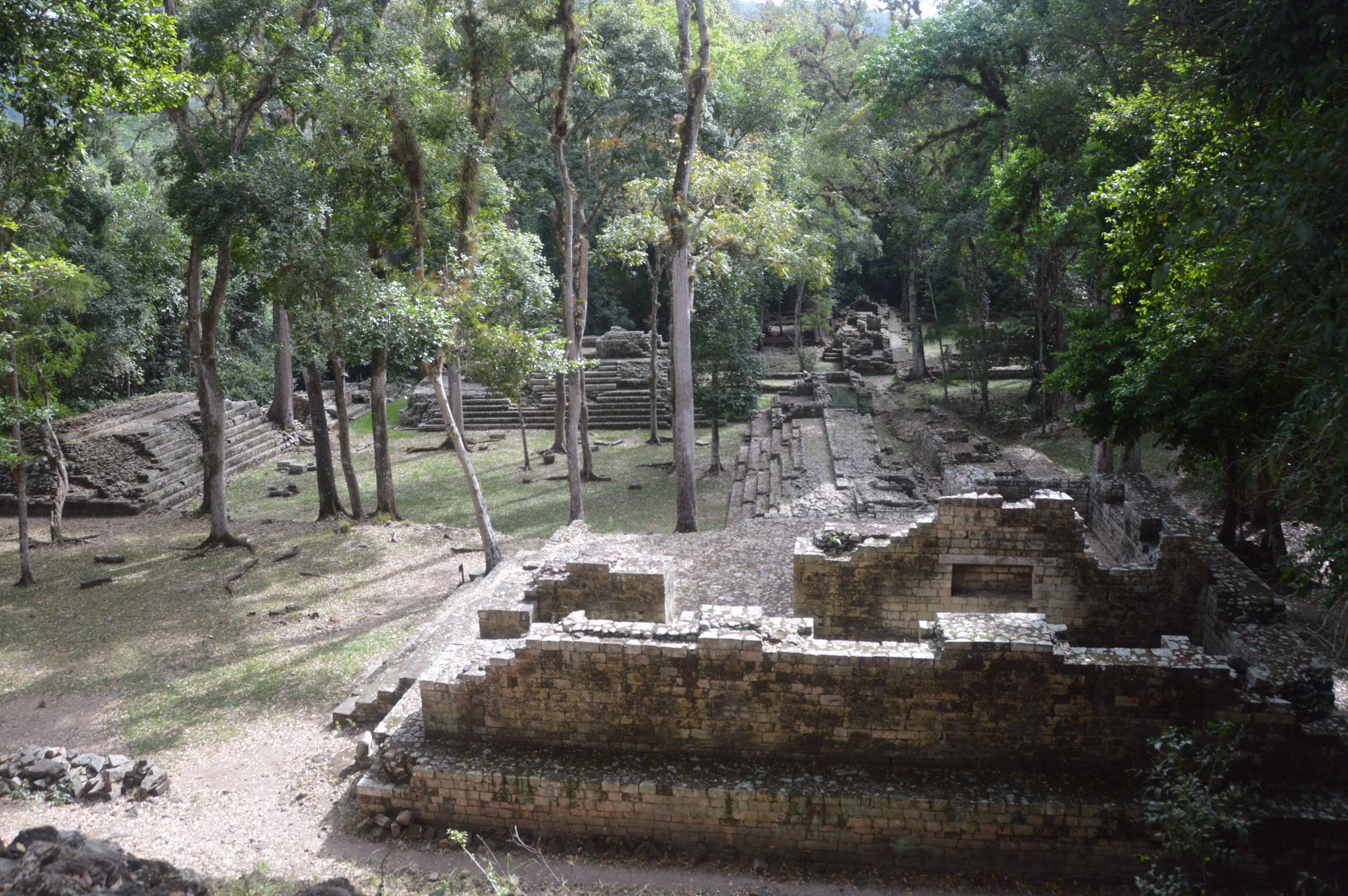
Copan Archaeological Site is a Unesco World Heritage Site. Though not the biggest nor most spectacular of the Mayan sites, Copan is exceptional due to the high relief sculptures and hieroglyphics found within its boundaries. I engaged the services of Gladiz, the gregarious guide, to interpret the site for me. Not only did Gladiz really know her stuff, she was lots of fun as well and I really enjoyed the tour. Even though I had visited many Mayan archeological sites previously, I found myself learning even more about this intriguing culture. 

  
I already knew that the winning captain of the ball game played in the day was occasionally sacrificed for the gods and that was OK in the victim’s eyes. What I didn’t know, was that the unfortunate was heavily plied with hallucinogens before being submitted to the event. By this stage, he was probably one accident away from checking out of the mortal world anyway so a sacrifice to the gods wouldn’t have seemed such a bad option. The other thing I learned was that the Mayan of the day didn’t have names like Bruce or Jesus, but 18 Rabbit and Smoke Monkey. I’m thinking the hallucinogens probably had a hand in that too. 

  
After an incredibly informative two hour guided tour, including some archeological tunnels exposing the Rosalila Temple which was built over the top of many Mayan moons ago, I bid Gladiz adios and continued wandering around the site taking photos and further exploring. The sacred Mayan bird, the scarlet macaw, has decided to take up residence again on the site and was a colourful addition. I also wandered down a couple of walking trails which lead through the jungle to some other sites, as well as visited the on-site Museum of Sculptures. 

  
Finally, all Mayan-ed out, I wandered back into town to explore its hilly streets. The walk up to a local lookout point was particularly brutal in one section, but I was astounded to see a couple of locals pop up from a track I would have thought impossible to climb. I’m sure they must have been crossed with mountain goat in some stage of the evolution process. Still, it was lovely wandering around the town, trying to stay on top of the hill where possible. What goes down must go up! At some stage. 

  
Back at the hostel, I had a by now much needed freshen up and went out to grab some street food in the form of burritos with a lovely Canadian family I had met at the hostel. Interestingly enough, our burritos were prepared by an expat Belizian Garifuna man who was now living in Copan. Not what I would have expected in a sleepy little Honduran highland town such as Copan Ruinas. 

San Pedro Sula – Copan Ruinas

Despite San Pedro Sula being listed as the No. 1 most dangerous city in the world, the Travel God of Security decided to take things a little too far this morning. The only way to keep the dorm room shut last night was to engage the lock. Seems a simple enough thing. Not, however, when said lock decides to jam up completely and refuse to budge. After several unsuccessful attempts, I started calling out through the bars of the window. Nothing. I googled the phone no of the hostel and rang it. Continuously. For about ten minutes. Accompanied by loud banging on the offending wooden door. 

  
Finally, the young Salvadorian guy who checked me in last night groggily came to my aid. I explained my predicament and he shuffled off to get the key. Alas, the key wouldn’t work either which meant I was trapped. A locksmith was called but my bladder wasn’t going to wait the length of time it may or may not take a Honduran locksmith to arrive. I pulled out my little multi tool set and took apart the lock casing so as to get to the main locking mechanism. The Salvadorian guy tried disengaging it with a utensil knife but to no avail. I didn’t have anything suitable my side to use so left him to try find something more hardy for the job. He eventually returned with a large screwdriver which he managed to wedge into the locking mechanism and finally disengage it. After nearly an hour, I was finally free! For that, my bladder was extremely grateful. 

  
Packed and ready to leave, I waited for the taxi I organised last night to return to pick me up. After more than half an hour, I decided to get the hostel staff to call for another one as I wanted to get a move on. The bus terminal in San Pedro Sula has a large shopping mall attached, with a great food hall right where I had to wait for my bus. As I chowed down on local cuisine, a young boy came over with a plastic cup and a bottle of soft drink. His mother, sitting nearby, smiled and nodded. I politely declined, but the three young children soon became my waiting room companions. 

  
To exit the waiting room, I had to go through security screening, though it wasn’t as stringent as others I had been through in this country. Then I was sandwiched in a minibus with my pack atop in the roof rack. The drive up to Copan Ruinas allowed me to see another part of the country quite different to where I had just come from. The road in the main followed the Río Ulua and wove through the valley passing spectacular scenery. As we left the tropical jungle behind us, pine topped hills took its place. We passed small coffee plantations carved out of the surrounding bush, though there is always room for maize and other Honduran staples. 

  
The bus stopped just outside the entranceto Copan Ruinas. The pastel pink archway on the edge of a bridge crossing a little river made a pleasant welcome to the town. Cobblestone and paved sections of road crisscrossed the hilly terrain Copan Ruinas is situated on. Traipsing up and down some of these roads fully laden in order to find the hostel I had picked out of the guidebook, was losing its appeal in the sticky heat. Especially when it wasn’t where it was indicated on the guidebook map! Directions sought, and I gladly dumped my pack on a dorm bed.

  
Hostel Iguana Azul ended up being an absolute gem of a hostel. Dirt cheap (AUD11) and spankingly clean, the US expat who built it 20 years ago did an amazing job. A more upmarket bed and breakfast next door served light meals and was available for hostel guests to use as well. This part of the property overlooked the Copan Valley with stunning views. A couple of cervezas watching the sun sink behind the mountains was the perfect end to another interesting day in Honduras. 

Olanchito – San Pedro Sula

Checked out of my little windowless dungeon and walked straight into a passing funeral procession. I was expecting Olanchito to be a little more bustling than the previous day, but wasn’t expecting this. Scores of locals, sheltered from the already blistering sun with umbrellas, slowly walked behind a vehicle carrying the dearly departed. I respectfully waited for the cortège to pass before continuing on to the bus terminal.   
Touts accost you as soon as you approach the buses as they get paid to get backsides on seats. There’s a sense of urgency that feels as if the bus will leave without you if you don’t jump on. Now! But then you end up waiting ages for the bus to fill and the driver to get his act together. One of the touts starting chatting to me on the bus, asking me where I was from. When he found out I was travelling solo and that I wasn’t married, he decided to try his luck and asked for my phone number. I explained that my phone didn’t work in Honduras, but he was persistent. Just before we were about to drive off, he came back over again and tried to charm a phone number out of me. He was really cute and funny, but I was leaving the area so not much point. I bid him adios as the bus roared off. 

  
I was hoping to do a loop to travel a different route, but it turned out the only way back was the way I had come. Nevertheless, it was a beautiful journey and well worth a second visit. As it was, I had travelled between Tela and San Pedro Sula in the dark, so was surprised to discover several aquatic parks located along this stretch of the road. We drove past the ubiquitous plantations of banana, palm oil and sugar cane. As I always try to take the local buses, we are forever stopping to drop off or pick up passengers along the side of the road. This slow pace allows one to experience the finer details of everyday Honduran life; vultures feeding on a carcass, wooden carts pulled by oxen, a panicky foal running along the road in search of its mother. 

  
Mid route, we stopped for one of the numerous police/military checkpoints and were directed to pull over on the side of the road. The two bus assistants got off and started talking to the police while the driver handed over the necessary paperwork. Then, a heavily armed police officer with hard hat and bullet proof vest climbed on board and addressed the passengers. Basically, he said they were going to conduct a routine search and that all the male passengers were to exit the bus. As the hombres exited the vehicle, I saw them lining up alongside the bus and being patted down by waiting policemen. Then, several armed police officers climbed on board and began a fairly thorough search of the luggage. For some reason, they didn’t ask to look in my day pack, for which I was grateful as I carry all my valuables in it. Probably would have been fine, but easier not to go there. Their search completed, the policía exited the bus and the waiting passengers got back on.

  
We were stopped a few other times and it looked like we were going to be searched again, but our driver managed to talk his way out of it with a little greasing of the palms. After a brief rest stop a couple of hours out of San Pedro Sula, one of the assistants took over the driving and the driver sat next to me. It was really interesting talking to him. His story was not that dissimilar to others I had heard from locals. His family had emigrated to the US where he worked ridiculous hours on minimum wages for several years. Returning to Honduras, he bought a bus and started his little business. He now owns four buses and seems to be doing quite well for himself. But he continues to work long hours driving the bus. Our trip was over seven hours and he still needed to drive back to Olanchito. Nevertheless, I guess he is back in his homelands. 

  
We eventually arrived at the main bus terminal in San Pedro Sula and it was nice to stretch out after such a long bus trip. I caught a taxi to a hostel I found in the guidebook and organised myself a bed and a beer. Saturday night appeared to be party night at La Hamaca and the little courtyard outside my dorm room filled with locals and marijuana smoke. San Pedro Sula, according to homicide rates, has been the most dangerous city in the world since 2012. That said, if you keep your wits about you and don’t go looking for trouble, it probably won’t come looking for you. I certainly didn’t loose any sleep worrying about meeting my maker in the midnight hours. 

Olanchito

 New Year’s Day and this tranquil little town reached new levels of sleepiness. I decided to trawl the streets for something to eat, but could only find a couple of pharmacies open. Maybe they were cashing in on post apocalyptic New Years celebrations, but I was looking for something more than a plate of pills. Further up the road I found a couple of señoras preparing baleados from a makeshift stall. I joined the small throng of locals sitting on the side of the road and feasted on the freshly made fare. 

  
A bellyful of baleados later, I headed back to the hotel for my free coffee and chilled in reception watching the Rose Bowl Parade with Spanish commentary. If this was a mandatory rest stop, I intended to rest. Well, for a little while anyway. That is until the Travel God of Exploration gave me a kick up the rear and sent me wandering around town. Unfortunately, that had to wait as this also needed to be a mandatory laundry stop as there was little passing the sniff test by now. The Travel God of Personal Hygiene won out in the end and my wanderings around town were pushed back a while. 

  
Olanchito is a pretty little town nestled alongside Rio Uchapa and backdropped by rolling hills. At one end of the Main Street lay a picturesque Parque Central with manicured gardens surrounding a central rotunda. A children’s playground in one quarter proved popular with the locals on a day where very little was open. At the opposite end of the Parque was a colonial church where a service was taking place. On the backroads, families gathered in painted adobe cottages to quietly celebrate the New Year. 

  
On my return to the hotel, I discovered a little comedor was now open. Marinated meat was being grilled on a barbecue out on the pavement and served with rice, beans, salad and tortillas. Washed down with a chilled cerveza, my New Year’s Day was now complete. As tranquil as the little town which hosted me. 

Trujillo – Olanchito

After the past couple of days on the go, I had a leisurely breakfast at my favourite Trujillo tuck-shop and worked out where to head next. Hmmm…. That road looks interesting. Let’s go to Tegucigalpa! About time the country’s capital had a visit from yours truly. From there, it was back down to the bus terminal to find​ transportation. 

 
As with most things in this neck of the woods, the best laid plans often end up in tatters. It turned out that the next bus to Tegucigalpa wasn’t until 2nd January and to make matters worse, left at midnight! I restudied my map. Ok… Well can I get a bus that goes down this road then? No. What about this road? No. Well where can I go? Back the way you came. But I don’t want to. I’ve already been that way. My patient, though somewhat disinterested, ticket seller was not overly helpful but a compromise was struck. I would catch the 2 pm bus to Olanchito, stay over New Years when everything shuts down, then continue on from there. 

  
I had a couple of hours to kill so decided to catch up with some writing over a cerveza. An affable hombre decided to personally escort me over to the adjacent service station to purchase said beer and escort me back. My plans for some quiet writing time were dashed however as I found myself with a new suitor. He pulled up a chair next to mine and proceeded to chat. I told him I needed to get some work done, so he grinned, gave my a hug and a kiss on the cheek. And then the neck. Fortunately he ceased his amorous advances and left me in peace. For a while at least. Shortly afterwards, my Honduran Romeo came back with a plate of fish and plantains and tried sharing it with me. I accepted a small portion to try and must admit it was damn tasty, but did not want to encourage him any further. In the end, I was quite glad when the bus to Olanchito was about to depart. 

  
Rumbling through the northern Honduran countryside, it was lovely to kick back and enjoy the tropical scenery as we roared past large banana, sugarcane and oil palm plantations punctuated with smaller fields of maize and other crops. The sky broiled above with the threat of rain which would have been welcomed in the sticky humidity. Back in Trocoa, we drove and stopped off at the markets where I had left for La Moskitia two days previously. I looked for my Dodge driver, hoping he had repaired his vehicle and was back on the road, but didn’t spot him. From there, it was on to Olanchito. 

  
The young woman sitting next to me started chatting and asked where I was headed and where I was staying. I told her I didn’t know as I had wandered off the pages of the guidebook again so would be relying on local guidance. When we pulled in to Olanchito, she insisted on accompanying me to a nearby hotel and gave me a hug goodbye. The beautiful people I meet on my travels only highlight the good in the world. Even though Honduras is supposedly one of the most dangerous countries on the planet, it’s only a small minority of its population that create the statistics. 

  
The hotel I got dropped off at looked like it would be a lot more expensive than it ended up being. I managed to get a relatively cheap room, albeit one without windows and with a slight fusty smell. With free coffee and drinking water, it was a good enough base to sit out the mandatory rest period that is New Year. 

Brus Laguna – Trujillo

The alarm on my iPhone sharply aroused me from my slumber at 3 am, shortly followed by a loud rapping on the door from the señor allocated to accompany me to the dock. I was more alert than I expected to be at such an ungodly hour and with so little sleep, and quickly organised myself to leave. Sooner rather than later.   
As I gingerly made my way down the greasy steps fully laden, I heard my amigo from the boat, Bill, call out to me from below. I hadn’t seen him since we docked and was surprised to see him as he told me he was continuing his journey home straight away. He told me he had bumped into a cousin and decided to stay for the next boat in the morning; the dozen or more empty beer cans on the table evidenced their nocturnal activities. I didn’t ask him how he knew I was here as I figured the whole town probably did. He asked for my contact details which reassured me greatly that he had higher than average expectations I would make it back to Australia in any sort of condition to reply to an email. 

  
I looked around for the señor who was to accompany me to the dock and could not sight him. Bill assured me it would be OK to just walk by myself and as I thought I had no other option, bid him adios and left. Bill’s parting gem was “Don’t trust anyone. This place is dangerous!” Cheers for that, Bill… 

  
I was extremely grateful for my super bright caving light which lit the surrounds to the extent I would have a fighting chance to evade any intruder. To my utter relief though, I spotted no one else until I got to the dock where a quiet bustle of locals were organising themselves for the journey. My pack and then myself safely ensconced in the little longboat, I could finally breathe a sigh of relief. 

  
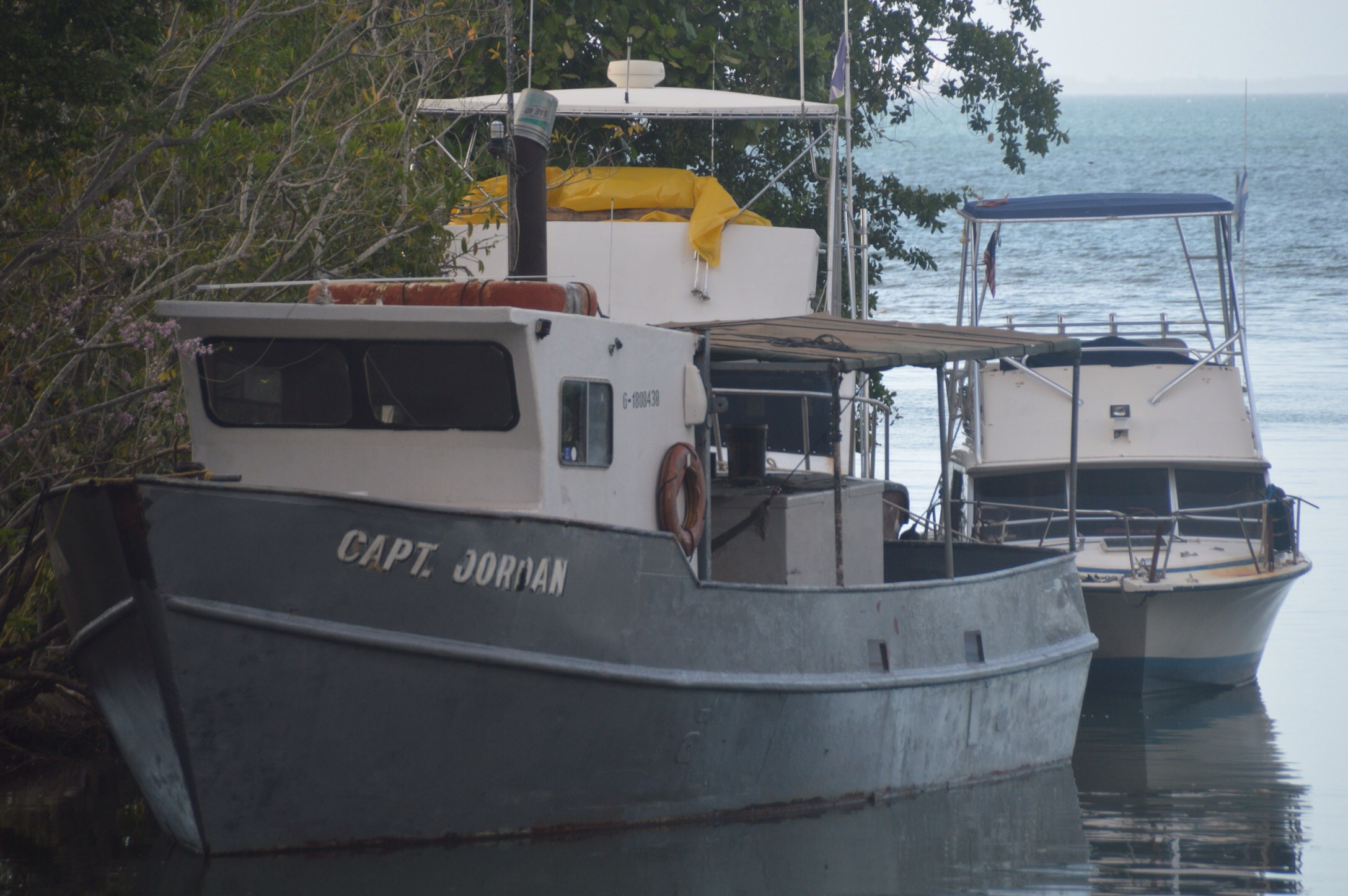
At 3.45 am, the boat slipped away from the dock and I left the craziness of Brus Laguna behind me. A beautiful moonlit sky illuminated our passage back through the waterway to the main Lagoon where we sped across the barely rippled water. As the predawn chill pervaded, I cocooned myself in one of the boat’s tarps and enjoyed the gradual lightening of the surrounding area. 

  
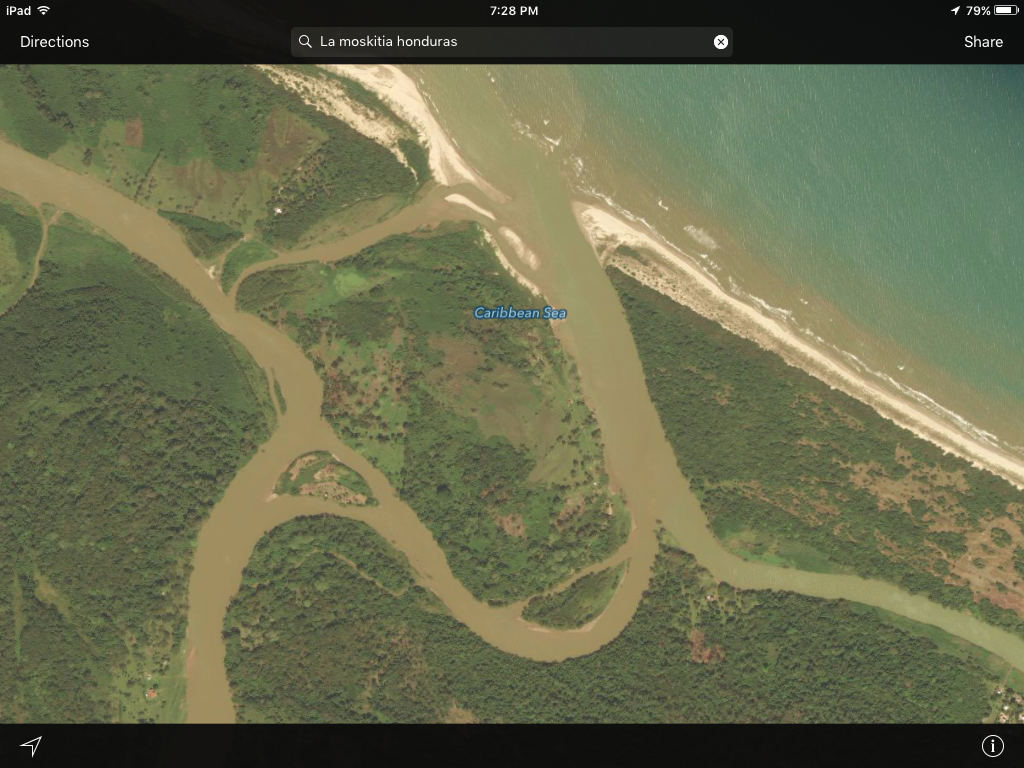
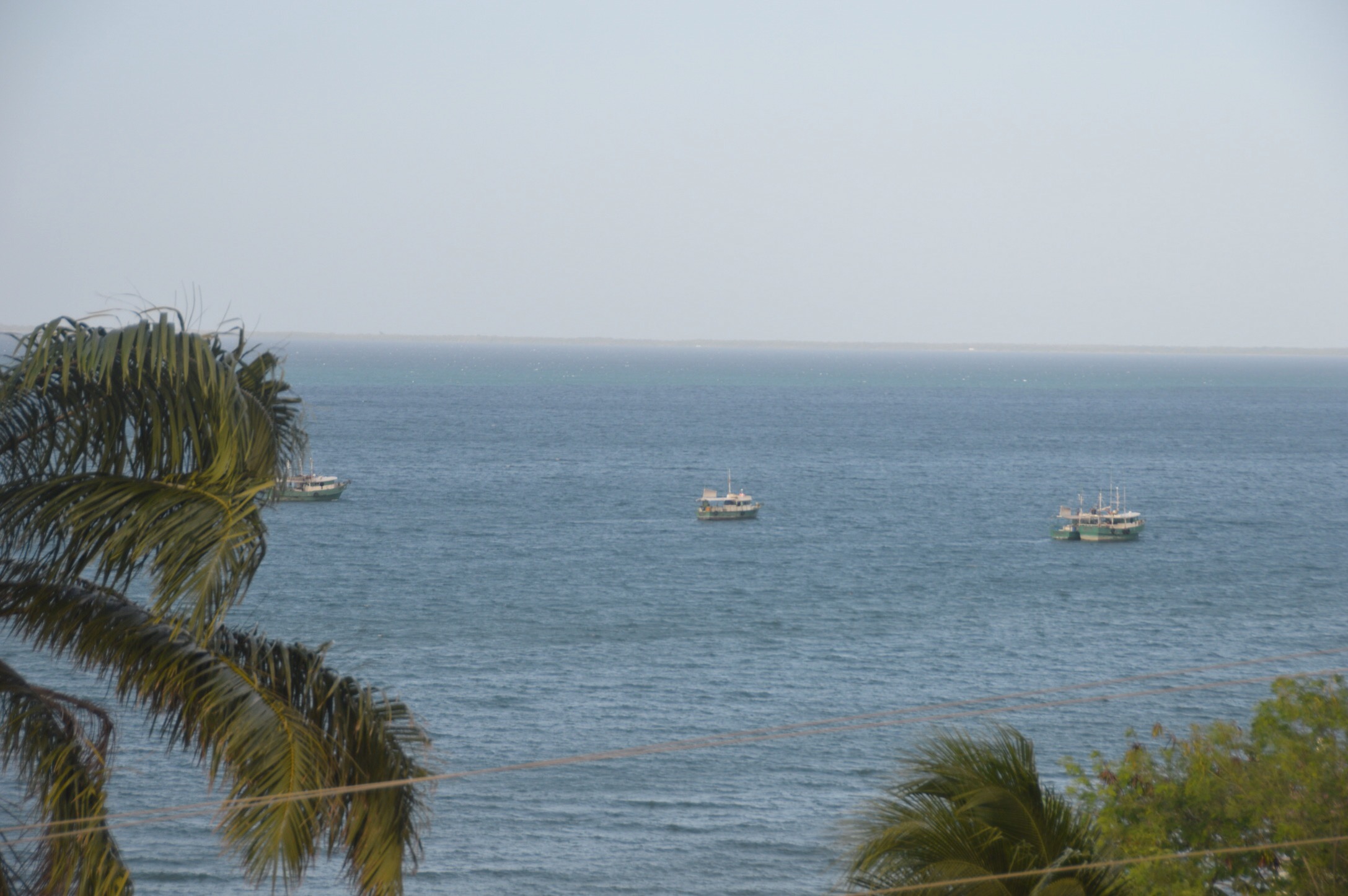
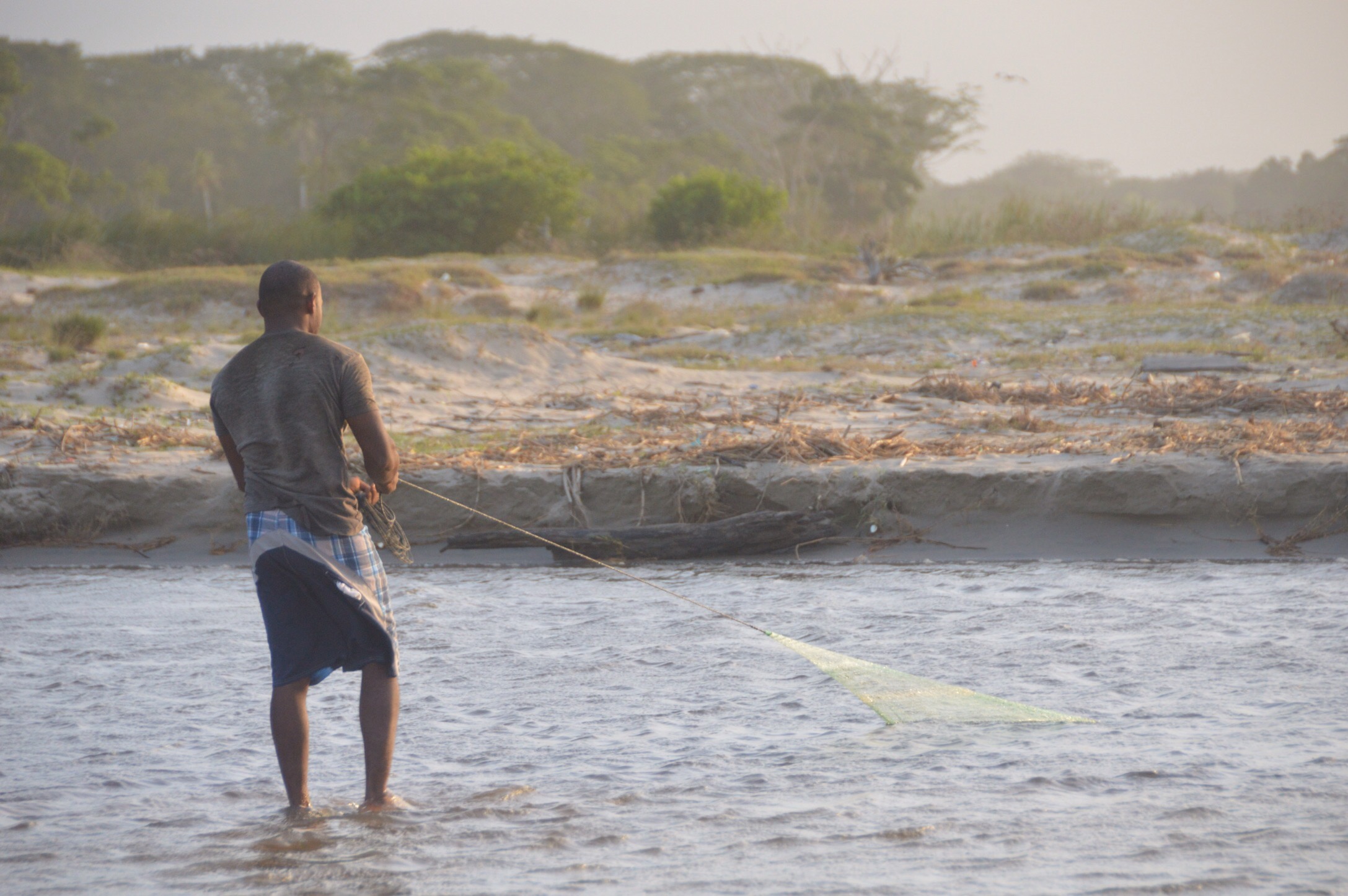
La Moskitia truly is an incredible slice of tropical wilderness. With verdant terrestrial foliage melding with the aquatic vegetation which fringes the waterways and lagoons, the place teams with life. Little ramshackle huts dot the shores at random intervals. Fishermen headed out in the predawn gloom to cast their nets from carved out wooden boats. 

  
As we made our way back to Batalla, we pulled into tiny inlets and alongside rickety docks comprising little more than a length of timber jutting out from the shoreline to drop off and pick up passengers. Despite the sensory overload of natural beauty, I found it difficult to stay awake and found myself drifting off on several occasions. The rhythmic motion of the boat and gentle breeze cooling the sticky heat did nothing to aide my struggle with consciousness. 

  
One last military checkpoint and we were back in Batalla. As the boat slipped into the shoreline, it was mobbed by several men touting transport back out of the region. I saw my driver from the previous day and called out to him. He was surprised, although pleased to see me and waved me forward. On shore, another hombre I remembered from the previous day’s journey came up and warmly greeted me. Travel in this region is not like travel back home, with various incidents that bond its participants with shared experiences. Backpack firmly ensconced back in the Dodge, We retraced our tracks back to Trocoa. 

  
At about 10 am, we pulled into a little cafetería where everyone piled out and piled up their plates. I hadn’t eaten anything since 8 am the previous day, so this was a most welcome respite. Dining on refried beans, spiced scrambled eggs and stewed chicken, washed down with proper coffee certainly plugged a hole. 

  
On the road again, I found myself again drifting off, though, awoke with the sound of a loud thudding. It turned out that the bald tyre put on the previous day decided to start parting ways with its tread and chunks were whopping the side of the wheel arch. No problem – in this part of the world, one just trims off the offending portion and continues with one’s travel. Until forced to stop with yet another flat (this one more rapidly dealt with now the correct wheel brace had been secured…), and finally coming to a complete halt when said bald tyre finally gives out completely, forcing the vehicle to swerve sharply in its direction, across the road and into a ditch. Reversing out of the ditch, the overall damage could then be surveyed. Unfortunately for our driver, the offending tyre was now the very least of his problems as he watched his vehicle cry oily tears from somewhere underneath its belly. Our journey in the Dodge had finally come to a close. 

  
The driver collected our money and herded us on to a bus heading back to Trocoa. I was sad to farewell him and the Dodge as I had enjoyed so many wonderful experiences in the past couple of days with both. Nevertheless, I was glad to not have to spend any more time on the side of the road. I changed buses at Corocito and rumbled back to Trujillo. 

  
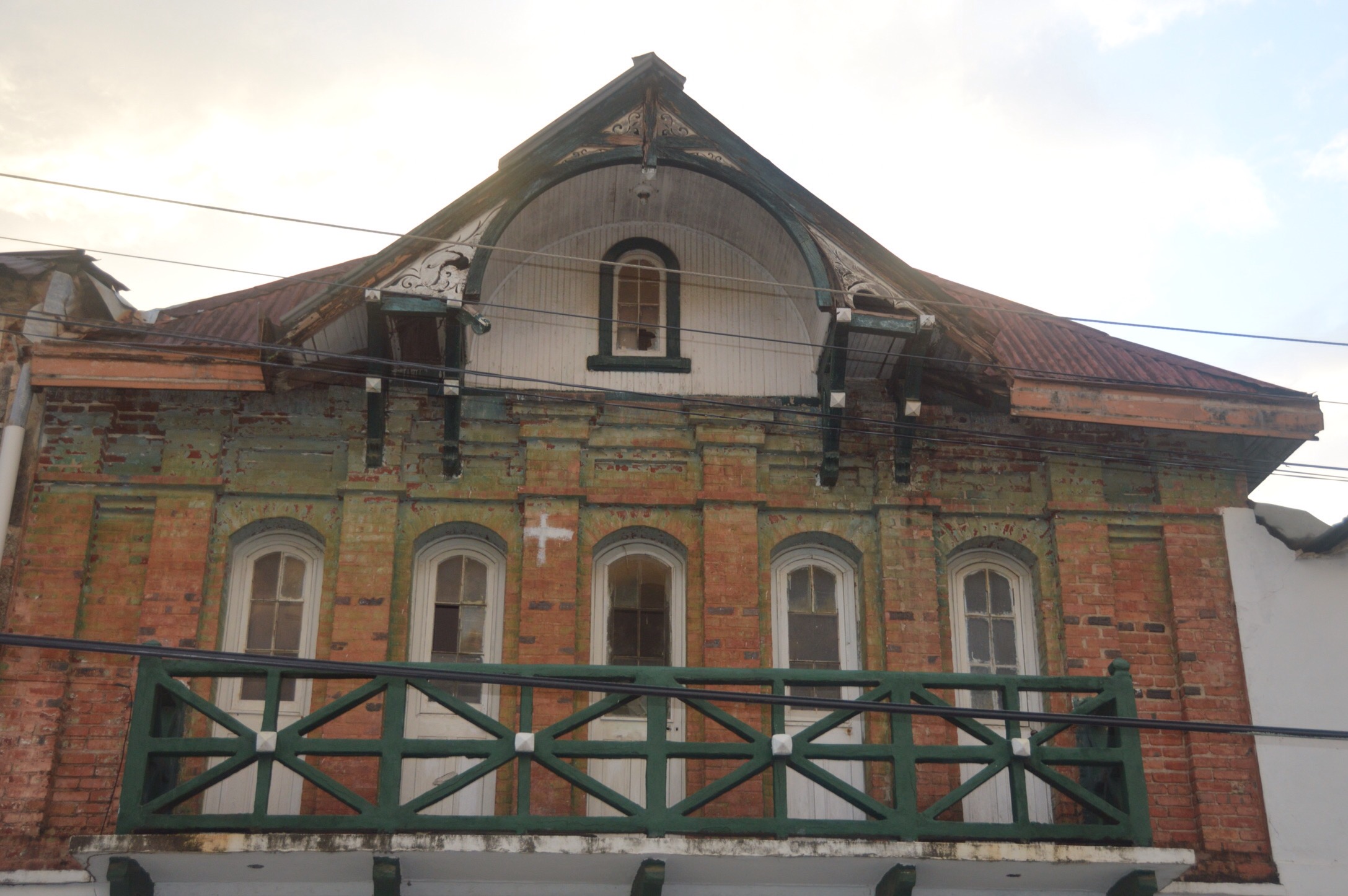
Historic Trujillo seduced me when I stopped over en route to La Moskitia and I wanted to return to explore it further. It was close to here that Colombus first stepped foot on mainland America and allegedly where the continent’s first Catholic Mass was held. Trujillo is one of the oldest Spanish settlements and used to be a provincial capital. Historic adobe and wooden buildings line remnant cobblestone streets. 

  
I checked back into my previous digs and dumped my pack. The upside of having such an early start was that it was only early afternoon by the time I returned. Which meant I had a good few hours to wander around the town. The ruins of Fortaleza Santa Bárbara de Trujillo was a great start with its elevated view over the Caribbean. Trujillo is picturesquely nestled between the sea and surrounding hills and although considers itself a city, is little more than a mid sized town. Time languishes here away from the hustle and bustle of more major centres. 

  
As dusk set in, so did a hankering for a chilled cerveza, to slough away the dust and grime. Trujillo seemed to have the same idea as the local fire brigade was washing down the streets with tanks of water. Skipping between the rivulets to my little second story restaurant from last visit, I reflected on my past couple of days of travel. It seemed inordinate that I managed to pack so much adventure into such a tiny space of time. Yet, when one opens oneself to possibilities and steps beyond the realms of the known, the unknown can sometimes provide unforgettable experiences. 

Trujillo – Brus Laguna

Up early, I checked out of ‘The Best Little Whorehouse in Trujillo’, grabbed something to eat in a nearby comedor and walked back down to the bus terminal. The Mosquito Coast does not sound particularly appealing, but I figured if it was good enough for Harrison Ford, it was good enough for me. I had no idea what time the transport legs I needed left, but Jorge had assured me I could get to my final destination in one day. It took me about an hour to backtrack back to Trocoa from where I needed to get a four wheel drive collectivo to Batalla.   
A collectivo taxi took me to the markets where the transport to Batalla left and I was soon relieved of my pack by an hombre with more gold in his mouth than a Mayan mine. I watched as my pack was securely wedged at the bottom of a growing pile of luggage. And then I waited. And waited. And waited. The offsider packed and repacked that many times I lost count as people wanted to retrieve packed luggage or add to it. It was interesting to watch the loads on the other four wheel drive vehicles gradually increase in height to towering stacks of up to three metres, lashed together with an assortment of nylon rope, none of which I would have relied upon myself. Just when you thought they couldn’t possibly add anything more to the mix, up would climb three or four people and perch precariously on boards lashed to the load. 
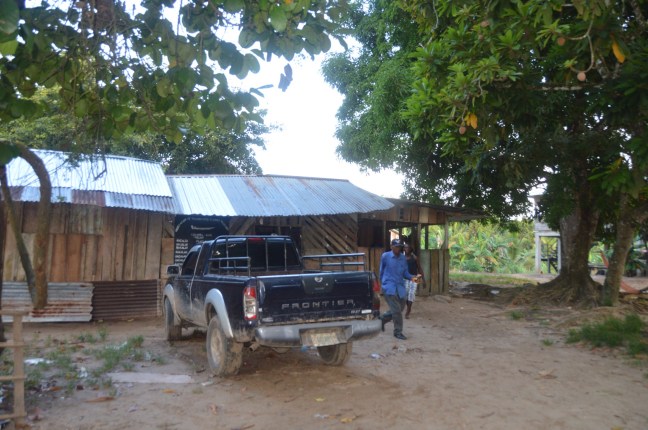
  
Finally, my ride was ready to leave and I jumped into the front of the vehicle. We were driving in a heavy duty Dodge 4WD so it was a bit more spacious than a standard 4WD. That said, there were eight people sandwiched in the cabin and another eight sitting on lashed boards atop the load. We turned off the main road and eventually the bitumen ran out. A dirt road took its place but it wasn’t in such terrible condition. I’ve driven on much worse dirt roads in Australia, but that is probably not saying much… The road travelled past pretty little farms with neat tree lined fences and livestock tranquilly grazing in fields; humble little cottages with neatly swept dirt yards and dogs languishing in the shade; and numerous military checkpoints. 
  
About half way through the trip, our driver pulled over to discover a flat tyre. We all piled out of the vehicle as the offsider set about changing said tyre. Unfortunately, the tyre brace didn’t match the diameter of the wheel nuts so was of no use. Several vehicles stopped, but did not have what we needed. Eventually, the offsider jumped into another vehicle with the non compliant wheel brace and got a lift to the next village. He returned about 20 minutes later with the correct size socket freshly welded onto the brace. As the weld was so fresh, everyone was reluctant to use it in case it broke. Other vehicles stopped and finally one had the correct wheel brace size. The spare tyre, balder than a monk’s pate, was duly exchanged for its deflated predecessor and we were again on our way. 

  
We stopped briefly in the next little village to plug the hole in the damaged tyre and sort out tyre pressure issues. Then we were roaring off again. Up until this point, I didn’t really understand the need for a four wheel drive vehicle as two wheel drive vehicles could have traversed the road relatively easy. That was until the road stopped in Iriona, about 20 kilometres away from Batalla. The driver turned left towards the beach and was soon driving on it, in and out of the tide at times. Now I understood the need for a four wheel drive!

  
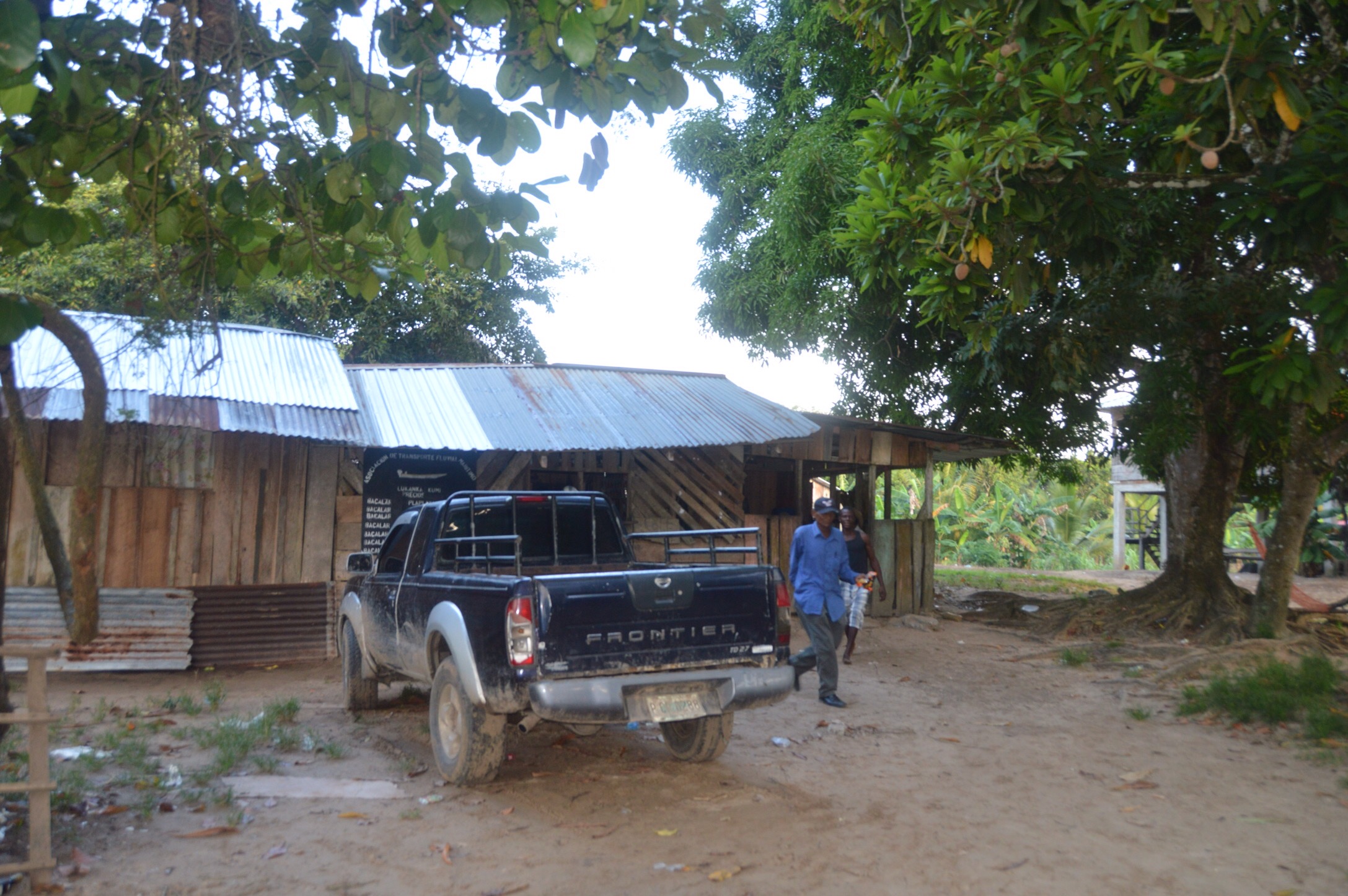
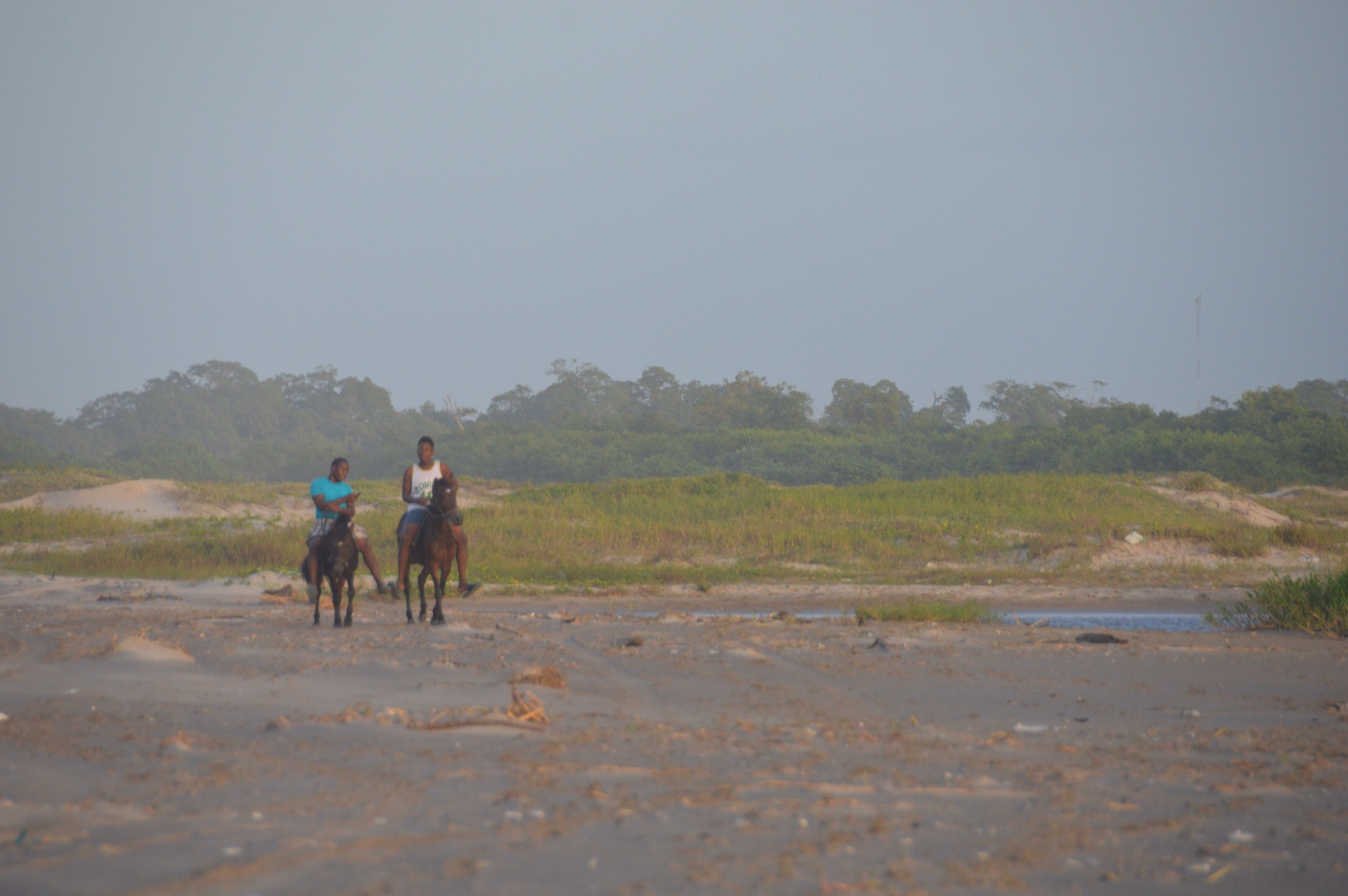
It was rather pleasant to be a passenger in a vehicle that wasn’t mine as we crashed through the waves, without the accompanying thought that Ole Neptune might decide to take your vehicle for himself. We drove on dune tracks and the beach the whole way to Batalla, passing through little Garifuna villages wedged between the sea and a river. Tilting mud brick shacks with palm leaf thatching and ramshackle little wooden buildings lined the dirt track that ran through the middle of the villages. Our passing caused much interest and merriment with the village inhabitants, seemingly all known to our driver. 

  
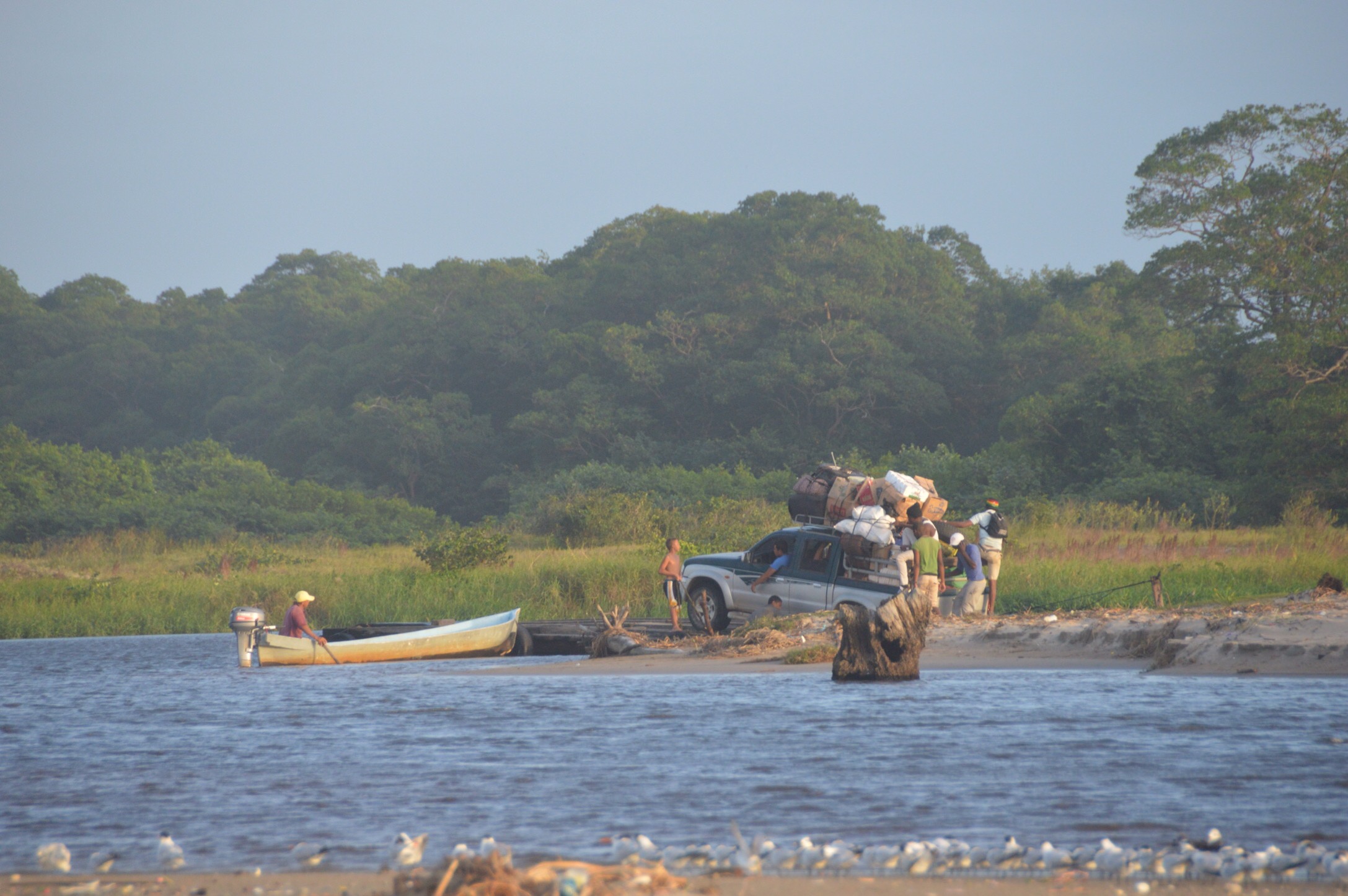
At one stage we came to a river crossing where the vehicle was guided onto a rough wooden pontoon just large enough to carry a vehicle such as ours. Two young boys pushed the barge away from the shore, then an hombre in a longboat with outboard on the back slowly powered the pontoon to the other side of the river. Once there, the two boys lined up the boards for our vehicle to drive off. 
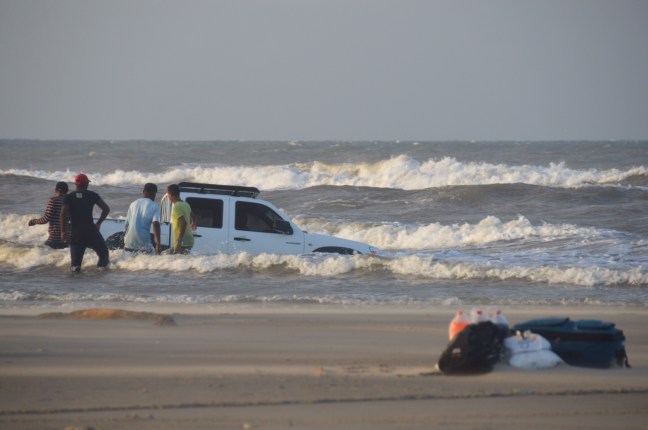
  
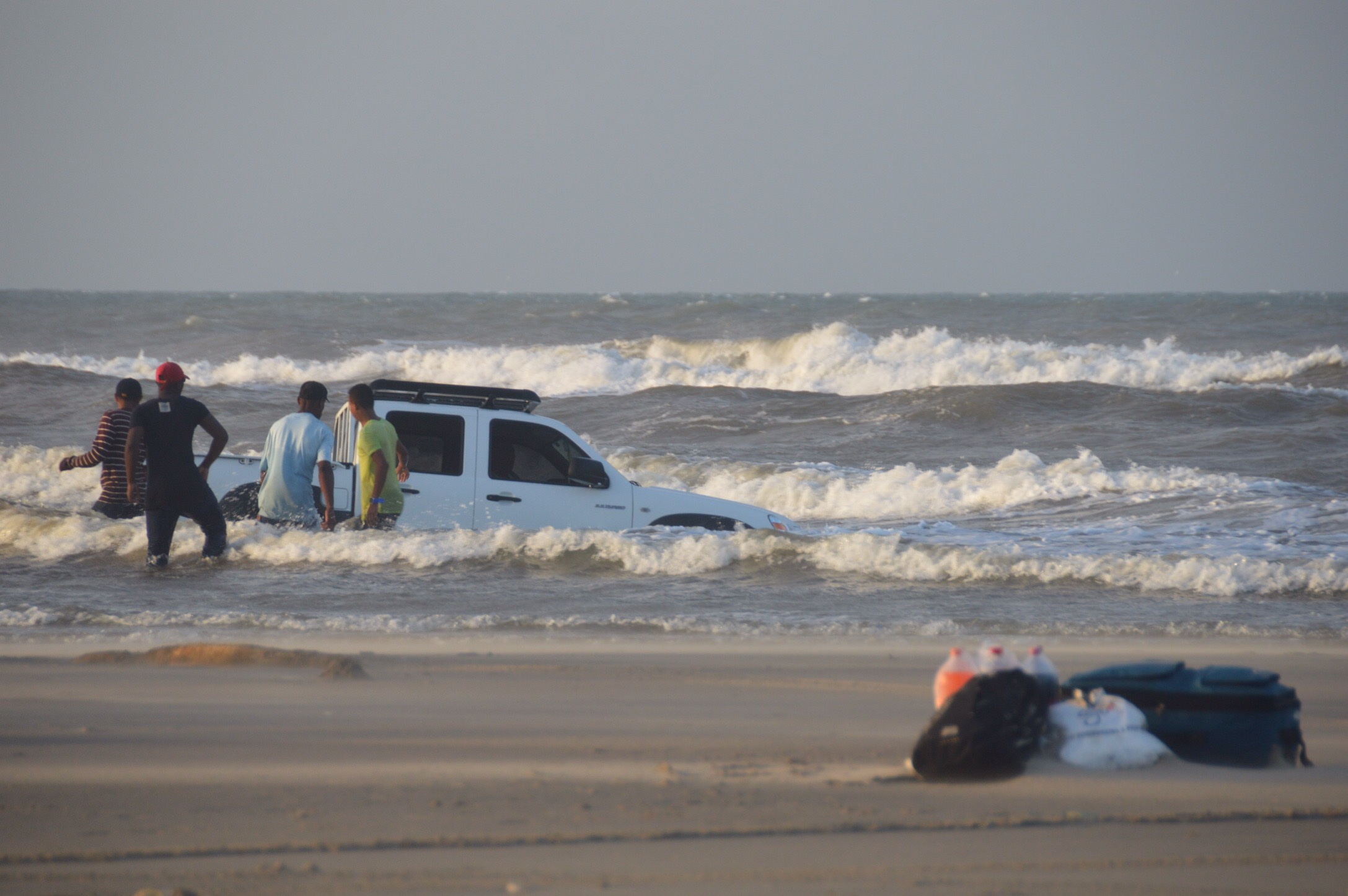
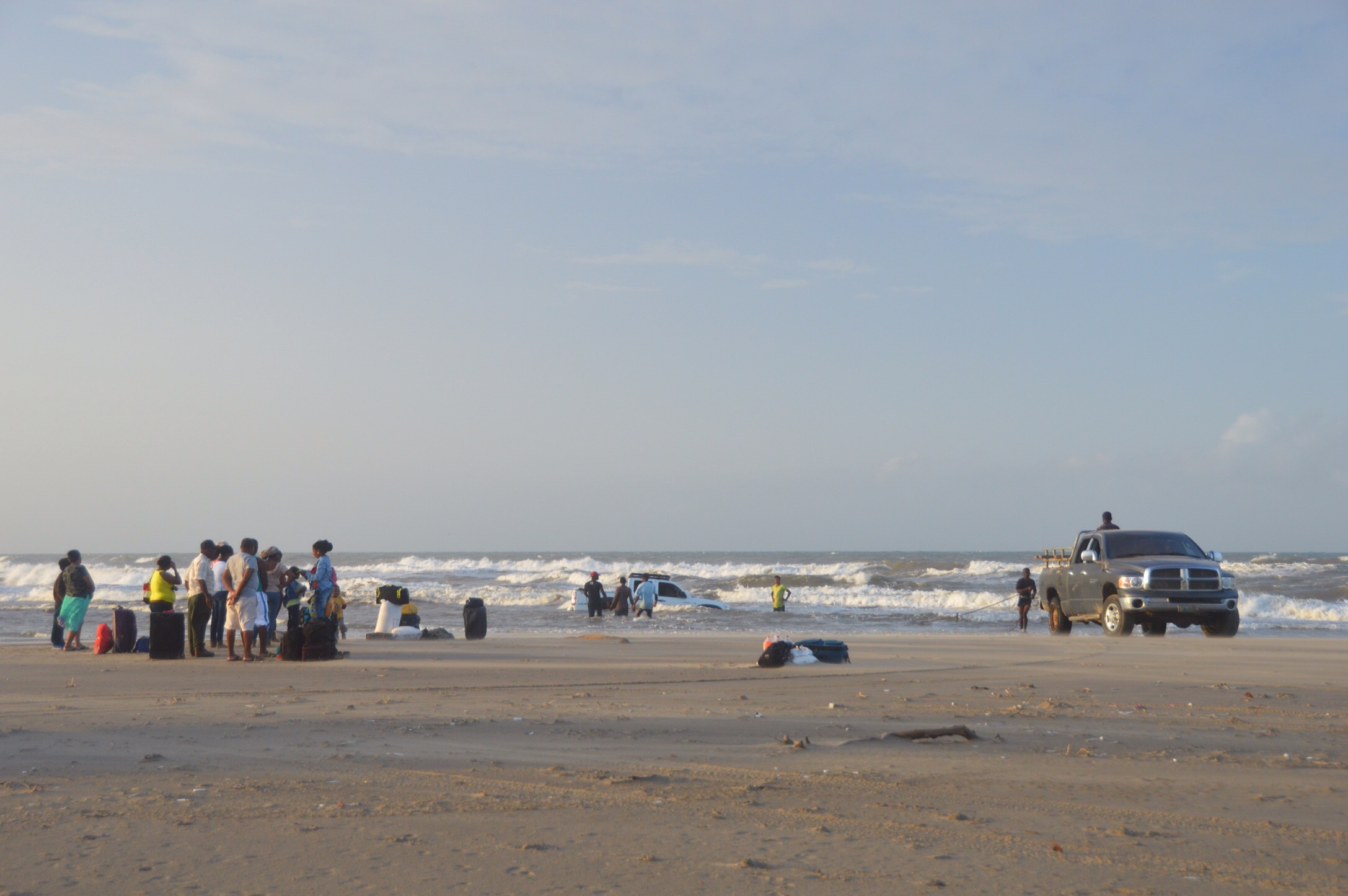
We noticed another four wheel drive vehicle stranded in the water at the mouth of the river, so our driver went to help. The passengers of the unfortunate vehicle were huddled forlornly together on the wind whipped shore with all the luggage strewn about them, looking somewhat like survivors from a shipwreck. We piled out again and our driver hitched his vehicle up to the waterlogged one with the ropes I hadn’t considered adequate to even tie a load. The tether was too long, of insufficient strength and the driver took off too quickly. All of which meant the venture was doomed to fail. An actual tow rope had been found and connected to the hotchpotch of tether, but to no effect. By this stage, the waves were lapping the bonnet of the vehicle. 

  
I bit my tongue until after about the fifth attempt them offered advice. I told them that I was from Australia and that this was quite common – not entirely true… To my astonishment, they listened and followed my directions. The tether was shortened and most of the rubbish discarded, the hombres by the stranded vehicles lifted and guided the vehicle towards the rescue vehicle when a wave came through, and the driver took off slowly with me yelling at him to go slow. Voila! One rescued vehicle. The doors were opened and water came cascading out. I put one of the novelty clip on koalas I carry to give to kids on the cross hanging off the rear vision mirror to remind the driver that it wasn’t the good Lord that saved his bacon, but an Aussie woman with a bit of nous. 

  
We piled back into our vehicle and roared off again down sand tracks to Batalla. It was almost dark when we finally reached the tiny village where I was hurried towards a 10 m fibreglass longboat. I had thought we would be making the boat journey to where Jorge recommended I stay the night by ocean and was pleasantly surprised to learn we would be travelling by inland waterways. I wasn’t particularly looking forward to an ocean crossing as these little boats sit low in the water and the wind had picked up. 


After stopping at a waterfront military checkpoint, we spluttered off down a dark river. I started chatting to the hombre next to me to get more information about where I was supposed to get off. It turned out that the place Jorge had directed me to was a private home and as it would be late by the time I got there, accompanied by the fact that I wasn’t expected, it was decided it would be better for me to progress through to Brus Laguna where there were hotels I could check into later at night. 
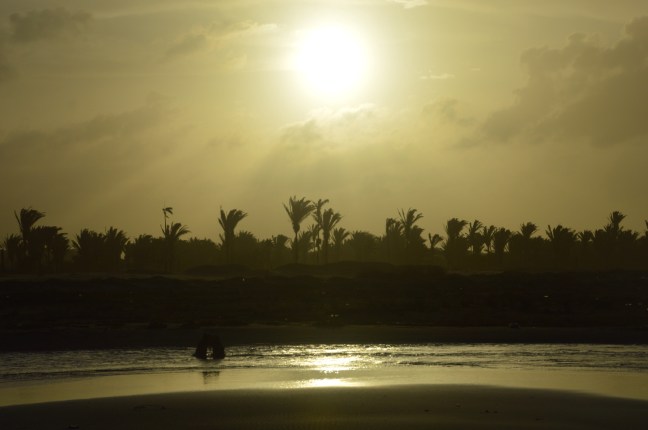
  
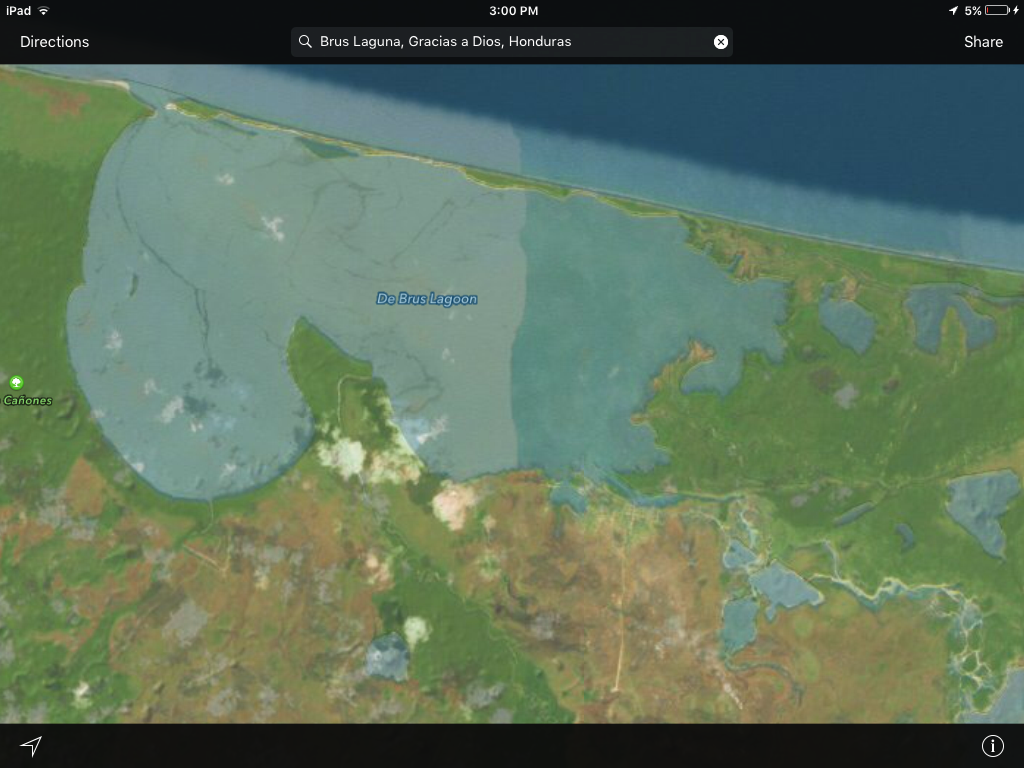
The little boat glided smoothly through silent waterways, slowing to find a darkened entrance to the next, all with the guidance of an hombre up front with a torch. We passed tiny settlements lit either by private generator or oil lamps as there is no electricity nor running water in this part of the country. La Moskitia is the most remote and undeveloped region of all of Central America, so a very special part of the world. Under a brilliant starlit night, we sped across Laguna Ibans, before negotiating another series of waterways connecting to Laguna de Brus. My final destination for the evening lay the other side of this vast lagoon. 

  
At the edge of the waterway that would lead us into Brus Laguna, our boat slowed to a halt and the two crew started shining torches around. A few minutes later, another smaller boat chugged along and pulled up alongside our own. Two hombres were on board and I thought I saw a handgun in the waistband of one of the men. I relaxed, though, when that hombre jumped on board and helped the crew to lift two large, heavy sacks from our boat onto theirs. Then, the unassuming middle aged woman sitting in front of me and the young boy sitting next to her climbed out of our boat and into the other. It wasn’t until the other boat sped off that my amigo, Bill, informed me that what I had just witnessed was a part of a drug smuggle. Bill didn’t seem in the least bit fazed and said it was extremely common. He said that Brus Laguna was the centre of the drug trade. Cocaine made its way from Colombia and money came down from the US. Exchanges were made here. Judging by the heavy thud of the sacks on the floor of the boat and the direction we were travelling, I would assume it was probably US currency rather than cocaine but I wasn’t about to investigate further. 

  
We putted on to Brus Lagoon. Just before the dock, one of passengers jumped out of the boat and swam away. Bill said he was probably evading the police. As these waters are teaming with giant alligators, you don’t go swimming in them without a particularly good reason. We docked and I gathered my backpack. It was at this stage that I noticed several shady señors lurking in the shadows. They looked as if they would roll me as soon as look at me. And looking at me they were. Intently. I kept them in my periphery vision and made sure I kept my distance as best I could. I needed to check what time the boat left to go back to Batalla in the morning and was dismayed to find it was at 4 am, meaning I needed to be back at the dock by 3.30 am. This was not the sort of place I wanted to be wandering by myself wee hours of the morn in the dark.

  
I got directions to the nearest hotel which thankfully was only a few hundred metres away. To check in, I had to go into a sketchy bar reminiscent of Mos Eisley Cantina of Star Wars fame. Limpira exchanged for room key and I was directed to my digs for the evening. It was arranged for one of the hotel staff to accompany me to the dock in the morning as I was heavily advised not to try going by myself. By now it was well past 10 pm and I had to be up at 3 am. Pumped with adrenaline, I found it difficult to doze off. I knew I was safe for the night but was not looking forward to running the gauntlet in a few hours time. Although I was well aware that I was venturing into Honduras’ badlands, I felt I had probably overstepped the mark on this occasion. Nevertheless, I eventually slipped into a restless sleep.