Jiquilillo – Potosí

I had checked with Ernesto as to when the buses left and which one to take to continue on to Potosí, my next port of call. He recommended taking the 7.30 am bus as it would be the best for connecting to the Potosí bus. As Nicaraguan buses don’t always run to an exact timetable, this meant being ready on the roadside closer to 7 am in case one missed the bus.

DSC_0440

As it was the bus came five minutes late and I hoicked my pack and self on board. Half an hour later, after slowly traversing the rutted road I came in on before, I got off where the bus turned on the main road to go to Chinandega. I had an hour to wait on the roadside bench which gave me plenty of opportunity to watch the passing traffic and all that prevailed. People came by in cars, on motorbikes and on horseback. A battalion of harvesting machines came by in two batches; each with one hombre driving and one hombre perched atop. A bus drove past with its interior packed full of people and its rooftop packed full of cargo; including one very unimpressed looking black sheep tethered to the struts.

DSC_0454

Finally, my bus arrived and I jumped on board. I managed to score a window seat as the bus wasn’t overly full for a change. After about an hour, the bus turned off the main road and slowly made its way through the Reserva Natural Volcán Cosiguina. If I thought the road to Jiquilillo was bad, this was considerably worse. At one stage, more than half the road had been washed away and an aged tree with low hanging branches on the other side meant the driver really had to use his skills. As we lumbered slowly past tiny communities, one caught glimpses of everyday Nicaraguan life from the discomfort of one’s seat. All the while with the majestic Volcán Cosiguina overseeing the commotion. This used to be the largest volcano in Central America at over 3000 m, but El Volcán decided to blow its stack big time in 1835; the effects of which were far reaching. Nowadays it sits at a more modest 872 m which hardly earns bragging rights in this neck of the woods.

DSC_0443

The bus kept filling and the temperature kept rising. Due to the slow movement of the bus, little airflow was available to provide any relief. Thus, one sat crammed into one’s seat hard up against the bus window stewing in one’s juices for the better part of an hour until we finally made it into the tiny fishing pueblo of Potosí. By this stage, I was grateful to escape my ‘sauna on wheels’ and get some air. The air outside may have been fresher but no less uncomfortable. The sun beat down relentlessly from atop a dead calm sky. Everywhere was hot, dry and dusty. I found lodgings for the night and decided to poke around the pueblo.

DSC_0447

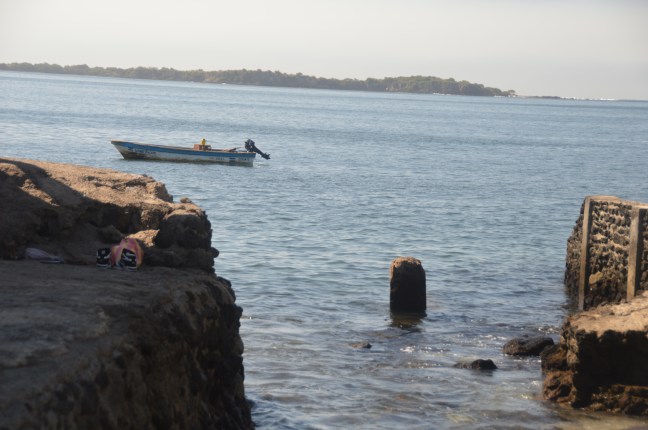
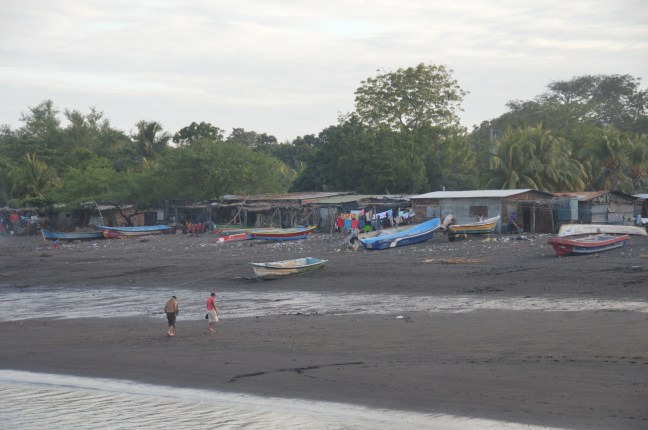
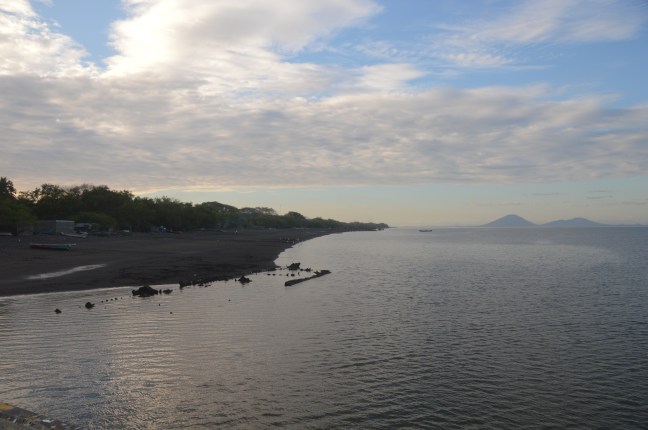
Potosí ended up being mainly one long dirt track echoing the curve of the beach, with a couple of adjacent tracks back up to the main paved road into town. I found the coast at the end of one of these tracks and had a brief wander over its pebbly volcanic beach. Potosí sits near the tip of the remote Cosiquina Peninsular and faces the Golfo de Fonseca. From the shore, one can see the neighbouring countries of Honduras and El Salvador on the other side of the gulf. Colourful fishing boats and ram-shackled wooden casas lined the beach, and a bright blue and yellow Nicaraguan Navel vessel sat out to sea.
DSC_0464

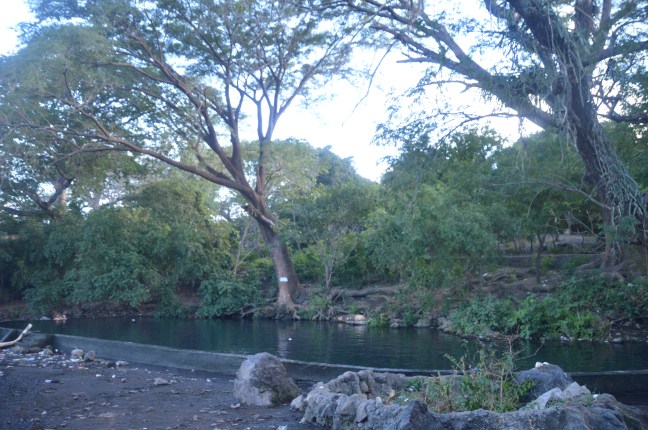
Wandering back up the other track to the road, I passed a shady pool filled with locals cooling off from the searing heat. In Nicaragua, the locals generally go swimming fully clothed, so that’s what I did! I had stumbled upon the famous Potosi hot springs I had read about in the guidebook and not a minute too soon. I put my daypack somewhere inconspicuous, but where I could see it from the pool, and jumped in. The slightly warm water, shaded by giant leafy trees, was pure bliss and I spent the better part of an hour there.
DSC_0450

I had intended to organise a guided walk up to and around the rim of nearby Volcán Cosiguina and made inquiries from a nearby small hotel. It seemed that the 2 – 3 hours quoted in the guidebook was one way only and I would need to be walking 6 hours in seating heat! Aside from the fact that I didn’t trust my knees to uphold their part of the deal, the idea of trekking for that long in this brutal heat was what really put me off, so decided against it. What I did decide upon though, was purchasing a chilled cerveza and availing myself of a mighty comfortable hammock under an obliging fan. And here I whiled away the next hour until things started to finally cool down a little.

DSC_0453

I decided to have a little wander around what there was of the town. It would seem from the reaction of the locals, especially the children, that not many travellers get up this far. It was interesting to explore this little remote part of Nicaragua. The whole place had a strong community feel about it and it was lovely seeing the interactions between its members. As I passed one particular shack on the sandy track, I noticed a racoon tethered to a post. As I had never seen a racoon before, I stopped to have a look. The señora of the casa came over and told me his name was Pancita – Little Pancho. I didn’t ask if I could pat it. From its frantic pacing I decided the last thing I needed was a bite from a potentially rabid racoon.
DSC_0463

I returned to the hotel I had had my siesta at for a most tasty meal of fresh pan fried fish. This, hands down, is my favourite dish at the moment. Especially with the smell of the sea in the air. It doesn’t make sense to eat anything else and the Nicaraguan señoras sure know a thing or two about pan frying fish. Que delicioso!
Jiquilillo

I awoke during the night to find a small kitten had crept in through a hole in the mosquito net and had decided to snuggle up. My little feline friend slept quite contently on me the rest of the night. I found out later that the kittens belonged to the property next door but had been spending quite some time at the hostel. Another one of the kittens decided to check out breakfast and had to be shooed away by the hostel cook who wasn’t quite as sympathetic to its cause.

DSC_0388

Jiquilillo is on the edge of Reserva Natural Estero Padre Ramos. The wetlands of this reserve contain the largest remaining mangrove forests in Central America and are federally protected. I inquired about a boat trip through the wetlands as I wanted to take photos and wasn’t prepared to risk taking my camera on a kayak. The cook rang her son who rocked up half an hour later on his motorbike. When I told him I had a 250cc Honda, he was impressed as that apparently is a big bike in Nicaragua. Most motorbikes here are only 150 – 200cc. I grinned thinking my little entry-level bike back home was hotshot here in Nicaragua.

DSC_0362

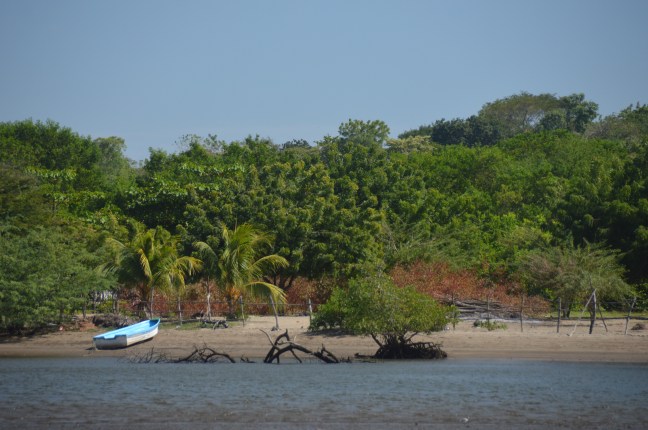
We walked to the edge of the river delta where the family’s 25 year old longboat, hewn from a single tree, was waiting on the beach. Ernesto used thick tubes of polypipe to roll the boat towards the shore and into the water. We putted around the river delta chatting and soaking up the scenery. Ernesto turned into a narrow waterway and we dodged low lying mangrove branches as he putted down an even narrower waterway to pull up on a muddy bank. Above was a small hill which we walked up for an amazing vista of the coast, the communities and the wetlands below.

DSC_0375

Back down the hill we returned to the boat and continued putting around the mangrove forest. We stopped where another boatload of travelers who were part of a volunteer scheme to re-vegetate lost stands of mangroves were replanting. I was handed a bundle of mangrove stems to plant so added my little bit to help maintain this amazing oasis.

DSC_0383

Back ashore, Ernesto asked if I liked fish as his mother (the cook at the hostel) did a mean red snapper. It seems that Mama feeds the hostel’s non-vego guests at her own home and I was quick to take up the offer. Ernesto pointed out his mother’s house so I could find it later and walked me back to the hostel. I was planning on renting a kayak so I could have a private poke among the mangroves, but found I could only do it as part of a tour, so declined.

DSC_0369

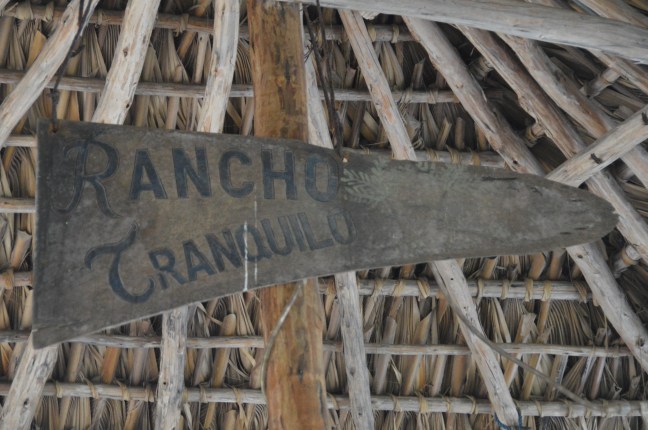
After spending a couple of hours rummaging through the mangroves, a dip in the ocean and a chill out on one of the hostel’s many hammocks seemed completely in order. After all, It wasn’t called Rancho Tranqilo for no good reason.

DSC_0392

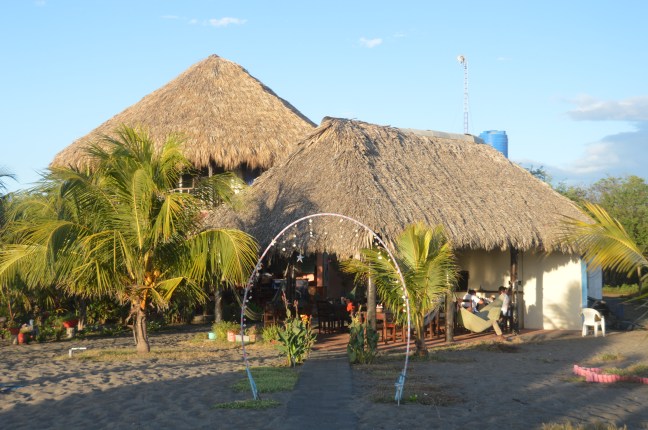
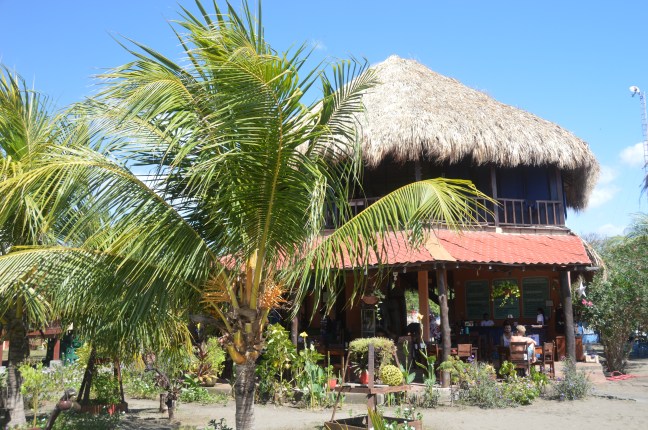
An afternoon walk along the beach gave me a chance to explore this largely undeveloped fishing village. Evidently a tsunami completely wiped out the village in 1992 and tidal surges still take their toll on unprotected properties. I stopped off at Monty’s Beach Lodge and chatted to the owner’s daughter. Monty is a Canadian ex-pat who came down to Nicaragua ten years ago to set up a surf camp. These days the Lodge caters more for volunteer travelers ranging from doctors, dentists, veterinarians, and scientists of many different fields. All to support the community and help make it more self sufficient.

DSC_0397

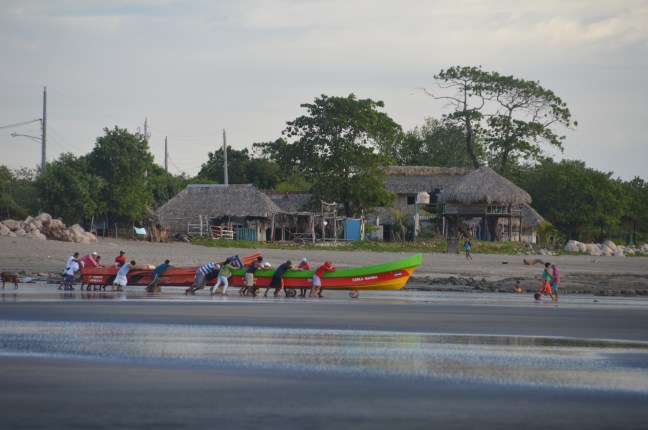
As it was getting later in the day, fishing boats were getting ready to go out. Each boat had a crew of about six people moving the boats on two well worn logs with a metal handle on one end to make it easier to move to the next position. When the boats were close to the water, the boat’s 75hp motor was wheeled down to it by another hombre and placed into position. The whole process was reasonably lengthy and quite relaxed with lots of breaks to wait for one thing or another to arrive. Eventually, the boats were rolled into the water and took off into the surf.

DSC_0417

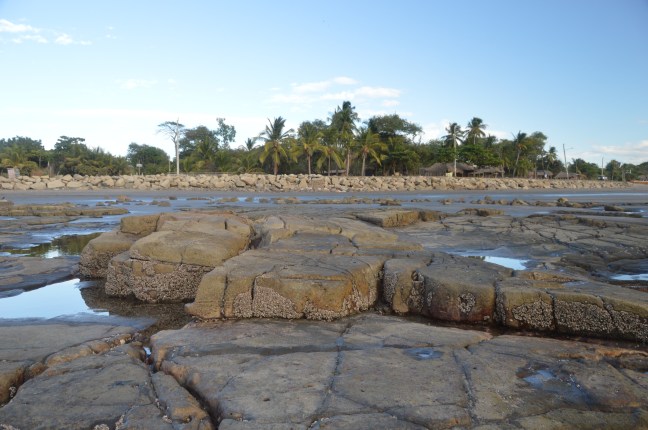
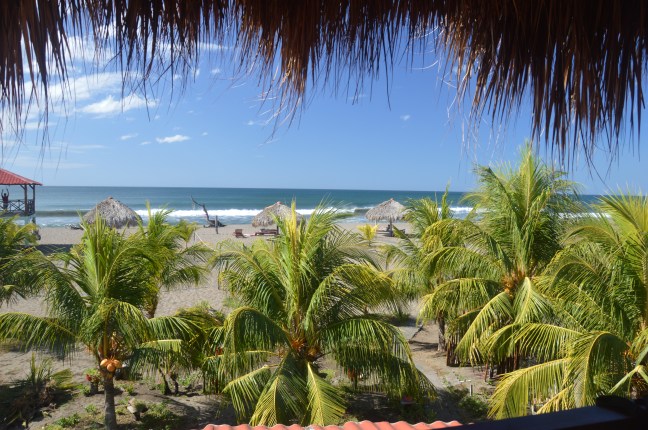
I continued my walk along the beach, past sparkling rock pools and a small rocky headland. Sea slugs were busy creating mantric patterns along the shoreline which glistened in the lowering sun. Out to sea, colourful fishing boats vied for better positions from which to harvest the ocean’s bounty. On the edge of the beach, thatch roofed shacks gradually gave way to lush vegetation. All was peace and absolute tranquility.

DSC_0411

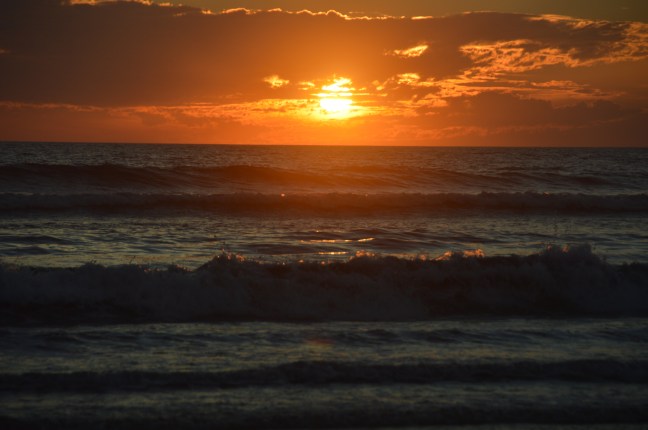
As was due to rock up at Mama’s house for dinner at 6.30 pm, I had time to grab a cerveza back at Rancho Tranquilo and watch the setting sun on the beach. One of Mama’s daughters came to collect me at 6.15 pm and walked me to the family house. Once there, I was sat at a table and presented with the most amazing meal of pan fried red snapper, rice, plantains and salad. There was so much food, I was struggling to get through half of it. Sitting in the breezeway of the family house, with family, dogs, pigs and chickens as my companions, I couldn’t have wished for a more blissful end to a perfect Nicaraguan day.

Corrinto – Jiquilillo

My dodgy Guatemalan drugs must have done something overnight as my knee was feeling much better come morning. I left my pack at the hostel and had a wander around town.

DSC_0306

Corinto goes down in history’s pages as the place where ex US President Ronald Reagan got busted big time for beyond dodgy interference in another country’s governance. Evidently the CIA (under Reagan’s directive) decided to mine Corinto’s harbour in 1984 as part of a scheme to aid US supported Contra rebels. The International Court of Justice called bullshit on the whole episode and ordered the US government to pay retribution to the Nicaraguan government for its interference. In true Reaganista arrogance, the court’s findings were rejected and no payments were ever made. Congress, however, decided enough was enough and refused to pass further military aid to the Contras. Not to be outdone, the Reagan administration then decided to illegally sell weapons to Iran and surreptitiously use the profits to aid the Contras. Thus started the CIA’s sweet little dalliance which became known as the Iran-Contra Affair. Needless to say, the good folk of the USA were far from pleased when details leaked and the whole operation was exposed.

DSC_0303

The Plaza Central was fairly buzzing last night with a shabby funfair down a couple of adjoining streets and vendors taking up most of the space in the plaza itself. Come morning, I saw why. The ship I had seen in port the previous evening was a cruise ship and passengers had just been let off for the day. Hawkers and pedicab drivers badgered anyone who obviously wasn’t a local which certainly took the edge off what seemed to be a pretty relaxed town to date. I also noticed extra security in the form of National Police on the streets; presumably to protect the punters. I had to cash up, so after a quick wander around, collected my pack from the hostel and caught a pedicab to the bus terminal.

DSC_0307

I had to return to Chinendega and then catch a collectivo to the mercadito from where the bus to Jiquilillo left from. Once there, I found I had to wait two hours for the next bus so found a small cafe in which to have something to eat and wait it out. This was one of those bain marie offerings where you chose what you would like and paid accordingly. I sat at a table on the sidewalk and watched the hustle and bustle take place around me. With about half an hour to go, I decided to wait on the sidewalk opposite where I was told the bus would arrive. A senor selling bags of tomatoes took interest in my sitting on the side of the road and made inquiries. Not satisfied with just finding out where I was going or even where I was from, he wanted to know if I was married and how old I was. Had a considered a Nicaraguan husband? Some things are better just politely laughed off.

DSC_0208

My bus eventually pulled up and people starting piling out. I decided to wait until it died down a bit before finding somewhere to put my pack and find a seat. My tomato Romeo came along to flog his wares to the punters and asked why I hadn’t found a seat yet. As I patiently waited, I began to see the error of this strategy as the bus continued to fill until there was no room for me to move even if I wanted to. As I was moved down the aisle with the rest of the standing senors and senoras, an hombre took pity and helped me put my pack up on the rack. I then had to stand sardine style for the better part of an hour before being able to secure a seat. Well, I learned that lesson well!
DSC_0114

After about an hour, the bus turned down a rough dirt road and had to slow down considerably due to the many ruts and potholes. By now I had secured a sweet spot behind the driver so had a great view out the front window. We passed tiny pueblos, stopping regularly to pick up and drop off passengers and their goods. Eventually, we came to Jiquilillo which is basically one of three tiny beachside communities alongside a remote stretch of beach. I was watching out for the sign for the hostel I had chosen out of the guidebook, but the driver asked me where I was staying and pointed it out to me. Rancho Tranquil certainly lived up to its name as a quiet little property on its own private stretch of beach.

DSC_0391

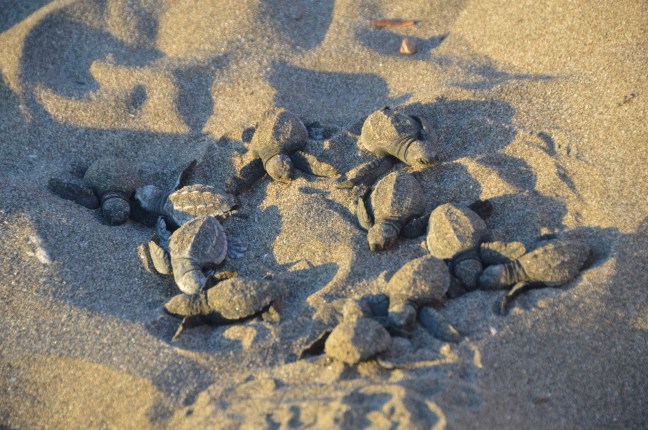
I was just in time to grab a cerveza and wander down to where they were releasing baby turtles at sunset. This turtle rescue organisation did things very different to Surfing Turtle Lodge and I was dismayed to see the organiser encouraging other travelers to actually pick the turtles up and have photos taken with them! They then let the turtles waddle on the sand for a couple of metres, collected them back up and released them directly into the surf. I later googled correct protocol for release of these endangered creatures and this is certainly not how one does it to ensure greatest rate of survival. Still, I wasn’t about to interfere.

DSC_0312

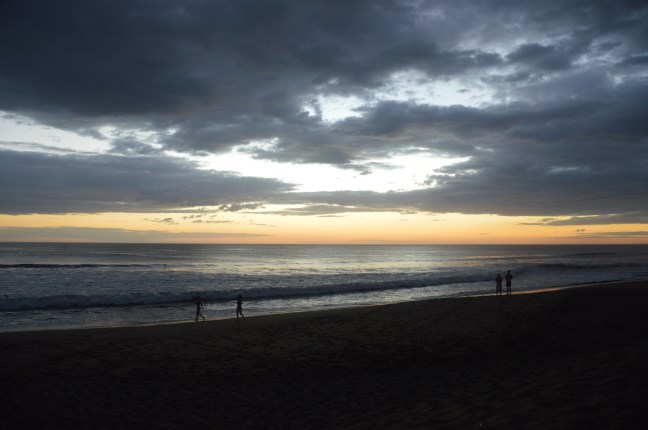
I watched the sun set, then went back to the hostel for dinner. I hadn’t realised that this hostel was vegetarian only, but it was nice eating communal style with the other travelers staying there for the night. It appeared that I was the first Australian to stay at the hostel, so proudly stuck my pin in the map. Most travelers seem to come from the US or Europe as was the case on this occasion. It was lovely lying in bed in the dorm listening to the rumbling of the waves only a couple of hundred metres away. A very soothing way to enter one’s slumber.

DSC_0331

Isla Los Brasiles – Corrinto

Packed up and said my farewells. Surfing Turtle Lodge proved to be a most enjoyable and memorable spot to spend Xmas. It’s very easy to see how some travelers come to spend a few weeks ‘volunteering’ and end up staying on. There is certainly a lot to ‘stay on’ for.

DSC_0290

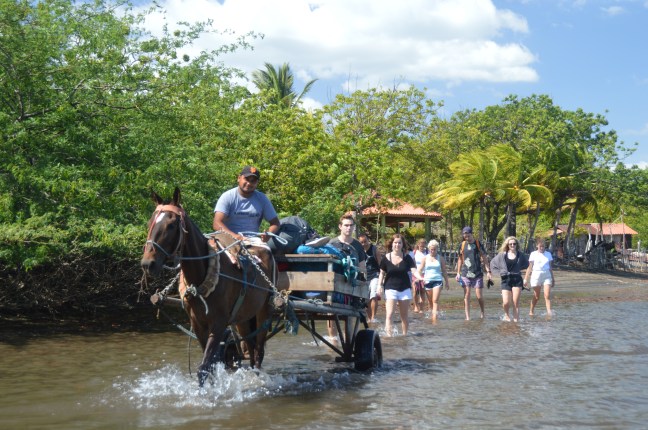
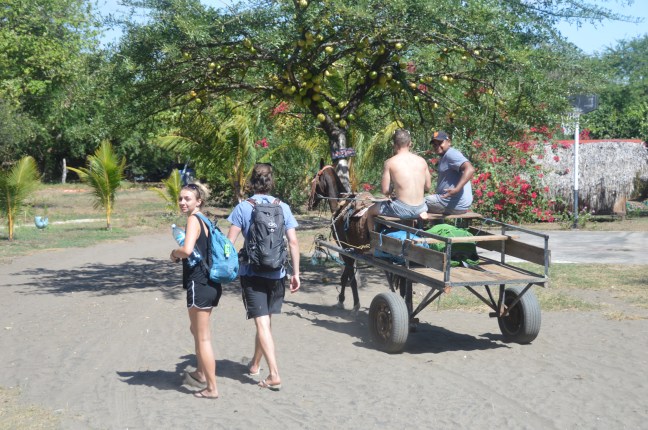
I walked back to catch a lancha over the channel to the mainland. I saw the lancha come in but no one was there when I got to it. I waited for a while looking around and then heard the snap of a twig. The lancha driver had decided to take a moment in the mangroves whilst waiting for passengers. I gave him his privacy and waited. As we were taking off, a large party from the lodge who were catching the shuttle to Leon came around the corner of the mangroves accompanied by a horse driven cart carrying their packs. The cart drove straight through the low water to the lancha while the others waded. It ended up being a very full boat after all and the hombres amongst them were called upon for lancha leverage duty until we were in deeper water for the motor to take over.

DSC_0293

Back on dry land I decided I wasn’t in any hurry and stopped for a cerveza at one of the little restaurants dotting the beach. Thus fortified for the hill climb, I returned to where I had left the bus a couple of days ago. I didn’t have to wait long before a bus came lumbering along and after a quick detour of the more touristy Las Penitas, I was on my way back to Leon.

DSC_0295

I caught another bus from the mercadito which the beach buses use as transits, to the main mercado to catch a bus heading north. A busker hopped on en route and proceeded to entertain the commuters with guitar and harmonica. As the bus tore through the city streets without heed to anyone’s comfort levels, let alone ones ability to play the guitar whilst standing, I was impressed that he still had a full set of teeth after such antics. Thus I handed over a few Córdoba to assist with what I can only assume will be future dental work needed.

DSC_0153

As I came away on this trip carrying a knee injury which is still to rectify itself, I have been struggling with swelling and pain. I did bring the remainder of my post surgery anti inflammatory meds with me, but had exhausted that supply. I had the box they came in so asked at one of the many pharmacies at the mercado if they had anything similar. To my astonishment, the señorita came back with a packet of meds made in Guatemala which appeared to have the exact same dosage of the drug I had been prescribed in Australia. This drug company is no Bayer so I may yet grow a third ear but am finding myself running out of other options.

DSC_0103

Armed with my dodgy Guatemalan drugs, I found a bus to Chinandega from where I planned to take another bus to Jiquilillo. A quick check of times to get to both places decided me on changing my mind and heading straight to Corrinto where this particular bus terminated. We drove through the pretty little town of Chichigalpa which is the home of Nicaragua’s famous rum distillery, Flor de Cana. A short stop in Chinendaga and we were heading down to the port city of Corrinto.

DSC_0298

The bus terminated and I could see a ship in port in the not too far distance so figured I was probably not far from the centre of town. I got directions for the Central Plaza and found it was only a few blocks away. I asked directions to a hostel I had picked out of the guidebook but got directed to Hostel Garcia which did the job as far as I was concerned. Cheap, basic with an odd little bathroom tucked into one corner. A thick, though shabby monogrammed towel was at my disposal. Ritz!!

DSC_0301

The guidebook recommended eating at one of the waterfront restaurants which are known for good seafood so I went in search of one. They all looked quite pricey but I found one a little shabbier than the others which had reasonably priced cerviche. I took the first of my dodgy Guatemalan meds after googling any info I could find on the company that made them. Oh well, another ear could come in handy…

Leon – Isla Los Brasiles

Time to leave Leon and head to the beach for a couple of days over Xmas. I’ve found it’s best to ensconce oneself somewhere pleasant for the couple of days the whole place shuts down and had opted for an Eco resort out of the guidebook I liked the sound of.Over breakfast I had another look in the guidebook for directions to take the local transport to Poneloya on the coast. Fortunately, I picked up what I had overlooked previously – that the buses didn’t leave from the terminal I used the previous day, but rather another one in a part of town I would need to catch a collectivo to. Thus informed, I kitted up and walked the few blocks to Parque Central from where I could start my journey.

DSC_0161

The clapped out bus hurtled to the corner, came to a screeching halt half way around blocking the entire intersection and with Latino efficiency swapped out several of its occupants (myself included) in record time. As I hadn’t had time to put away my pack harness and it was a bit of an OSH issue (if such a thing exists here!!), I alternated between holding fast as Speedy Gonzales opted to see if he could get the bus airborne over the street’s lumpy surface and trying to secure my pack rigging before someone did themselves a disservice on it.

DSC_0116

I found the bus I needed to continue on to Poneloya and fortunately was able to secure myself a seat at the front of the bus to best take in the views. After hot, bustling Leon, I was looking forward to spending a couple of days at the beach. The bus ride down provided glimpses of everyday Nicaraguan life; tiny thatched roofed casas shaded by age old trees, vistas of majestic volcanoes dominating the landscape from afar, broad fields upon which cattle and horses were grazing, and a dozen locals trying to pull an upturned car out of a ditch.

DSC_0156

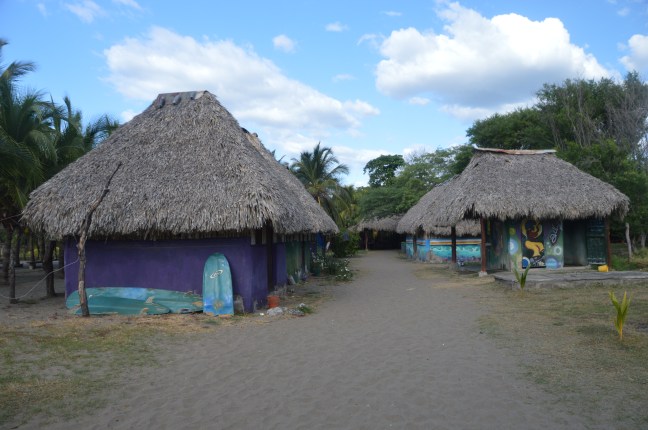
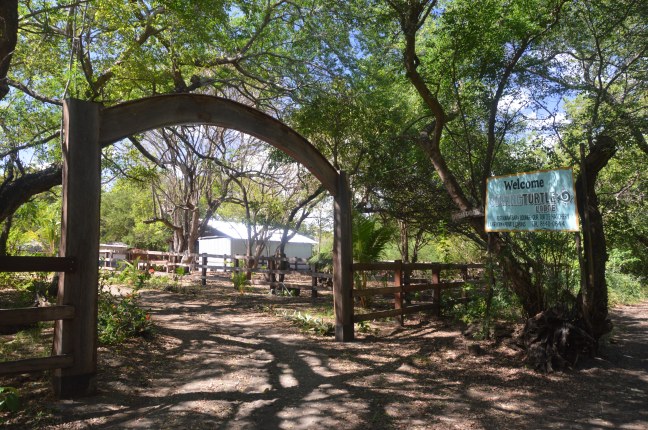
The bus pulled up in the centre of ‘town’ if that was what the few ramshackle buildings represented. A short stroll up and back down a small hill led to where the lanchas left to take people across the narrow channel to Isla Los Brasiles where my digs for the next two nights lay. A short walk on the other side along a sandy track deposited me at Surfing Turtle Lodge. This Eco-lodge is solar powered and nestled on the edge of the beach. Palm trees and gardens add to its lush tropical appeal. I had booked a dorm bed in the large upstairs screened dorm, which had a large deck jutting out and amazing views out over the Pacific Ocean. With a great bar and communal area below, I had picked well for my Xmas break!

DSC_0284

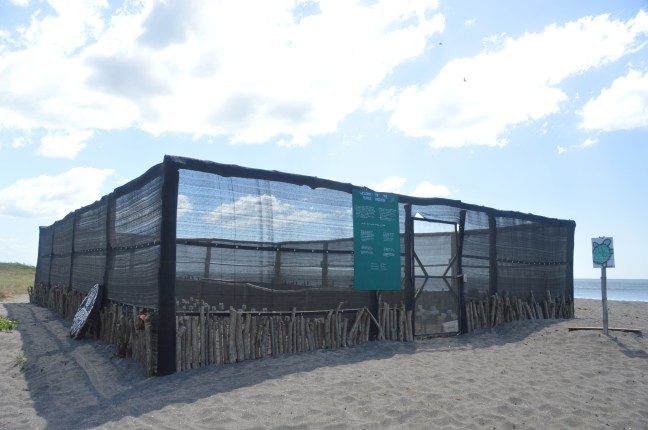
The lodge has a turtle hatchery attached and has released many thousands of turtles since it began operating. They have a local turtle specialist who oversees the whole operation, from monitoring the local beach for females laying eggs to purchasing eggs from local poachers who otherwise would sell them to restaurants for human consumption. Three species of these endangered sea turtles nest on Isla Los Brasiles – Olive Ridley, Leatherback and Green Turtle. The eggs are carefully gathered and buried in plots in a fenced off area on the beach to prevent loss from predators. When the baby turtles hatch, they are taken closer to the water were they waddle down to enable any females among them to ‘imprint’ the location so they can return to the same spot years later to lay their own eggs as adults.

DSC_0286

After sitting in the surf with a cerveza, I returned to the bar to make new friends. The lodge organises daily sunset beach volleyball games and after most people had eaten dinner, Christmas themed group games were spun out with raucous results. My team won and we were rewarded with shots of rum. It was then time to go down to the beach for the nightly bonfire and shenanigans around the beach bar.

DSC_0278

I noticed a shifty looking hombre on a pushbike by the bar and wondered what was going on. It turned out he was one of the local poachers who had ‘stolen’ a cache of sea turtle eggs from their mother and was looking for a quick profit. I found out later, that the poachers generally come to the lodge first to sell their eggs as they tend to pay slightly higher than the restaurants. I went with the staff and one of the owners to bury the eggs in a plot in the turtle hatchery. The date and number of eggs are recorded on a plastic sign so they know how many baby turtles to expect and when. A quick check of other plots that have been hatching recently revealed two more baby turtles. These were put in a container with beach sand and taken down to the beach to be released. As the tiny turtles made their way to the water, they were caught up in a small wave and finally made their way out to sea. Bon Voyage little Christmas turtles!

Puerto Momotombo

After three days exploring Leon, I was keen to take a break from its pre-Xmas franticness and ‘escape to the country’. I walked to the main bus terminal to catch a bus out of town to the tiny pueblo of Puerto Momotombo. The map in the guidebook only had an arrow pointing to the edge with 500m next to it, but I managed to find where to catch the bus I needed without too many difficulties after asking locals.

DSC_0218

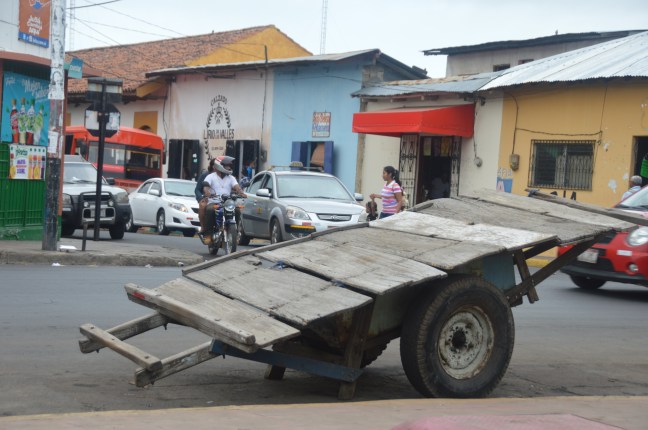
An extremely public altercation between a young man and his mother kept the masses amused. One of the spectators gleefully tried to fill me in what was going down but unfortunately I couldn’t understand all he was saying. I got the gist that the mama was trying to stop her chico from getting into strife and he was having none of it. You have to give it to these women – they’ll fight tooth and nail for their loved ones without heed as to who watches on. An ice chest had upturned over the road and as I helped the vendor return the packets of water to it, el Chico came tearing through the melee causing pandemonium again. Mama, of course, hot on his heels. I decided to leave them to it and crossed over to where the buses were.

DSC_0225

I first had to catch a bus to La Paz Centro, then jump on another bus down to Puerto Momotombo. As the bus chugged through the hilly terrain, we passed all manner of transport including trucks, horse drawn carts and tuk tuks. Eventually, we hit the dirt road into Puerto Momotombo.

DSC_0247

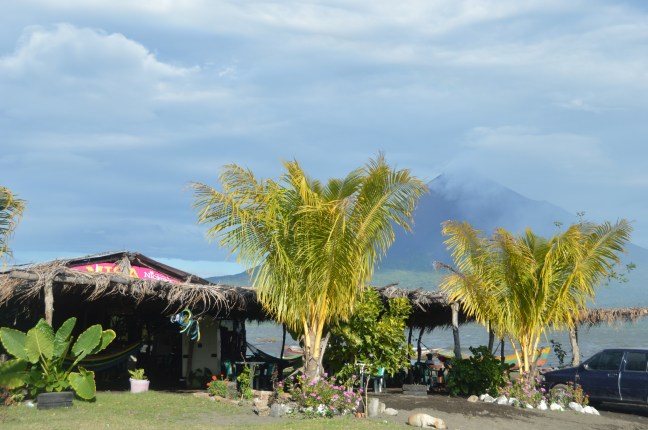
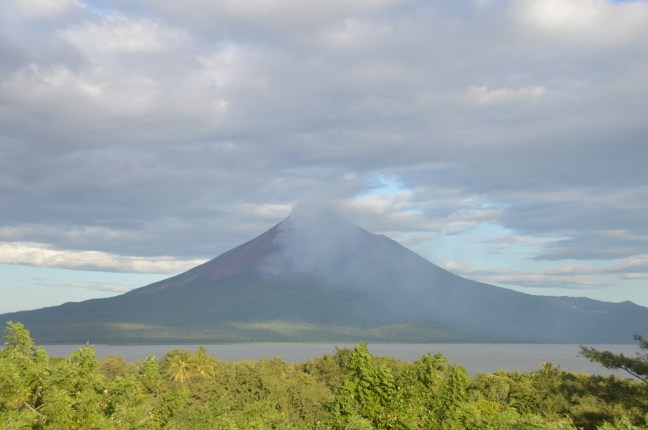
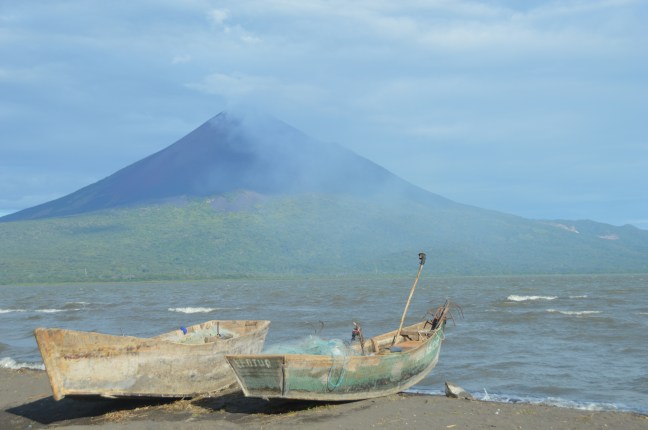
This little pueblo is situated on the edge of Lago de Managua and in the shadow of Volcan Momotombo; Nicaragua’s famous volcano which looms 1280m above the lake. Volcan Momotombo was directly responsible for completely destroying the original city of Leon in 1610 and even left a miniature of itself in the Lago as a reminder of who was boss in those parts. Now a days a sleepy little pueblo pays homage to its slumbering master and a kind of quid pro quo seems to exist.

DSC_0248

I wandered down to the edge of the largo where a couple of thatched roofed open aired patios were situated. I had read in the guidebook that I could get a lancha to take me out to Isla Momotombo, however, this option appeared to be off the plate. What was on offer though (upon asking) was a delicious meal of pan fried fish with a tasty salsa, plaintains and salad. Washed down with my new favourite Nicaraguan beer, Tona. All for just AUD7! A cooling breeze came off the largo, local music was playing behind me, and in front was the spectacular vista of both versions of the majestic Momotombo.

DSC_0249

After lunch, I decided to wander through the pueblo and see if I could find the Unesco World Heritage listed site of Leon Viejo. It turned out to be just on the edge of Puerto Momotombo and relatively easy to find. I passed an hombre on horseback guiding his small herd of cattle down the Main Street and waited for the dust to settle before continuing on.

DSC_0252

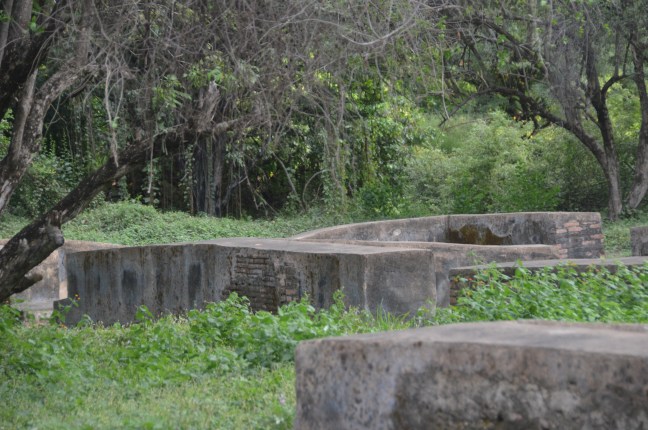
The site of Leon Viajo was buried for over 300 years until archaeologists from Leon’s UNAN university eventually unearthed the chapel and central plaza. Further excavations revealed more of the city though time has taken its toll and most walls are not particularly high. It’s still an interesting visit and the view from on top of the still buried city fortress is phenomenal. Unfortunately, funds are limited so further excavations are slow to take place.

DSC_0257

My guide, Martha, started the tour then asked how I got there. When I explained I caught the bus from Leon, she informed me that the last bus back to La Paz Centro had just left. Martha was going back via La Paz Centro after work herself so told me I could tag along and catch a tuk-tuk with her. My options seemed limited so I agreed. We did a whirlwind tour of the site, then walked back through town to catch a tuk-tuk.

DSC_0258

Stopping at a small tienda on the main road, Martha bought groceries whilst I sat and chatted with the owner. As always, people from this part of the world are impressed that someone from so far away has come to visit their shores and want to know what Australia is like.

DSC_0129

A tuk-tuk came by soon after and we hopped in. The driver stopped to pick up another two people so there were three of us squashed in the back and two in front. The tuk-tuk’s little motor worked overtime getting us up the hills, but the driver performed admirably in preventing us ending up under one of the various trucks that came roaring up behind us a little too close for comfort for even my seasoned companions.

DSC_0444

A detour off on a rocky dirt track brought us behind yet another small herd of cattle on the move. As the two accompanying chicos on bicycles smacked their bovine butts with a stick, we were able to pass without incident.

DSC_0199

Back in La Paz Centro I waited on the main road for a bus to Leon. This must have been Nicaraguan peak time as the bus was so full I could barely find somewhere to have both feet on the floor. So close to Christmas, locals were traveling to spend time with family and the bus was full of presents and packages for the festivities. As it was I had to get up close and personal with a large boxed pedestal fan with a mass of purple ribbon affixed to one corner.

DSC_0177

I eventually made it back to the bus terminal in Leon and found my way back to the hostel in the dark. A quick reorganise of my pack was in order before bed as I was leaving the following day.

Leon

My final day of attempting to finish the guidebook’s walking trail with no further distractions! So much for 4-6 hours… Mind you, I knew I was going to be in town for a few days so didn’t knock myself out. More old churches and I came to the National University of Nicaragua. Leon is known for being the cultural and intellectual hub of Nicaragua so the university takes pride of place in the centre of town. This is also a particularly important place in Nicaraguan historical context as it was students from here that guided the revolution. It always makes me wonder what would have happened to these leading lights who dared to take on the old guarde with their liberal views, only to be rewarded with an early death.

DSC_0235

Pondering and pounding the pavement is thirsty work so I decided to find one of the many student bars mentioned in the guidebook to take the edge off a particularly hot day. The bar I chose also had a makeshift cafeteria in the entrance where diners could choose their combination of local cuisine from a variety of Bain Maries. I chose to just sit on my cerveza though the food did look good.

DSC_0241

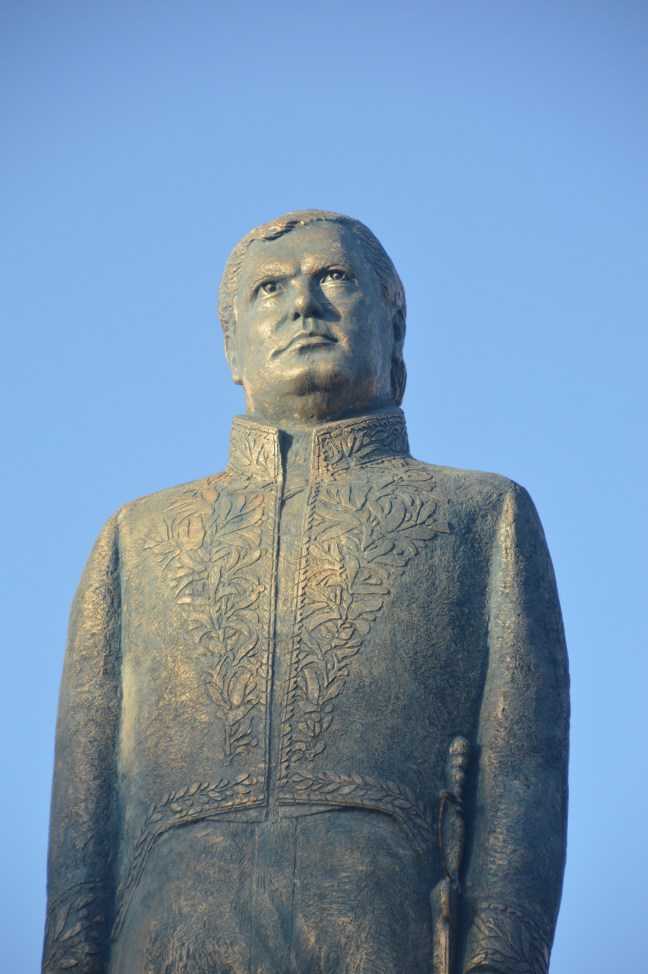
Suitably refreshed and ready to continue this never ending trail, I made my way past the final few places of interest and ended up at the Museo Ruben Dario. This remarkable poet is one of the most important figures in Nicaraguan history, alongside revolutionary leader, Sandino. The Nicaraguans tend to rate a decent poet and many of them have made their way into local history’s records, but none so much as el señor Dario. The Museo was set in his birthplace, which was of interest in itself as an example of a moderately wealthy Leonese casa of the late 19th century.

DSC_0033

I chose just to wander by myself and read the many info boards (in Spanish) rather than get a guide. El señor Dario turned out to be a shocking alcoholic and after winning the hearts of most of Latin America, came home to die at a mate’s place. His body was interred in the main cathedral and his funeral took place over the better part of a week, attended by everyone who was anyone. All this for a man of verse. Like I said, Nicaraguans do rate a decent poet.

DSC_0243

By this stage, I was well and truly over pounding a particularly hot Leonese pavement and decided my afternoon ambitions lay in the form of a shaded hammock back at the hostel. Three days in a hot, hectic city had taken its toll and I made plans to escape the following day to somewhere cooler and off the beaten track.

Leon

First port of call for the day was finding someone to repair my travel sandals which had started coming adrift. I got directions to where I could find a zapateria (shoe repairer) in a local market. A seasoned senor saw my sad sandals and waved me over to where he was hammering away on a pair of boots. Whilst we were discussing what was needed and the price, el señor kept pulling out a disposable razor and absentmindedly running it over his stubble. I tried not to laugh as the whole scene seemed quite ridiculous to me. Still he did a good job hand stitching my sandals for less than AUD9.

DSC_0192

I continued my walking tour from the guidebook, past a couple of interesting churches, until I got to Mercado San Juan. This market place had all the hustle, bustle and skank one could hope for and drew me in for a good explore. What you couldn’t buy in a market place like this clearly didn’t exist and you should just go home! The various enthusiastic vendors would certainly subscribe to this point of view and I was jostled quite fervently to examine the goods at hand.

DSC_0211

Once I was finally spat out of one of the mecardo’s many entrances, I decided to just take an unsolicited wander of Leon’s streets and observe the local streetscape and activity thereon. As dusk steadily approached, vendors were closing their little shops and joining the congregating locals in plazas to enjoy the festivities of the season.

DSC_0185

Back at the hostel, I got chatting to a couple of my fellow dorm companions and spent the evening swapping stories and more than a few laughs over numerous cervezas at the bar.

Leon

I awoke to birds trilling and a gentle wafting breeze. Neither of which was conducive to getting me out of bed, but I dug deep determined to get on with the day. Fresh fruit and great coffee was a big help. I asked at reception if I could stay another two nights and after checking my name was immediately given the OK. I wonder if they only initially let you stay one night so if you turn out to be of less desirable character they can move you on. If that was the case, just as well I had a quiet night!

DSC_0083

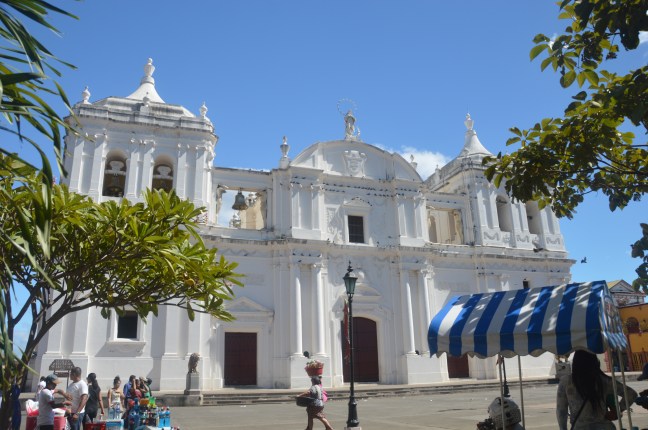
I decided to do the walking tour in the guidebook and headed off to the Parque Central. Here was what was missing in Managua; a large grimy cathedral overlooking a leafy plaza bustling with vendors of all kinds, hombres reclining lazily on park benches, and more pigeons than you can shake a baguette at. Oh…..and the local Blood Bank set up in the rotunda taking blood donations. The signage said it was completely safe and sterile but I wonder with the amount of dust, debris and droppings in the vicinity.
DSC_0091
I got myself a traditional Leon raspado (basically shaved ice with raspberry sauce and condensed milk on top) and bunkered down to enjoy this recommended confection. All of a sudden there was an ear piecing siren of air raid capacity. I looked around at the locals who seemed quite non-plussed so assumed there was nothing to be overly concerned about. After the wailing died down to more audible levels, I asked the hombre on the bench next to me what it was. He explained it was announcing the midday. A quick glance at my watch confirmed this. If this how they communicate time, I would hate to see how they would deal with any sort of disaster warning! It wasn’t as if the cathedral’s bells were defunct. One could hear the last of the tolling when the ruckus died down.
DSC_0086
Next port of call was the Museo de Revolution. Every major Central American city worth its sal has one of these grimy, poignant homages to the passionate soldiers (of both gender) who fought with the unbridled passion of youth for perceived justice and freedom. In reality, the end result is usually unthinkable carnage (on both sides) and very little to show for in terms of real gains. An affable hombre by the name of Benito was to be my guide and once attuned to his thick Nicaraguan accent, I found I was able to generally follow what he was saying. The guides at the museum came equipped with a short length of polypipe which they used to enthusiastically tap on images of El Senor Sandista, the nation’s revolutionary hero. This was rendering the good senor’s image to a succession of white blobs after successive tappings had penetrated the surfaces of the photos. Sheets of thick plastic had been used to clad the worst of these to prevent further damage.
DSC_0098
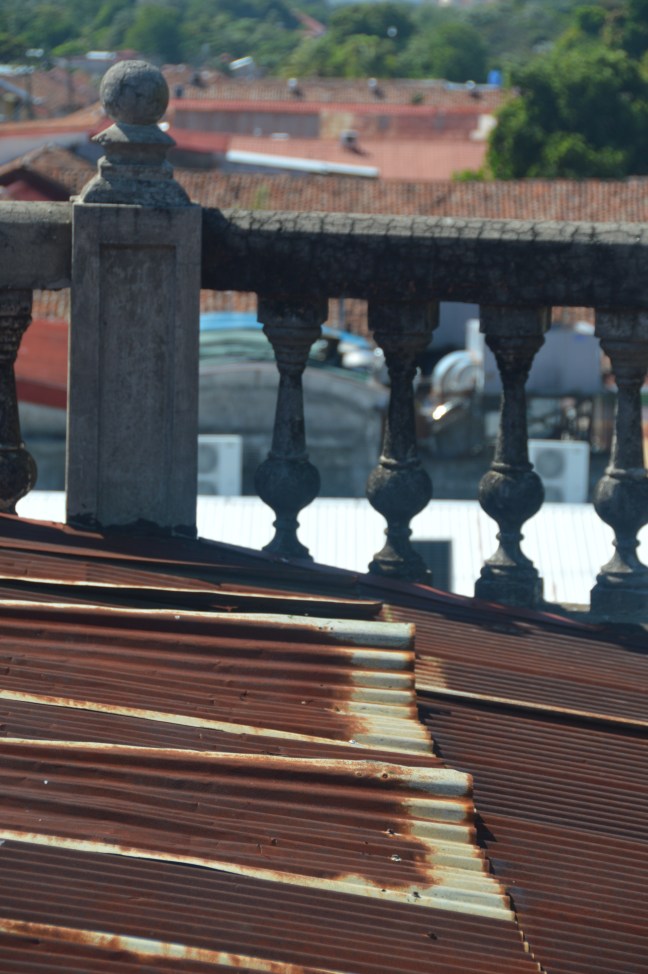
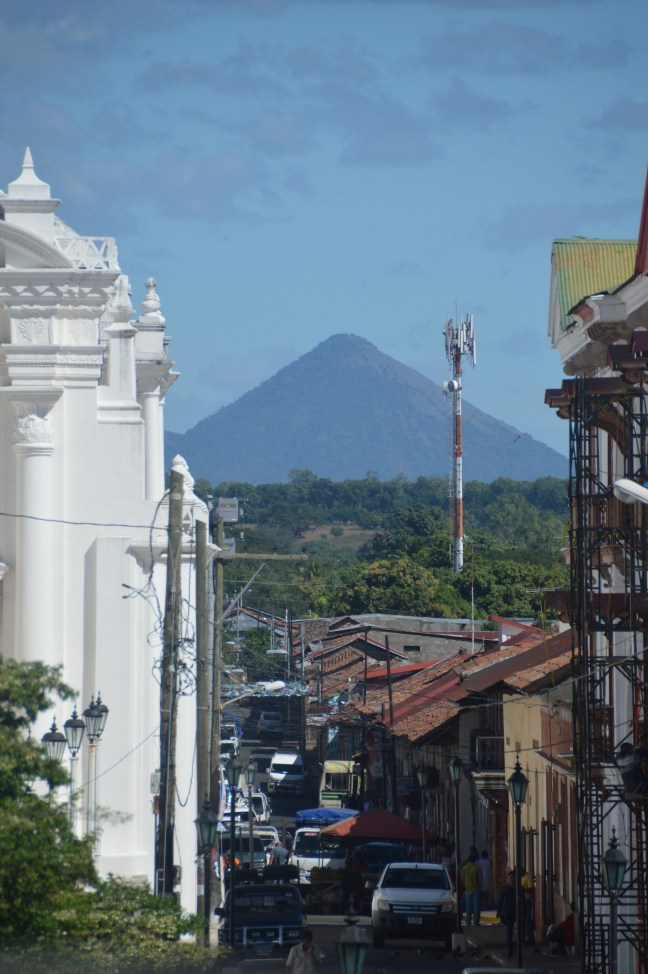
After being lead from one captioned black and white cardboard photo display to another, Benito eventually took me on to the roof of the building the Museo was displayed in for some spectacular views of the city and beyond. As I gingerly trod on the reinforced sections of the rusty iron cladding, Benito assured me it was completely safe and to prove the point, starting jumping up and down on a particularly dodgy looking bit. It was worth the angst though, as one could see Nicaragua’s famous Volcano Momotombo puffing away in the distance beyond the streetscape.
DSC_0113
I asked Benito if he fought in the revolution and he grimly nodded. He was 20 years of age at the time and many of the murdered revolutionaries he had shown me photos of had been his friends. I was a young teenager when the revolution took place and vaguely recall hearing about it from the sanctuary of my home town. How very different our lives have been. Fate is a curious dice. Benito believes Nicaragua was far better off before the revolution compared to now. An interesting confession from a card-carrying FSLM member. I didn’t press the point but wondered whether he regretted the whole episode considering the cost.
DSC_0142
I continued on my stroll past various buildings of historic interest (including a church that had been almost completely obliterated during the Revolution and was still awaiting restoration) until I got to a particularly strange little museum. Part depiction of some of the human rights abuses locals suffered by the National Guard, part life-size paper mache figures portraying local myths and legends. The whole effect was quite creepy and I felt if I had been brought up on this ghoulish diet, I think I would have been condemned to a lifetime of eternal nightmares!
DSC_0152
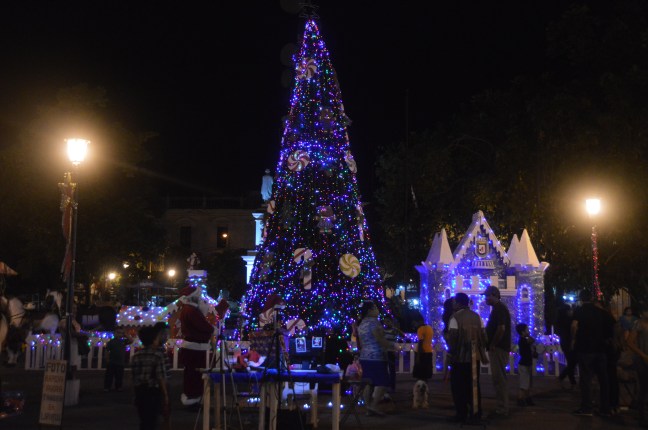
At dusk the Parque Central was ramping up in activity. Street food vendors were doing a brisk trade as locals gathered to take in the festivities. Aside from the usual Nicaraguan Santa and children’s activities, there were many of the local La Gigantona troops making their rounds throughout the city. A giant paper mâché woman, fancily dressed and with long hair and wide blank eyes, is brought to life by a young boy hidden under her voluminous skirt. When the chico’s merry band of drummers up the beat, La Gigantona is made to dance in a weird arm flailing manner. It’s quite mesmerising and just a bit disturbing to watch.
DSC_0167
I got myself a feed of street food and watched the merriment from the steps of the cathedral. A lovely end to my first day in beautiful Leon.