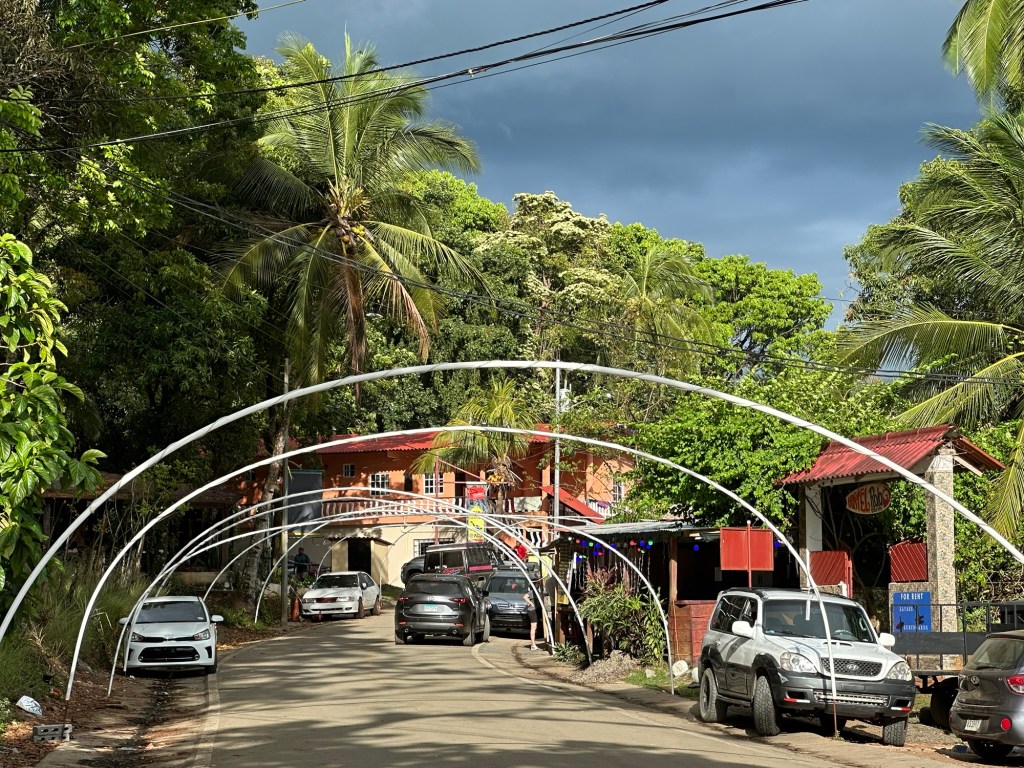
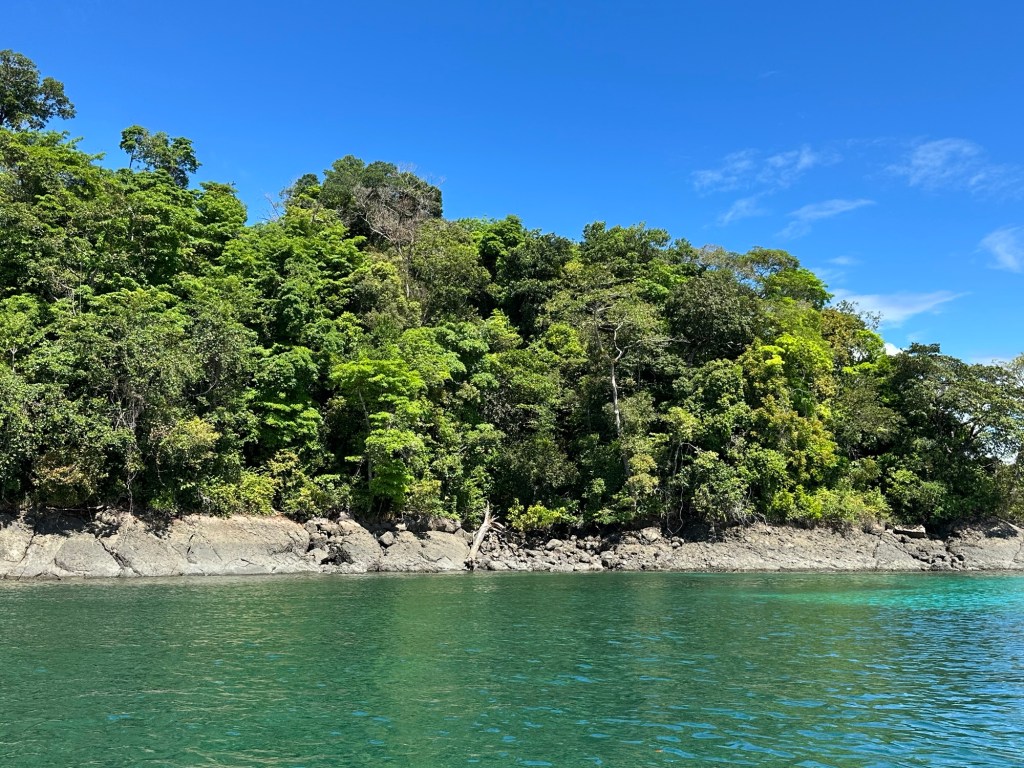
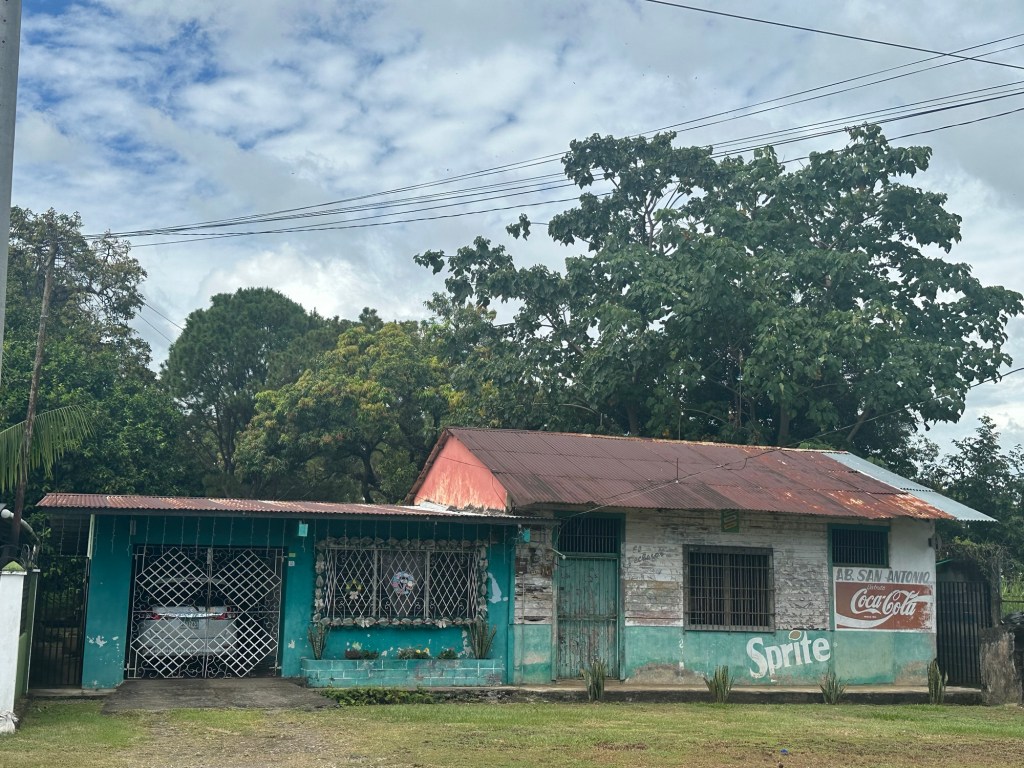
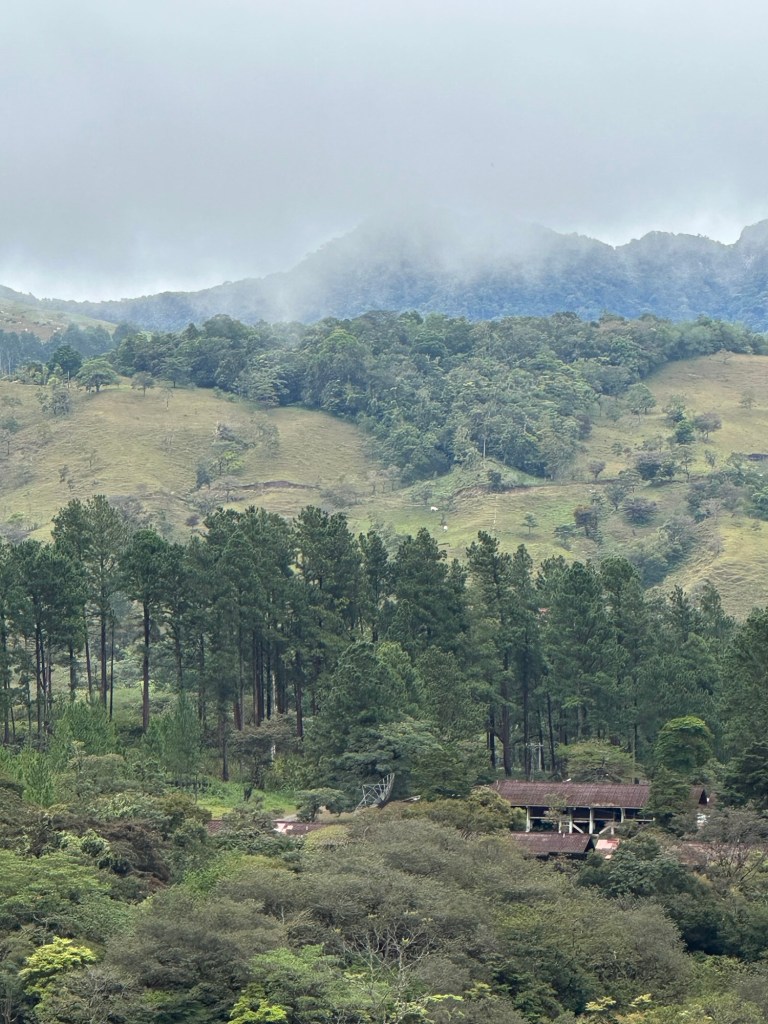
Nicoya – Puntarenas

It was cool and quiet when leaving my lodgings, but it didn’t stay that way for long. Once back in the throng of this busy little town, the heat, humidity and bustle soon caught up. I had to recharge the data on my travel SIM card, so made my way to the Claro office I had passed the previous night en-route to my hotel. I also got directions to the bus terminal from the helpful señora behind the counter.

Hotel Chorotega, Nicoya

The bus station was only a few blocks away and I found it easily. What wasn’t as easy, however, was finding information about routes further south. I could get to Samara which was one of the places I wanted to check out, but there didn’t appear to be any way of getting further south from there. There was also no information of any other destinations south of Nicoya. I decided to chance it and take the bus to Samara and ask when I got there about possible on-going routes.

Parque Central, Nicoya

The journey down to Samara was spectacular, with the road winding through jungle clad hills and over small rivers and streams gently discharging their contents downstream. A fresh breeze cooled the bus when moving, however, it quickly heated back up again when stopping to pick up or drop off passengers en-route. All too soon, we arrived at Samara where I immediately started making enquiries as to how to get further south.

Playa Samara, Samara

Despite my best efforts, there was no other way out of Samara except returning to Nicoya and trying again. I did manage to confirm there was a route down from Nicoya, albeit complicated, so decided to use the hour and a half I had before the bus left again to check out this sweet little coastal village. Samara was completing geared up for tourists, including a little tourist market, but it had a nice, chill vibe. I found a beachside bar and enjoyed an ice-cold cerveza whilst taking in the scenery.

Tourist Market, Samara

Back in Nicoya I had the usual problem of struggling to find information about buses. This country is frustratingly difficult to traverse on public transport as the locals don’t rely on it as much as in other Central American countries, so don’t know about services. A myriad of bus companies ply different routes which adds another layer of complexity to the situation. After asking around a bit, a señor behind a counter at the bus station waved me over and asked where I was going. I explained I wanted to go to either Montezuma or Santa Teresa and he was finally able to give me the information I needed. It turned out I needed to catch a bus to Playa Naranjo, then a ferry to Puentarenas, another ferry to Paquera, then a bus to Montezuma. This was the route a señora had explained to me in Samara so I embraced it with some confidence. The only problem was that the next bus was at 5pm and it was only 2.30pm.

Casa, Nicoya

I wandered around trying to find a restaurant where I could while away the time over something to eat and a cerveza or two, but to no avail. This region is one of only five ‘Blue Zones’ in the world. Whilst its inhabitants may enjoy longer, healthier lifespans than most, it would seem they do it without beer. In the end, after killing another half hour in my holy grail of a quest, I had to settle for a fruit smoothie instead.

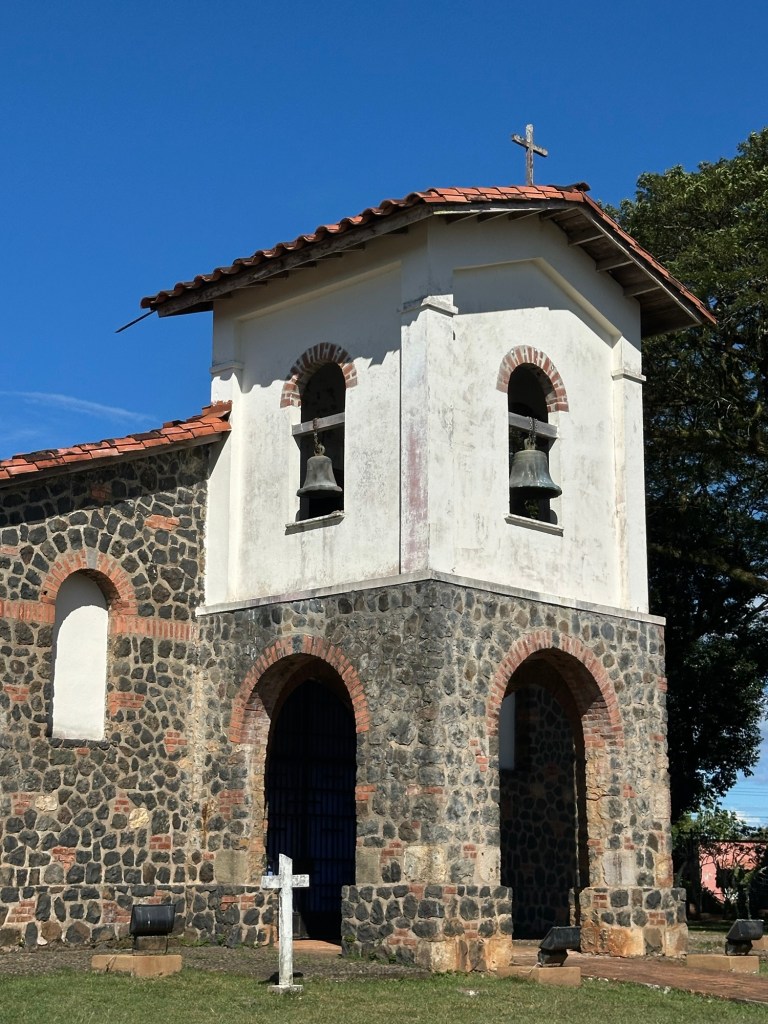
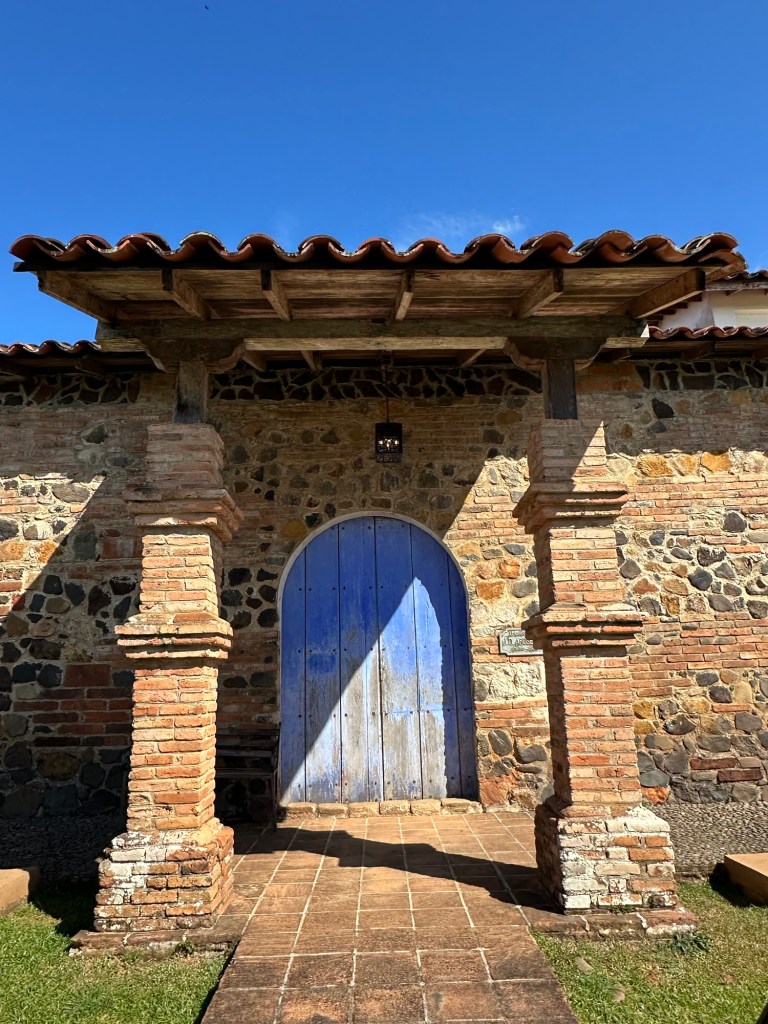
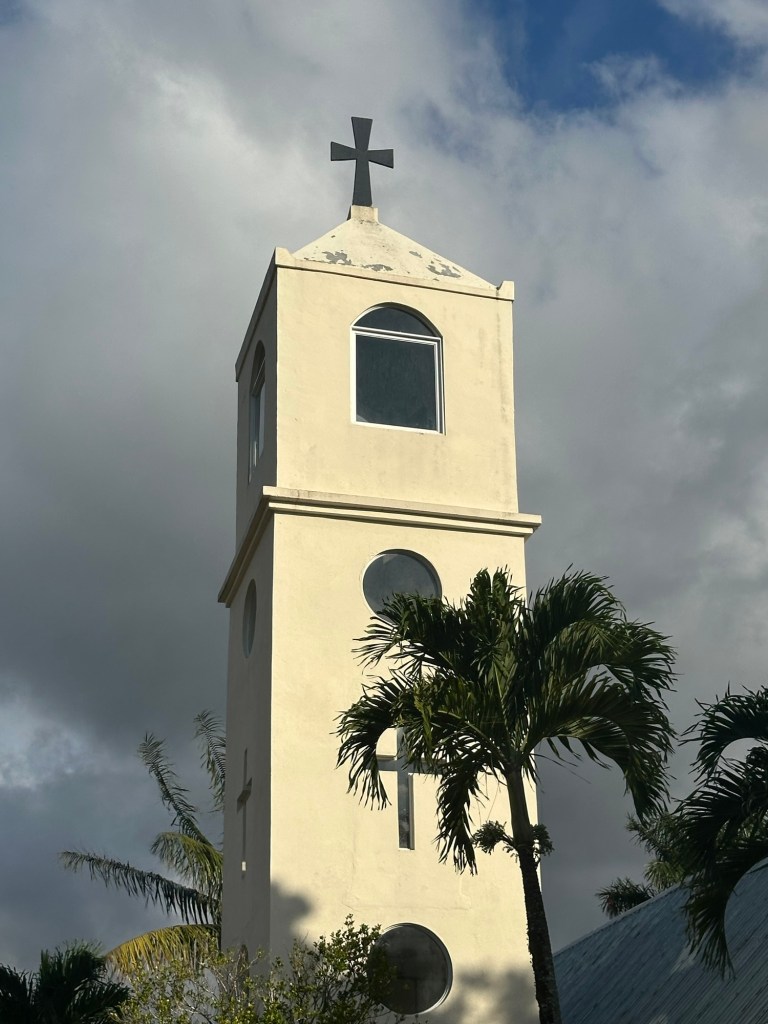
Iglesia Colonial de San Blas, Nicoya

I wandered back to the bus terminal at the allotted time and didn’t have to wait long for my bus. I was hoping to be able to see out of the bus for at least half of my two hour ride, but unfortunately, this bus had tinted windows obscuring much of the vista in the gathering dusk. Eventually, I was able to move up behind the driver, so at least could get a better view from the front. It was lovely watching the locals interact with one another and it seemed many were regulars who knew the driver. One thing I am noticing is the Costa Rican catchphrase of ‘Pura Vida’ is not used by the locals unless in the tourism industry. By now, I have travelled nearly all over the country and never heard a local use it once.

Ferry Terminal, Playa Naranja

It was well and truly dark when the bus arrived at the ferry terminal and parked up. I then had to wait another hour for the ferry’s departure, however, was able to board shortly after it arrived from Puentarenas. I found a seat on the top deck to gaze out at the distant lights and take advantage of fresh ocean breezes. An hour later we were in Puentarenas and I made my way to my accommodation for the night. It was late and I was well and truly ready for bed.

Liberia – Nicoya

I was up nice and early to catch my 7am bus. Unfortunately, coffee was a bit late getting started and I didn’t have enough time to grab one beforehand so it was an uncaffeinated start to the day. Still, I made my bus with plenty of time and got a seat right behind the driver for great views of the countryside.

Countryside Liberia

It was a two hour journey which wound its way past Liberia’s International Airport and continued on through primarily farming country. Small pueblos were scattered en route and the bus detoured through their streets to collect and drop off passengers. I didn’t take into account which side the sun would be on when boarding the bus and it burned down on me for most of the trip. I ended up putting my hat on to try eleviate the worst of it.

Playa Tamarindo, Tamarindo

We eventually reached Tamarindo, one of Costa Rico’s tourist hotspots. The only reason I decided to go there was that there was a national park I wanted to check out. I stayed in the bus as it drove through the centre of Tamarindo thinking it would terminate at a bus terminal or at best, a designated stop I could get information about on-going transport. Unfortunately, neither option availed and I ended up at the far end of Tamarindo in luxury condo land where no wild woman should wander. It was only about a kilometre back to the centre though so I trudged through the heat to find an ATM to cash up and a bakery to fuel up.

River Mouth, Rio Tamarindo

Then it was time to find a boat to take me for a tour of the Tamarindo Estuary, part of Parque Nacional Marino Las Baulas. I had got information from a local hombre to walk down to the river mouth and negotiate a tour directly with the boat captain. This I did but found it more than I was hoping to pay. After weighing up whether to cough up the coins or not, I came to the conclusion that I had come here just to see the estuary so might as well. Decision made, I returned to the boat and jumped on board.

Rio Tamarindo

The tide was low, as was the channel the boat had to pass through. It took a while but the skipper and his offsider managed to navigate into deeper water. Once past the sandy river mouth, the estuary was immediately lined with ancient mangrove forest. Interestingly, black mangroves grew on the east side of the estuary and red mangroves grew on the west. A myriad of coastal birds waded, flittered or soared, whilst below in the murky water, fish and crocodiles went about their daily business. On the mud banks, soldier crabs scuttled about.

Mangrove stands, Tamarindo Estuary

After puttering around for a while we stopped to check out a little patch of jungle for howler monkeys. As both the hombres got out of the boat in separate searches for the little beasties, I had to take my pack with me. I wasn’t overly keen on this part of the tour as I had already seen heaps of monkeys and would rather have spent the time on the estuary, but dutifully followed in tow to nil effect. The beasts had bolted and were nowhere in sight. I reassured my guide I wasn’t disappointed and we returned to the boat.

Boat and guide, Tamarindo Estuary

We puttered further on and found a crocodile swimming in the water. Said crocodile was eying off some soldier crabs on the mudbank so was dutifully still for a photo opportunity. We waited for a few minutes to see whether it would lurch out of the water for one of the crabs before eventually moving on. As soon as the boat motor started again, so did our crocodile and quickly disappeared under the swill.

Crocodile eying off soldier crabs, Tamarindo Estuary

Back at the river mouth, I farewelled my guides and walked back to the main road where I could get a bus onwards. I had an hour to wait so stopped for a cerveza next to the bus stop. At the appointed time, the bus lumbered up and I jumped on board. We rolled back up the hill on tightly winding roads and in and out of little pueblos where families were going about their daily life. Eventually we arrived at Santa Cruz where I planned to spend the night.

Fiesta Típicas Nacionales de la Santa Cruz

Santa Cruz had a most festive vibe about it which was confirmed by my bus driver who advised it was the Fiesta Típicas Nacionales de Santa Cruz, one of Costa Rica’s premier events of the year. Taking place deep in ranchero country, this Tican style country and western gathering is an extremely popular week long event drawing a huge crowd. My hopes of attending, however, were dashed by the bus driver stating I would have Buckley’s chance of finding any accommodation and would be best to press on to Nicoya. As I wandered through the throngs of locals, dressed in ranchero garb and dancing to the myriad of local ranchero bands playing on every corner, I was disappointed to have missed such an opportunity. Still, I got a taste of it before finding the bus terminal for Nicoya.

Parqué Central, Nicoya

Nicoya was only half an hour away and I got information about a reasonably priced hotel not too far away from where the bus terminated. Dumping my pack, I went out in such of food. On the other side of the Parque Central, I found a little food truck still open and perched myself down for some local fare. It would seem that some of the party vibes from Santa Cruz extended to Nicoya as the park was brightly and colourfully lit and ranchero music rang throughout. Locals mingled and it provided a pleasant backdrop to my dinner.

Liberia

My last day in Liberia was for going out to Parque Nacional Santa Rosa. Fuelled up with my regulatory coffee, I headed to the bus station. After a pleasant half hour bombing along the highway, I got dropped off at the park entrance. By now, it was searing hot and I was rethinking my decision to walk the 7kms to the area of the park I wanted to visit. I instead chose to get a lift with an Australian guy and his Finnish girlfriend who were driving to where I was heading.

Entrance, Parque Nacional Santa Rosa

This National park visit was for an entirely different purpose. Santa Rosa used to be a sprawling hacienda of cattle ranching and agriculture, before being turned into a national park in 1971 to protect the surrounding tracts of dry tropical forest. This hacienda, however, was not just any old hacienda. The hacienda casona was the site of three important historical battles which shaped the future for Costa Rica. Unfortunately, this overachieving homestead was burned down by arsonists in 2001 but was rebuilt due to its historical significance.

La Casona, Parque Nacional Santa Rosa

These days La Casona houses a museum dedicated to the most important of those three battles; the 1856 Battle of Santa Rosa. The 1850’s saw the rise of filibustering, which is basically trumped up US citizens deciding they would try take over a foreign country by way of military and political interference. The most famous of these was William Walker who had grandiose ideas of taking over Central America. He actually did manage to wheedle his way into power in Nicaragua which he then used as his base to try conquer the rest of the region.

Original stone corrals, Parque Nacional Santa Rosa

Costa Rica picked up on Walker’s dodgy deals and declared war on Nicaragua. The two sides met at the casona in 1856 and after a ‘blink and you miss it’ exchange of 14 mins, Walker’s army were sent limping back to Nicaragua. This was the beginning of the end for Walker as Costa Rica organised the other Central American countries to rise up against his regime and run him out of the region. Walker eventually got his comeuppance when the US government handed him over to the Hondurans for execution. Now he lies beneath Honduran soil for all eternity.

La Casona, Parque Nacional Santa Rosa

At the rear of the casona is a steep hill where a monument to the heroes of all three battles is situated. It is a lovely, peaceful place with views overlooking three of Costa Rica’s impressive volcanos. Sitting there in the shady serenity, it was hard to imagine at three times the casona just metres away was the site of intense battles. Hopefully, those days are now well and truly over as Costa Rica cherishes its peace and freedom from conflict.

Lookout at Monumento a los Héroes, Parque Nacional Santa Rosa

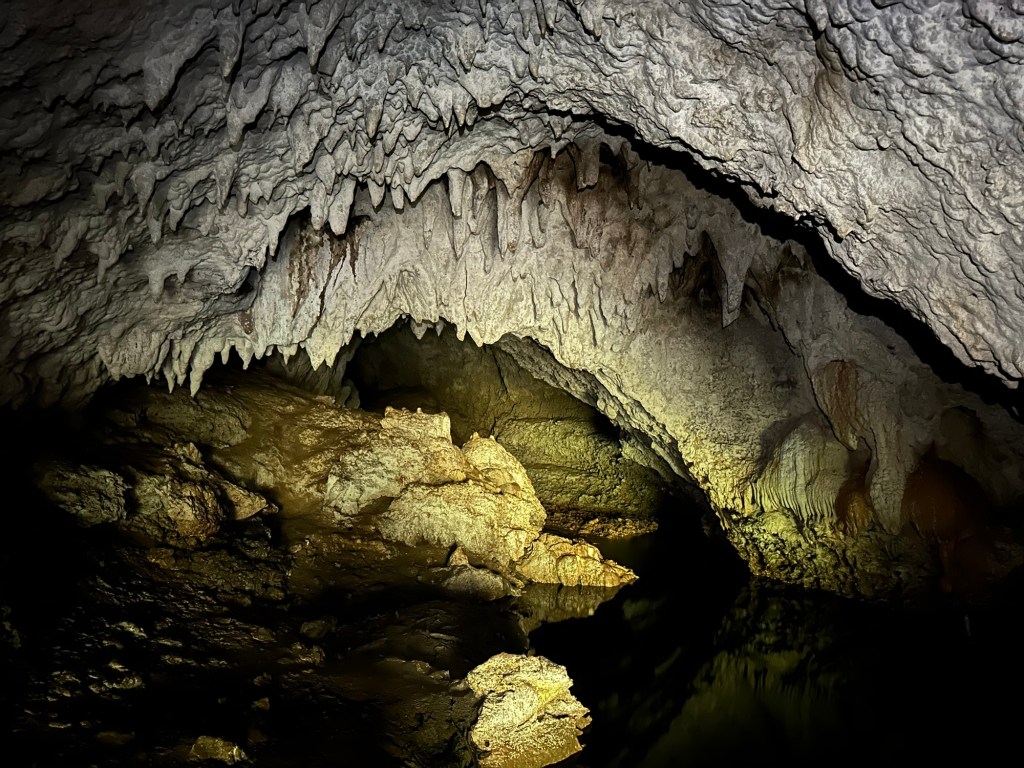
Down past the original stone corrals and cattle dipping station, I found the little Sendero Indio Desnudo. This short trail winds through the forest back to the main road with a natural trail branching off mid-way. I turned off onto this trail and followed it around. I heard the sound of something large moving in the bush and turned just in time to see a white-tailed deer disappearing into its depth. I had actually seen one of these majestic animals from the car on arrival into the park; startling it on a path. Continuing on, I found a small cave which of course I had to check out. It was small and low with hundreds of bats pouring out as I interrupted their slumber. Not wanting to disturb them any further, I backed out and left them in peace.

Small cave, Parque Nacional Santa Rosa

By now it started to cool down and I was happy to walk the 7kms back to the main road to await my bus. There was very little traffic on the road, so ample opportunity to spot all manner of birds and small mammals en-route. I also came across another deer who went crashing into the bush when detecting me.

Animal crossing sign, Parque Nacional Santa Rosa

About half way back to the road was the Mirador Tierras. This beautiful little lookout took in vast vistas of the surrounding countryside; now forested due to fire control, wind and animal seed distribution. It’s the second largest tract of dry, tropical forest in the world; surpassed only by Kakadu National Park in Australia.

Mirador Tierras, Parque Nacional Santa Rosa

It was dusk by the time I reached the highway and totally dark when my bus finally arrived 45 minutes later. Then it was a pleasant 30 minute ride back to Liberia for my last night there.

Liberia

I had booked a 7.15am shuttle up to Parque Nacional Rincón de la Vieja, but was told around 7am there wasn’t a bus running and if I wanted to go, I could take a taxi for USD40. I declined, thinking I would probably catch the bus up and then hitch out to the park. The Señora at the hostel, however, rang one of her friends, and arranged for him to pick me up from the hostel and take me up to Curubande, the closest village to the National park.

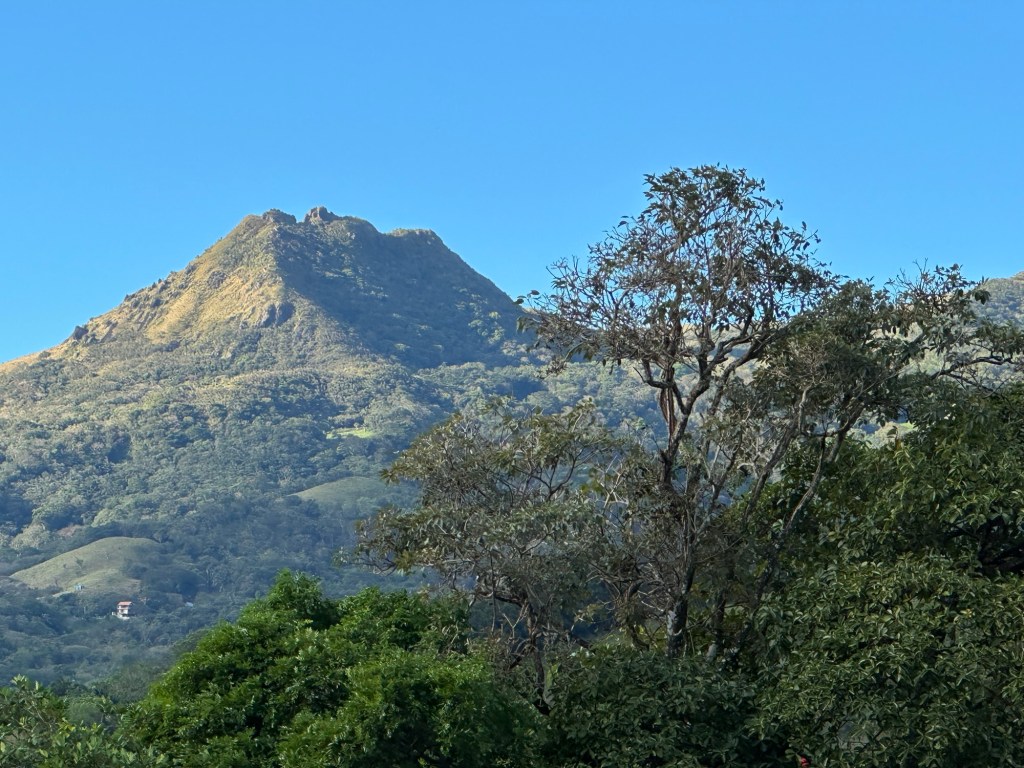
Volcán de la Viaja

Offe ran a tourist operation out of Curubande so was going up there as part of his working day. I squeezed in the back of the car with two of his tour guides and we made our way up the mountain. Once there, Offe told me his daughter was coming up to hike with a friend in the National Park and could give me a lift there. So I ended up getting all the way to the park for free, albeit somewhat later than planned.

Entrance, Parque Nacional Rincón de la Vieja

Parque Nacional Rincón de la Vieja has got a curious backstory. According to legend, in Pre-Columbian days, there was a powerful chieftain by the name of Curubande. He ruled his little part of the world and all was peachy. But then his daughter, Princess Curabanda, had the audacity to fall in love with a warrior from a rival tribe. This did not go down well with her Pa who decided to intervene. He tricked Mixcoac, the princess’s beau, into attending a party, got him pissed and threw him into the volcano. Problem solved. However, Princess Curabanda didn’t take it so well and took herself up to the volcano summit to await the arrival of her baby – one can only assume the romance had taken on a more carnal route than anyone realised. Once born, Princess Curabanda ‘reunited’ her son with his father by throwing the infant into the boiling lava. She then spent her remaining days in the nearby jungle, mourning her beloved.

Mini volcanic mud-pots, Parque Nacional Rincón de la Vieja

These days, the crater is off-limits to the public for safety reasons, but one can do a 3.5km loop further down the slope which goes past areas of high volcanic activity. After a short walk from the park entrance through picturesque rainforest, resplendent with spider monkeys and multi-hued birds, the trail spits you out onto a barren plateau covered with active volcanic mud pots and remnant volcanic debris. You follow the trail around to a volcanic lake, more mud-pots and then to a large, extremely active volcanic mud-pot resembling boiling gruel, and a very impressive fumarole.

Volcanic mud-pot, Parque Nacional Rincón de la Vieja

The trail then continues through rainforest to a volcancito (little volcano) and some impressive fumaroles. Steam can then be seen rising through the jungle here and there from the trail until you reach a section of fumaroles and a volcanic steam fed spring. The sheer power of this volcanic energy was evident everywhere, as were the volcano evacuation signs should your visit go pear-shaped.

Volcanic steam fed spring, Parque Nacional Rincón de la Vieja

The trail continued on through rainforest back to the start. I was hoping to hike out to one of the waterfalls, but was disappointed to find they closed those trails at 1pm. As I had planned to spend the day in the park, I decided to walk the 11kms back to Curubande.

Evacuation sign, Parque Nacional Rincón de la Vieja

The road back down to the village was primarily rainforest with some plantation in patches. Fortunately, there wasn’t a lot of traffic so I could just enjoy the ambiance and not have to worry about dodging traffic on the narrow roads. I passed the two geothermal plants which combined with other geothermal plants in the region provide neatly 14% of Costa Rica’s energy needs. There is an ecological debate over this ‘free’ energy in that all the volcanos are in National Parks and National Parks cannot be exploited for commercial gain. It’s an argument that needs careful consideration as Costa Rica moves forward in its efforts to become carbon neutral by 2050.

Parque Nacional Rincón de la Vieja

I was two kms shy of my destination when an SUV pulled up and asked me where I was going. When I told the hombre, he told me he was heading that way and to hop in. I gratefully took up the offer and was able to return to Liberia in air conditioned comfort. Leo dropped me off at what he referred to as ‘American Corner’, an intersection where all the American fast food chains had restaurants. It was close by to my hostel so I only had a short walk back.

Bijagua – Liberia

Breakfast was included in this hostel and since I was the only one there, I was treated like royalty. A large plate of fresh fruit, scrambled eggs and toast, and lashings of good quality coffee all hit the mark. All served on the terrace adjacent an immaculately maintained garden. The señora had put out some fruit scraps which attracted two little squirrels and a multitude of brightly coloured birds. It was a very pleasant way to start the day.
Rio Celeste Backpackers, Bijagua

I got directions to the bus stop and waited for the bus back to Canas. From there, I needed to catch a bus to Liberia, one of the major Costa Rican cities. I could use Liberia as a base to visit another two national parks as it was cheaper and easier than going somewhere else closer to both. The Liberian bound bus wound its way through the suburban streets for a while, before hitting the Pan-American Highway and then bombing along before reaching Liberia.

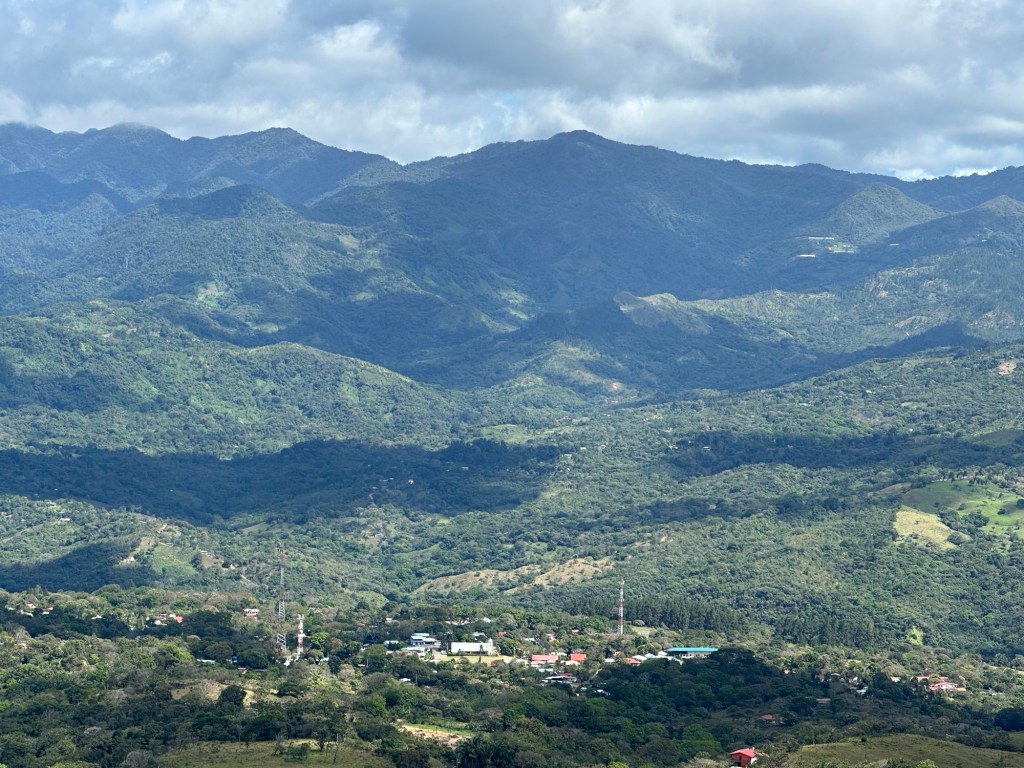
View to the mountains, Bijagua

I found a hostel and checked in. Then I had a very important question to ask. Midway through these trips I need to find a half-way decent hairdresser to touch up my roots. I used to dread the potential outcome but am much more chill about it now. I mean, the worst that could happen is my hair all falls out… The señora gave me directions to a hairdresser at the local market, however, I think she missed the brief of a ‘good hairdresser’. I punched hairdressers into Google Maps and found a nearby salon with a good rating. I showed her this and she confirmed it was a ‘very good salon’. Thus satisfied, I headed out.
Hostel Pura Vida, Liberia

Sirius Salon and Spa was just what I expected – a small salon trying to impersonate a quality hair salon. everything was shabby and the small quantity of product was behind lock and key. My stylist, Leo, was lovely though and after explaining what I wanted, left it in his hands and waited to see what transpired. What did transpire was a quality job with a price tag to match. I paid about what I would back home, but at least I could tick that job off until I got home again.

Liberia Streetscape

By the time I had finished, the day nearly was as well so I sought out cerveza and something to eat. A fairly chill afternoon in downtown Liberia but I had plans for a much more active day tomorrow.

Tilaran – Bijagua

I had found out what time the bus left in the morning when I arrived in Tilaran the night before so I wasn’t spending a whole day there waiting. After grabbing a take away coffee and something to eat from a nearby bakery, I headed back to the bus terminal. I had to catch a bus to Cañas and then another one to Bijagua which was the closest town to the National Park I wanted to visit. This time I was finally on top of how to use the Costa Rican public transport system with any degree of certainty by checking timetables and asking staff at each stop. By now I had completely discarded any of the recommended on-line platforms as being either too inaccurate and/or unreliable.

Cañas Bus Terminal

The journey to Canas went through pretty countryside and tiny villages. All the while with the volcanic range looming in the distance. I kept an eye open for the hostel I had booked into but couldn’t see any signs. I got dropped off in the centre of town and walked back to where Google Maps said it should be. Nothing. After walking back and forth, a señora from a casa waved me over just as I was heading over to ask her if she knew where the hostel was. It turned out they were doing some renovating so took the sign down. I would have thought it prudent to at least replace it with a temporary one, but at least I had found my digs for the night. I dumped my pack and organised transport up to Parque Nacional Volcán Tenorio.

Entrance, Parque Nacional Volcán Tenorio

Parque Nacional Volcón Tenorio is a 189 square km reserve with Volcán Tenorio the big guy of the park. You can’t climb the volcano as it’s too dangerous, but you can see the beautiful Rio Celeste which winds it’s way around it. And of course, that magnificent rainforest the area is known for. There is a 5km hiking trail which takes in some of the best bits which of course I was keen to tackle.

Trail entrance to Catarata de Rio Celeste, Parque Nacional Volcán Tenorio

I was expecting the park to be overrun with tourists but the first section to the waterfall actually wasn’t that bad. There were tour groups but it wasn’t as crowded as what I had experienced in other parks at times. The walk to the waterfall was on a well maintained hard track and a fairly comfortable meander. When you got to the entrance to the waterfall though, it became a whole other story. Steep steps and many of them led down into the valley below. But the effort was totally worth it when you clapped eyes on the Catarata de Rio Celeste – a 30m torrent of pure white crashing into an aquamarine pool below.

Catarata de Rio Celeste, Parque Nacional Volcán Tenorio

It was fortunate there was lots to admire and take photos of as lots of stops were required on the slog of a hike back up the valley. This was the point that the tour groups (and most people) turned back so I had opportunity for a more tranquil hike checking out more of the park’s charms. The trail leading off the main path was natural so more challenging in sections with one needing to scramble over tree roots and boulders in places. It followed the Rio Celeste upstream past beautiful blue lagoons including one which had volcanic activity in a corner; the water burbling away from the thermal gases below.

Thermal activity in Rio Celeste, Parque Nacional Volcán Tenorio

The vivid blue of the water is actually an optical illusion caused by the convergence of two rivers containing different minerals and ph levels. The result is a scattering of sunlight off suspended particles in the river which our eyes (and camera lens) register as bright blue. It truly is a surreal image. The blue is deeper the closer you get to the source and gradually fades along a 14km section of the river.

Rio Celeste, Parque Nacional Volcán Tenorio

I was now close to the source and the blue was so intense as to seem unworldly. Fringed by lush, tropical rainforest it was certainly a sight to behold. I continued on along a muddy track, crossing two small bridge, following this mysterious river all the time. At the end of the trail was the point called El Teñidoro – The Dyer. This was where the Rio Buena Vista and Quebrada Agria converge to form the Rio Celeste. It really does look like someone has poured dye into the river and the ‘mixing’ effect is most surreal.

El Teñidoro, Parque Nacional Volcán Tenorio

By this stage of the day it was starting to get late and I wasn’t surprised to see a park ranger ambling up to the trail end. There were three South American girls recording sounds for a podcast as well as myself and I thought the ranger was rounding us up to vacate the park. It turned out not the fact and Cecilia, the Park Ranger, ended up giving us a private tour and some entertaining stories as she accompanied us back towards the entrance. She showed us a tiny, but deadly, viper curled up sleeping on a palm leaf just off the track. These incredible creatures are so well camouflaged it is difficult to spot them. We also saw toucans and many other birds along the way.

Viper, Parque Nacional Volcán Tenorio

It was nearly dark when we got back to the park entrance and the previously bustling carpark and surrounding restaurants and stalls were ghostly quiet. I had caught a taxi up to the park as I didn’t have a lot of time to get there before they stopped people entering in the early afternoon. I was considering hitchhiking back but was out much later than expected. Cecilia was going to call a taxi for me but the South American girls offered to take me into Bijagua even though they were going in the opposite direction. I chatted with them on the way back down the mountain and found out two of them produce a soundscape podcast. They were lovely girls and had very interesting stories. I got them to drop me off in town as I was planning on finding somewhere to have a meal before returning to my hostel. This time at least I knew where that was.

Santa Elena – Tilaran

Up for another tasty breakfast before checking out of my hostel. I had asked the night before where to catch a bus to Tilaran as I needed to transit through there on my way to my next port of call. I found a bus stop where the señorita had indicated but with no idea of bus timetables, I stopped to ask at the restaurant across the road from it. The señora I spoke to didn’t know, but asked a co-worker who told me there were only two services a day – 6am and 4pm. As I had well and truly missed the 6am bus, I had six hours to fill in before the afternoon option.

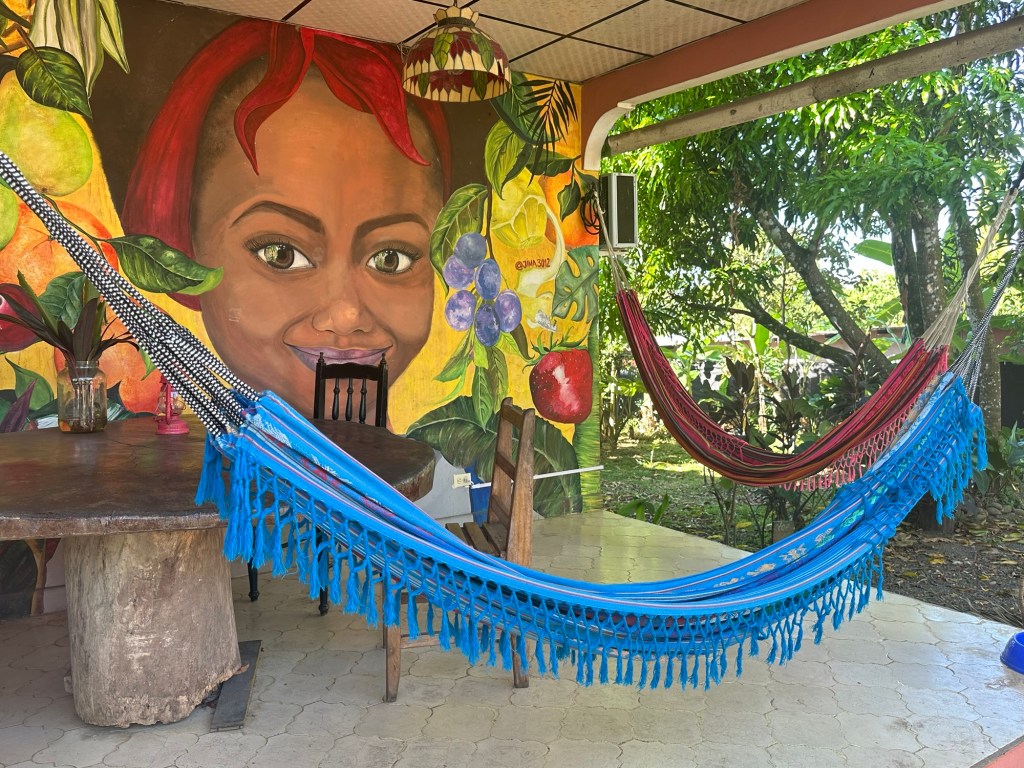
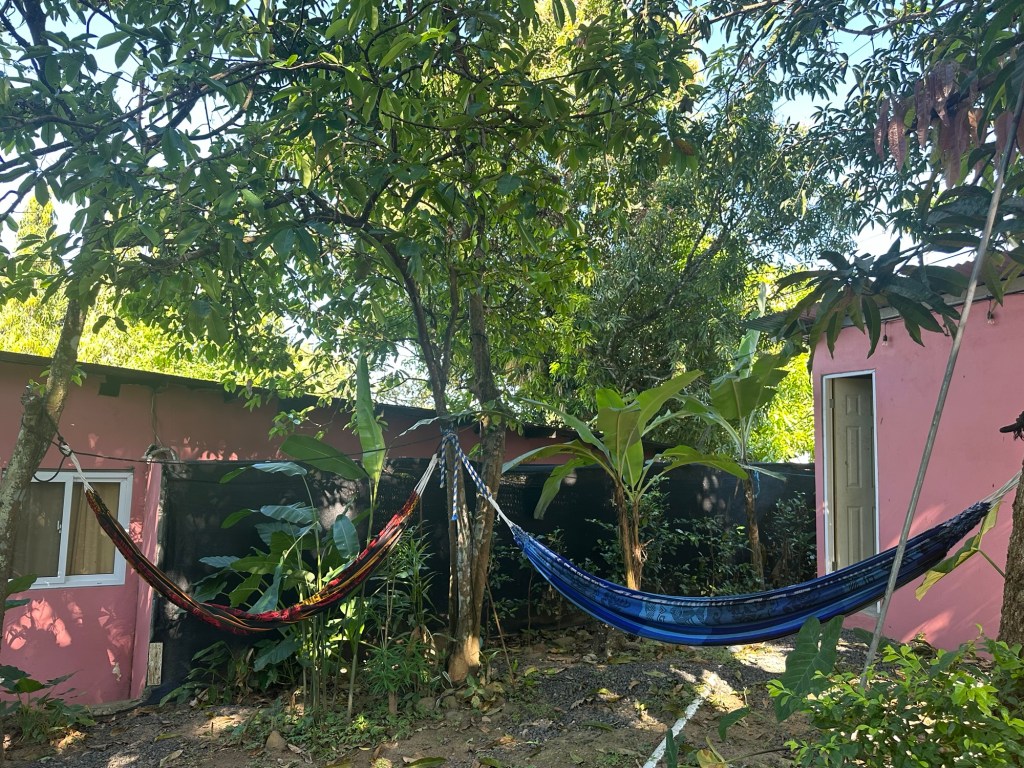
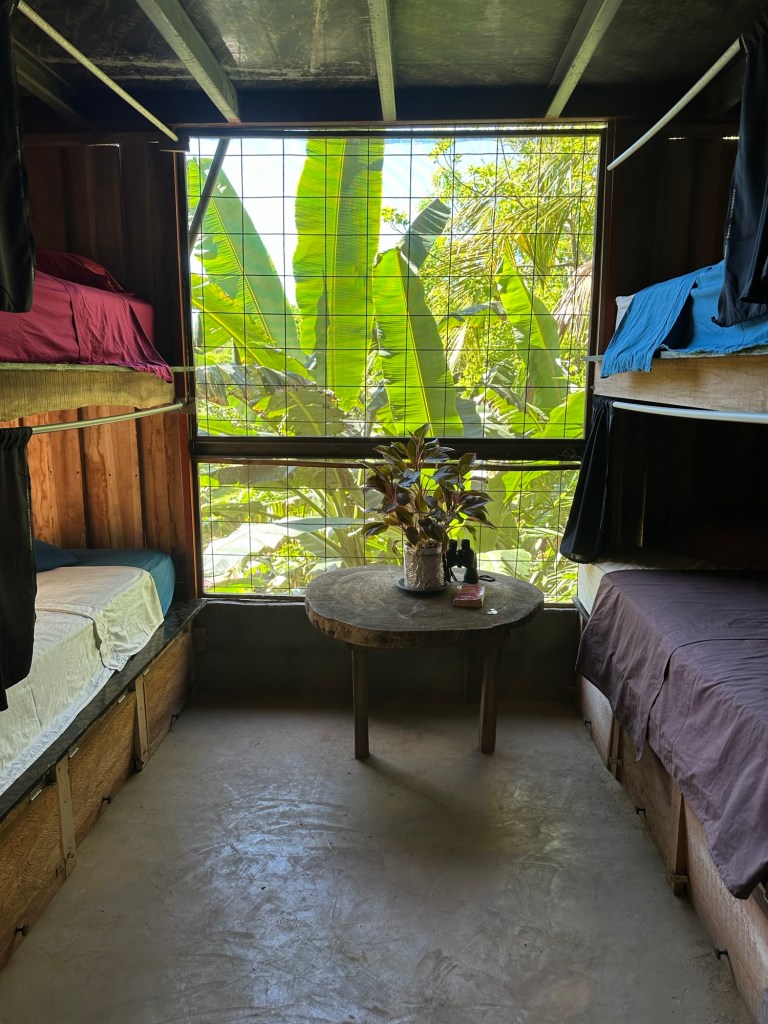
Casa Tranquilo Hostel

I decided to stop at a lovely little cafe for coffee while I weighed up my options. I looked in the guidebook to see if there was anything in there I might want to check out and found there was a bat refuge and education centre about 2.5kms out of town. Finding it on Google Maps, I also noticed there was a lookout and waterfall en-route. That was enough to keep me busy until my bus left. Decision made, I set off.

Sloth sculpture, Santa Elena

Santa Elena is situated in the mountains and anywhere you walk involves extremes of inclines and declines with the occasional ‘flattish’ section to catch your breathe. Add in heat, humidity and altitude, and walking is not a fast affair. But the slow pace of travel allows one to see what would otherwise be missed. While stopping to take a photo of the landscape, I spotted a little squirrel darting up and down some small trees. He was way too quick and far away to be able to catch on my phone camera so I had to be content with just watching his antics.

Lookout, Monteverde

The lookout indicated on Google Maps was most definitely a wow factor. Popping up a steep incline, the road traversed around a wide valley which opened up to spectacular views below and beyond. The road crossed the main watercourse for the valley and continued around to where ‘The Bat Jungle’ was situated.

The Bat Jungle, Monteverde

‘The Bat Jungle’ is a rehabilitation and refuge centre dealing solely with bats. It has a small educational museum and a larger bat enclosure. Unfortunately, when I got there the power was out and the guided tour didn’t go ahead. Still, it was interesting and I was happy to support a grassroots conservation project.

Catarata Los Murciélagos, Monteverde

Coincidentally, the waterfall across the road was called the Waterfall of the Bats. I had to check it out! After paying the admission fee, I walked down the steep steps that led down into the valley to the little river. Following it around a bend, the cascade thundered into a small pool. This was the same watercourse I had passed on the road. I spent some time just chilling and enjoying the ambiance before turning back to tackle the trail back to the top.

Trail Catarata Los Murciélagos, Monteverde

Then it was back to Santa Elena to wait for my bus. I had about half an hour to spare so grabbed something to eat and a beer in a nearby restaurant, then walked back up to the bus stop. After a short while, a señora came along to wait as well and I was able to confirm where to wait and approximate time the bus would arrive.

Santa Elena

If the great Costa Rican coffee doesn’t jolt you awake, then a ride at the back of one of its buses will. These old jalopies are not known for their comfort value but are a great way to experience authentic Costa Rica. As the bus ground it’s way through its gears and out through the valleys, it was best to hang on as it flung itself around the sharp mountain corners. Eventually the dusk permeated the vista and darkness prevailed. We arrived in Tilaran shortly afterwards where I decided to stay the night and continue on the next morning. I found a cheap hotel close to the bus terminal where I could get away early the next day.

Santa Elena

This great little hostel had breakfast included, so I was able to tuck into fresh fruit, omelette and coffee prior to starting my day trekking though the Santa Elena Cloud Forest Reserve. I was hoping to be able to take a public bus out to the reserve, but the only option I had was by shuttle bus. Still it was cheap and convenient so I didn’t mind too much.

Santa Elena

The shuttle picked me up from outside my hostel and after picking up another few people, we drove out to the reserve. The region around Santa Elena is extremely hilly and our van slowly wound its way up, down and around the poor roads. It was remarkable to see all the private reserves, adventure parks and properties offering a myriad of tours along our route. It would seem that large swathes of Costa Rica are being developed for the tourism market; although in the main, they are maintaining the rainforest.

Reserva Bosque Nuboso Santa Elena

Arriving at the reserve, we had to patiently wait our turn for a briefing from staff in the information centre. The trails were explained as were the conditions of entry. We had to take a photo of the map as no maps were provided. Reserva Bosque Nuboso Santa Elena (Santa Elena Cloud Reserve) is a community administered reserve of some 310 hectares with 13kms of trails winding their way through a portion of the park. This is not as popular as the tourist encrusted Reserva Bosque Nubosa Monteverde down the road which meant for a quieter, more tranquil experience.

Sendero Encanta Trail, Reserva Bosque Nuboso Santa Elena

I decided to start with the ‘Sendero Encantado’, a 3.5km circuit, so headed to the trailhead. I followed a neat concrete pathway which led to the trailhead and was pleased to find a more traditional single-file dirt track leading off. The trail wound its way down into the valley, crossing little bridges here and there. I only came across a few other people the whole time on the trail so could really enjoy the solitude and ambiance of this high elevation forest. Surprisingly, the only sound you could hear was a faint humming of insects and the constant slow drip of water permeating every inch of the forest. I was expecting to hear birds, but only saw the occasional one flitting through the forest. And yet if you looked closely, life was abundant.

Tarantula, Reserva Bosque Nuboso Santa Elena

Back at the park entrance, I decided to stop for coffee at the the little cafe there before continuing on to complete a loop which would take in the remaining trails. Sipping my coffee on the cafe verandah, I watched a myriad of birds flit in and out of the forest which lay just on the other side.

Which trail to take? Reserva Bosque Nuboso Santa Elena

Heading back out, I was stopped by debris coming down from high in the forest canopy. Looking up, I could see the source of the destruction; a small troop of Capuchin monkeys were devouring the hearts of epiphytes and discarding the rest onto the track oblivious to consequence. I watched their antics for a few minutes before making my way to the start of my next circuit.

Reserva Bosque Nuboso Santa Elena

The second circuit I planned on completing took in the rest of the trails, totalling about 10kms. I started on the easy, concreted ‘Mundo Joven (Child’s World)’ trail, before veering off onto the start of the ‘Youth Challenge’ trail. This was more of a traditional dirt trail and gradually wound its way along the side of a hill before starting to ascend. At the point at which it turned to complete its loop, I continued straight ahead on the ‘Del Bajo (low)’ trail until it too turned north. Then it was on the most challenging of the five trails – ‘Canó Negro (Black River)’.

Trail intersection, Reserva Bosque Nuboso Santa Elena

This trail, being the longest and most challenging one, had very few people on it. Some rudimentary track hardening by way of wooden blocks and planks and concrete filled sacks prevented you from sinking into the mud in places. Other places required you to step up or down steep steps either carved out of the mud and reinforced with timber or climbing down a cascade of tree roots. The trail ascended again and led to a lookout of magnificent proportions. Overlooking the mountains and a nearby volcano, the low cloud cover threatened to obscure the vista.

Lookout, Reserva Bosque Nuboso Santa Elena

This was where the trail became its most challenging as it wound its way up and down various little valleys. All the time, you could hear the sound of water crashing down some distant cascade, interrupting the gentle dripping soundscape. After a series of small bridges, the trail began to climb again out of the valley.

Water droplets, Reserva Bosque Nuboso Santa Elena

I eventually reached the end point of this trail and retraced my steps along the first trail I walked to get to the other end of the ‘Del Bajo’ trail. I quickly worked out that they had set this trail to be walked in the suggested direction so as to be all downhill. Unfortunately, I hadn’t looked at the contour gradients on the map before deciding which way to go and so faced a long, slow slog up the hill in the heat and humidity. It was a pretty trail though and I did enjoy it, but was well and truly glad when it ended.

Youth Challenge Trail, Reserva Bosque Nuboso Santa Elena

Back on the ‘Youth Challenge’ trail, the pain subsisted as the trail continued climbing to reach the highest point in the reserve. At 1725m, I was then on the downhill run. Quite literally as by now it was getting close to when I needed to catch the last bus back to Santa Elena. Unsure of the terrain between me and the reserve entrance, I decided to jog a little along the easy decline. I decided I had time to climb the observation tower en-route and was glad I did. The views were spectacular and the encroaching clouds made for magnificent and mystical viewing. After a few quick photos, it was back down and powering back to the visitor centre.

Encroaching cloud cover, lookout Reserva Bosque Nuboso Santa Elena

I made it back in time for the transport shuttle, happy I had managed to walk all 13.5kms of trail. Back in town, I got dropped off in the centre to find somewhere for an early dinner and a couple of bevies. It had been a long day and I was looking forward to a hot shower and an early night.

La Fortuna – Santa Elena

Checking out of my hostel (again…), I waited to be collected for the first part of my tour/transfer to Santa Elena. I was expecting a small mini-van as the transfer was referred to as jeep/boat/jeep, but a large van turned up and started filling before finally leaving La Fortuna. We drove back up through the hills, crossing the Laguna de Arenal dam wall. This dam provides sufficient hydroelectricity to generate around 13% of Costa Rica’s energy needs. Pretty and practical. We continued around the edge of the dam a bit longer before pulling into a rutted dirt road which lead down to the water. There waiting, were several passenger boats.

Laguna de Arenal

Other buses were already disgorging their passengers onto the boats and we followed suit. Our luggage was hauled off the van and placed in the front of the boat. And then we were off. And then it started to rain. And rain. And rain. The plastic screens of one side were rolled down, effectively blocking any views in that direction. Then, the lake became shrouded in mist masking any views at all. Still it was lovely being in the water and watching the ghostly vista pass by.

Laguna de Arenal

The lake was much larger than I was expecting and it took us nearly half an hour to cruise to the end where awaiting vans were lined up. We had all been given a number on a yellow sticky note indicating which bus we needed to take on the other side. I was in van number 8, along with several of the other travellers I had been chatting to en route. Once all aboard, our van lumbered up the dirt road heading towards out final destination.

Laguna de Arenal

The roads on this side of Laguna de Arenal are less than desirable; being heavily potholed compacted dirt and roadbase. Moreover, they are narrow and winding which makes for interesting traversing for larger vehicles. Our driver was well versed in handling the conditions though and we had a comfortable ride. I sat up the front and took advantage of unencumbered views of the picturesque countryside. And picturesque it was. Everywhere was lush and verdant, with little casas neatly nestled in the hilly terrain. We were gaining altitude and a misty cloud cover came to greet us.

Casa Tranquilo Hostel

After a short rest stop at a roadside cafe, we eventually arrived in Santa Elena. I was dropped off at my hostel and checked in before dumping my pack and going off for an explore of this sweet little tourist town.

La Fortuna – La Fortuna

It was time to leave my little hostel in La Fortuna and move on. I had booked a couple of nights in Monteverde the previous night and worked out how to get there by local bus using an app that had been recommended to me by several locals. it was going to take about four hours and three buses to get there so I left in plenty of time to arrive mid afternoon.

La Fortuna

This was the first time I had used the app and I spent a bit of time working it out. It was a bit clunky until you upgraded to get rid of the ads and open up some of the more useful functionality. And then it was brilliant, offering everything you could possibly want in a public transport app. I climbed aboard my bus and settled into a hassle-free first leg of my journey. The app followed our route and even notified me to get off at the next stop. I was most impressed.

La Fortuna countyside

At the bus terminal in Guatuso, I consulted my new best friend who gave me details of how to get to the bus terminal for my second bus. I dutifully followed directions. And found nothing. I asked a girl in a roadside kiosk. She told me there was only one bus terminal and that was the one I just came from. She didn’t know about the bus I was wanting. I asked an older couple at a bus stop and they gave me the same information. I returned to the bus terminal and asked the couple of locals waiting for a bus who promptly told me there was no bus to Tileran from Guatuso and I would need to return to La Fortuna to take a bus from there. I showed them my app which was counting down the time to my bus’s arrival, but they could give me no answers.

La Fortuna countryside

The time for arrival came and went and the app started counting down the time to the next service in an hour’s time. Still no bus. I scanned the road I was supposed to standing on but no bus trundled along there either. Eventually, a bus arrived heading to La Fortuna and I asked the driver. He confirmed what everyone had already told me. The service on my app just didn’t exist. My only option was to return to La Fortuna and try again. Despondently, I climbed aboard and sat down.

Inglesa La Fortuna

By the time I returned to La Fortuna it would have been too late to try again so I weighed up my options. I could try again by public bus in the morning, I could take a tourist shuttle (which I detest doing unless I absolutely have to), or I could book a transfer which took you to Lago de Arenal to board an awaiting boat for a scenic crossing. Then it was back on a bus to your accommodation. I decided on the latter option as it was something I had considered doing and was a much safer option than catching public transport again. I had already spent enough time in La Fortuna and needed to move on. Regardless, I needed to organise a bed for the night in La Fortuna and let the hostel in Monteverde know I would be a day late. As we went in and out of mobile coverage I managed to secure a bed back at Rio Danta Hostel again.

Volcán Arenal

As we pulled up again at La Fortuna, I got another message on my phone from the bus app letting me know my bus from Guatuso to Tileran was arriving soon. My response was to promptly delete the app. As I walked into the Main Street, I looked up at to see probably the clearest view of Volcón Arenal I had seen the whole time I was there. It had shrugged off its misty shroud and looked for all intent and purpose to be mocking me. Well, I suppose it does have a mischievous history. I looked away and began my walk back to the hostel.