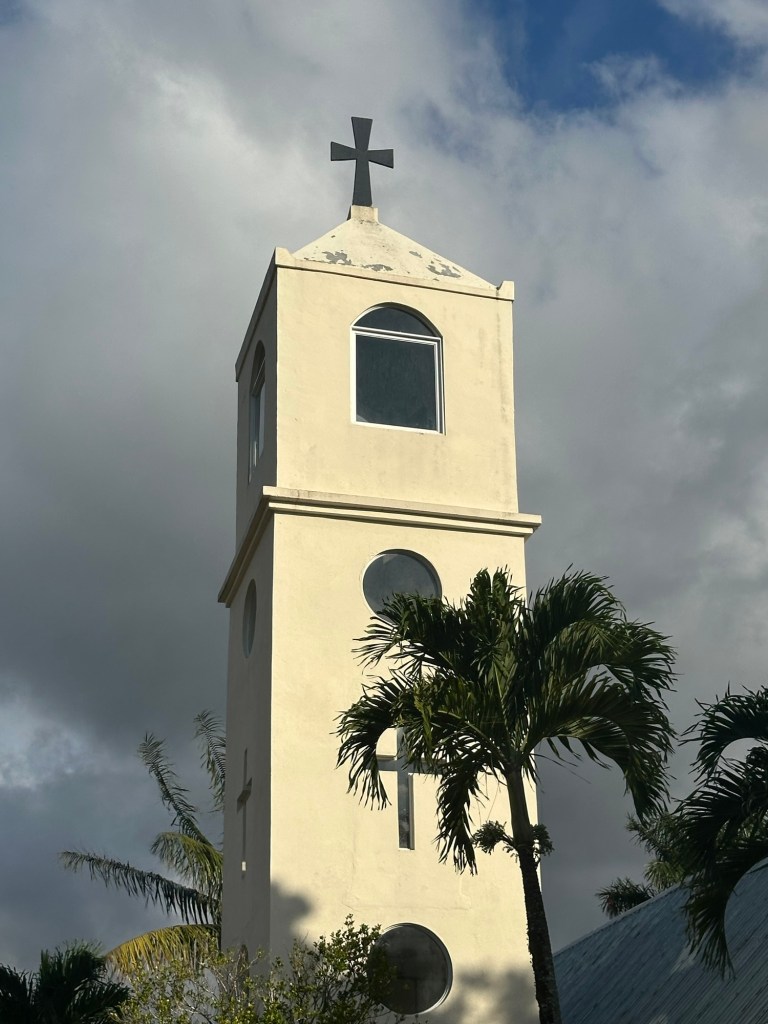
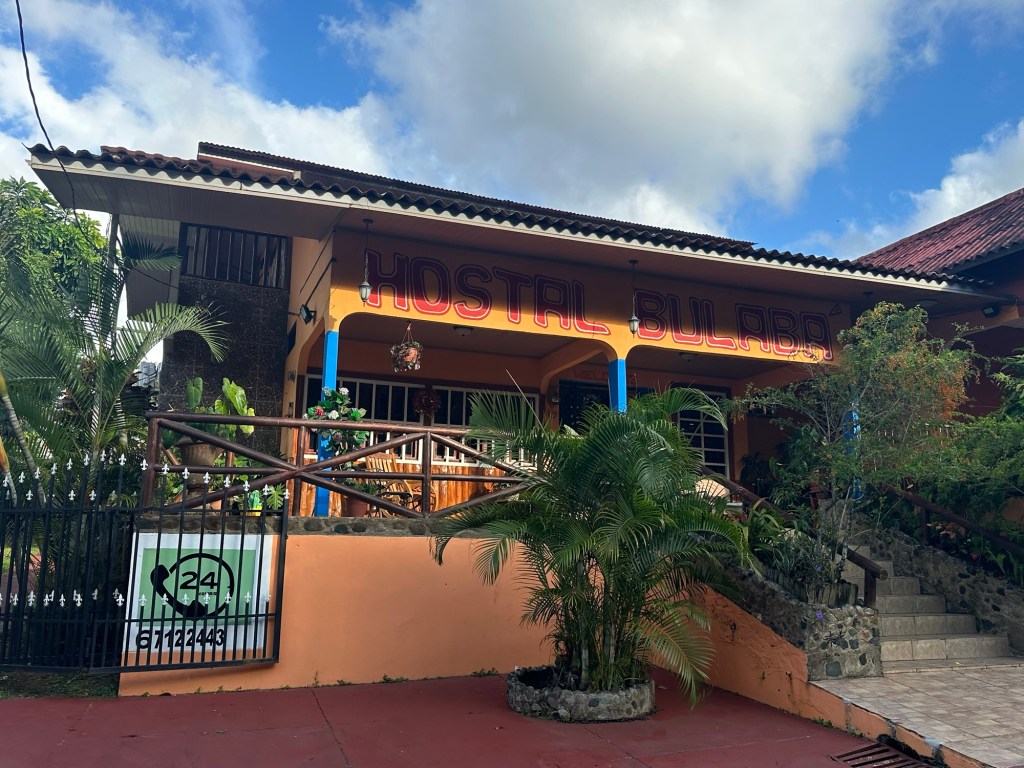
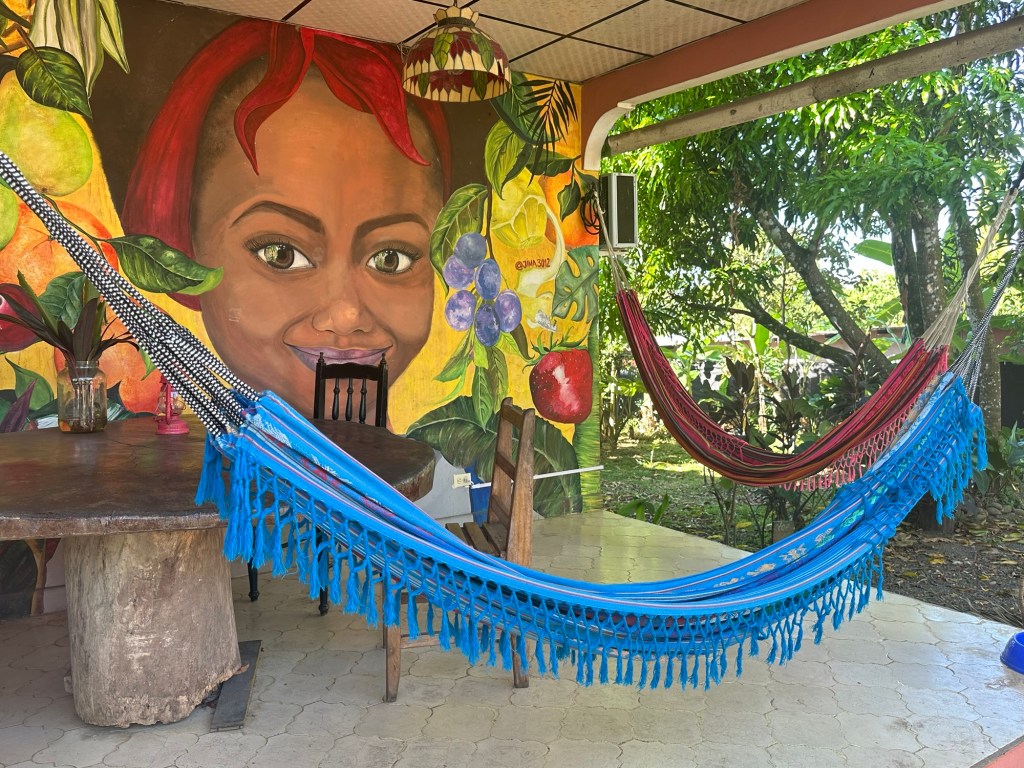
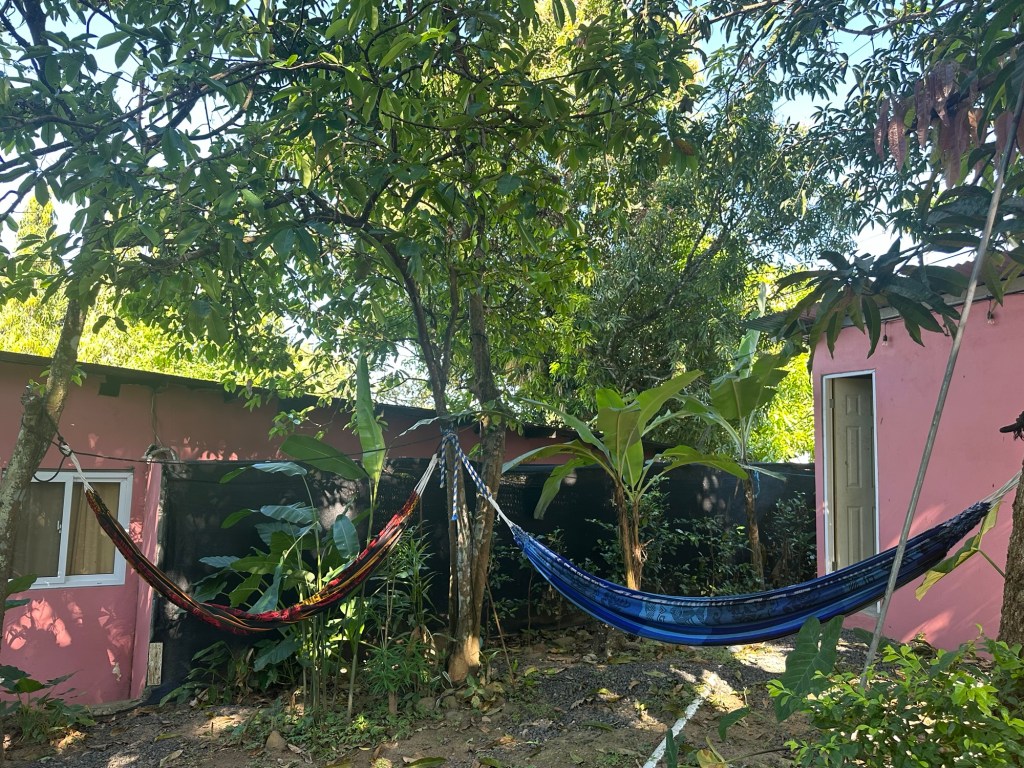
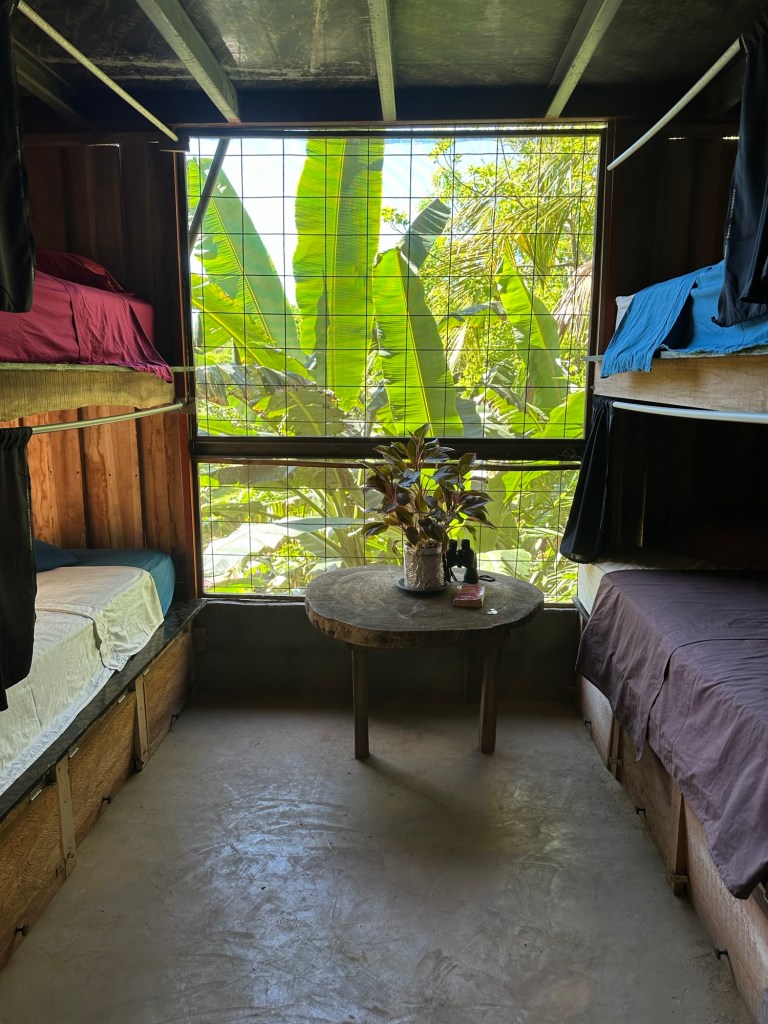
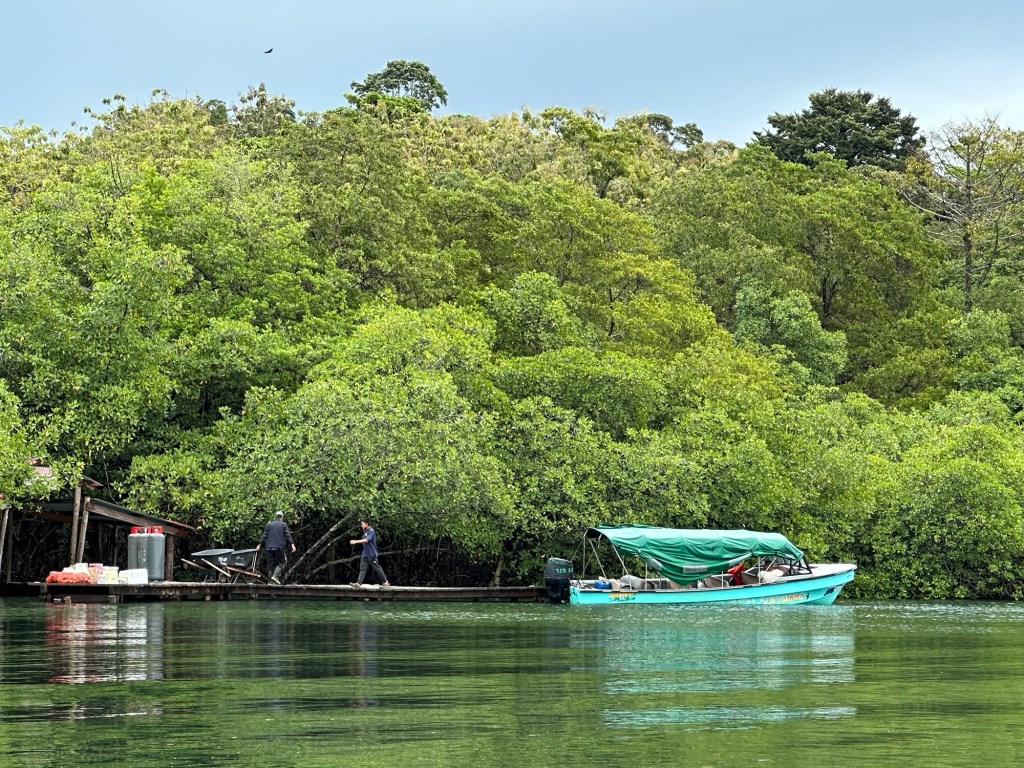
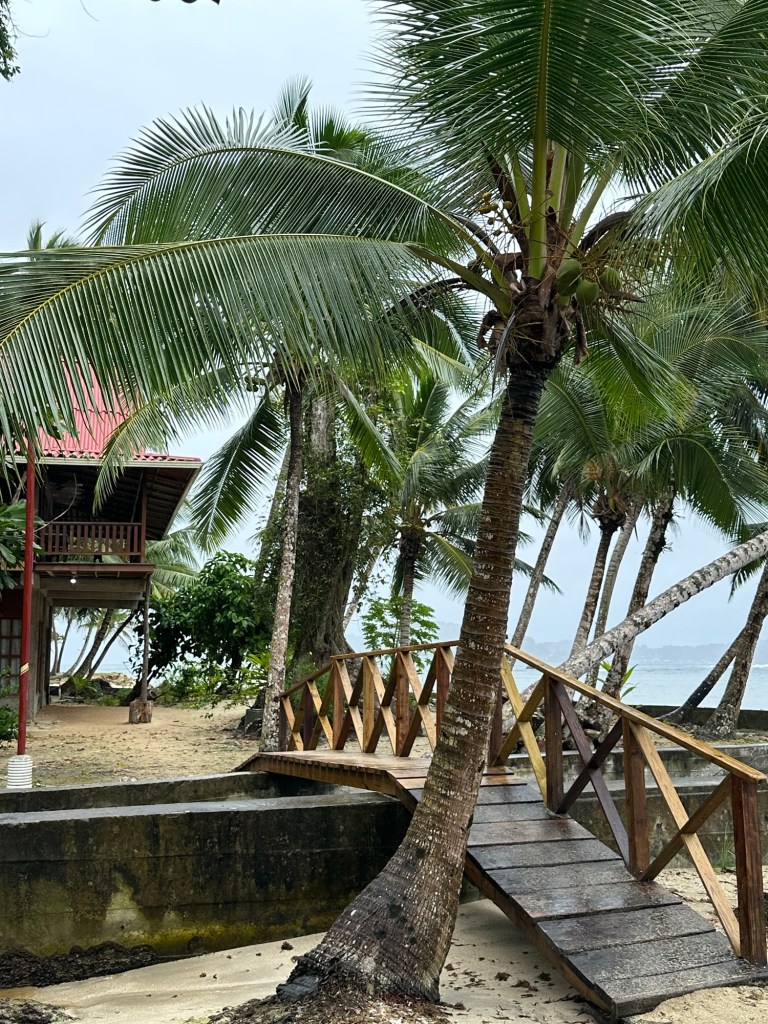
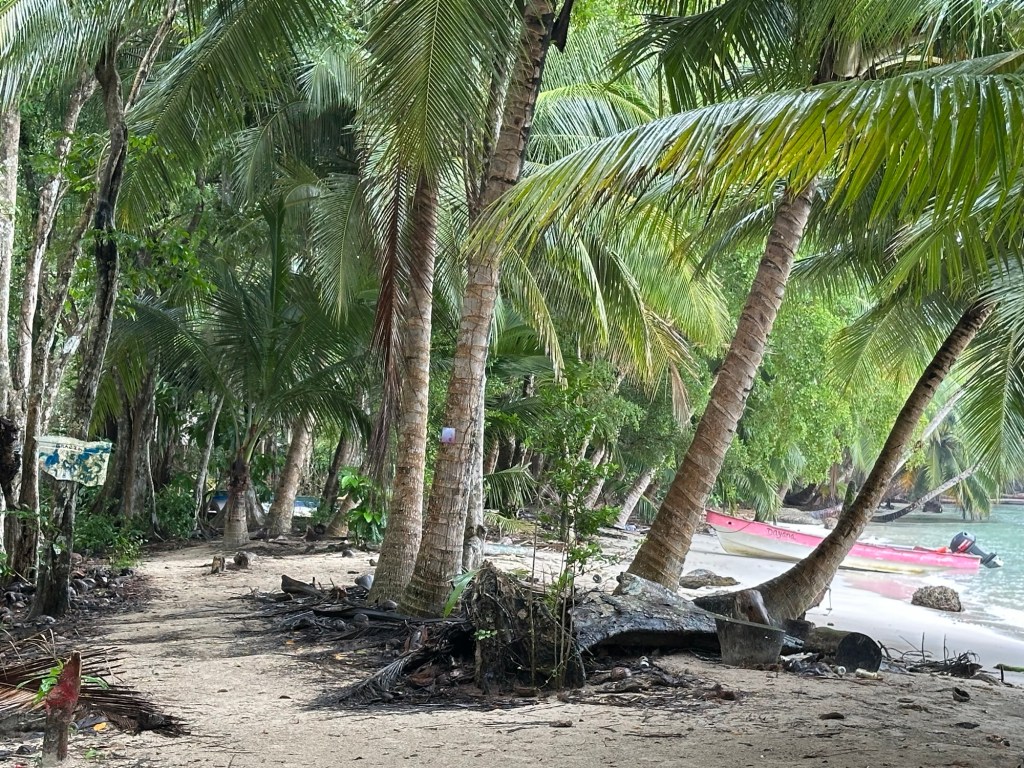
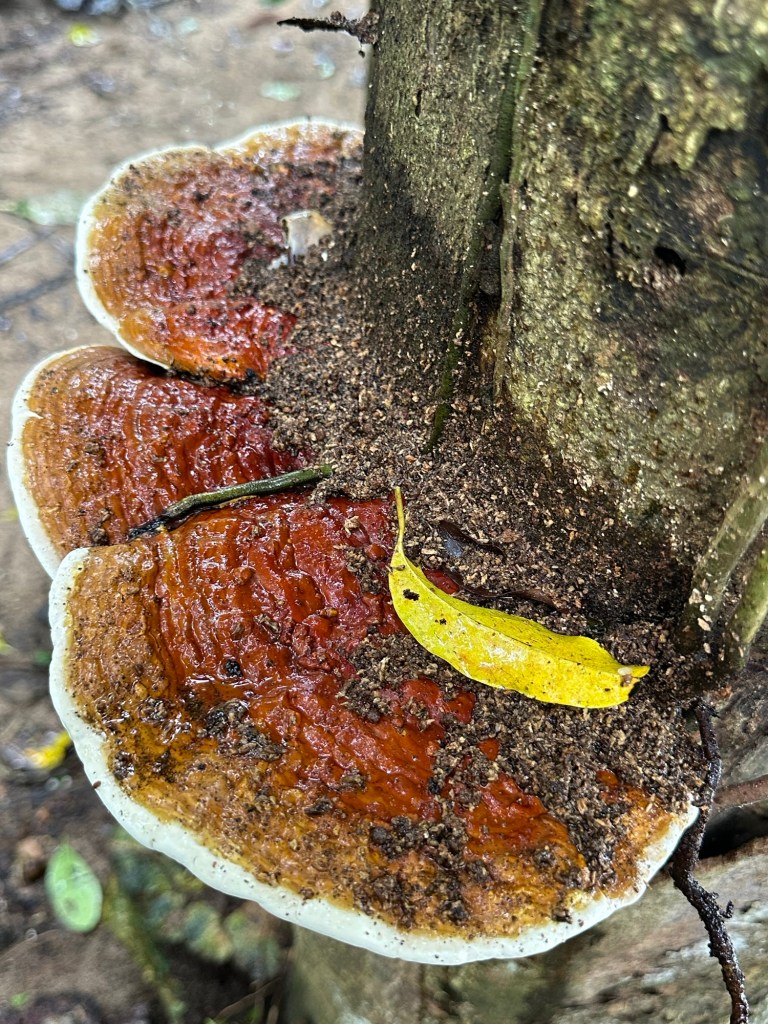
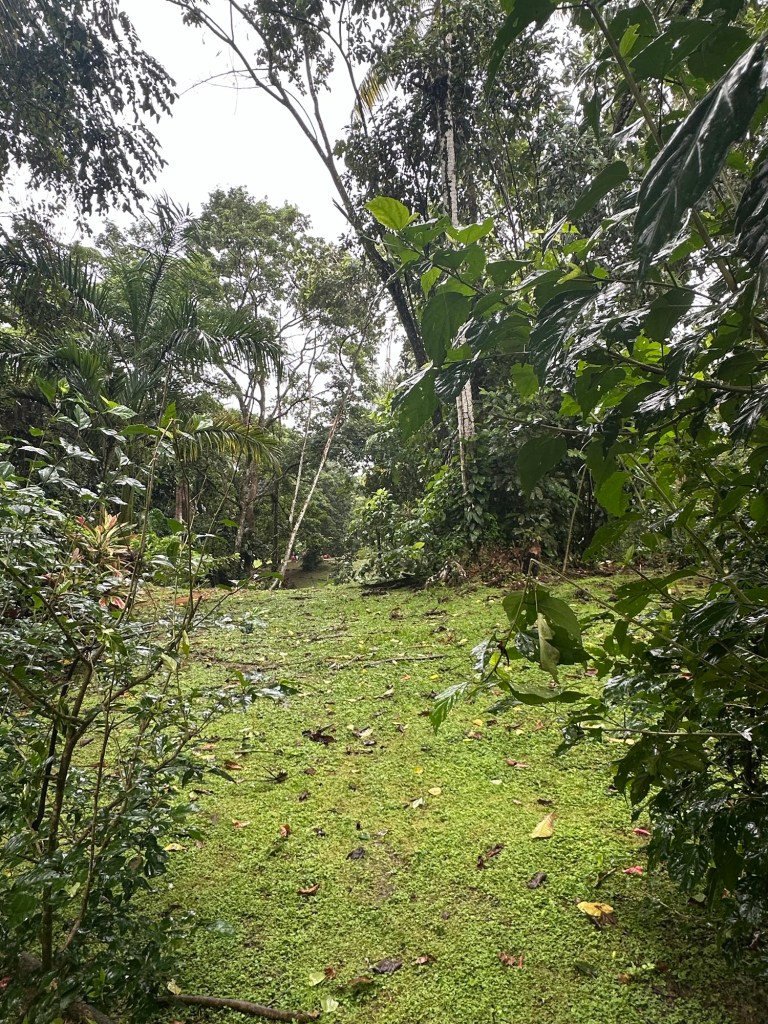
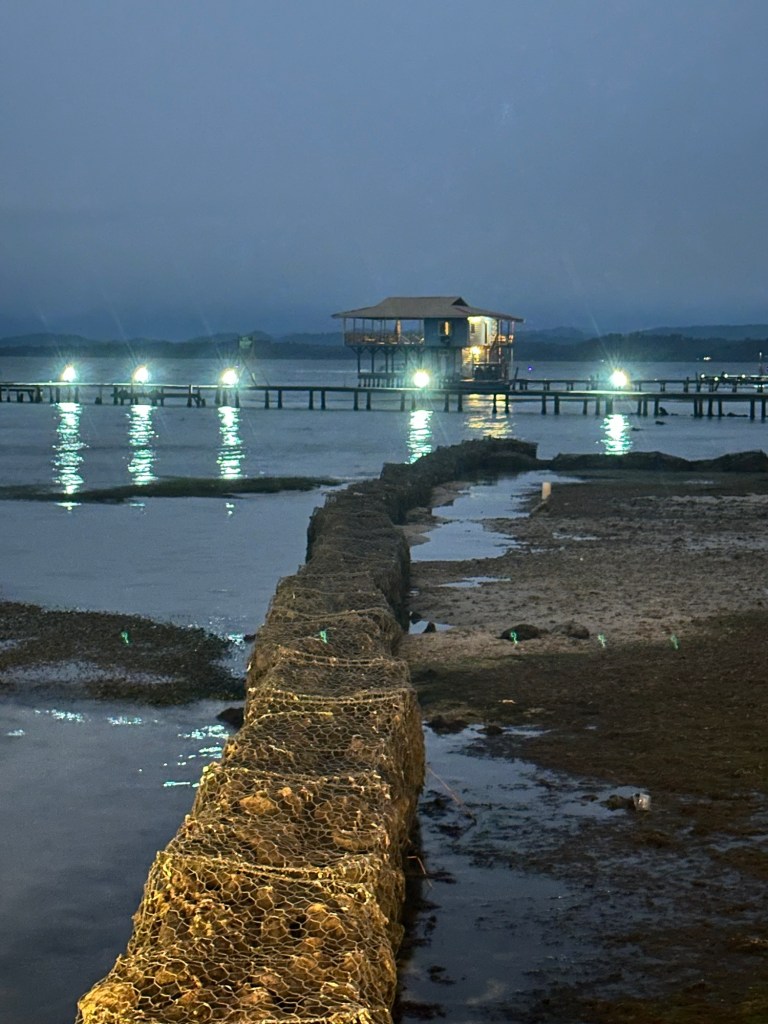
The morning revealed a lovely surprise at Axel’s hostel. You could see there was water under the decking the previous night, illuminated by a string of coloured lighting. But it wasn’t apparent that the house was built next to and on top of a picturesque mangrove swamp. A very pleasant spot to have one’s morning brew prior to farewelling the hostel.
Axel showed the way to a local cafe where I could get some breakfast, then left me to tuck in. From there it was a very short walk to the ferry terminal to catch the boat to Bocas. As I was walking, a señor called out to me that I had missed the ferry and I would need to take a water taxi instead. I thought him mistaken, or at the very least trying to drum up business for the water taxis. Unfortunately, he was entirely correct as the scheduled ferry left nearly an hour early and I had indeed missed it. Not wanting to hang around Almirante another four hours, I relented to taking a water taxi.
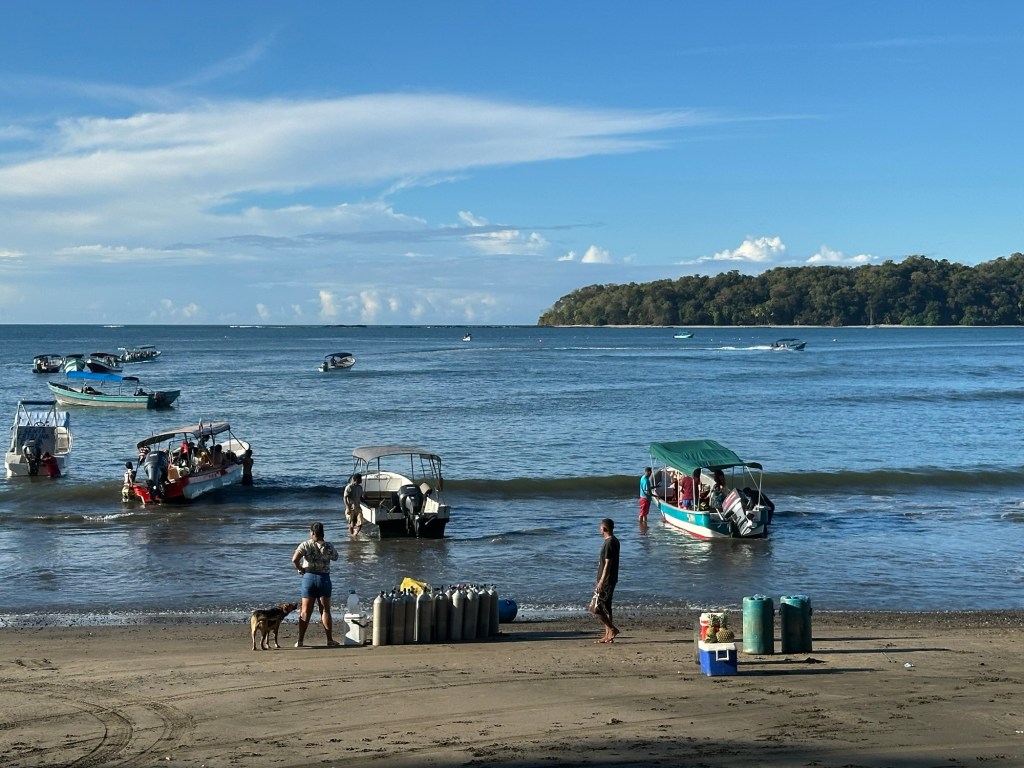
Water taxis, Bocas.
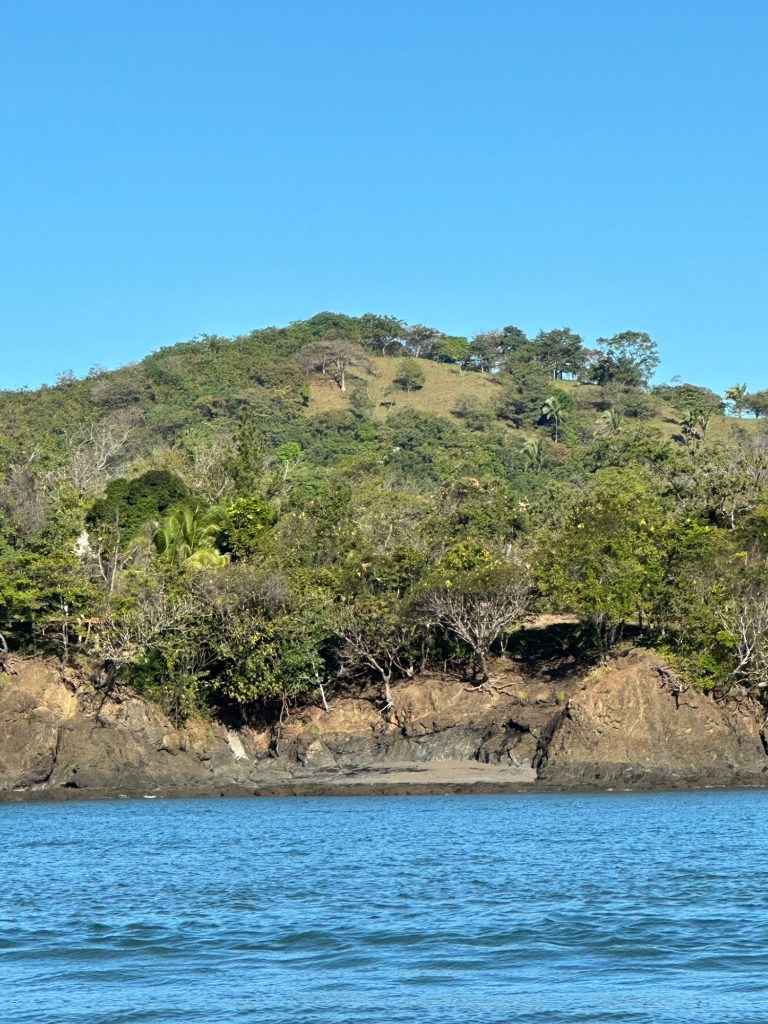
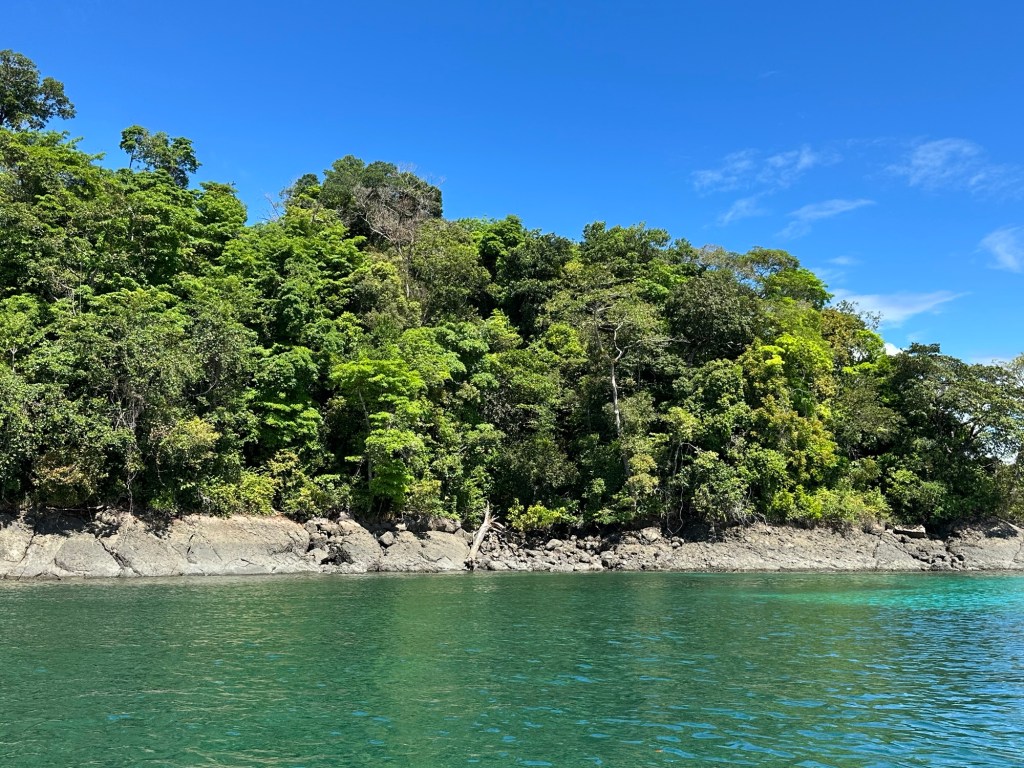
Isla Colón is the largest and most developed island in the Bocas del Toro archipiélago; a string of emerald gems strewn off the coastline in the Caribbean Sea. Bocas Town, or Bocas as it is better known, is the main town in the island chain and forms a hub for the other islands. I had found a hostel I liked the sound of and booked a couple of nights to see how I went.
Caribbean charm, Bocas.
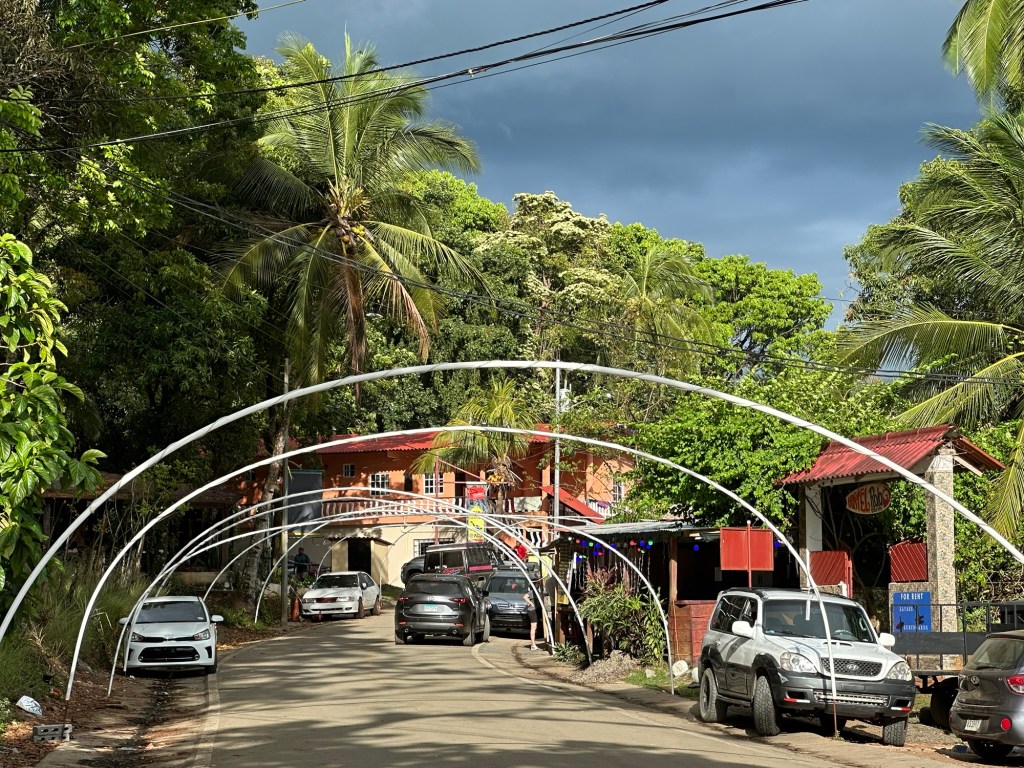
After checking in, I had a wander around town to get my bearings. Bocas is situated on a spit of land jutting out from Isla Colon’s south-eastern corner. Primarily Caribbean in its roots, it exudes coastal charm by way of its pastel hued clapboard buildings and all manner of palms and other tropical plants squeezed into as many spaces as possible. Although clearly catering to the burgeoning tourist market, it still manages to have a laid back charm about it.
One of the many restaurants in Bocas.
Suitably impressed and with a range of options for day trips from Bocas, I asked if I could extend a couple of nights. Alas, the inn was full so I booked accommodation on other islands planning on making my way across the archipelago over the next few days.
The guidebook mentioned an historic centre in David worth checking out. Which was why I decided to overnight there in the first place. After a fortifying breakfast provided by my hostel host, I ventured out into the searing heat to see for myself.
Parque Miguel de Cervantes Saavedra, David.
A somewhat underwhelming town square bedecked in Christmas fare and a church in full congregational swing, ended up being the sum total of my discoveries. There were several iguanas in the square though which were quite entertaining; especially when a large male had a squabble with a female and fell out of one of the trees onto the grass below. He composed himself, looking quite indignant, then made his way back up the tree to finish what he started.
Indignant iguana, David.
I returned to the hostel to retrieve my pack, then made my way to the bus terminal. Normally, I make my way around a country either clockwise or anti-clockwise. However, Panama doesn’t really lend itself to that option due to it being largely uninhabited on a good part of the Caribbean side, then narrowing at the eastern end of the isthmus before finally moving into the highly dangerous Darién Gap. Thus, I’ve decided to travel across the country from west to east as far as possible, then return to Panama City to fly back to San Jose to pick up the first of my three flights home.
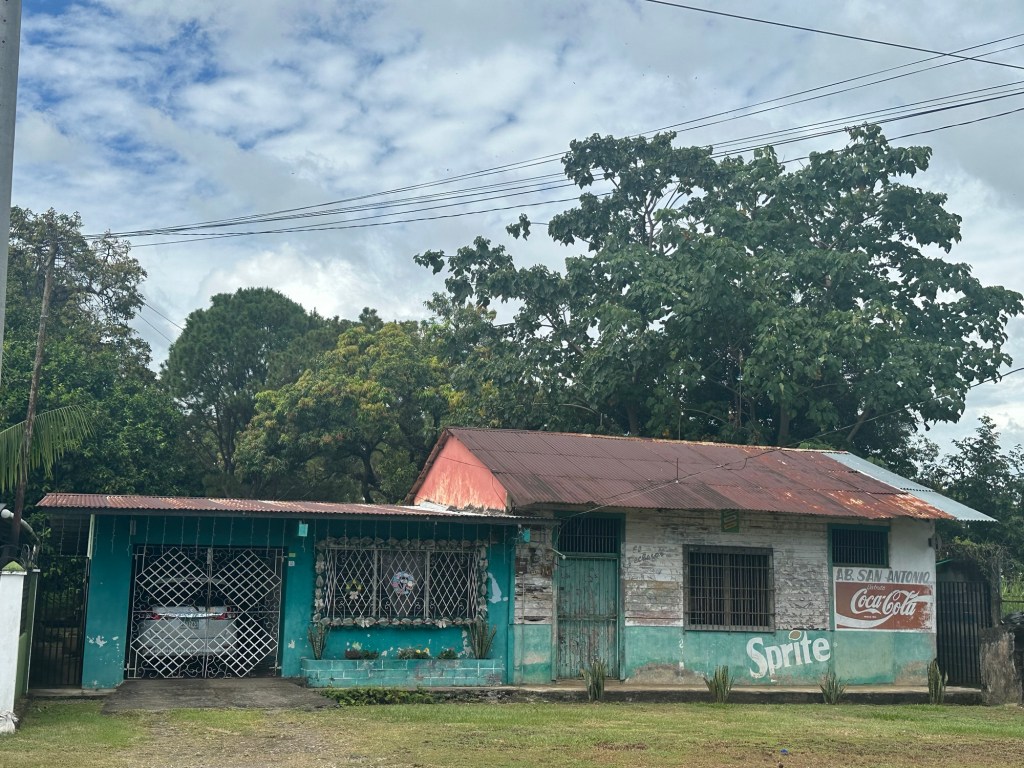
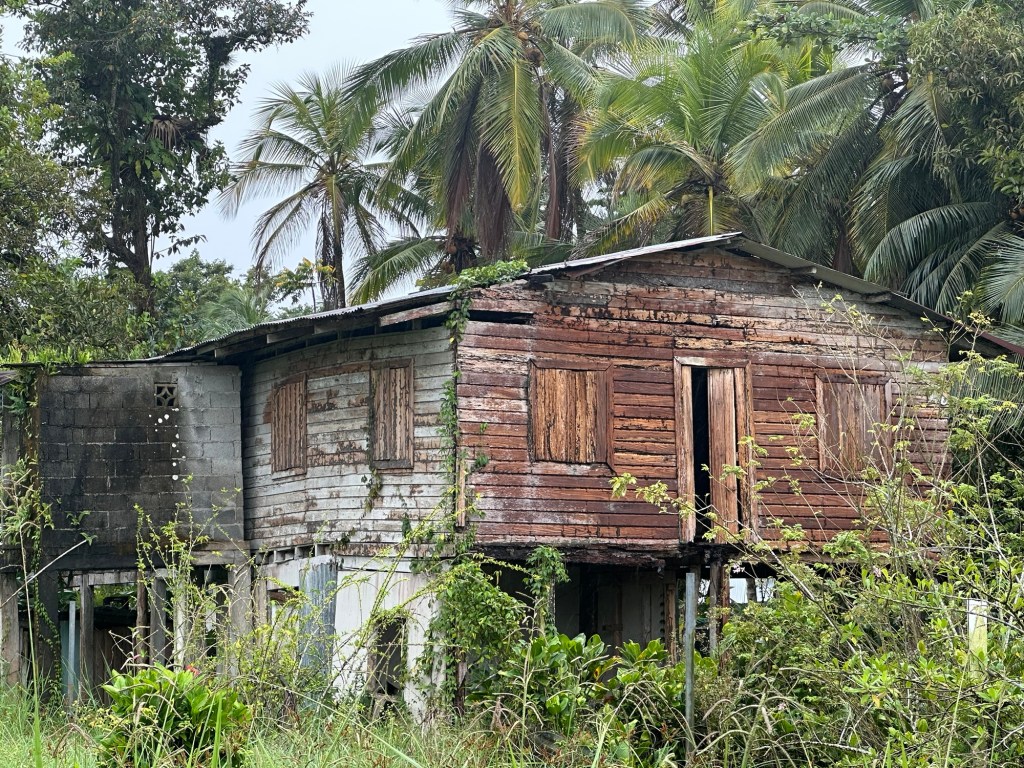
This casa has seen better day. David.
But first, it was north through the mountains to visit the Bocas del Toro Province. The islands off the coast here are one of Panama’s biggest party places and a popular tourist destination. Not usually my vibe, but I wanted to go and check it out. I located the bus and waited in a long line to purchase a ticket.
Casa, David.
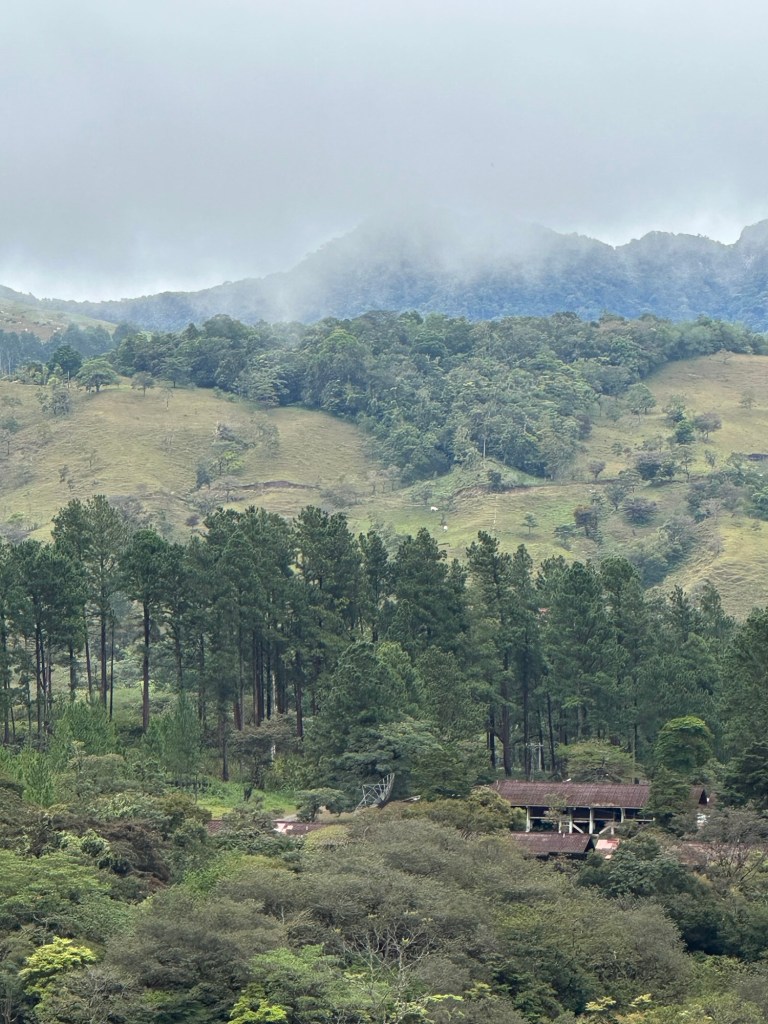
The CordilleraCentral is the collective name given to the mountain range running down the spine of Panama; delineating watershed to either the Caribbean or the Pacific. And also the only route from the Pacific to Bocas del Toro. I had managed to get a seat behind the driver so had pretty good views the whole way there. As the road wound around the sides of the mountains, the picturesque valleys opened up to reveal verdant grazing fields carved out of the emerging cloud forest. A highlight of the journey was crossing the dam wall of Panama’s largest hydroelectric power plant. The damming of the Rio Brazo de Hornito now meets around 12% of Panama’s energy needs.
Axel, the marvellous muso, Almirante.
I didn’t arrive in Almirante until dusk, so found a local hostel to stay in overnight. Hostel Cafe Axi was more of a home than a hostel and run by the most amiable hosts one could imagine. Axel is also a professional musician and gave myself and the other two travellers staying overnight an impromptu performance on his keyboard, which rested on a stool on the rustic boards of the outside deck. A truly memorable evening created by a truly talented hombre.
Not content with ignoring the road beyond Boquete completely, I left my pack at the hostel after checking out and caught one of the local minivans that service that area. I explained to the driver that I didn’t want to be dropped off at any of the trail heads, rather just do the loop and return to Boquete. He was more than happy for that and let me sit in the front seat so I had a panoramic view of the countryside.
Exposed volcanic rock, Bajo Mono.
Almost immediately, I was happy I had decided to venture up the mountain road. The terrain altered to reflect the high altitude landscape that depicts this region. Cloud forest enveloped the steep slopes. Strawberry farms in protected plastic tunnels filled some of the valleys. High altitude coffee plantations completed the vista; the red coffee ‘cherries’ peaking through glossy green foliage. And pristine rivers cascaded down sheer drops or rumbled noisily down rocky river beds.
Waterfall, Bajo Mono.
My driver decided he would be my ‘tour guide’ and stopped for me to take photos as well as explaining aspects of the region to me. What became apparent as we traversed through the countryside though, which needed no words, was the disproportion between expat foreign or wealthy national owned enterprises and the indigenous communities living on the fringes; the latter living in crude wooden huts with limited facilities.
Rio Caldera, Bajo Mono.
Back in Boquete, I gathered my pack and wandered down to catch a bus back to David. David is Panama’s second largest city, outside of Panama City, and has little to recommend it to the average tourist. The guidebook did mention an historic centre that was worth a look so I decided to book a dorm room overnight so I could check it out before pushing further afield. Before leaving Boquete, the owner of the hostel contacted me and asked if I was interested in going with him to release some turtle hatchlings down on a beach just south of David. I had seen turtle hatchlings released before in Nicaragua but it didn’t cost much and I could check out another little part of Panama.
Plant Nursery, Boquete.
Roger, a Samoan-Spanish-American born in Panama, picked me up from the bus terminal and we just had time for me to drop off my pack and change shoes before heading out again for Playa Barqueta, about 40 mins south of David. Roger explained the conservation issues with this particular stretch of coastline with land owners wanting to sell to consortiums to build high rise apartments for expat foreigners with scant regard for the plight of the sea turtles who would be effected by such a move. It is an issue deep in his core.
Turtle Refuge, Playa Barqueta.
Down at the beach, Roger introduced me to Alexis who runs the small turtle refuge situated between his beachside cafe and a run-down high-rise block of apartments. Eggs are collected prior to poachers nabbing them and reburied in numbered and dated pits at the refuge. When the turtles start to hatch, they are collected to await the next possible mass release on the beach. Late this afternoon was one of those occasions.
Parrot Turtle hatchlings prior to being released into the ocean.
I helped with transferring the hatchlings into special containers used for their release. Then the containers were carried down to the beach and placed inside a roped off area prior to the relapse. Finally, a section of the container was removed so the hatchlings had free access to the beach. Then, following natural instinct born over millennia, the hatchlings made their way down to the water; the waves collecting them in its embrace and taking them out to sea.
Sunset at Playa Barqueta
By now it was close to sundown and we had time to watch as a glorious ball of light melted into the horizon; the ocean reflecting its fiery descent. A beautiful end to a lovely day and a beautiful start for a couple of hundred little parrot turtle hatchlings.
Boquete has some of the most amazingly beautiful waterfall hiking trails just up the mountains but alas, I am unable to embark on any of them. I have been carrying an achilles tendinitis for some time now which is annoyingly taking forever to rectify itself. Patience and daily physio is my frustrating state of being this trip to prevent any further flare ups. While my dorm roomies venture out into the mountains each day to tackle a new waterfall hike, I remain in town trying to curb my envy and not lament my current position.
Sculpture. Dominga Médica Park
Still, it is not like me to just sit and wallow in self-pity so I found a 6km trail which wound up through the town’s hills on one side of the valley. One of my dorm roomies introduced me to a hiking app, Komoot, which had some walks more suited to what my ailing achilles would allow. After breakfasting at my now favourite Jewish bakery, I headed off to pick up the trail.
Paseo de Los Novios, Dominga Médica Park.
Walking up a steep, newly ripped road leading up the hill and out of town, the trail took a sudden detour up an even steeper partially concreted access way. Trying to follow the app’s route indication took me past a señora’s small, neat casa where I was promptly informed that the route I was on was not my intended. Backtracking a short distance, I eventually found where I had lost the trail. A tiny bridge led to a covered set of steep, narrow, concrete stairs which wound past several casas perched on the side of the hill.
Hillside casa.
Half way up, the path clung precariously to one side of the hill as the other side had evidently decided to part company. A faded length of caution tape delineated the effected edge. While I quickly ascended as close to the ‘attached’ side of the path as possible, shortly afterwards an hombre strolled past me and continued down on the exposed side. A dice I wasn’t quite prepared to roll.
View of Boquete and surrounding countryside
Eventually, the steps led to a grassy slope which offered up spectacular views of the town and opposing hillside. From there, it was along another road which climbed further up the hillside. This time, the humble, casas of faded pastel hues were replaced with stately homes sporting luxurious park-like gardens and security systems to match these grandiose estates.
Quebrada Checha, Boquete
Down a gravel road of dubious condition, the trail made its decent towards the Rio Caldera and back towards town. I found a little ecological park which had been built on former flood plains of the Rio Caldera where river-fed lagoons and tropical gardens abounded. And made a delightful detour en-route back to the hostel.
Parque Biblioteca Boquete
Catching up with one of my dorm roomies, we wandered back into town to look at souvenirs for him before parting ways as I had decided to have a quiet one with a bottle of wine back at the hostel.
I awoke at midnight to very loud bangs from very nearby. Upon further investigation, I found the sky alight with fireworks and crackers going off in the street. Evidently, Christmas Eve is the most important time of the year for Panamanians with families gathering together for gift exchanges, feasting and Midnight Mass, prior to a pyrotechnic free-for-all which can be seen all over town. Children were letting off crackers with scant regard for finger maintenance, whilst more sophisticated chrysanthemums bloomed across the night sky. I found the source of my rapid rousing to be mere meters away from my dorm room; adding to the Christmas cacophony. Eventually, the night settled and bed again beckoned.
Vive Panamá!
As I had been on the road a week by this stage, it was time to do a bit of washing. I prefer to do my own so sourced a bucket to give everything a good sluice and soak. Then it was time to find somewhere for brunch. A Jewish bakery down the road fit the bill with tasty food and good coffee. Christmas Day for local Panamanians is usually spent recovering from the late night fervour of the previous evening so the town was fairly quiet. As the weather was a bit iffy, I didn’t want to wander too far from my washing so had a fairly relaxing afternoon back at my lodgings.
Christmas in Boquete.
Later in the afternoon, my dorm roomies returned from their respective days’ out and we also welcomed some new inmates. A few of us decided to wander down to the main square to check out the Christmas light display. As did half of Boquete! The previous 24 hours of quiet were well and truly over. Families gathered in the main square and wandered around the festive exhibits. The whole ambiance being one of festival frivolity and a lovely way to finish an extremely quiet Christmas.
I decided to head to the more touristy town of Boquete to spend Christmas. There I would find other travellers in the same situation as myself – away from family and friends. I have found this is the best option for me as I still find it somewhat difficult even though I don’t really celebrate Christmas and am away travelling most the time. That, and the 13 hour time difference making it difficult to connect with back home. Being with a ‘tribe’ of likeminded folks helps alleviate any disconcerting feelings.
Cultivated fields on the edge of the Nature Reserve
After checking out of my little hospedatje, I found the bus that would take me deeper into the mountains. The road up into the Cerro Punta valley winds through a narrow canyon with small streams cascading down the almost sheer walls in places. All being shrouded in lush vegetation. After a while, the canyon opens up into a wider valley patch-worked with tiny fields of crops. On the fringes of these little farmlets lies the Parque Internacional La Amistad, a 4000 sq km UNESCO World Heritage Site which stretches over both Costa Rica and Panama; its dark interior contrasting with the bright cultivation spread before it.
Indigenous housing. Guadalupe.
I hopped off the bus at the tiny hamlet of Guadalupe which is as far as the road goes in that direction. Modest little houses and plant nurseries line one of the two streets that form the village centre, with a small selection of shops lining the other. Sun-baked farmers tend their crops while a group of indigenous women in traditional dress peddle eggs from a makeshift stall. A cluster of hombres gather on the street junction and convivially engage in conversation. A car slowly makes its way along the road with the driver gently guiding a horse trotting alongside it.
How to move a horse – Panama style
The bus took an alternate route through farmland back to the main road, then back down to Volcán. I decided to stop in Volcán for a coffee and toilet break so I wasn’t ‘caught short’ on the lengthy trip down to David for the next leg of my journey. As luck would have it, my bladder decided to mix things up a bit and was most insistent upon our approach to David. With nowhere to stop and just having to wait until we got to the bus terminal, I told the bus assistant I would be exiting as soon as we arrived and would have to come back for my pack which was at that stage tied onto the roof of the bus. It was then that a desperate Aussie banshee was unleashed on the unsuspecting folk at the David Bus Terminal, escrying ‘baño’, ‘baño’! Eventually, I was pointed in the right direction and the very helpful señora in charge opened the disabled cubicle for me. Reckoned she thought it easier to clean that than any resultant puddle that might arise with any further delay. Crisis averted, I then returned for my pack where the bus assistant was duly waiting for me.
Vegetable stand. Cerró Punta
From there it was a pleasant hour long bus ride back up the mountains to Boquete. I located my hostel, dumped my pack, and found a lovely little restaurant to have my Christmas Eve dinner.
After the chaos of the previous day, it was time to decompress. And a nice wander in the countryside works wonders in that department. I had found mention of an archeological site in the guidebook which sounded interesting so decided on that. The site was only 7kms away on a road which wound through a valley leading out of town.
Everyone obeys the stop signs in this part of town.
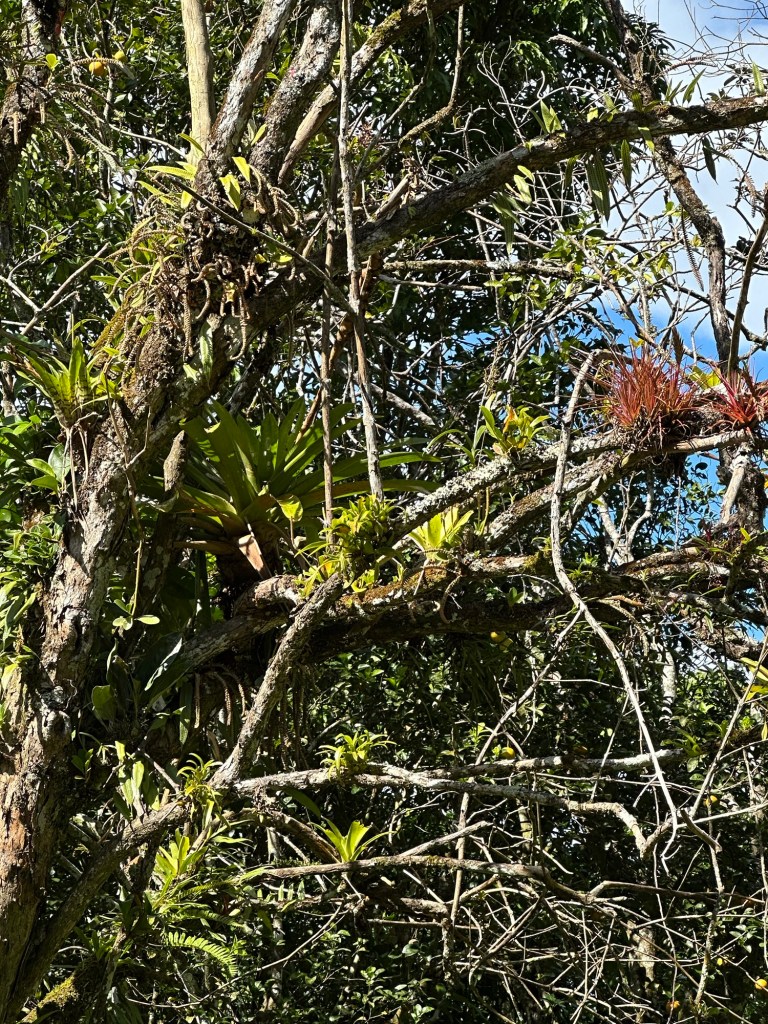
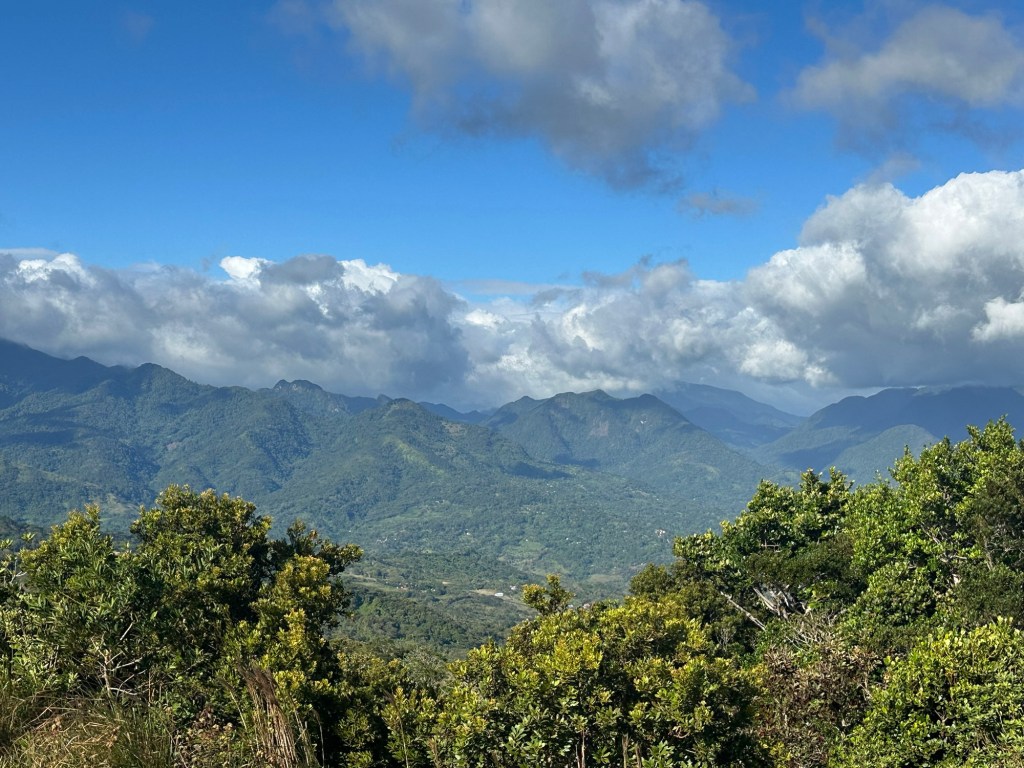
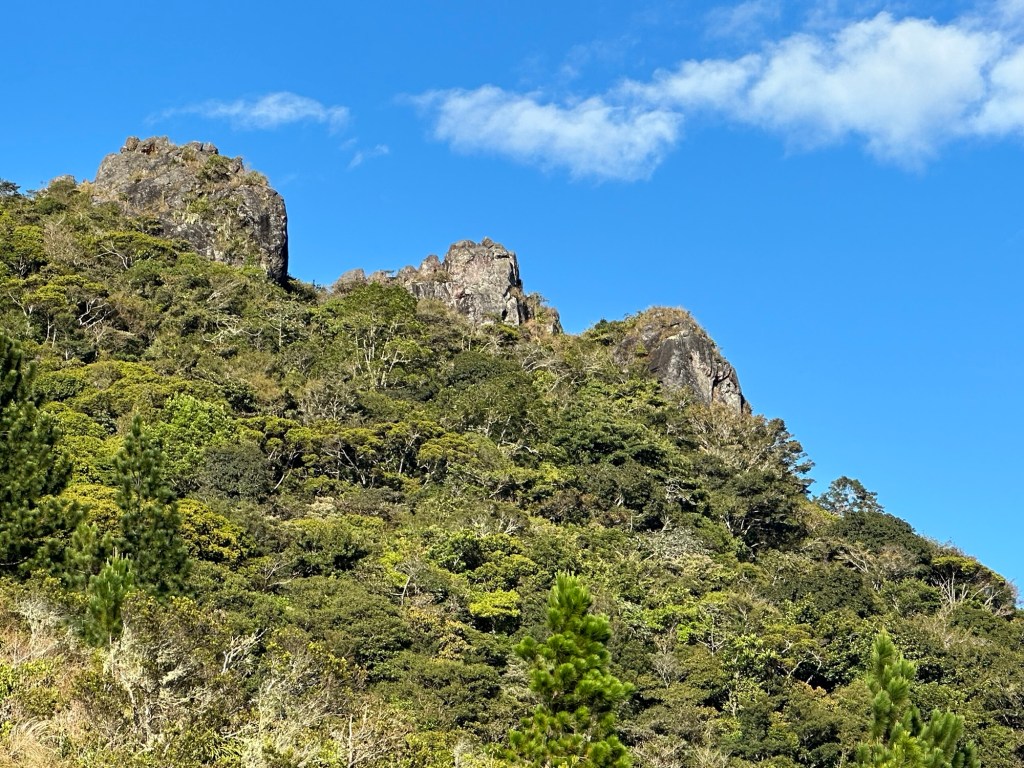
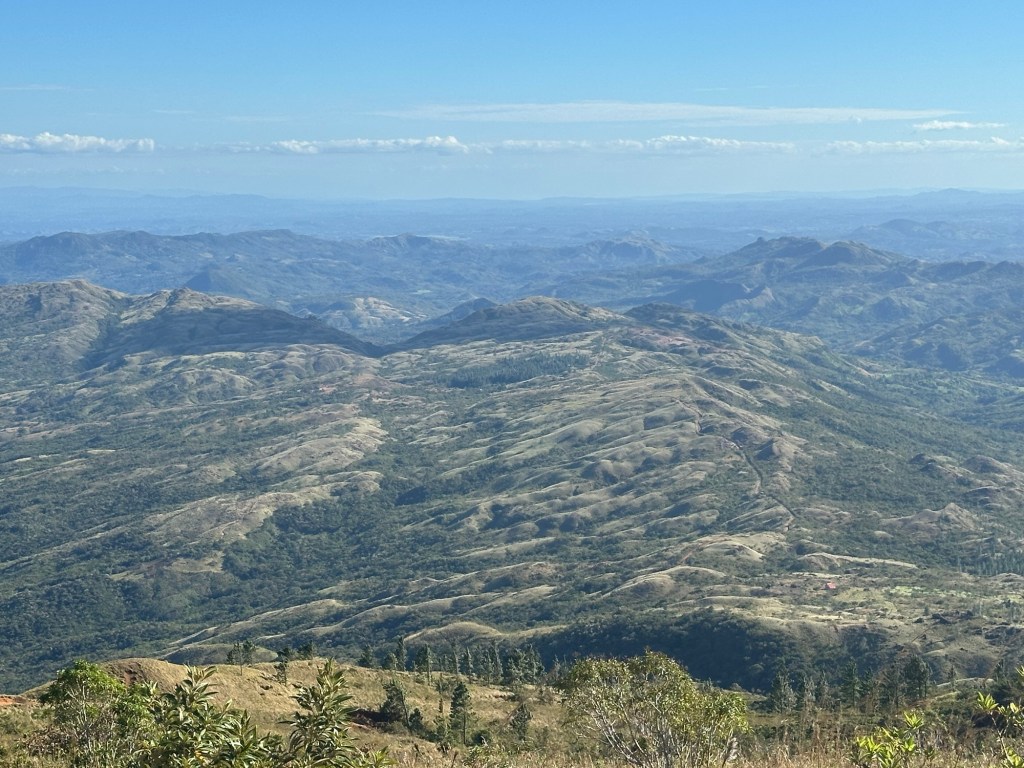
Volcan is not a large town so it didn’t take long to leave its bustle behind and embrace the relative quiet of the countryside. The road out to Sitio Barriles meanders through a verdant valley, resplendent with dairy cows and the occasional horse tranquilly grazing. At approximately 1400m above sea level, Volcan is firmly positioned in the Cloud Forest zone. Soft green mosses and lichen layer themselves upon every wooden surface, while vibrant bromeliads and other epiphytes jostle for position to nestle in the embrace of a tree. The air mists and dense clouds cloak the surrounding peaks. Tiny hummingbirds flutter in the bushes while the ubiquitous black vultures peruse all from above.
No room at the inn on this tree.
Walking on rural Central American back roads is not for the faint-hearted. The narrow lanes are marked almost to the edge of the tarmac leaving 15-20 cms max for the ‘shoulder’. From there, it’s usually a steepish drop down to a drain which may or may not be heavily vegetated. Fortunately, you can hear oncoming traffic early enough to find somewhere to place yourself just out of harm’s way. The locals are used to encountering the occasional pedestrian on the road so all-in-all it’s a relatively safe practice so long as you have your wits about you.
Peek-a-boo!
Sitio Barriles is one of only a few important archeologist sites in Panama. Unlike its northern Central American neighbours, Panama has relatively little to show from its early inhabitation. While the Aztecs and Mayan used stone to build their monoliths, the pre-Colombian indigenous chose the more ephemeral option of wood and other vegetative matter which did not stand the test of time; especially when exposed to the advancing jungle. That, and the fact that anything of any major significance was quickly whisked out of the country by the foreign entities who ‘discovered’ it, led to a dearth of remaining artefacts. Such was also the case with Sitio Barriles, however a few significant artefacts now grace the property and the excavation block from the last investigation in 2001 has been left open for the public to view.
Large statue excavated from site.
Though there was little to see from an archaeological perspective, the property had been transformed into a lush botanical garden with a riot of colourful vegetation. Little paths meandered through the jungle on both sides of a stream bank and I managed to spend a very pleasant hour exploring the grounds. Unfortunately, I had come on a day when there was not a guide available to interpret the site and open the tiny museum, however, I still relished the experience. And the discounted entry fee for having to ‘self guide’.
Part of botanical gardens.
Upon arrival back in town, I decided to check out a local ‘hole-in-the-wall’ kitchen recommended in the guidebook. ‘El Tamalito’ did not disappoint and I paid only USD7 for a very filling and exceptionally tasty plate of traditional fare consisting of pork, rice, beans, plantains and salad. That, and the half price mojitos at USD2.50 rounded off a highly enjoyable day.
You know that moment when you have that slow, horrible realisation that you have f***ed up in a major way? Well, that was me this morning. As I walked back up to the border to catch a bus to start my Panamanian adventure, I thought to myself, “Did I actually officially leave Costa Rica yesterday??” The answer to that question was unfortunately a terrifying NO. As I had entered the country the previous day, it wasn’t just a matter of sneaking over the remarkably leaky border, officially exiting Costa Rica and continuing on my way. I had to do things properly.
Quirky display in garden of lodgings.
Back at Panama Immigration, I tried to explain the situation and the fact that I needed to officially exit Panama to be able to officially exit Costa Rica, then re-enter Panama again. I was told that the exiting side of Panama was shut and that I would need to take a taxi to the ‘other office’ five kilometres down the Costa Rican road. I explained I didn’t have enough money for that and that the Panamanian ATMs were at present emptier than a politician’s promise. I was then taken down a souk-like maze of ‘free-zone’ shops to an ATM which run out of green stuff just as it was my turn. Fortunately, another few twists and turns led us to another ATM which had better manners and I quickly cashed up as much as foreigners are allowed – USD250. At least it was more than my previous reserves of USD11.
Just breath and smell the flowers.
I was then ushered into a taxi and told it would set me back USD20 for the driver to take me there, wait, then bring me back. I had no choice though so reluctantly agreed. Once at the ‘other office’, I tried explaining again but was having difficulties having anyone understand my predicament. Eventually, I got my point across (After a Costa Rican Health official tried to whisk me away for a random malaria test…) and the security guard took me up to a Honduran Immigration official to whom I could explain the situation. After taking my passport and deliberating with her supervisor, my Panamanian entry stamp had a big red ‘cancelled’ stamp superimposed on it. For not properly exisiting Costa Rica.
This is what a border immigration building looks like, Costa Rica!
At last I could now do the righty Costa Rican side. By now, my taxi had been dispatched by security with a stern warning about ripping tourists off so I waited on the side of the road for a taxi to take me back to the border for the more appropriate fare of USD3. It was little wonder I had overlooked the Costa Rican Immigration Office as it was a ‘blink and you miss it’ type of affair over the road from its ostentatious Panamanian counterpart. Passport appropriately stamped, it was then time to re-cross the border. Officially.
Welcome to Panama! Just don’t plan on staying.
Surprisingly, having an entry stamp cancelled raises eyebrows when trying to re-enter a country. I had to explain what had happened and waited for the immigration official to check the records to verify my story. Then came the next sticking point. Supposedly, you need to have an outward ticket via something to somewhere to be able to enter the country. The immigration official I saw yesterday made no such inquiries and I thought that was that. Alas, no. This official decided to do his job properly and wouldn’t even entertain my ticket from Costa Rica back home as a valid option. I had decided I would fly from Panama City back to San Jose but hadn’t booked my ticket as yet. As it was a no ticket-no entry type of deal, I decided to find somewhere to sit, have something to eat and organise the flight in question.
La Concepción
Back in line at the Immigration office and I ended up with the official from the previous day. I had to explain everything again but was processed relatively quickly. And you guessed it, he didn’t ask for evidence of an outgoing journey!
My humble abode for the night.
Then, it was just a case of jumping on a bus and leaving the craziness behind. I jumped off at La Concepcion, got incredibly dodgy directions for where to catch the next bus, but after a magical, mystical tour and asking other people, eventually got there. I reached my intended destination, Volcan, upon dusk and got directions to a cheap hospedaje which turned out neat and clean with a super friendly owner. And that, my friends, was how my first day in Panama panned out.
Ah, San José… Beneath that veneer of ‘developed’ hopefulness lies an undercurrent of ‘developing’ reality. Which pays to remember as one marches from the backpackers to the bus station after 37 hours travelling and only a few hours sleep; sidestepping the disheveled state of the sidewalk more akin to a war zone in places. Safely ensconced in my steel chariot, I made my way towards the border with Panama; trying to stay awake but mostly failing dismally.
Panama Immigration
Late afternoon, the bus pulls up at the border and I am directed to a large, multi-hued edifice in front of me. I make my way there and am enthusiastically directed to a tiny window where a nonplussed immigration official asked a couple of questions, took my photo and fingerprints before stamping my passport.
Welcome to Panama!
Formalities over, I was in desperate need of a baño before heading further afield. I found one at the bus terminal adjacent to the immigration centre but they wanted USD and I only had Costa Rican colones. And the Panamanian ATMs had run out of dinero! A helpful señor took me to a local shyster who happily relieved me of my colones for extremely overpriced USD. That gave me USD33 which I hoped would at least get me to the next cashed up ATM.
Golden Dreams Lodging
My helpful señor also let me use his baño and we got chatting. Turns out he is a veterinarian who works for the Panamanian Department of Health and was on duty to clear any cats or dogs wanting to cross the border – no other animals being allowed. He also goes overseas to Asia on a regular basis to clear shipments of tuna for export to Panama so was quite well travelled. He offered to give me a lift to La Concepcion, however, I couldn’t find any accommodation on-line. We did find a neat little motel on the edge of Paso Canoas though which had vacancy. I gratefully accepted a room, although they didn’t do eftpos and I had to hand over most of my meagre USD; leaving only USD11 until I could find an ATM. Undeterred, I wandered down to a nearby service station and bought my first Panamanian cerveza and a some snacks to celebrate my first night in Panama!