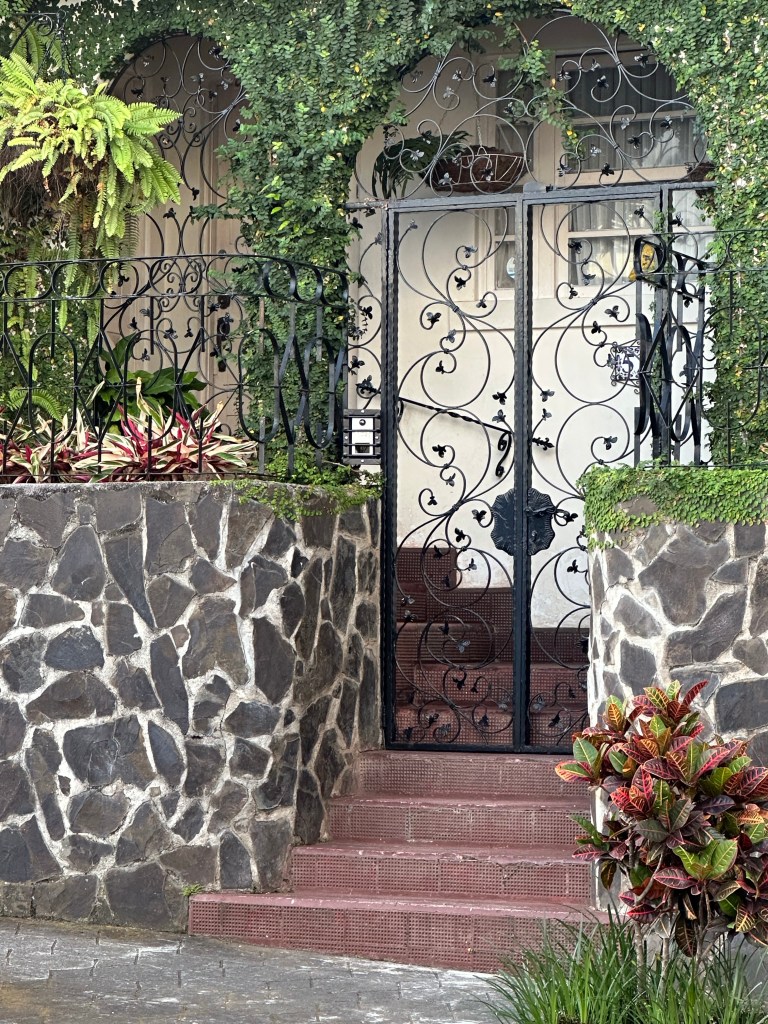
San José

The little restaurant at the hostel wasn’t open this morning, but fortunately there were lashings of free, good quality coffee. Suitably fuelled up, I headed the few blocks over to the National Museum.

Bullet holes from revolution fighting prior to disbandment of army are left as a reminder.

This remarkable and extensive museum is housed in the former barracks and headquarters of the Costa Rican army, Cuartel Bellavista. Apparently, when the government of the day disbanded the country’s army in the late 1940s, the Museum Director proved most savvy in requesting the barracks to house its collection ‘in the spirit of community building’. He read the play book and was granted his wish. Museum staff must have been dancing in the street with the news as it meant they finally had decent digs to set up in and spread out. The work over the past 70 years has resulted in a world class institution.
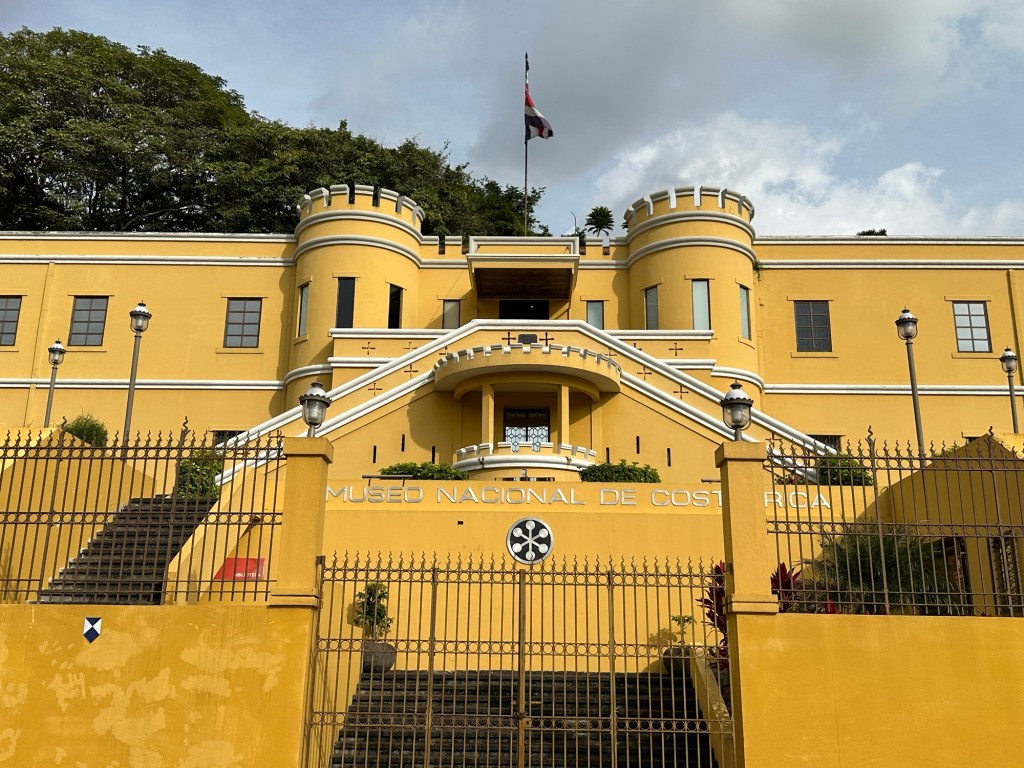
Museo Nacional de Costa Rica

Immediately entering the museum, you pass through double glass doors into a butterfly filled, glass covered atrium resplendent with lush, tropical gardens. With clouds of large, brilliantly coloured butterflies swooshing through the air, and occasionally landing for an obligatory photo opportunity, this place rates up there for enchantment value.

Jardín de Mariposas

From a corner on the lower level of the atrium, you can climb up inside one of the original barrack towers to emerge onto the rooftop with brilliant vistas of San Jose and the surrounding mountains. It’s easy to see why the cuartel was built there in the first place. The upper part of this particular tower was demolished when the army was disbanded to prevent it being used for attacks on the city again.

View from top of Museum overlooking San Jose towards surrounding mountain range.

From this point, you go back inside at the same level to explore the old barrack kitchen area, bathrooms and even the solitary confinement area. Interpretation panels in Spanish and English are accompanied by historic photos of when the building was a military emplacement. Reading the personal accounts of former soldiers based there, you have to think they would rather have had the place burned to the ground themselves. It was a particularly harsh life for a sentry during that time.

Outer wall of barracks

Once through this section you climb a set of stairs to pop back up into bright sunlight and a gorgeous central patio filled with immaculately landscaped gardens. The buildings surrounding the patio is where the Museum’s permanent collection is displayed and well worth a visit to get your head around Costa Rican history from pre-Columbian to present. All interpretation panels are in Spanish and English and exhibits are well presented.
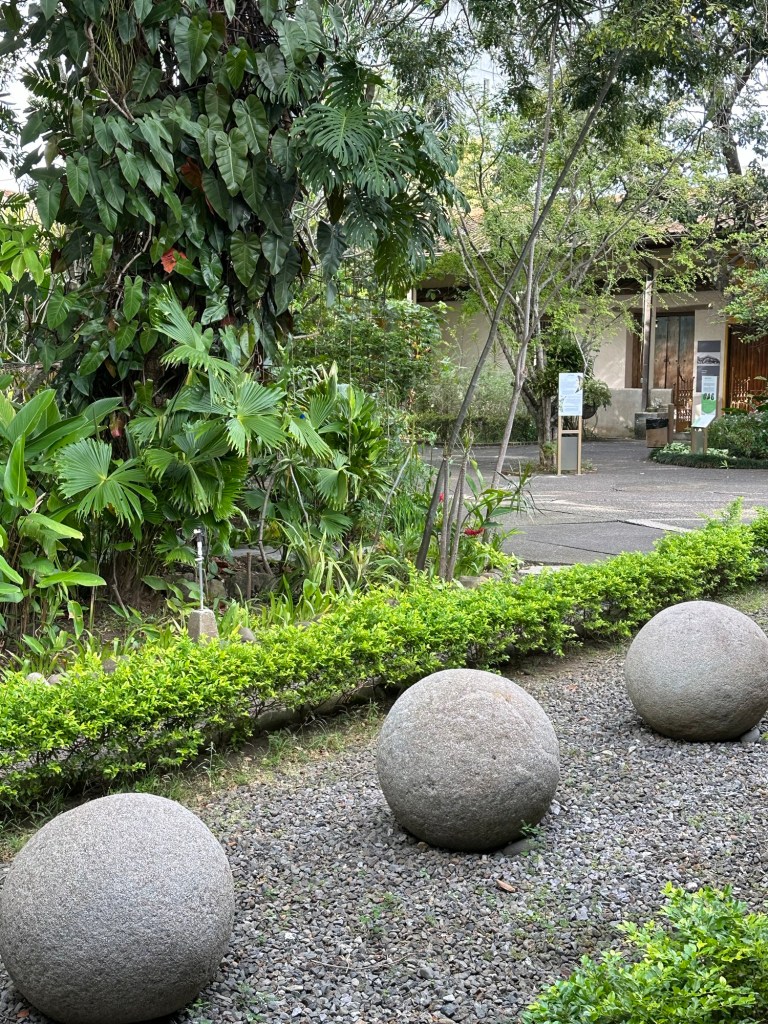
Central patio

Having not eaten since the previous day, I eyed a cute little restaurant over the road from the museum. Upon being ushered in and presented with a menu, I discovered prices were not to my liking but I had made the cardinal error of not checking the menu first so felt obliged to suck it up and just order something. I chose one of the cheapest things on the menu, rice with shrimps, and a beer. When presented with the bill, it was even more than I had anticipated with taxes and charges added on. For AUD65 I expect a pretty amazing meal but amazingly, this was not. I’m going to have to be on guard here a bit more it would seem.

Glass sculpture out front of Museo Nacional de Costa Rica

Back at the hostel, I partook of Happy Hour/s at the hostel bar, chatting to fellow travellers and whiling away the time with tasty rum cocktails in hand.

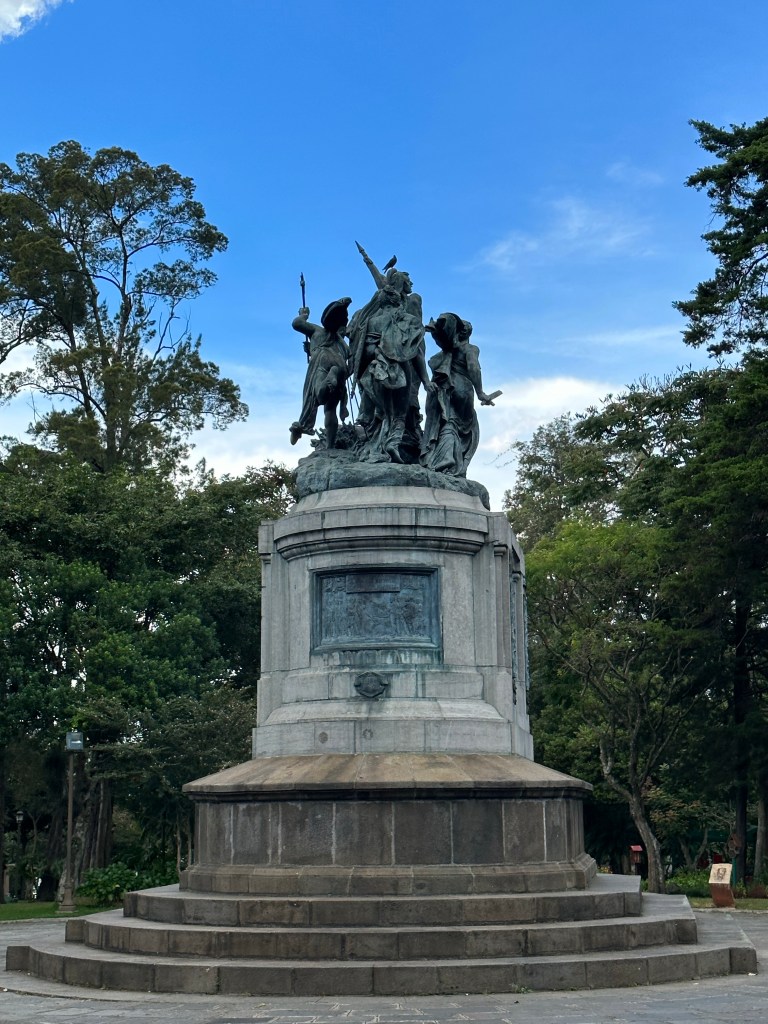
San José

Arrived at my hostel wee hours of the morning after travelling for 30+ hrs to find I had unwittingly booked my bed a night out!!Thankfully, the lovely receptionist found me an emergency bed for the night after I made noises about just crashing in a hammock or on a couch. Even after a shower and clean clothes I was too wired to sleep for a bit so didn’t start my day until mid morning.

I wanted to just walk around this remarkable city for a bit to get the vibe of the place. It had been five years since I had last been in Central America and that was in Nicaragua, one of the poorest countries in the region. Costa Rica, by comparison, is very much the showy, wealthier relative with support from its rich benefactor, the US. The city is relatively clean and well organised, and it has a veneer of respectability about it. The absence of an army is very apparent as that’s one of the things that is usually very much in your face in other Central American countries. That said, there is a very strong police presence as it was to them the role fell to keep the peace after the army was disbanded in 1949.

San José has many small, immaculately maintained parks which provide a welcome change from the hustle and bustle of city life. I meandered my way through crowded streets which were being cordoned off for a street festival later that evening. Families were setting up along the parade route in order to claim prime position and there was definitely a festive atmosphere in the air.

I left the crowds behind and started exploring the various barrios surrounding downtown San José. The terrain is hilly which allows for some superb views from elevated positions. Picking my way through streets with well maintained garden verges; pretty colonial cottages mingled with more modern concrete edifices.

Returning to the hostal after several hours of walking, I bumped into a Chilean woman I had been chatting to earlier in the day. She said that a group from the hostel were going to go watch the Festival of Lights – the festival I had seen the preparations for earlier on my walk. We left together and walked past multitudes of buses lining a back street. We were trying to find a bar we could hang out at prior to watching the parade but it seemed alcohol was off the menu because of the parade. Strolling back, however, it seemed the parade had started so we stopped to watch.

As luck would have it, this bar didn’t seem to get the memo about the no alcohol ruling, so I plonked myself at the bar and ordered a cerveza. Almost immediately, I was accosted by a more than slightly inebriated Colombian hombre who kept trying to hug and kiss me. Fortunately, he left shortly afterwards with the assurance of a security escort. In his place came along a really interesting, local hombre who was producing music. The bar was playing some great local music and his latest offering, which was filmed in Nicaragua, was on the DJ’s play list.

After I left the bar, I walked back past the buses strung out along the street which were now surrounded by performers in their hundreds in magnificent costumes packing up to go to their relative homes in Costa Rica. I felt of brief pang of regret for not waiting it out to see it, but choices had to be made.