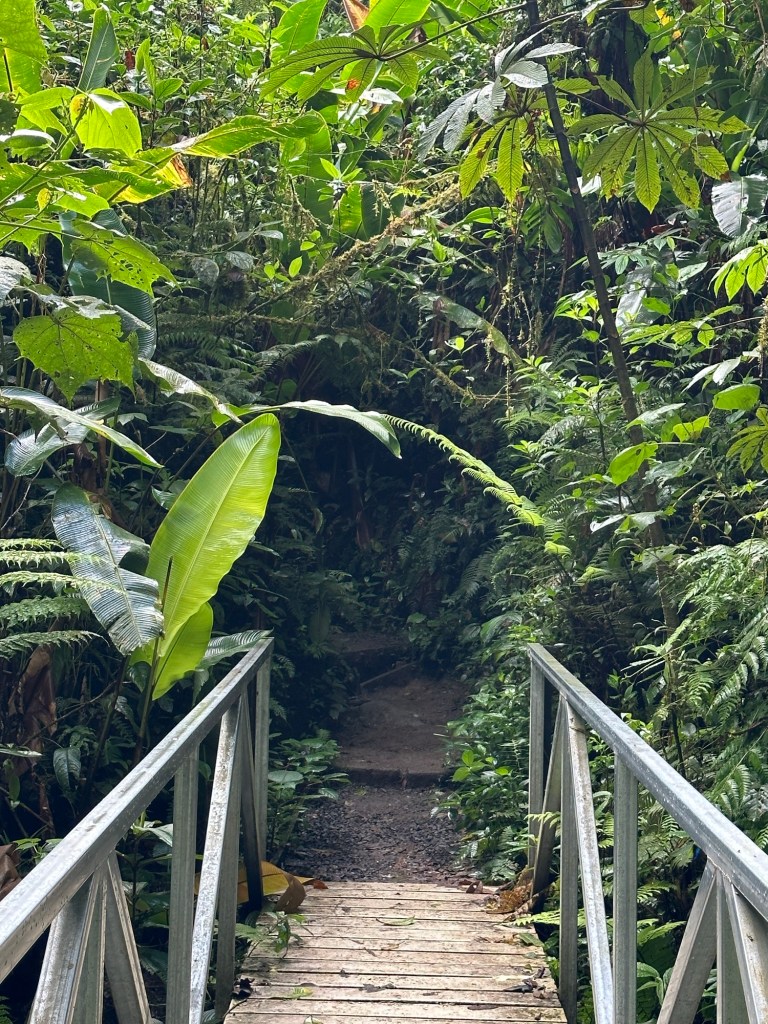
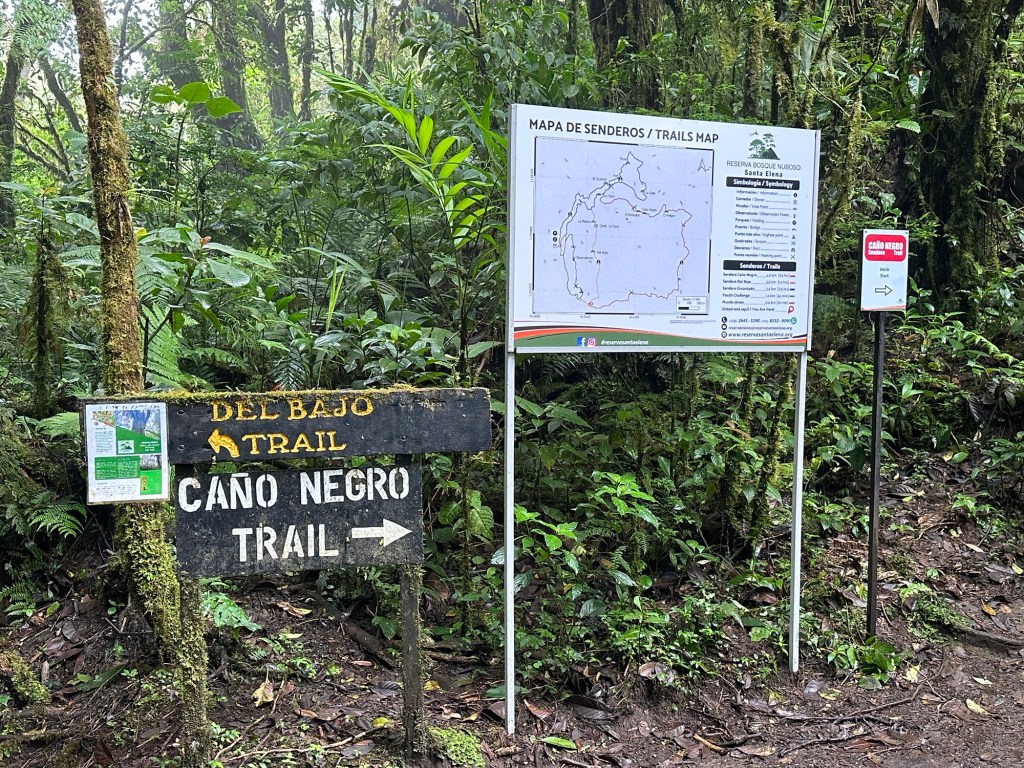
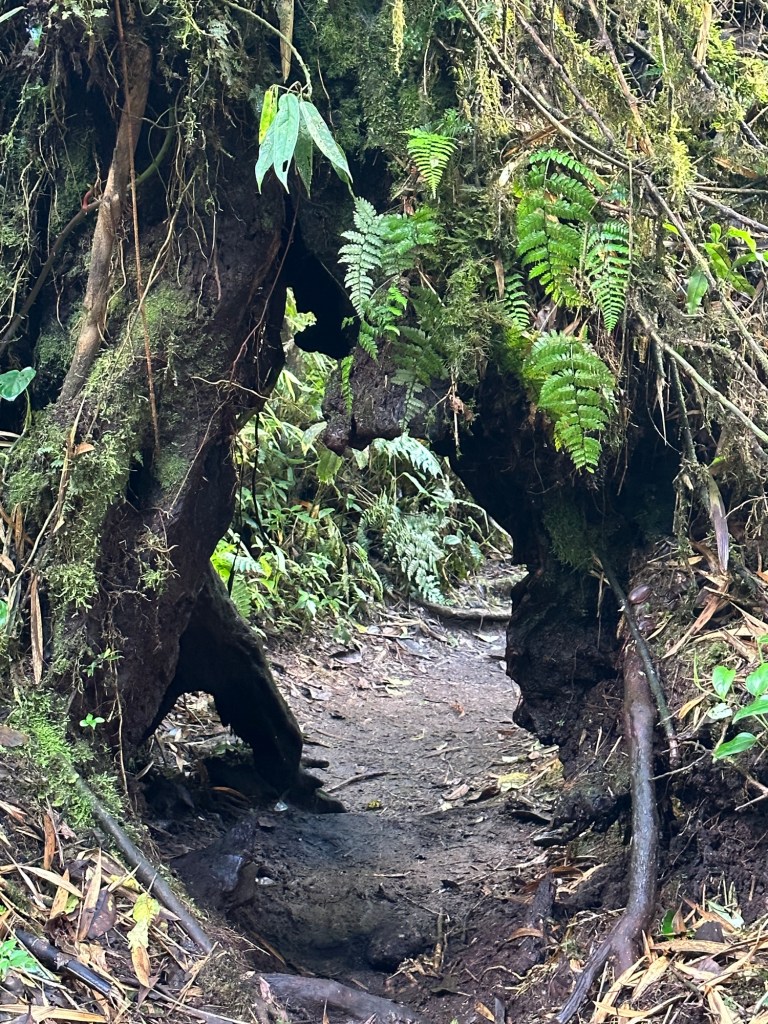
Tortuguero – Sarapiqui

I didn’t sleep well so when my alarm went off at 5am, I groggily dragged myself out of bed to get ready for my canal canoe tour. I waited for my guide at the designated spot and found I was being palmed off to another tour as the other tourists I was with were on a French speaking one. I walked down to the National Park boat dock and waited, hoping someone would come by and pick me up. Eventually, a canoe with guide and a German couple quietly slid into the park boat dock and I climbed aboard.

Water lily bank, Tortuguero National Park

The early morning had a freshness that took the edge off the humidity as we quietly glided across the main lagoon of Tortuguero. Other canoes, kayaks and electric powered boats dotted the edge of the lagoon and an awed hush was respected by all. The setting had a sense of surrealism about it as we gently paddled past waders investigating rafts of waterlilies and other water birds flittering above and around us.

Basilisk Lizard, Tortuguero National Park

Our guide quietly paddled alongside the bank, pointing out birds, iguanas, monkeys, sloths and caimans. I was glad to have taken the canoe instead of a single kayak as it was much easier to take photos from. At this hour of the day, the jungle was teaming with life and wonderful photo opportunities were abundant.

Creek, Tortuguero National Park

We paddled into little streams where one had to duck to avoid the low-growing vegetation. It was in one of these streams that we saw dozens of boat-billed heron going through their mating rituals oblivious to our presence.

Pair of boat-billed heron, Tortuguero National Park

Caimans could be sighted resting with their heads out of the water or swimming just under the surface. Capuchin and howler monkeys plied their theatrics high in the canopy. And sloths, bless them, slept through the lot.

Caiman, Tortuguero National Park

Our tour came to an end and I was dropped back at the National Park boat dock. I still had an hour until check out from my hostel so decided to get some breakfast first. On the way back to the hostel, I organised the boat I would need to leave Tortuguero. I still had another hour and a half before my boat left so thought I’d check out the jungle walk in the National Park.

Jaguar Trail, Tortuguero National Park

The only jaguar one is likely to see on the Jaguar Trail is the cartoon one on the notice board advising what to do if you do actually encounter one. Still it is a pretty jungle walk heading from the lagoon to the beach and following the coast for a couple of kms. At intervals, there are access points to the beach, which I thought was handy if one did encounter a jaguar. Evidently, that is what you are supposed to do – head to the high tide mark. One can only assume body surfing is not high on a jaguar’s bucket list. Whilst not eyeballing any jaguars, there were the usual parade of sloths, monkeys and iguanas to keep one amused during one’s wander.

Boat Dock, Tortuguero Village

It was time to leave this lively little village behind and head west. I found my boat and took my leave of Tortuguero. Zooming off towards La Pavona, most of the passengers didn’t have their life jackets on; myself included. This unfortunately drew the attention of a passing by Coast Guard boat manned with four armed, balaclava clad officers. Our boat was stopped and the captain handed over paperwork. Papers were examined, photographs taken and we were all given a stern talking to. I didn’t think it appropriate to take a photo as I wasn’t sure if I might be up for some sort of fine for not wearing a life jacket so didn’t want to push my luck. Eventually, we were allowed to continue our passage. We drove through serpentine waterways, dodging debris at intervals, until we reached La Pavona.

La Pavona boat launch

I was planning on catching a bus from La Pavona to Cariari, but was approached by a colectivo driver who offered a fair price and was leaving then. We drove through pretty farmland interspersed with jungle; watched by fat cattle contentedly enjoying a mid-afternoon graze. In Cariari, I caught a bus to Puerto Viajo de Sarapiqui, the other Costa Rican Puerto Viajo. I can now say I have been to both! I couldn’t book any accommodation on line for there so just decided to wing it like I normally would in Central America. Unfortunately, the ‘cheap’ accommodation I was directed to was still more than I would have like to have paid and was pretty disgusting. On opening the door, I was hit by a wall of insect spray which made me gasp for breathe. Fortunately, with the door and window open I was able to air it out a bit. It was dark and I was tired so I took it.

Tortuguero

After a big day and night, I had a pretty chill New Years Day. After a leisurely lie in, I had coffee with some of the crew from last night at the hostel. Then it was time to have a poke around Tortuguero.

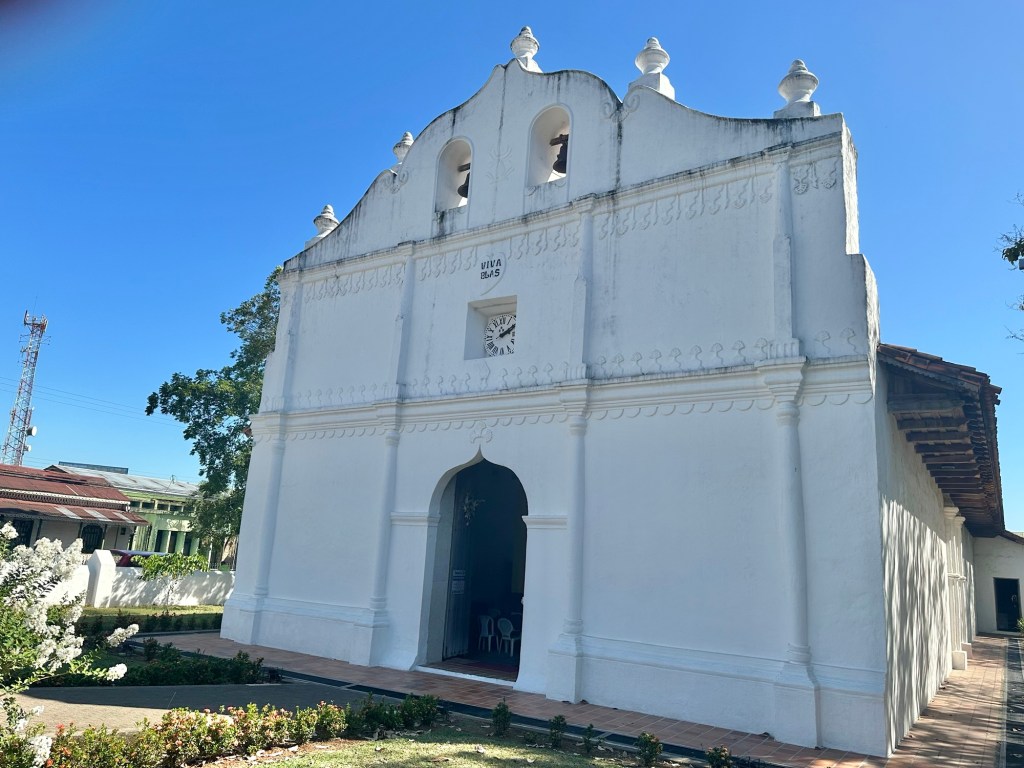
Church, Tortuguero

Tortuguero quite literally translates to ‘land of the turtles’ and derives its name from history. Back in the day, native inhabitants did their thing; living with nature and managing it quite nicely. Part of their diet were the turtles that came to lay their eggs on the sandy beaches of the area. Enter the Europeans who decided they wanted some of that sweet turtle action themselves and muscled in to exploit entire turtle populations. At the same time, they quite liked the idea of ripping out as many trees as they could offload which put additional pressures on habitats. The net result of both practices being some species coming close to being wiped out.

Remnant machinery from timber industry days, Tortuguero

These days the whole area around Tortuguero is a National Park. The canals and beaches are closely managed by rangers to ensure the animals within its confines are protected. The local people of Tortuguero are largely involved in the burgeoning eco-tourism trade and turtle populations are encouragingly increasing. Which in turn is good for tourism. I mean, you wouldn’t want to go somewhere called ‘land of the turtles’ if there where no turtles…
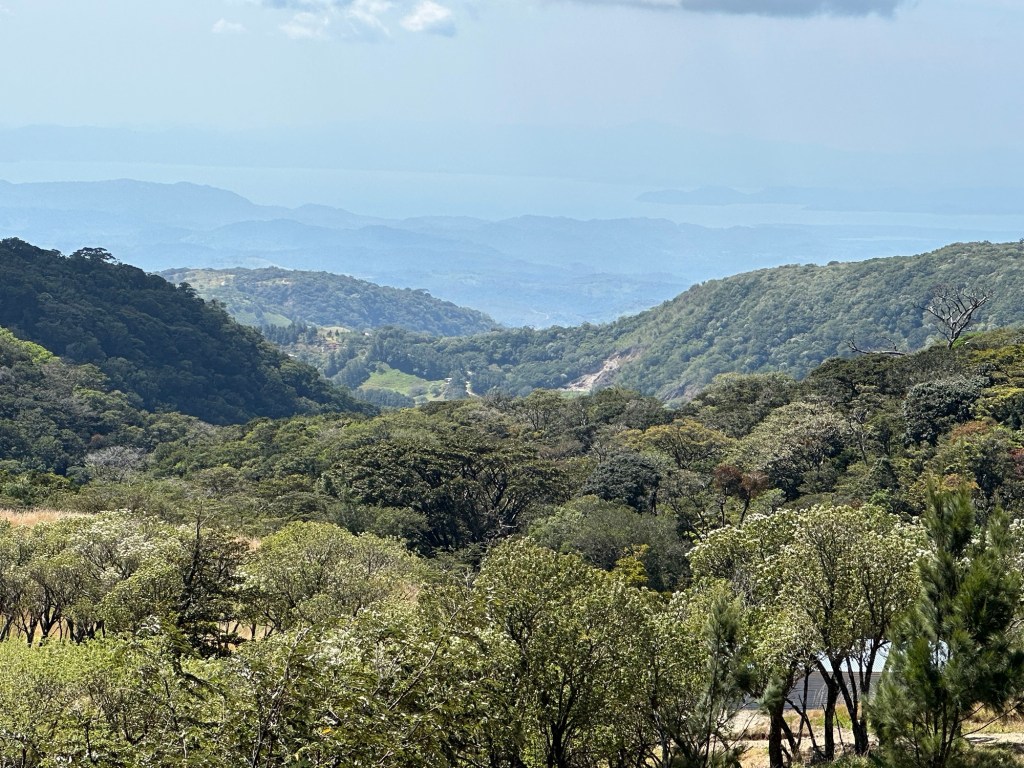
Boat Dock, Tortuguero National Park

I booked a canoe tour of the canals for the following day and found somewhere to chill for a couple of hours. Back at the hostel was fairly quiet so I just had some drinks with one of the travellers who was leaving the next day. Then an early night for me as I needed to be up at 5am for my tour.

Puerto Limon – Tortuguero

I had organised with the hostel owner boat transport to Tortuguero, my next port of call. I was hoping to get on a 10am boat, but he told me the night before he could only manage to get me on a 1pm one. Hence, I had plenty of time in the morning to get to the boat dock in Moin. I looked up Google Maps to see how far it was and decided to walk the 6.5kms instead of taking a taxi. Having everything that packs into one 35L pack weighing only 10kg really makes decisions like these most manageable. I cringe when I think about my early backpacking ventures with huge 20kg packs. I certainly have whittled it all down to the essentials these days and appreciate it every time I’m on the move.

Casita, Puerto Limón

Even though it was the heat of the day, the route down to the boat dock was most picturesque. It started through Puerto Limón suburbia where I was staying which eventually transformed into fringe dwellings. More basic little casas clung to the side of the ridge I ended up walking, affording beautiful views down into steep valleys. The ridge morphed into a spur and I followed it down to the coastal plain where the main road to Moins ran.

View down to the coast, Puerto Limón

Once I hit the main road which ran along the coast, it was very easy to see where all the money is in Puerto Limón. I ran straight into coastal high-end resort hotels, multi-rise luxury condos and gated communities. There was much in the way of development going on as well. Raucous callings of howler monkeys emanating from the tiny little National Park in its midst reminds one the vital habitats that will be destroyed when all this development is at an end.

Fancy Pants beach with all the overpriced trimmings

Eventually, I reached my end point with time to spare. Cheekily, a taxi driver pulled up next to me to offer a ride to the dock a mere 100m away! I showed him off with a grin. After a short wait, the boat arrived full with passengers from Tortuguero. It would appear that the morning boat is the more popular as there were only a German couple, myself and a local hombre as passengers on the return voyage.

Passenger Boat Dock, Moins

Reloaded, our little boat turned to make the journey back up to Tortuguero via the Tortuguero Canal system. This feat of fluvial engineering was completed in the early 1970s to join the numerous and varied waterways to make transport easier for the remote communities that relied upon it. As such, it is a labyrinth of channels spanning a large area. Signage one might expect on roadsides indicate directions and distances to settlements as I imagine it would be very easy to get lost in this aquatic maze.

Shortly into our trip we stopped to pick up a young hombre, his mother and his grandmother. It was really sweet watching him help his far from fit mother and frail grandmother onto the boat and settling them into their seats. The tiny settlement we collected them from had rustic shacks fringing the waterway; many with small fishing boats tied up in front.

Continuing on our journey, we sped along the river and passed many interconnecting waterways en route. Occasionally we came to an opening to the sea and had to circle around the intersection to continue our route. The banks were lined with dense jungle vegetation which dripped into the tannin-rich water, obscuring sight of the muddy riverbanks. Overhead at intervals ran the remains of old fruit-train bridges and one could almost imagine what it would have been like back in those days when it was only steam train, boats and animal-driven carts available to traverse the steamy, tropical jungle.

Tortuguero Canal

After a couple of hours, the sky clouded up and the temperature dropped. It was getting decidedly chilly on our little boat, but with spray jacket firmly tucked inside compression bag in pack I decided to just suck it up. But then it started to rain. Fortunately, the boat had plastic sides it could roll down which actually made everything much more comfortable inside. By the time we got to Tortuguero though, it was bucketing down. The boat pulled up alongside the dock and we piled out into the rain and straight into an adjacent dock-side restaurant to await our bags. I had paid the deposit for my trip to the hostel owner and handed over a 20 colones note for the remainder of the fare to the señora collecting. She said she would get change but it ended up being a shitfight with her claiming she didn’t owe me anything. I had taken a photograph of the text messages between the hostel owner and whoever he booked it with and stood my ground. It was only about AUD12 but I was determined. Eventually, she gave in and I got my change.

Tortuguero Canal, Tortuguero

By this time, I was soaked so decided just to walk straight to the hostel in the pouring rain. With water cascading off me, I found reception and checked in. The dorm I was staying in was a nine bed one but very roomy with fairly good amenities. Peter, who I had met in Cahuita and travelled to Puerto Limón was staying there as well so was good to catch up and swap stories. I straight away organised my roomies for a New Years celebration, then had a much needed shower and put on some dry clothes.

Hostel Cabinas Tortuguero, Tortuguero

We met up with some Uruguayan girls staying at the hostel in a private room and they joined us for drinks in the common area. It was a great evening swapping life and travel stories and generally having a laugh. Come 12.00am, we did the usual Happy New Year and continued the party over the road at the local nightclub. The music had been pumping all night and now it was notched up. With a killer light show and energetic DJ, it certainly got the punters moving. I left with the last of my party peeps at 2.15am after a pretty big day.

Puerto Limón

I was a bit excited to get out and explore Puerto Limón today as a refreshing change from the tourist hotspots I had been basing myself at recently. This is an authentic port city with hints of its colonial past sprinkled throughout. That said, it has all the grit and grime one might expect from a city of this nature in the region.

Hostel Doña Koko, Puerto Limón

Suitably caffeinated up, I headed off back down the hill I was now so familiar with. I had read in the guidebook you could take a public boat to the little island out in the bay and was keen to check it out. I wasn’t exactly sure where to go as the LP has of course stripped all that useful information out if it’s latest editions… So I asked a señora at the entrance to the port facility. She informed me it wasn’t possible and a charming and well spoken Afro-Caribbean man stepped in to assure me that was indeed the case. However, he could organise a private tour for me. I told him I wasn’t interested in a tour and went to walk off after politely taking his card ‘in case I changed my mind’ when another hombre approached me to tell a different story. I found out that you definitely can get a boat out to the island and he gave me directions on how to get to the boat dock.

Puerto Limón Pier

Dodging the hectic Puerto Limón traffic to make the necessary road crossings, I walked around the port facility to a small river where a couple of passenger boats were tied up. I asked what ended up being a somewhat inebriated hombre about boats to the island and he directed me inside the adjacent building where I found a lovely hombre by the name of Eduardo who was keen to provide assistance.

Boat Dock, Puerto Limón

Eduardo gave me the name and number of a boat operator to contact. I spoke to him for a couple of minutes but it seemed if I wanted to go out by myself it would be more than I was willing to pay. That was when Eduardo intervened and spoke to the hombre to come to an arrangement. I would join another pre-booked group leaving in 15 minutes and only have to pay AUD4. A great deal that I immediately jumped on to. Eduardo showed me where to wait and explained to another hombre on the dock what was happening so he could ensure I got picked up.

Rio Cieneguita, Puerto Limón

My little boat came along and I jumped aboard. We putted past tiny, wooden fishing shacks lining the banks of the river and the Costa Rican Coast Guard (another never-ending branch of the CR Police), before reaching the mouth of the river. When we got there, I realised there was a gigantic cruise ship in port I hadn’t been able to see from the other side. I didn’t see any tourists in town so I’m assuming visiting passengers were bussed off to different parts of the country for day trips. It did explain the small array of tourist trappings surrounding the port though, in case some poor passengers dared to venture out on their own.

Puerto Limón

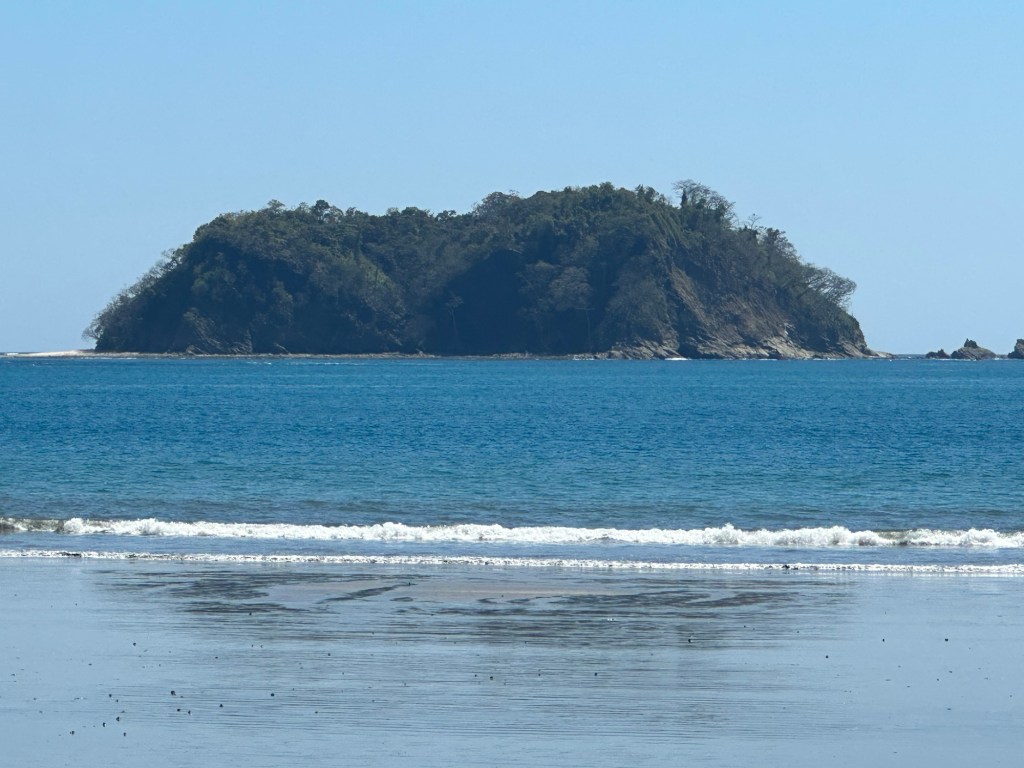
After passing the cruise ship, we headed straight out to the island. Isla Quiribri (or Uvita as it is locally known) is quite significant in Costa Rica’s history as Christopher Columbus anchored there in 1502 on his final trip to the Americas. We pulled up at a boat dock which was in a state of great disrepair and jumped off.

Isla Quiribri

I quickly found and followed the narrow little track leading off into the jungle. This trail wound its way alongside the coastline, climbing little rises to provide its trampers with stunning vistas of its surrounding terrain. On the far end of the island were the remains on an 1886 hospital run by nuns for patients with incurable diseases and further around, the remains of the monastery attached to the operation. There was also a lookout tower built by the US military during WWII.

Trekking trail, Isla Quiribri

All around the island, was thick jungle running straight down to the rocky coastline. Birds circled high overhead and flittered through the jungle canopy. On the ground, leaf-cutter ants created orderly causeways through the jungle floor. And always, the sound of the powerful surf, permeated the cicadas and bird song.

Coastal vista, Isla Quiribri

After a couple of hours, I returned back to the start and decided to go for a swim while I waited for the boat to return. Suitably refreshed, I then found a perch to wait. The boat arrived at the designated time, but the party I had crossed over with had no intention of getting in board at that stage. As I was well and truly ready to go back, I wandered over and the young boys manning the boat were happy to take me and return later for the others. I jumped on board and we zoomed back to the mainland.

Monastery remains, Isla Quiribri

Back at the boat dock, I went in and thanked Eduardo for his assistance, then walked back into town. I wanted to wander around a bit more and see some of the old, colonial buildings. I found the city markets which had been in operation since 1893, and had a poke down its narrow warren of gangways.

Municipal Market, Puerto Limón

Eventually, I made it back up to a little restaurant I had passed several times on my way to and from the hostel. Restaurante Linda Vista certainly lived up to its name and the city lights twinkled below as I had something to eat and wash it down with an ice-cold cerveza.

Cahuita – Puerto Limon

It was time to bid this sweet little town adios, but first our small gang of the previous evening went to see a tree where one of the group was pretty sure a sloth was living. We were certainly rewarded for our early morning efforts as not so high in the massive cinnamon tree was a sleepy sloth. After we unwittingly disturbed it from its slumber, it stretched a bit, then made itself comfortable and went right back to sleep. We left it be then and continued on our way.

Snoozy Sloth

One of the guys had booked a surf lesson and the rest of us went with him to find some breakfast close to his meet point. Pickings looked slim, but then we spotted an hombre sitting out the front of a hotel with a coffee so asked if the hotel restaurant was open for breakfast. It turned out that this particular hombre was the hotel owner down for a few days to attend to some business. French-Canadian, Jean, was particularly chatty and very entertaining as he explained how he came to purchase a piece of rocky land by the beach in the 1970s and transformed it into the beautiful little hotel it is today. He invited us to look over the property after we had had our breakfast and we ended up spending a couple of hours there chatting with him and getting the low down on Cahuita’s more recent history.

Playa Negra, Cahuita

Back to the hostel to check out and collect packs for three of the five of us. I decided a farewell cerveza was in order so we went back to my favourite beach-front hotel for a brief bevvie before parting. Then it was to the bus station and boarding buses in two different directions.

Cahuita

Peter was heading to Tortuguero so caught the same bus as me as he had to pass through Puerto Limon to get there. After about half an hour of the bus rumbling along the main coastal road, stopping to pick up and drop off passengers, it started to rain. Heavily. Windows were slammed and the temperature inside the bus climbed steadily. Rivulets of water streamed past and the road was quickly inundated. As we approached Puerto Limon, thunder and lightning began to make itself known as the rain intensified.

Puerto Limón

Once at the bus station, I organised a taxi for Peter to take him to the boat he needed to get to Tortuguero as he didn’t speak any Spanish. I then checked how far away my hostel was. According to Google Maps it was only 2.5kms away and the rain seemed to be easing. I figured I could probably make my way there in between showers so started making my way in the light drizzle. Unfortunately, the drizzle ended up becoming a bit heavier and the route became quite interesting. Costa Rican footpaths (if one can bring oneself to refer to them as such…) are a mishmash of steeply sloping driveways, narrow steps, broken and uneven paths of concrete and/or tiles, and narrow, grassy tracks. Hazardous enough in the dry, they become almost suicidal in the wet. To top things off, shortly after setting off, the route began to climb a particularly steep hill. I remained committed and eventually reached my destination in a somewhat less than tidy condition.

Puerto Limon

My hostel host was particularly chatty and although desperate for a shower and dry clothes, I had coffee and a conversation with him first. I was pleased how well my Spanish held up as I haven’t really been conversing in it a great deal this trip and I’m still very rusty. However, I was able to satisfy his questions about me and Australia and passed a pleasant hour as such. Suddenly, I got a message from my Chilean friend, Maria. She had returned from Tortuguero and was now spending the night in a downtown hotel. I bit the bullet and walked back into town to meet her for dinner. It was a slow trip as playing chicken with Costa Rican traffic was hazardous enough at the best of times. It was lovely to catch up with Maria for one last time as she was leaving for home the next day. It’s one of the things I love about travelling; you are always making friends on the road. We said our final farewells and I turned to make the slow, steep trek back up the hill to my hostel.

Cahuita

The one thing everyone comes to Cahuita for is it’s amazing National Park. Only 10 square kms in size, this little slice of heaven packs a huge punch when it comes to local wildlife. I decided to do the whole 8.5km trail which works it’s way along the coast and around Punta Cahuita. Fuelled up on coffee and something to eat from one of the little local restaurants, I wandered over to the Ranger Station at the start of the trail to sign in.

Parque Nacional Cahuita

The first couple of kms were pretty hectic as groups of local and international tourists were clumped together with guides strung out along the trail. I didn’t want to do a guided tour as I was planning on walking the whole loop, but took advantage of eavesdropping on the various groups as I wandered by. There were so many animals in that first section of trail that moving through became a slow process. I saw sloths, monkeys, raccoons, coatis, macaws, toucans, iguanas and even a couple of little snakes.

Raccoon, Parque Nacional Cahuita

The trail twisted its way between stunning coastal rainforest and picturesque mangrove swamps; with regular little paths veering off to the palm-thronged beach. Eventually, it came to a small river crossing where it seemed most tourists turned back from. The river was easily forded however, and I continued on my journey. The trail continued past another small river crossing and on to Punto Cahuita, the tip of the little peninsula the park is primarily situated in.

Rio Perezoso. Parque Nacional Cahuita

At this point, the more adventurous tour groups finished up with fresh fruit in a little wooden pavilion and snorkelling tour groups congregated. In Parque Nacional Cahuita, it is illegal to snorkel without a guide, due mainly to the intense and unpredictable currents which plague this stretch of coast. I passed the little throng of people and continued along the trail.

Capuchin Monkey, Parque Nacional Cahuita

The coastline changed as you went around the point. The rainforest was a bit more open and the beach all but disappeared. Waves gently crashed on the edge of the vegetation as the trail wound itself between tiny black sand bays strewn with exposed tree roots. There were very few people on this part of the trail so it was lovely to just soak up the tranquility.

Parque Nacional Cahuita

Eventually, the beach reappears as you approach Playa Vargas. This beach has black sand where back around the point, the sand is white. Timid little hermit crabs scuttle along the track, sheltering under their shells as you approach. The surf is also rougher on this side and signs appear warning people about the hazardous currents. Despite that, I was in much need of a cooling dip so braved the conditions for a quick swim.

Hermit Crab, Parque Nacional Cahuita

At this point the track spits you out at the Puerto Vargas Ranger House where there are some basic facilities to wash the sand off. This is also the start of a 2km boardwalk through mangrove forest to the Puerto Vargas park entrance. The boardwalk is relatively new and winds it’s way through stunning mangrove habitats. There are little wooden pavilions at intervals you can sit at and just soak up the tranquil environment. The gently crashing waves just beyond the mangroves set the soundscape, along with cicadas and frogs; punctuated with the distant calls of howler monkeys.

Puerto Vargas entrance to Parque National Cahuita

All too soon, you pop out at the Puerto Vargas entrance to the park and pass the ranger station as you walk back to the main road. I was planning on catching a local bus back to Cahuita, but accepted a lift for a few dollars from a passing shuttle bus. Back at the hostel, it was time for a much needed wash of me and everything I was wearing; hoping my clothes would dry in time for moving on in the morning. I went back to my favourite hotel overlooking the National Park and partook of more 2 for 1 daiquiris. I was updating my blog when I noticed some people looking up with their phones. There perched not far from my head, was a sloth slowly making its way along a cord strung between the table shelters.

Parque Nacional Cahuita

On returning to the hostel, I met up with two of the guys I had been partying with the night before, a French girl and a young American guy. We decided to all go out for dinner at one of the local restaurants and as luck would have it, this restaurant still had its Happy Hour in full swing. Two extremely strong caipirinhas later, I had well and truly done with the cocktails for the day.

Puerto Viajo de Talamanca – Cahuita

Up nice and early for breakfast after getting my stuff organised to move on. Hostel Playa 506 really is in a beautiful setting. Right out the front of the hostel is the beach. Waves gently crashing is a tranquil soundscape to chill to, but there is much more of this enticing country to experience.

Hostel Playa 506

I got information about where and when to catch the local bus to my next port of call, Cahuita, and waited well beyond the scheduled time. Just as I was about to give up and try hitching with three Aussie travellers I had met at the hostel, it slowly rumbled up. Clearly this bus was on Tico Time! We continued on into and out of Puerto Viajo and up to the tiny town of Cahuita. Lush, verdant countryside passed by as the bus stopped on a regular basis, picking up and dropping off locals. I chatted with the three Aussies who caught the bus with me, swapping travel stories.

Puerto Viajo de Talamanca

In what seemed no time, we were in Cahuita. I looked where my hostel was and walked the couple of blocks. Secret Garden is a lovely little property located on the edge of the National Park and right in town. It is beautifully appointed and set amongst landscaped gardens. Unfortunately, the dorm room I was staying in wasn’t as salubrious, with five bunk beds crammed side by side with little space in between. Still, each bed had its own little fan, light and charging station so it was all that was really needed.

Secret Garden

I had settled into doing some much needed washing when I got a message from Maria, my Chilean friend. She had moved up to Cahuita the day before and was staying at a nearby hotel. We met up and wandered to the beach at the National Park just up the road for a swim. It just so happened that the hotel at the edge of the National Park had two for one cocktails for AUD10 so I felt compelled to avail myself of a few after our swim.

Playa Blanca, Parque National Cahuita.

It was then back to our respective lodgings where I met up with some other travellers from US, UK, Switzerland and the Netherlands. We chatted for a while before deciding drinking card games were in order and wandered up to one of the local supermarkets to buy beer. There may have been shenanigans and requests to keep the merriment down by management later in the evening, but no-one was kicked out and we eventually called it a night before anyone was. And so endeth my first night in Cahuita.

Puerto Viajo de Talamanca

I went with Maria into Peurto Viajo after breakfast to cash up at the ATM and get some bug spray. I’m trying to use my credit card as much as possible as the ATM fees are astronomical. But some things you have to pay for by cash. There doesn’t seem to be any rhyme or reason behind fees – could just be to do with individual banks, but fees have been as much as 9%. I also needed to get some bug spray. I took a pump pack of Rid from Australia as I couldn’t take an aerosol can on the plane, but it quickly clogged and stopped working despite my best efforts. A massive pity as the aerosol can I replaced it with cost an eye-watering AUD21!! If I end up with any mozzie-born nasties after marinating in this gold-plated elixir, I’m going to be mighty pissed.

Playa Cocles

Back at the hostel, I rented a pushbike for USD7. Given I haven’t cycled outside of the gym for several years, it was a rocky start. But I eventually wobbled my way down the road back towards Puerto Viajo. The bike was very basic with no gears and back brakes but it did the job of getting me along the coast quicker than I could walk. I will hire a motorbike at some stage, but they are quite expensive to rent.

Puerto Pirate

After congratulating myself on riding the three kms back to Puerto Viajo without coming a cropper, I decided to find a beachside bar for lunch and a cerveza. Puerto Pirate certainly ticked that box. With a funky decor and situated right on the beach, it was just the place to partake of tasty honey and lime shrimp tacos and watch the world pass.

Sloth Point, Playa Uva

Suitably refreshed, I jumped back on my deadly treadly (aptly named if you saw my cycling…) and headed back down the coast. I passed my hostel and the Jaguar Refuge Centre and was then in new territory. I wanted to check into the beaches en route and turned into a side street indicating Playa Uva. Riding down a rutted, narrow track, I eventually came to what was signposted as Sloth Point and parked the bike up. Obviously a popular swimming spot, the place was quite crowded so I wandered further up the beach to find a quiet spot to strip off and jump in the surf.

Sloth Point, Playa Uva

On the way back to my bike, I saw a sloth in the trees in the jungle next to the beach. They are such magnificent little creatures. So slow moving due to their extremely low metabolism, it’s like they are doing yoga in the trees and are a joy to watch.

Track alongside Playa Uva

On the bike again and I continued following the coastal track, passing more little beaches until I came to a river. From behind, a guy on a heavy duty beach bike passed me and headed over the river; continuing on the other side. There was no way my little bike was going to repeat those antics, so I pushed it over the hard sand and the narrowest part of the river crossing. Once there, I was able to find a continuation of the track, albeit a very rough, rutted one with tree roots playing havoc with the surface. This is was able to follow until I came to another river. Alas, this one was unpassable.

Mangrove swamp, Playa Uva

Reluctantly, I turned around and followed the track back to the main road. I was hoping to continue on to Manzanilla, however, it was getting late in the day and these roads are not best for night riding. It only took me about an hour to return to the hostel, by which time it was just on dark.

Hmmm. Which way to go??

Bike parked up and it was time for a well earned cocktail in the hostel restaurant. Time also to work out where I was going next. I had decided I would start at the southern Caribbean side of Costa Rica and make my way around the country from that point. Decision made, I booked the next couple of nights on-line in Cahuita and called it a night.

Puerto Viajo de Talamanca

Christmas Day and a lazy start. It’s always a different experience being away from family at Christmas when you’re travelling and everyone deals with it in different ways. Some travellers spend the day glued to the phone to friends and family back home. I personally find it easier to just treat it as a normal day. The time difference between Central America and Australia makes it difficult as well to make connections when you would like.

Hostel Christmas decorations

Maria, my Chilean friend, and I decided we would go out to the Jaguar Rescue Centre to see if it was open as we couldn’t find any information on-line. We caught a tuk-tuk and found it was well and truly open with over 100 tourists booked in for a tour. Fortunately, they split into groups of about 20, each with their own guide, which made for a more manageable experience.

Jaguar Rescue Centre

The Jaguar Rescue Centre is actually a bit of a misnomer. Two European animal biologists met in Puerto de Viajo where one had already moved to. A local brought an injured ‘jaguar’ (actually an ocelot) to them which unfortunately didn’t survive, but that didn’t stop locals bringing the couple injured animals and referring to them as the Jaguar rescue people. The Centre has now grown to a large, well organised organisation running primarily on a volunteer staff, funding from public donations and what they make from tours.

Sansa, the Spider Monkey

Our guide, Carlos, was excellent. He explained how the Centre came about and the threats and challenges facing local wildlife. It would appear that electrocution from overhead powerlines are up there as the main cause of death and injury for animals such as sloths and monkeys. The Centre has an active program raising funds to purchase insulation for the cables to make it safe for wild animals. The Costa Rican power company has agreed to fit any provided insulation as part of an agreement it has with the Centre.

Juvenile Two-Toed Sloth

After our tour, we tried to find a soda (local restaurant) one of the guides recommended, but failed so had lunch elsewhere. Then it was back to the hostel for a chill for the rest of the afternoon. And that was my Costa Rican Christmas.

Orosi-Puerto Viajó de Talamanca

With the debacle of getting from Cartago to Orosi, I was keen to get accurate information about how to get to my next port of call, Puerto Viajo de Talamanca. It’s quite a long way from Orosi and I knew the journey by local bus would take several hours. So didn’t want to waste time trying to find information on the hop. I had met the lovely Dutch owner of the hostel a couple of nights ago who assured me the bus information in the hostel was correct so decided to rely on that.

Iglesia Colonial de Orosi Convent

I breakfasted again at my little Swiss bakery and while enjoying my coffee, the owner came out with an anxious look on her face. She was concerned that the buses may not be running as regularly due to it being Christmas Eve. I hadn’t considered that as I hadn’t encountered it as being a problem before in Central America. Christmas, Boxing and New Year’s Day, absolutely – most of Central America comes to a stand still. The señorita helping her tried to find information for me and could only find a direct bus from San Jose. Not my preferred option. The hostel owner had put me onto a site called ‘The Bus Schedule’, but I had been having troubles trying to get it to connect. Suddenly, that morning it did and I showed my concerned amigas. As some of the connections seemed a little tight, I decided to leave an hour earlier and leave a bit of wiggle room if I missed any of the connecting services. Thus, I bid adios to the señoras and walked over the road to the bus stop.

Iglesia Colonial de Orosi

As luck would have it, the 9.30am bus was cancelled, as wasr all subsequent buses for the next 2-3 hours. Vuelta Ciclista a Costa Rica is Costa Rica’s answer to Tour de France and just happened to be passing through Orosi that morning. There would be no buses until it was all over. I went back to the bakery and an amiable hombre filled me in with all the details. I explained I had accommodation booked in Puerto Viajo and really needed to find a way to get there. That was when he offered to take me to Paráiso (the first bus change) after he and his family had had their breakfast as they were going that way themselves. I gratefully accepted and ordered another coffee while waiting.

Local Orosi garden

Pablo and his wife, Jessica, another señora and I piled into the pick up and the three older teenagers jumped on the tray along with my pack and Pablo’s bike. In honour of my being Australian, Pablo decided the appropriate road trip music should be AC/DC’s Highway to Hell. I secretly hoped that wasn’t a foretelling.

Valle de Ososi countryside

We drove through back roads lined with locals waiting for the race to pass them. And then suddenly stopped on the side of the road on a hill. Pablo explained we were going to watch the race first, then go to the bus station. He kept assuring me that he would get me to the bus on time and not to stress. I had no option anyway as I was a captive audience. The race eventually passed and it was pretty awesome to experience. Especially with locals who could explain what it was all about.

Pablo and other local cyclists

After the last bicycle, support car/van/motorbike, paparazzi, police car/motorbike and ambulance passed, we all piled back in and on Pablo’s pick up and headed off on narrow, windy back roads; even crossing a small stream at one stage. Pablo kept assuring me all was fine with my bus schedule, although, by this stage I was having my doubts. Eventually, we popped out above a large town which I assumed was Paraíso. Alas, it was not. It was Cartago where Pablo and his family lived. Pablo explained we were just stopping at his home so he could get changed and then he would drive me to the bus station. I was desperately trying to get The Bus Schedule site to connect as we were now way past any bus timetable I had already searched.

Vuelta Ciclista a Costa Rica

Pablo cheerfully dismissed my concerns and we jumped back into his pick up to drive to the local bus station. He asked the señora there about connecting buses down to Puerto Viajo but wasn’t satisfied with the answer. Pablo thought it a safer option to go back to San Jose and take a direct bus. By this stage I was starting to think the same. I thought he was driving me to the bus station to take a bus to San Jose, but he drove me directly there himself instead – about a two hour return trip! He checked everything was in order before leaving me there. I was so grateful for his kindness. I tried to give him some money for fuel, but he wouldn’t accept it. Pablo explained he had travelled extensively and that other people had helped him out, so he was happy to help out a fellow traveller.

San Jose sculpture

At 2pm, my bus rumbled out of San Jose and began its long, uneventful journey down to the southern edge of Costa Rica’s Caribbean coast. I eventually rolled into Puerto Viajo de Talamanca around 6.30pm. I caught a taxi with two other backpackers staying at the same hostel, checked in and found my Chilean friend, Maria. It turned out some of the backpackers had organised a Christmas party and invited us to join them. Festivities ended with a bonfire on the beach and a late night.