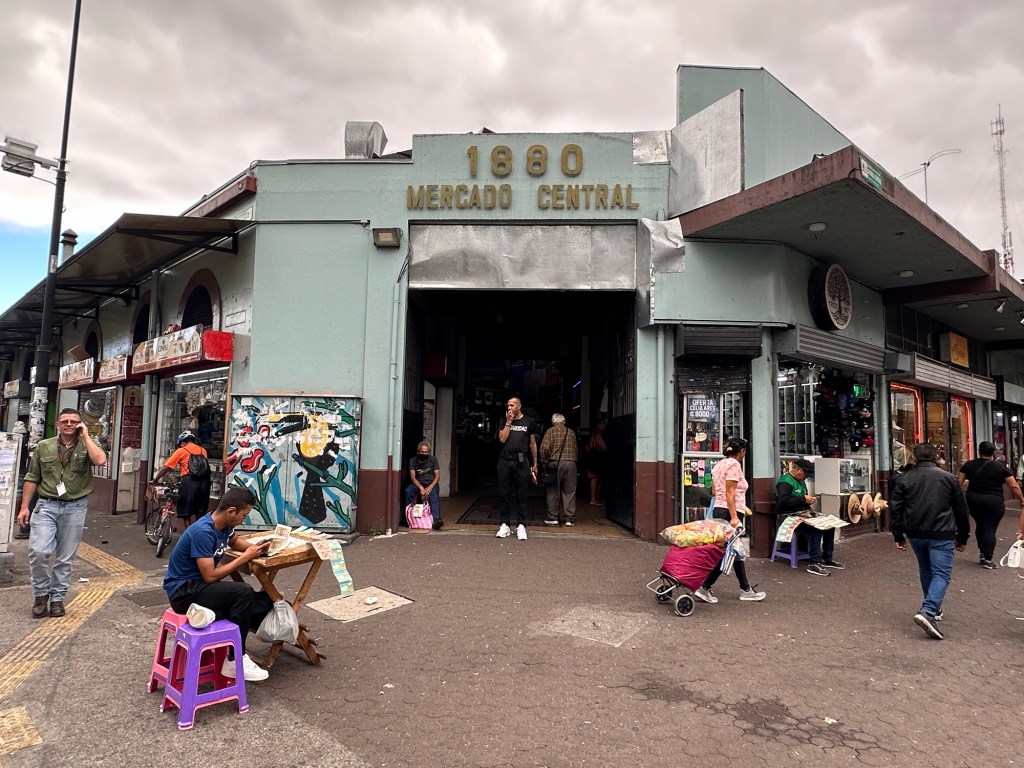
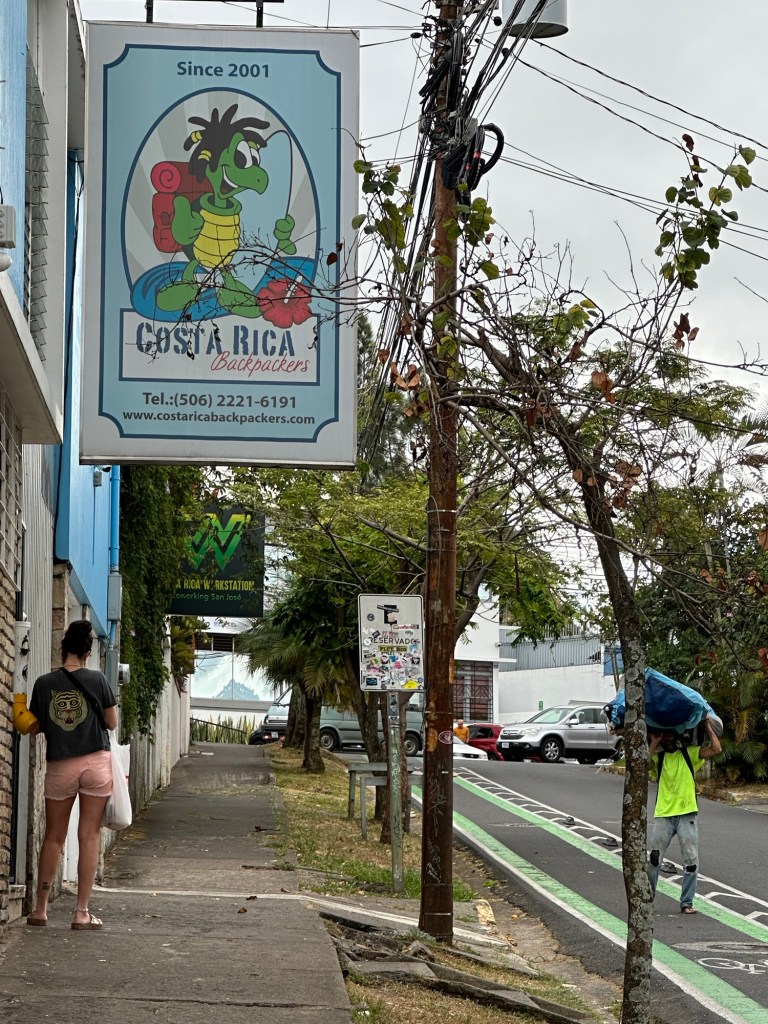
Back in San Jose and back at Costa Rica Backpackers, I enjoyed my morning coffee on the terrace chatting to another traveller. I had one more thing on my list to do before taking an Uber to the airport. As I travel light, I leave any souvenir shopping to the last day before I leave. I wanted to go the historic City Markets to find a couple of things to take home.
Mercado Central, San Jose
I arrived shortly after the markets opened and I found what I wanted. I also had time to have a poke around this traditional market that has been in operation since 1880. There was a myriad of items one could purchase from fresh produce to flowers to little birds in cages. Tourist stalls primarily ringed the outer edge, but the inner workings were as traditional as it gets.
Mercado Central, San Jose
Then it was back to the hostel for a quick shower before checking out and heading to the airport for the long flight home. It had been a magical six weeks and I thoroughly enjoyed it. Even though I had my challenges, Costa Rica prevailed and will always remain in my memories. Pura Vida, Costa Rica and thanks for hosting this wild woman during her wanders through your beautiful country. Adios!
I had bought a rockmelon from a roadside vendor the previous afternoon, so we had fresh fruit for breakfast looking out over the beautiful gardens of the property. It was so peaceful, with the birds chirping and the river cascading down alongside the garden. But we had plans for the day. After bidding farewell to our new French friend, we trekked back down the hill and walked towards the town.
Centro Ecológico Montaña Verde, San Gerardo de Rivas
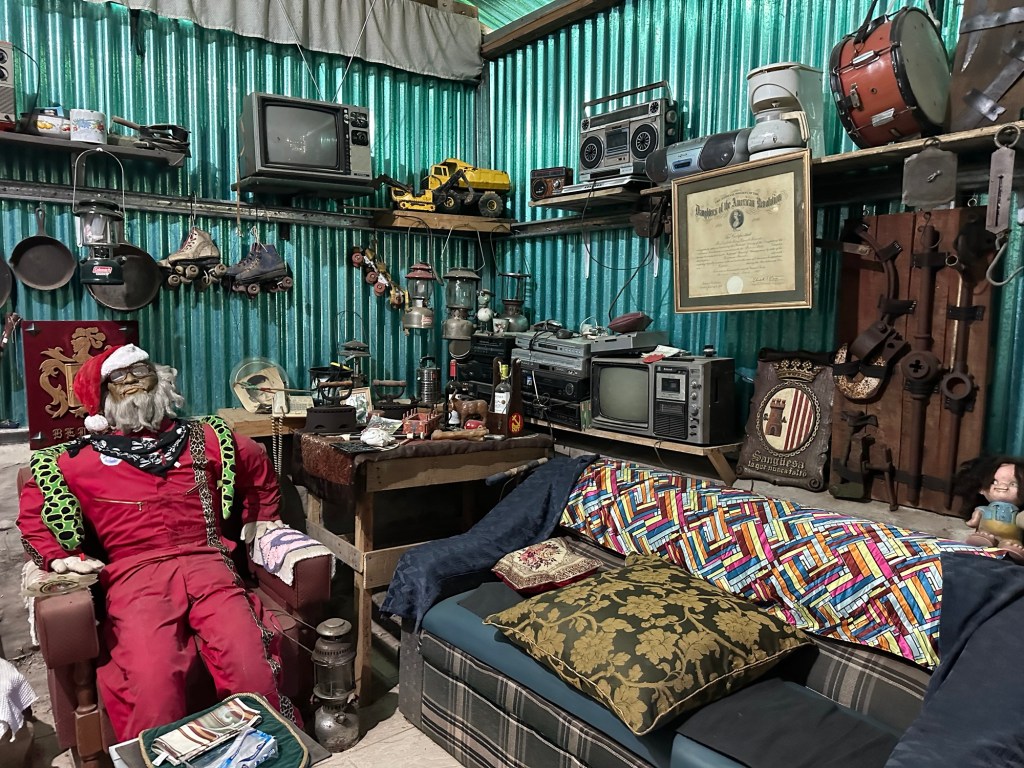
I had noticed a building with some really cool metal sculptures on the sides so stopped to take a photo. There was an hombre there who I started chatting to who ended up giving us a tour of his private museum. Every room in his sprawling casa was filled with items he had collected over the years, neatly displayed. Pedro was most enthusiastic about his collection and insisted on us seeing it all; the piece de resistance being a motorised Santa sleigh he hauls out every Christmas for an annual parade. We eventually managed to extradite ourselves and continued on our way.
Pedro’s ‘Museum’, San Gerardo de Rivas
We found a bus that went further up the mountain to a tiny village that was within striking distance of Cloudbridge Nature Reserve. Fortunately, we didn’t need to wait long and were soon on our way. The roads in this part of Costa Rica are narrow and wind tightly around the hills. At times, it seemed almost impossible for the bus to manoeuvre around a bend, but these drivers do it day in day out with aplomb and the bus glided without incident around each and every one.
Casa, Chirripo
We checked the return times with the driver at the end point and set out on foot (with luggage) to walk the final 2.6kms. One of the locals had told us the route was ‘muy tranquil’ and should only take us about 20 minutes. 30 tops. Encouraged with this information, we anticipated we had plenty of time to get there, spend a couple of hours in the park, and comfortably return for the 1pm bus.
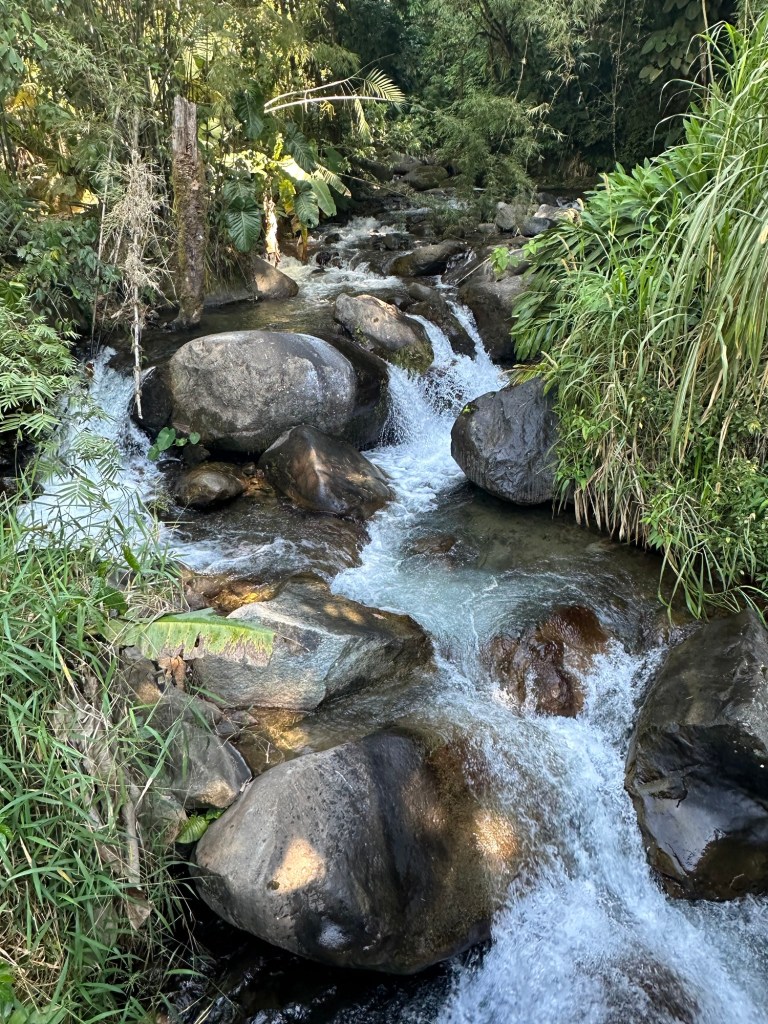
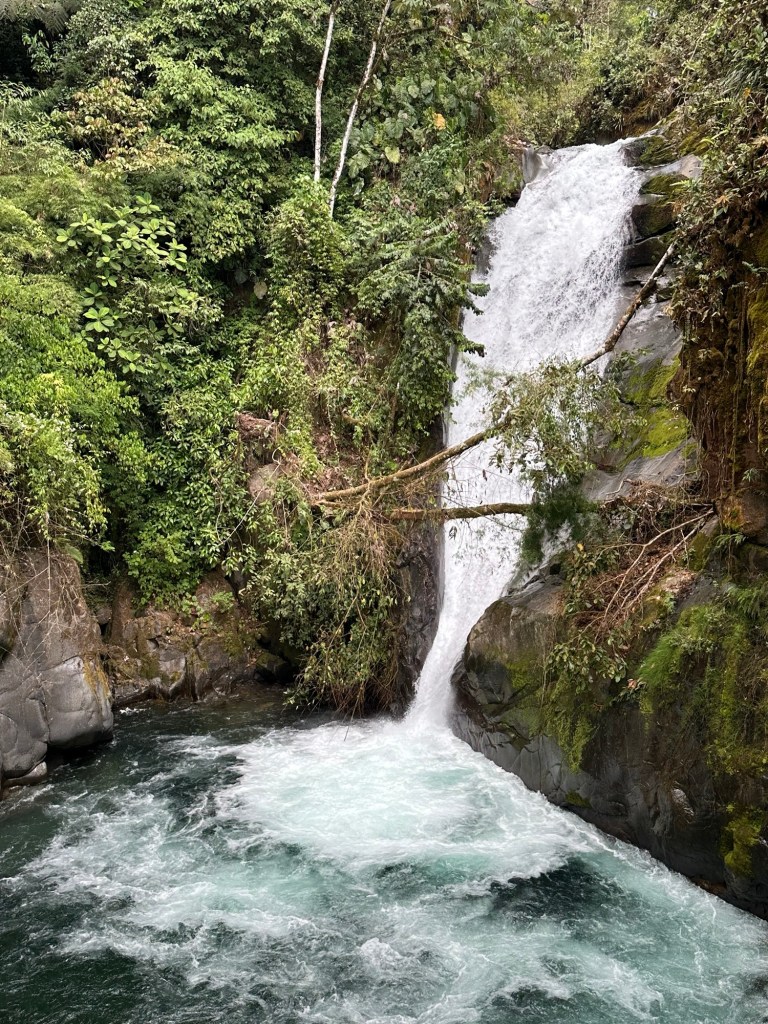
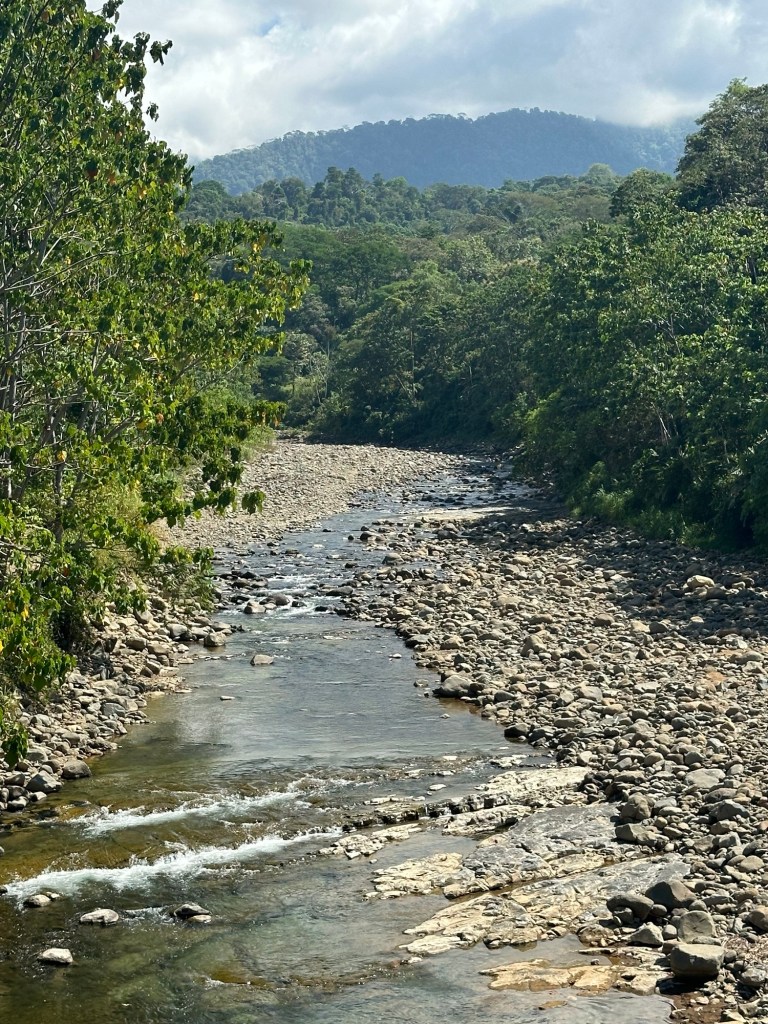
Rio Chirripo Pacífico, Chirripo
At first, the road was sensibly only slightly undulating, but then we turned off onto a side road which had a steep decline, crossed a pretty, cascading river, turned a corner and went straight up the side of the mountain. And by up, I mean up. The road was in poor condition, which made the traverse even more difficult, and extremely narrow. Any vehicle that went past, meant moving off the road completely. Fortunately, there were few vehicles, although a pack of half a dozen horses were being driven down while we were walking up.
Chirripo
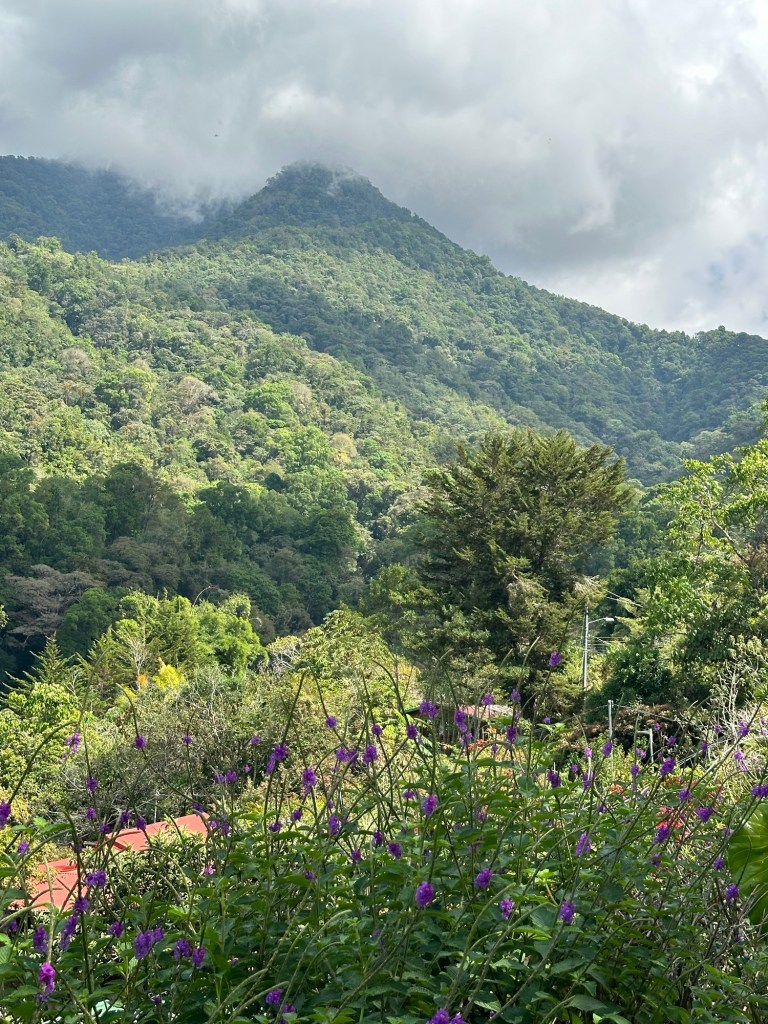
Even though the route was tortuous, it did allow for frequent stops to admire the spectacular view. And spectacular it was. Mountains cloaked with misty shrouds overlooked dense, verdant valleys with little casas dotted here and there. We were up in the cloud forest and the lush vegetation was everywhere. I reflected on our ‘helpful’ hombre’s description of ‘muy tranquil’ and his ridiculous time estimation. By now we had been walking for about an hour.
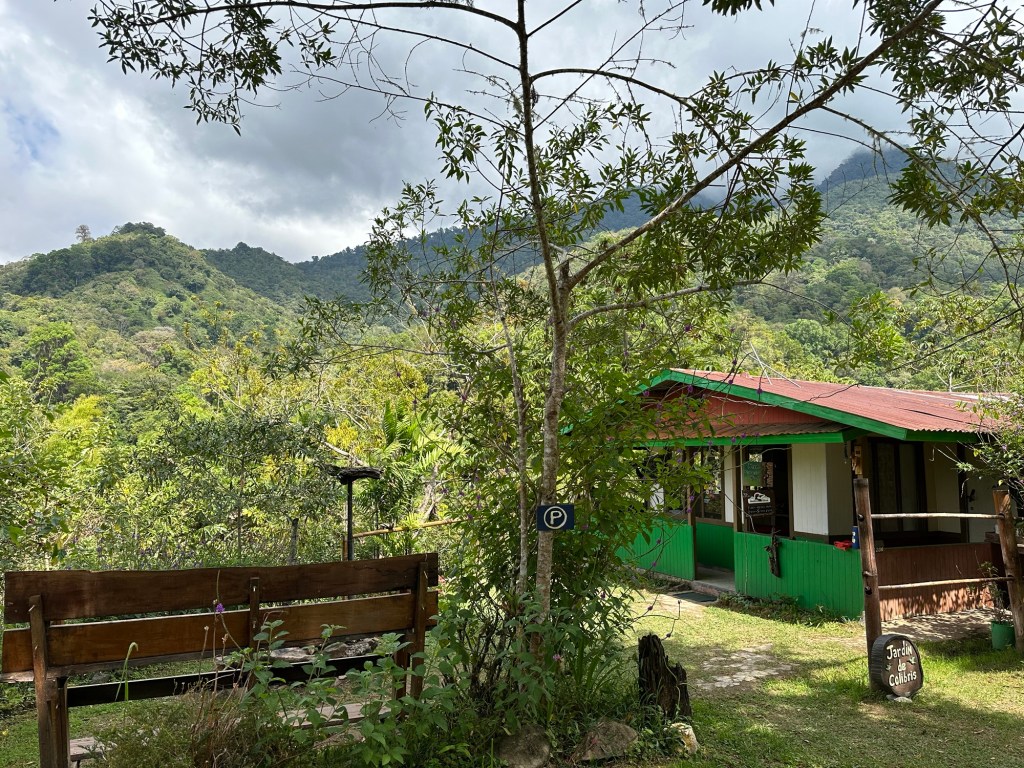
Jardín de Colibris, Chirripo
Just when I thought this road would never stop its steep descent, it began to flatten out. At this point, at a bend, we noticed a little building that looked like it could have been a cafe or something so went to investigate. It happened to be a hombre’s house which he allowed visitors to come and birdwatch. There were a couple of guys from the UK doing exactly that and who were also staying at Cloudbridge so we got more reliable information about the remainder of the journey there. It seemed we had done most of the hard work and the final 700m was relatively easy going. We left our packs with the hombre there and continued on our way.
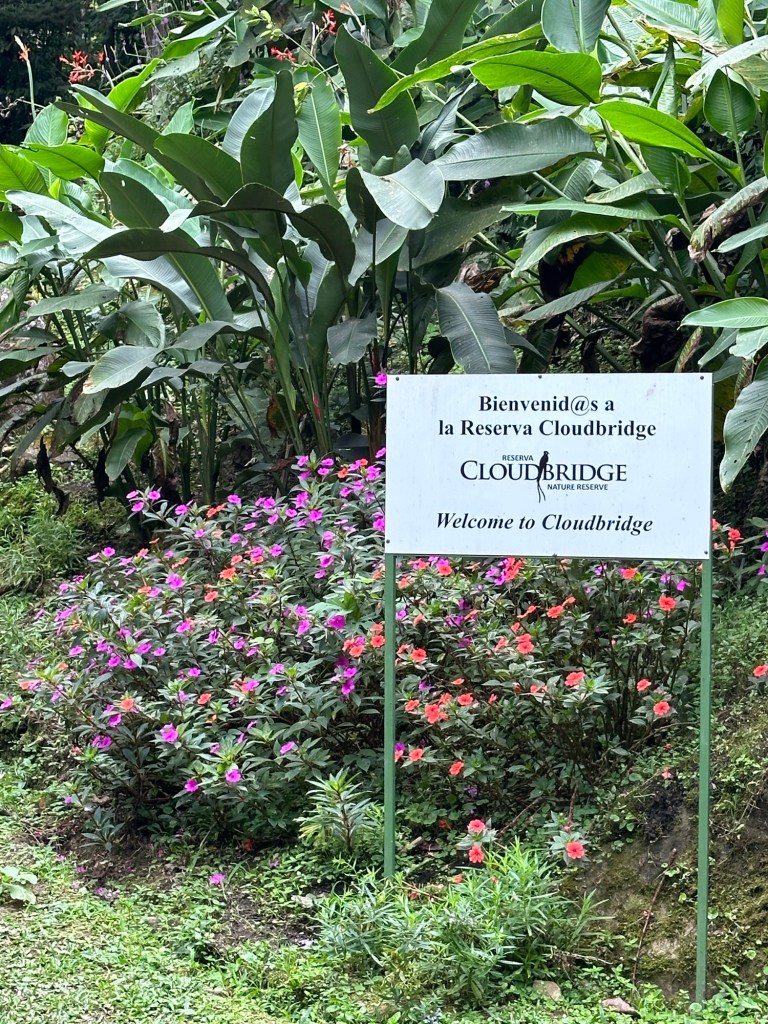
Cloudbridge Nature Reserve, Chirripo
We finally reached Cloudbridge at 11.30am. I estimated I would need to leave by 12pm to have any hope at all of making the 1pm bus so effectively only had about half an hour in the park. That was enough time to see the main trails and cascades close to the entrance so decided that was all I would be able to do. I needed to be back in San Jose that night and was already pushing it. I was pretty fatigued by this stage and what should have been a breeze to get around, took forever. Still, the park was beautiful and the cascades stunning.
Cloudbridge Nature Reserve, Chirripo
Janie decided she would continue on to the lookout before trying to catch me up. We said our farewells in case we missed each other. I all but ran down the main path to the entrance before deciding there was no way I was going to make the 1pm bus by walking. I asked a couple if they would give me a lift back down the mountain to the bus and they were more than happy to do so. Relieved, I arrived with time to spare. Shortly before the bus left, Janie arrived back to. She had also got a lift down so we jumped on board the bus back to San Gerardo de Rivas. There we did say our final farewells as Janie wanted to go see a coffee finca, whereas I was keen to get going to San Jose.
Parque Central, San Isidro de El General
The bus continued on to San Isidro de El General where I bought my ticket to San Jose. Unfortunately, I had a two hour wait for the next bus which meant I wouldn’t be able to see the countryside after the first couple of hours but at least I would be in San Jose at a reasonable time. My hostel was only a short walk from the San Jose bus terminal and I was relieved to finally arrive, shower and hit my bed. It had been a big day.
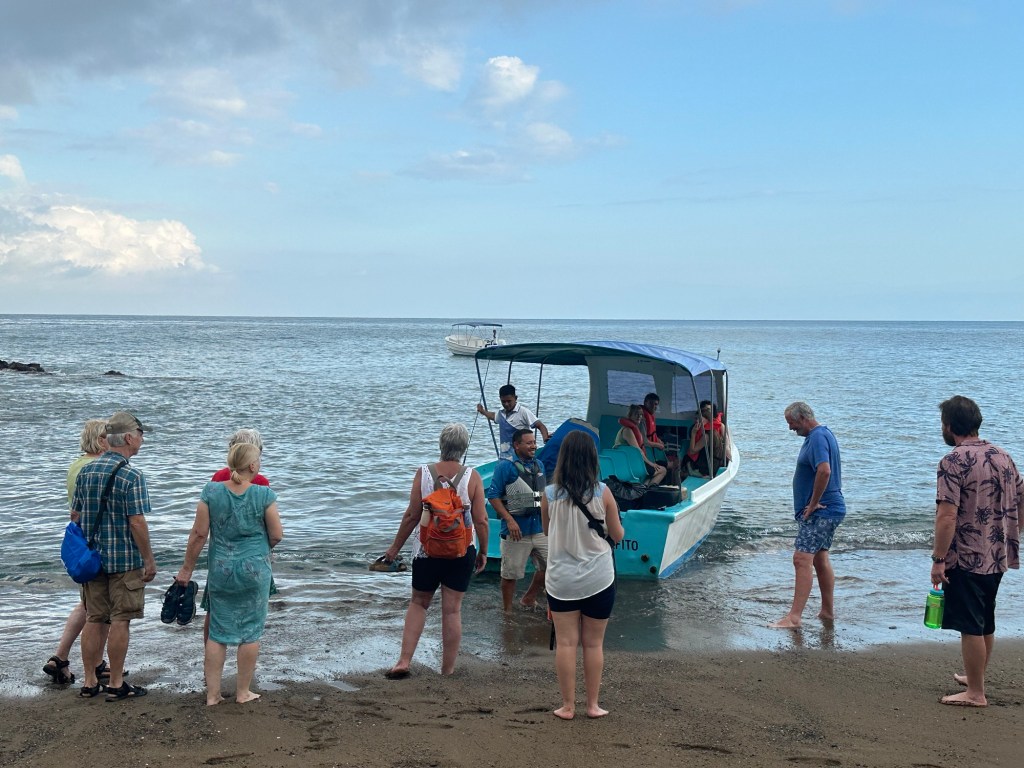
I had booked a boat back to Sierpe leaving at 7am so had an early start to the day. Once all the luggage was put in the front hold, we waded through the water to climb onto the boat. Then, it was off back up the coast. Our captain had told us we had to pick up more passengers at the main settlement, but we were unprepared for how packed the boat ended up being. It would seem that the early morning boat is the popular choice for people leaving the area as there were many more boats departing apart from ours.
Boat transfer, Bahia Drake
The ocean was more choppy than when I arrived and the swell where the waves were breaking was greater as well. I was expecting a bumpy ride, but our captain expertly coasted through with barely a blimp. Then, we were back in the river, zipping through at a good rate of knots. A crocodile was basking on a mudflat as we sped by and a multitude of birds flittered, soared or waded as we passed.
Bahia Drake
All too soon we were back in Sierpe, disembarking and awaiting our luggage. I walked the couple of blocks to where the bus was waiting and caught up with Janie who had been transferred to another boat. We travelled the short distance to Palmar Norte and then jumped on a bus to San Isidro. The road closely followed the river and we had spectacular views of its cascading stream. Then it continued on its way northwards. We were now back in the mountains and able to enjoy all the vistas that that entailed; from sweeping views across broad mountain valleys to perilous drops down into seemingly never-ending chasms.
Sam Isidro
In San Isidro, we went to grab a coffee before deciding our next move. I found a cheap hostel just out of San Gerardo de Rivas from where we could try to get to the Cloudbridge Nature Reserve. Decision made, we then organised an Uber to get us there.
Centro Ecológico Montaña Verde, San Gerardo de Rivas
Centro Ecológico Montaña Verde was up a steep, dirt track which passed several rural properties along the way. We ended up walking as we hadn’t realised it was so far up. When we arrived, the only person there was a French traveller who advised that the hombre who ran the hostel wasn’t there and he wasn’t sure when he would be back. I had booked us both in so we decided to just chance it and leave our packs and wander into the little town.
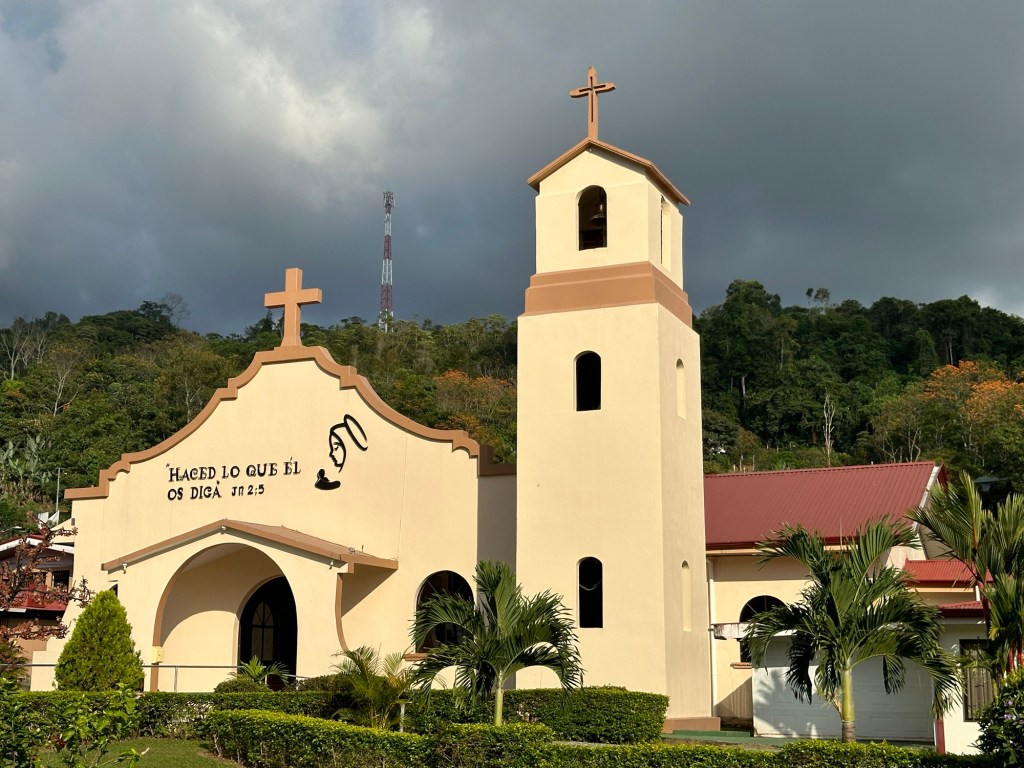
Parroquia Inmaculada Concepción, San Gerardo de Rivas
San Gerardo de Rivas is a pretty little town with an ubiquitous quaint church in its centre, framed by the surrounding mountains. We found a little restaurant with views over the countryside to have an early dinner before heading back to the hostel.
Centro Ecológico Montaña Verde, San Gerardo de Rivas
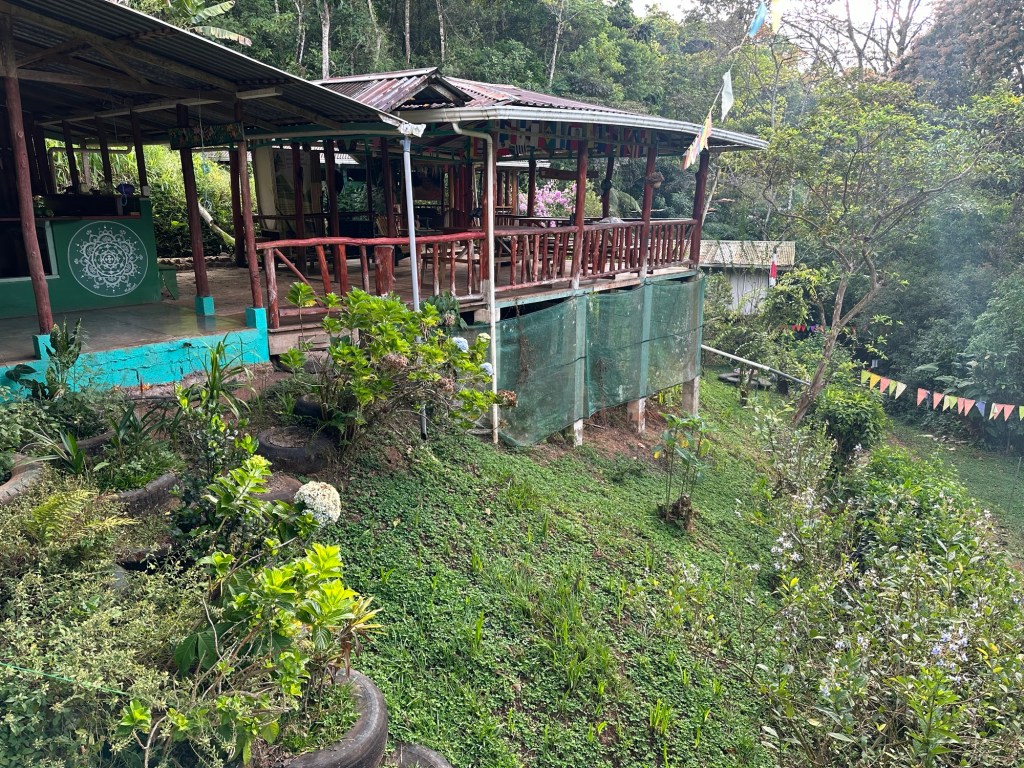
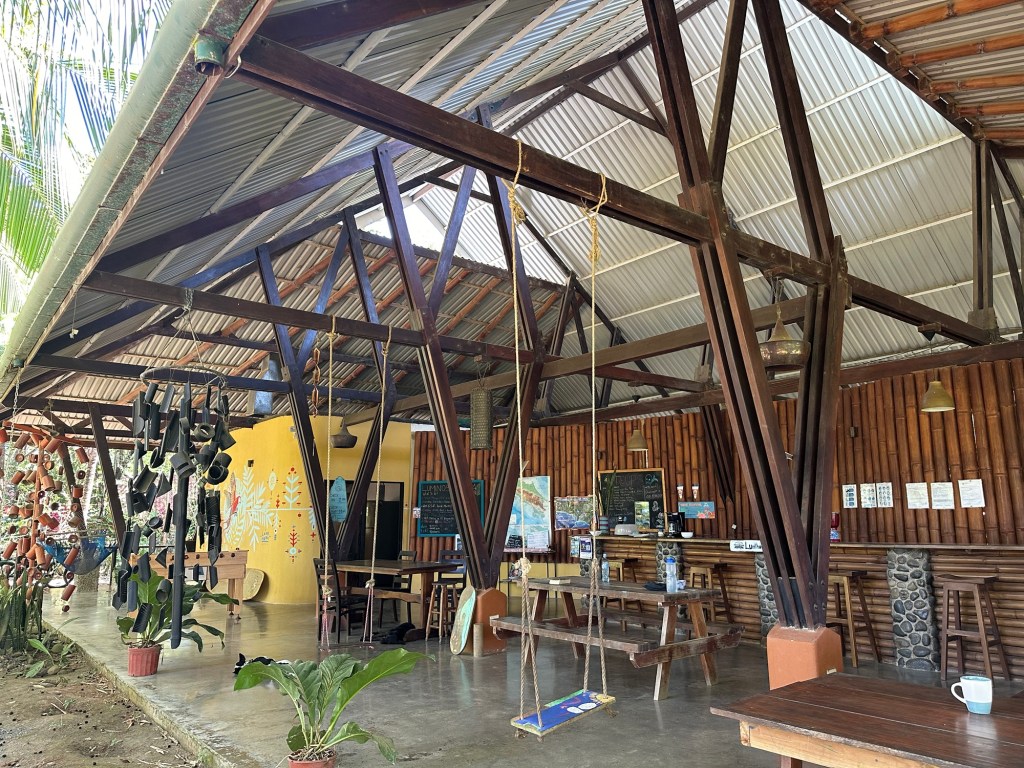
When we returned to the hostel, the hombre running it was there so we were able to check in as well as learn a little more about the place. Centro Ecológico Montaña Verde is primarily an educational facility focusing on delivering ecological and sustainability messages. The hostel is just a side venture. There was only the three of us staying the night and we had a pleasant time swapping stories and chatting.
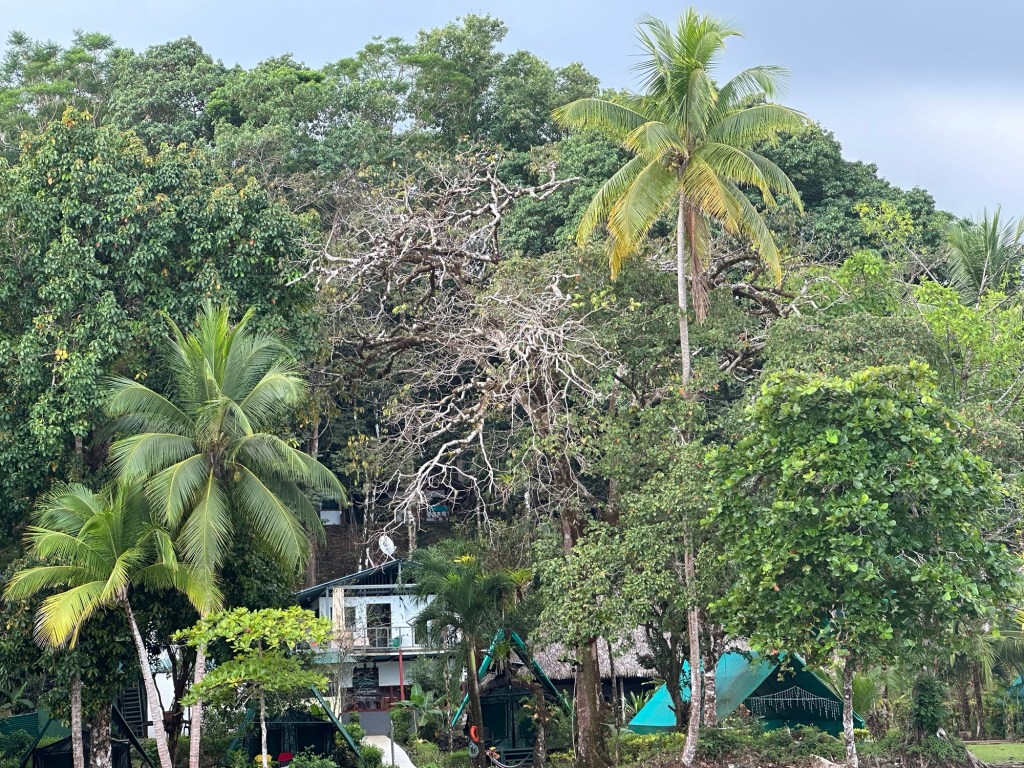
Corcovada Jungle Lodge is part of a larger accommodation and adventure tour centre. Set amidst manicured gardens just above a rocky headland and adjacent to a sheltered little sandy bay, the property boasts tent accommodation on the lower level, cabins with magnificent sea views on the level above, and a hostel at the top of the hill nestled in the jungle. It was a bit of a slog getting up to the hostel itself, but its position in the jungle made it all worthwhile.
Stream inlet, Bahia Drake
I was sharing the dorm with a French-Canadian girl who was keen to check out a local waterfall along the Rio Claro south of the lodge. As I was planning on walking the jungle trails that followed the coastline, we set off together. The trail wound its way through the jungle and in and out of little sandy beaches. At one point we climbed up to another property where cabins were situated high on the hillside overlooking the sea. We asked to have a look in one and were impressed with the simple but spacious room and the decent sized deck overlooking that magnificent view. At USD190 per night, it was a bit of a splurge though.
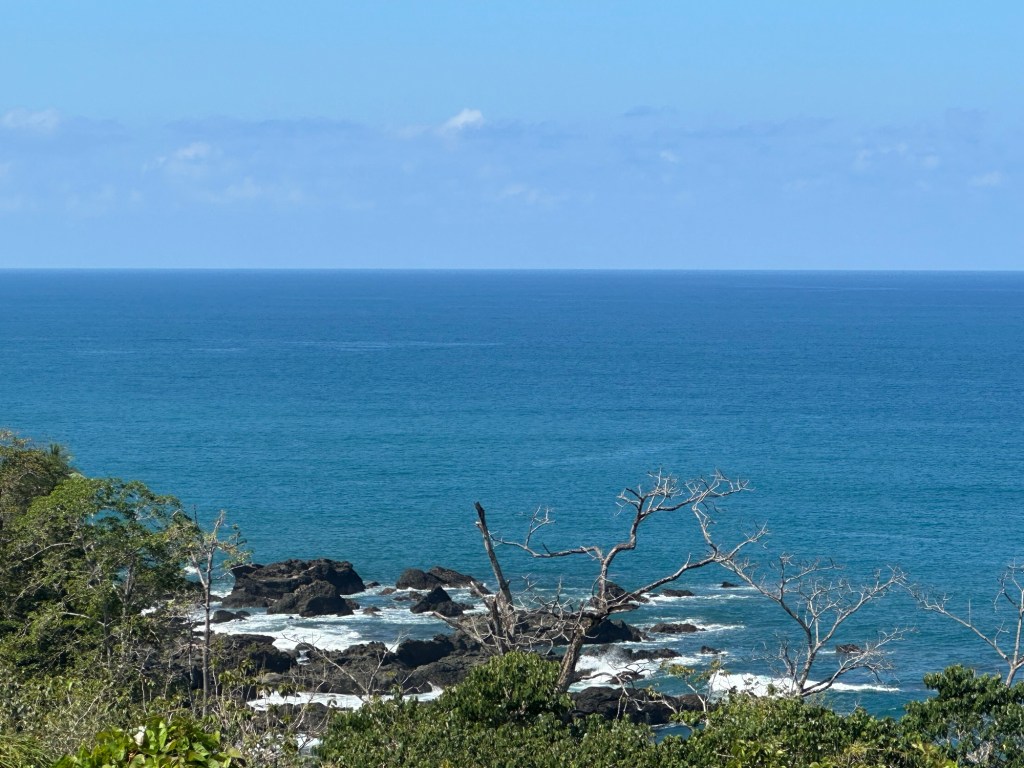
View from lookout, Bahía Drake
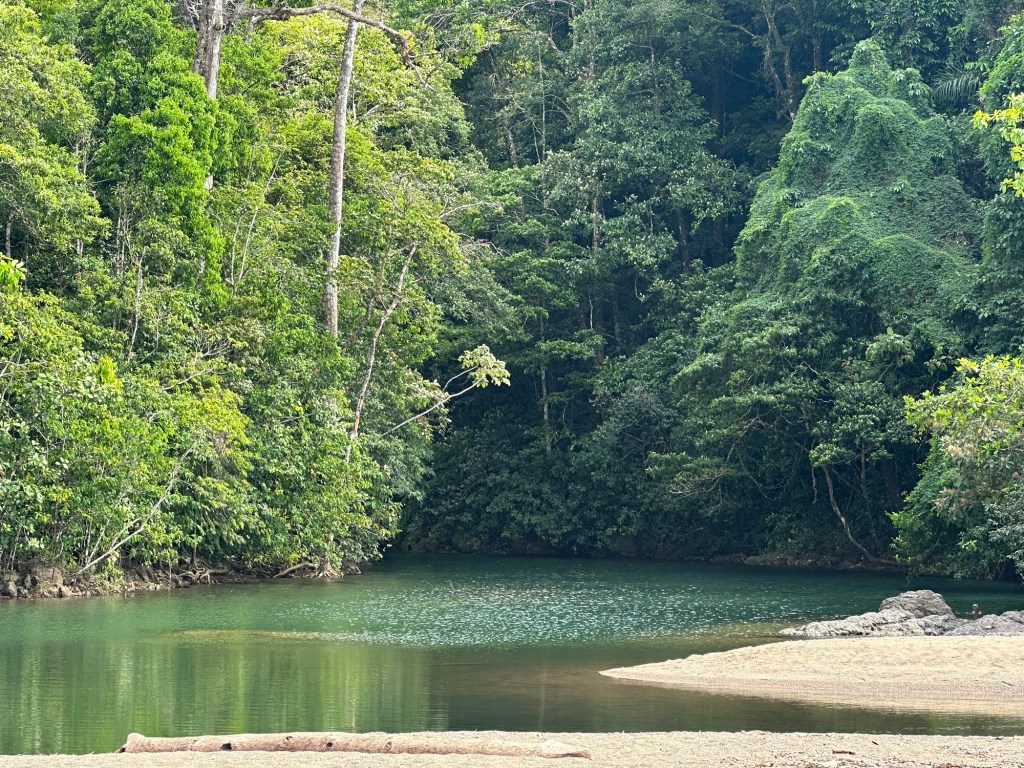
We continued on until reaching the Rio Claro. A beautiful, cool lagoon lay just beyond the beach where the river slowly discharged its flow. We forded at the shallowest part and discreetly left our packs on the shore. Then it was a matter a swimming about a 100m upstream to where a small cascade joined the main river. Janie climbed up and reported the way on was quite difficult. As we only brought a pair of thongs with us, I decided not to continue in that direction, instead swimming further upstream. I managed to reach a section of river partially blocked by a large boulder and some white water I wasn’t able to pass through about 400m upstream. Turning around, I floated with the current back to the packs to await Janie.
Rio Claro, Bahía Drake
Janie returned after a bit and reported the trail to the waterfall was sketchy to say the least, especially in a pair of thongs. We swapped stories then packed our things ready to leave. Unfortunately, the tide had started to come in by this stage so our knee-high river crossing was now up to our thighs. Packs held high, we managed to get across without incident.
Barr-Throated Tiger Heron, Bahia Drake
Back at our lodge, we decided to chill for a bit before continuing along the trail in the other direction. A German guy Janie had met the previous day invited us to check out a friend’s accommodation property, so we went with him and another French-Canadian guy. This part of the trail was very different from the other side in that it was up higher and crossed several little bridges en-route. As it was getting late by this stage, we were walking in the cooler dusk which made for a much more pleasant traverse. But then we had to climb up the side of a hill to get to the property. Janie and I had our phones with us which we needed to get back in the darkness that by then had prevailed.
As I was coming close to the end of my trip, I had to make some hard decisions. With only days left, where was I going to spend them? After consulting the guidebook, I decided to head to Bahia Drake, deep in Costa Rica’s south. I worked out what time the bus I needed came through Uvita and was packed up with ample time to cash up and catch it. Or so I thought…
Luminosa Uvita Hostel, Uvita
I found a more direct route to the main road which took me half the amount of time the previous day’s had. First things first, I would cash up at the ATM to get that out of the way and then I could chill somewhere until the bus arrived. I dutifully waited in line for my turn at the ATM to find it repeatedly coming up with an error message. Thinking it might be that particular ATM, I waited for the other one to be free. Same problem. I asked other people waiting and was told that the ATMs here were a little temperamental. Some people were getting cash and others weren’t. I tried both machines multiple times without success before biting the bullet and walking the kilometre back over the river to find another bank’s ATM where it worked first time.
Swimming hole Rio Uvita, Uvita
Somewhat peeved, but relieved I had managed to get cash as I was going into a remote area, I walked back to the bus station. Once there, I tried to find information to confirm the bus schedule I had found online as I still didn’t really trust the information was correct. A bus driver from the same company confirmed the route, but said the bus would probably arrive in Uvita closer to 1.00pm than the scheduled 12.30pm. So it was just a matter of sitting around and waiting. And waiting. And waiting. Until the bus finally arrived at 1.40pm. And then had a 20 minute stopover before finally pulling out at 2pm. The boat I needed to take from Sierpe left at 4pm so I hoped there were no further delays.
Rio Uvita, Uvita
The road continued hugging the coastline more or less for a time before veering off inland. Then we were passing farmland and patches of rainforest prior to turning off and heading south towards Sierpe. There, we passed palm plantations interrupted by little farmlets nestled on their outskirts.
Boat terminal, Sierpe
The tiny village of Sierpe is ringed on two sides by the Rio Sierpe which is its mainstay. The bus pulled up at a boat dock where half a dozen brightly coloured boats quietly bobbed in the river. As the bus disgorged its remaining passengers, those continuing on to Bahia Drake lined up to give their details to an hombre organising passengers onto the various boats. When it was my turn and I told him where I was staying, he frowned and called over another hombre. This would be my captain. I had about half an hour before departure, so grabbed a cerveza at the adjoining dockside restaurant to wait.
Rio Sierpe
Five minutes before departure time, my boat captain summoned me and I jumped on board with the other passengers going my way. It turned out this was a private group of six French tourists and their French speaking Costa Rican guide. I was just a blow-in and no one seemed in the least interested in taking my money. At exactly the allotted time, we took off downstream towards the river mouth.
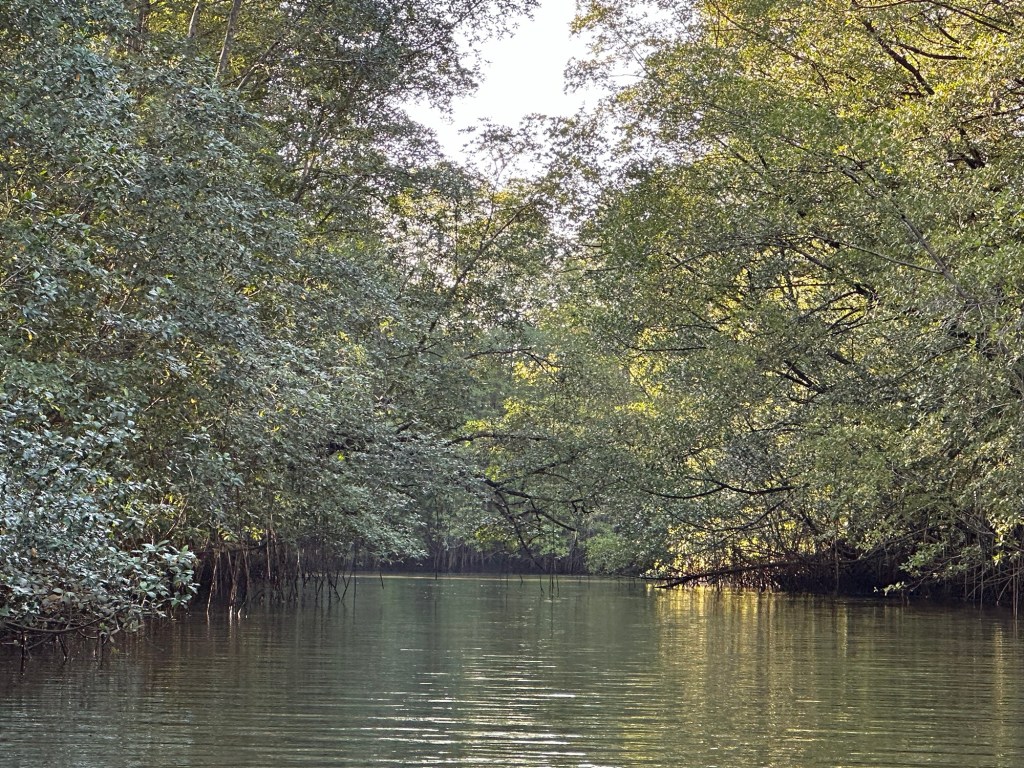
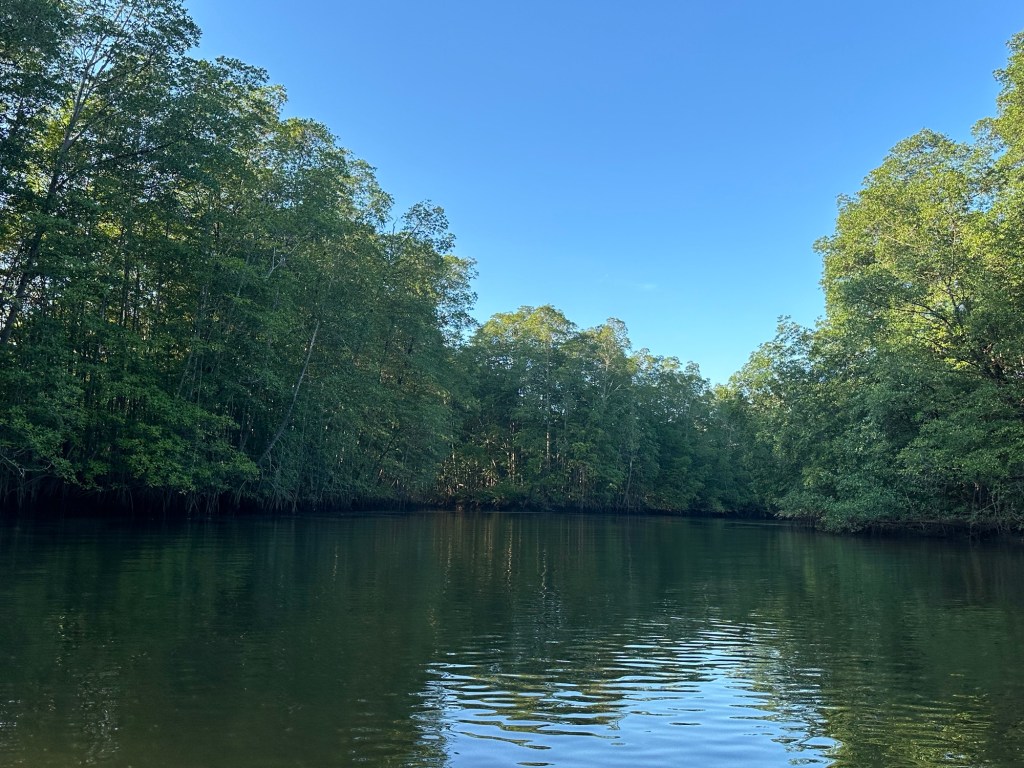
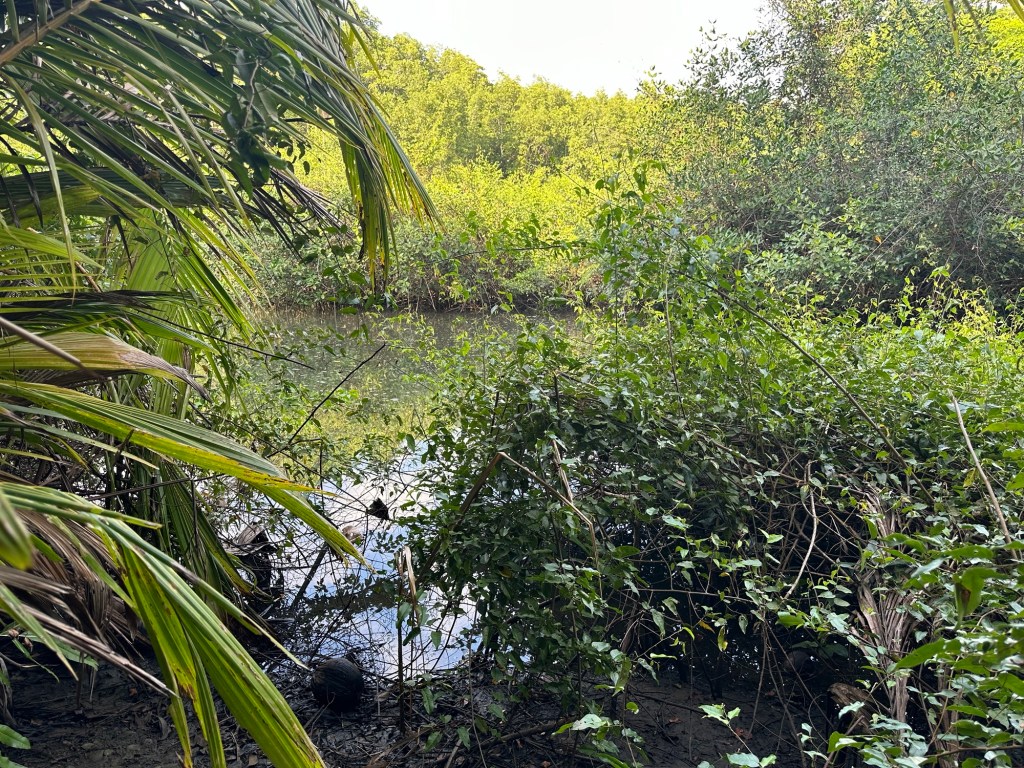
Mangrove forest, Rio Sierpe
After speeding down the river for a while, our captain pulled back on the throttle and we slowly cruised down a side canal where the group’s guide proceeded to give a commentary about the mangrove forest in French. I was able to pick up a few words here and there, however, that is about the extent of my French. I just enjoyed the ambiance of drifting through this beautiful part of the river.
Rio Sierpe
Then, it was time to continue our journey. The river twisted past jungle-clad banks, eventually spitting us out into the ocean. At this point there must be a reef as the waves were crashing off-shore. Our captain had to manoeuvre the little boat through the swell, timing the breaks which he did impeccably. Then, we were zooming past the coastline towards our destination.
Corcovado Jungle Lodge, Bahía Drake
We passed the main settlement in this part of the area and continued on until reaching the little bay where our accommodation was situated. The boat reversed up to the shoreline and us passengers disembarked. Then, the luggage was pulled out from the front hold and passed out to us. It was a short walk across the sand to a tiny stream which you crossed before entering the property. Once checked in, sand washed from feet and pack dumped in the dorm, it was time for a pre-dinner cocktail at the lodge’s on-site restaurant. A perfect end to a fabulous day.
I slept like a baby listening to the waves crashing on the beach over the road from the hostel so woke fresh to start the new day. This little hostel harks back to days when travel was more basic. No doors, only curtains. Open air living spaces. Sand everywhere. And the most basis of basic of amenities. Its reto charm was what made it. Plus it’s hippy, surfer Italian ex-pat owner who was more about collective positive energy than collecting colones.
View from hostel deck, Dominical
It would have been nice to spend a bit more time in drowsy Dominical, but I had a bus to catch. After checking out the beach, I found where the bus left from, then wandered down the beachfront road to grab a coffee to take with me.
Turtle conservation sculpture, Dominical
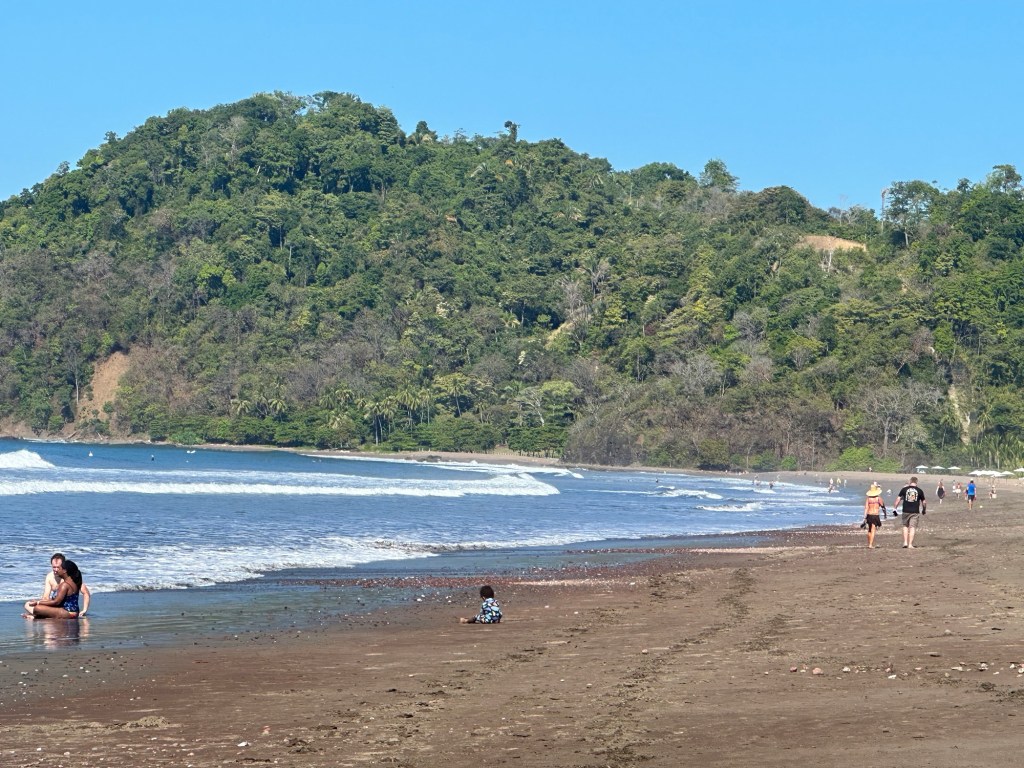
As I was first in the bus, I had prime position in front to take in the views. And they were worth taking in. The road hugged the coastline pretty much the whole way to Uvita, affording numerous glimpses of turquoise water gently crashing on cinnamon-hued beaches. All surrounded by verdant jungle. I knew I would probably have to walk from where the bus dropped me off to my hostel, but it ended up being much further than I anticipated in the searing midday sun. So I was well and truly happy when I reached my destination.
Luminosa Uvita Hostel, Uvita
I couldn’t check in until 2pm so left my pack at reception and walked to the national park at the end of the road. Parque Nacional Marino Ballena is primarily a marine reserve which takes in adjoining beaches and their abutting mangrove forests. Its most famous drawcard is the ‘Whale’s Tail’ – a rocky headland connected to a tidal sandbar which when exposed, looks remarkably like a whale tail from above. As an added bonus, migrating humpback whales regularly promenade these shores twice a year in season. It’s as if the ‘Whale’s Tail’ is on their bucket list as well.
Entrance, Parque Nacional Marino Ballena
I started walking on the beach as I couldn’t find the trailhead for the jungle trail which ran alongside. After reaching the ‘Whale’s Tail’, I found the observation deck which was also an entry point to the trail. The tide hadn’t fully gone out at this stage, so the waves were meeting and crashing in the middle of the sandbar. Now I had found the trail, I followed it for it’s northern duration up to the Rio Uvita. This route was much cooler; shaded by a dense canopy as it wound its way through the jungle. All the time, the crashing of the waves could be clearly heard through the foliage.
Rio Uvita inlet, Uvita
I popped out at Rio Uvita where an hombre was fishing with his son. It was a picturesque lagoon and I dearly wanted to take a dip, however, the señor was most adamant it wasn’t safe due to the presence of crocodiles. I had to settle for a swim in the rip-prone sea instead which prevented me from going too far in. Still it was refreshing and prepared me for the walk back along the beach.
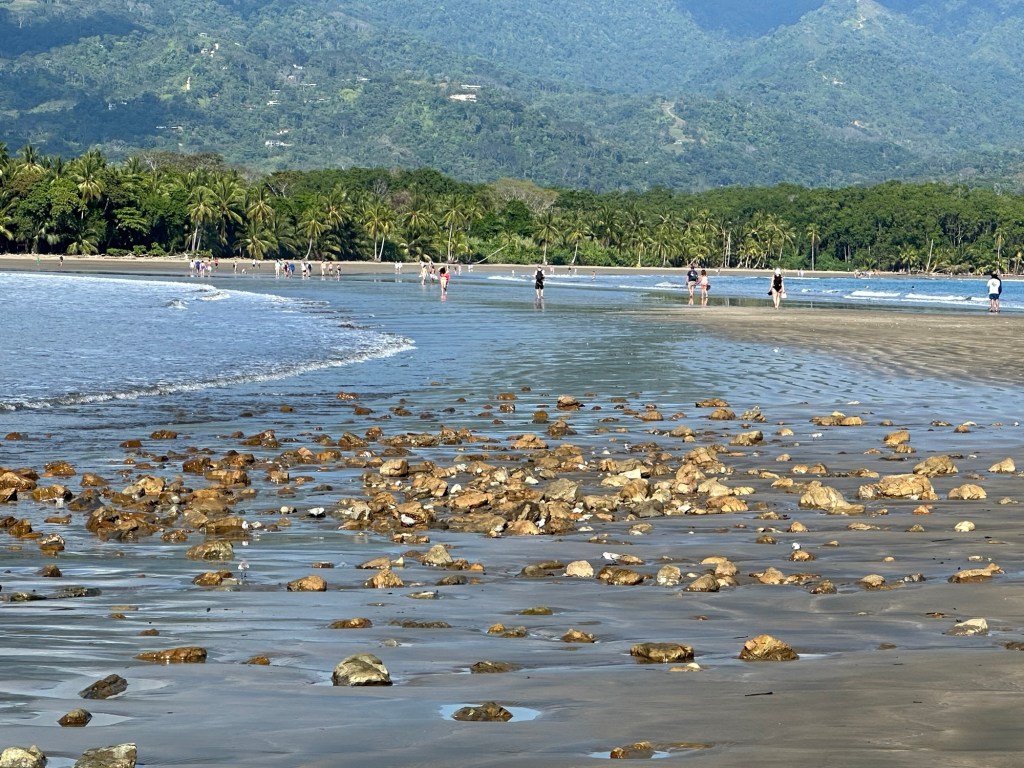
‘Whale’s Tail’, Punta Uvita
By the time I returned to the ‘Whale’s Tail, the tide was at its lowest and the sandbar was fully exposed. I walked its length to the little rocky headland so I could take some photos. It was certainly pretty with the jungle-clad hills in the background and the little rockpools which had formed on the headland.
‘Whale’s Tail’, Punta Uvita
Now I knew where the trail was, I took the southern route back out. This trail passed a little lagoon, fringed with drooping vegetation. As this was prime croc country, I quickly took my photo and moved on. It was a pretty little trail which wound its way through the jungle to spit its venturers back out on the beach further down. It was then a matter of following the beach and finally a dirt track back to the entrance.
Lagoon, Parque Nacional Marino Ballena
By now I was well and truly ready for a soothing cerveza. I found a little restaurant for a beer and something to eat while waiting for the temperature to drop a little before walking back to my hostel in the gathering dusk.
Jaco salvaged itself slightly with the view over the top of its disauthentic drama to the mountains from my elevated hostel deck. Breakfast started at 8am and I estimated the bus I needed out of there came through around 9.30am so plenty of time. All organised and with a renewed attitude, I was dismayed to find I had miscalculated the bus arrival by an hour as the 8.30am bus zoomed past 45 minutes late. I now had an hour to wait for the next scheduled bus and that was if it too wasn’t late. I was peeved.
View from hostel, Jaco
As I had the time, I thought I may as well check out the beach. Whilst the jungle clad headlands were pretty, this particular playa had nothing to recommend itself. Crowded and adorned with miscellaneous beach accessory rentals, the beach itself had debris-strewn, dark brown sand. I know it’s hard to impress an Aussie with a beach, but there are truly much more beautiful ones in Costa Rica. And without the shadow of looming high-rise condominium towers. I left the beach and found somewhere to get a fruit smoothie while I waited for the bus. I would have loved to have been able to get one beachside, but that remains the property of swanky hotels with swanky prices to match. Not for this wild woman.
A quieter part of Playa Jaco, Jaco
As luck would have it, my bus was nearly an hour late, so my departure out of Jaco was significantly delayed. As we rumbled through the main drag and up the hills on the other side, I did see a quieter, more pretty side to jostling Jaco but not enough to encourage a recommendation. It was a different story further on as the road hugged the coastline in places and wound its way through pretty hills in others. The breeze from the open windows and the quiet chatter of passengers lolled one into a pleasant state of peacefulness.
Quepos
The bus lumbered into the bustling little town of Quepos, which is the launching pad for Costa Rica’s jewel in the crown – Parque Nacional Antonio Manuel. This National Park is so popular, you have to book a 90 minute time slot to visit. Crawling with tourists, I had decided a while ago I was going to skip it as I had been to many parks and reserves already and didn’t feel the need to fight my way through the throng of tourists in this one. I got information about where and when the next bus left for Dominical and went to find a beachside beer while I waited.
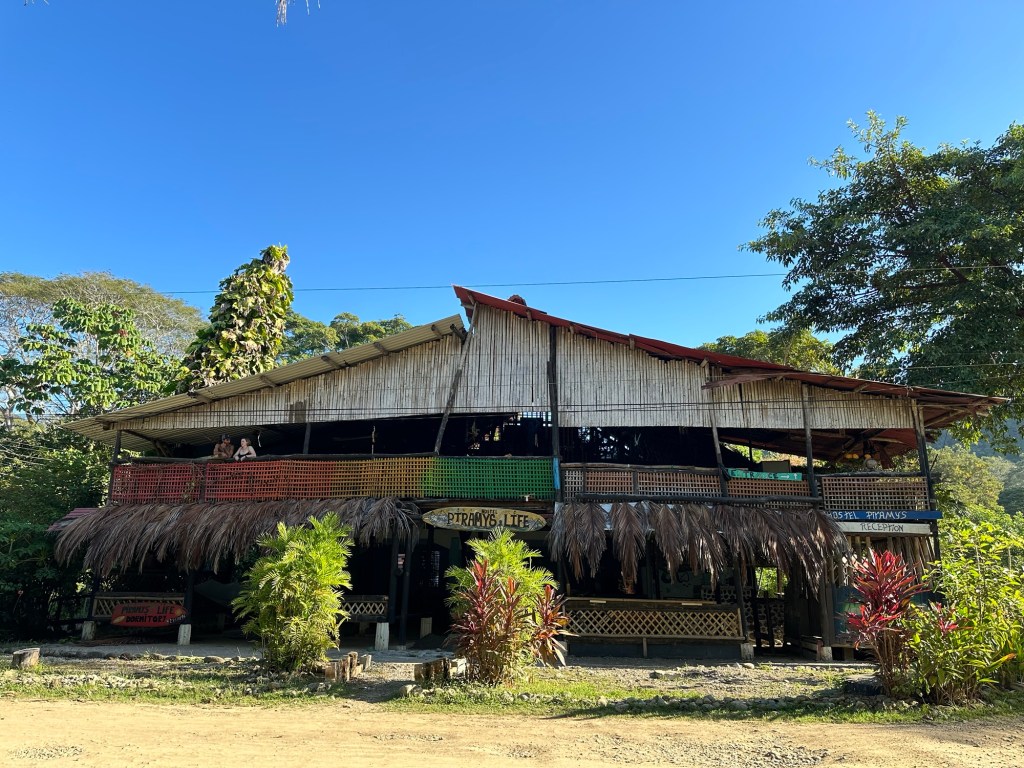
Piramys Hostel, Dominical
Dominical was much more my vibe. I got dropped off in ‘downtown’ of what was pretty much a small village. Even so, it was only a 10 min walk to my hostel on the edge of town. I found the hostel owner who quickly showed me around and allocated me a bed as he was off to watch a local surfing contest on the beach. I dumped my pack and walked over the road to the beach to join the festivities.
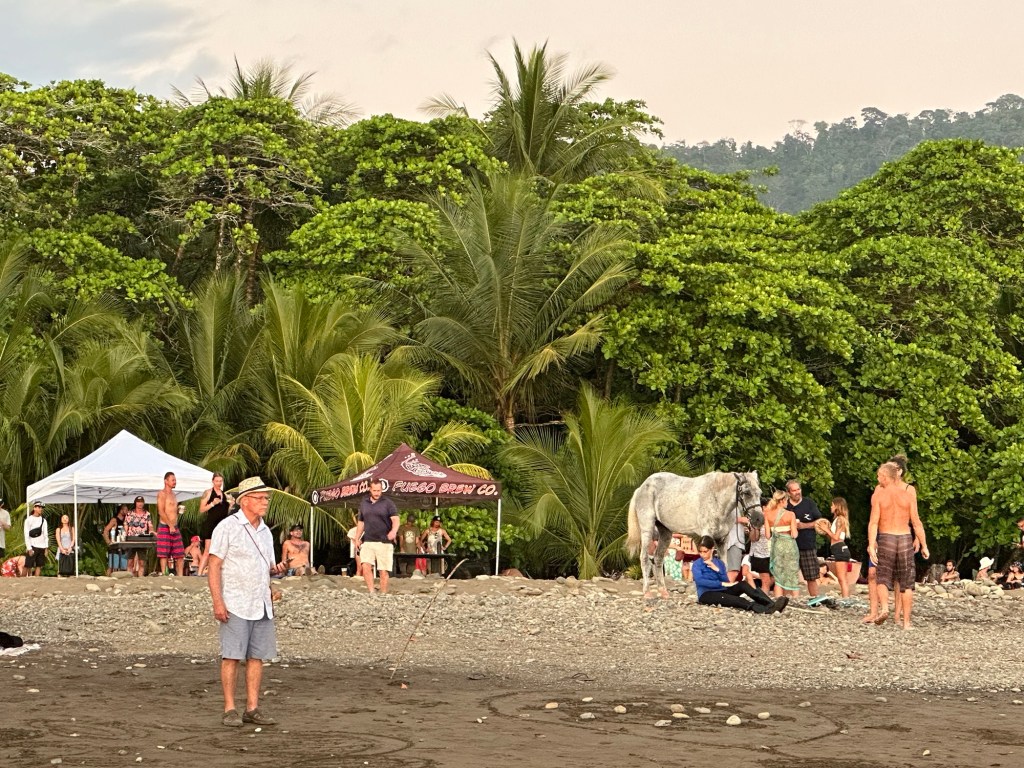
DJ and surf competition commentator tents, Playa Dominical
It wasn’t hard to find where the action was taking place as it seemed the whole village had assembled there to watch it. People gathered in small groups with picnics and beers and one señorita even brought her horse with her. A DJ was pumping local Latino music and a commentator was announcing each competitor. It was very low key and had a relaxing, chill vibe to it.
Surf competition spectators, Playa Dominical
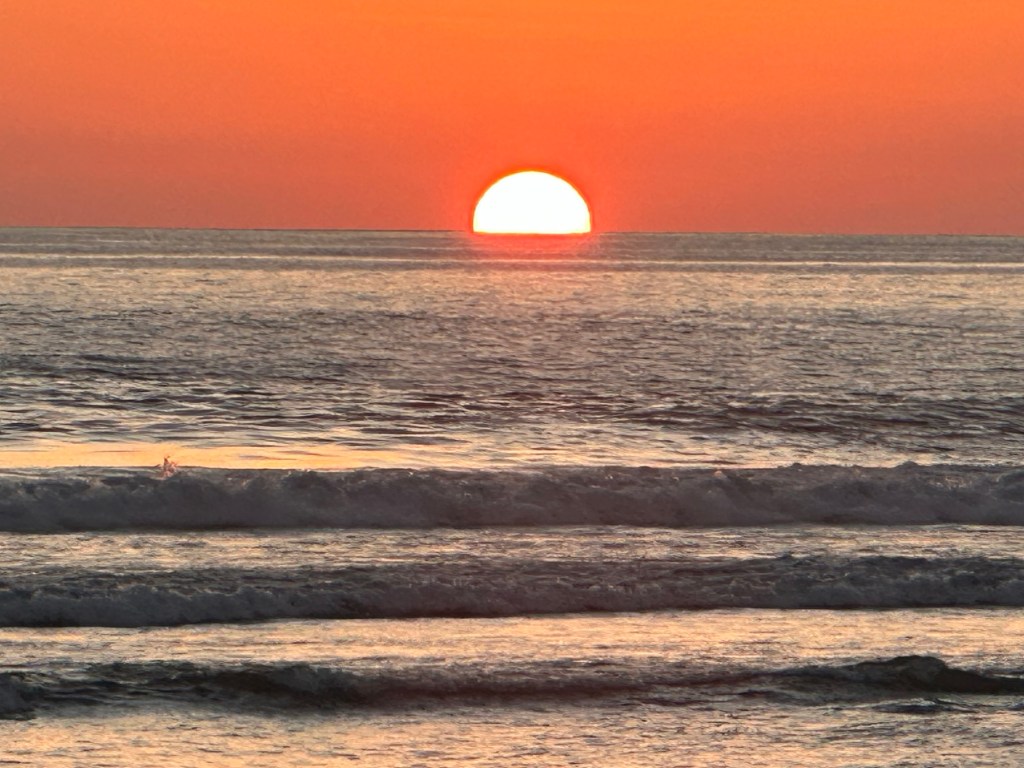
The surfers did their thing and the sun started to set, tinting the slightly heaving sea in gorgeous hues of tangerine. The winners of the competition were announced and people started heading off. I lingered a little longer, soaking up the ambiance of the brilliant sunset before taking my leave.
Sunset, Playa Dominical
I soon found where many people had retired to – a beachside bar where a local ex-pat band had the evening’s billing. I ordered something to eat and settled down for a great night of awesome music and stage antics.
Loitering too long over coffee, pancakes and fruit in my chill little possie in front of the hostel, I ended up having to rush to catch my morning bus out of Montezuma. Panic averted when found a longish line of people waiting to board so patiently waited my turn. This time I was savvy enough to take the sun position into account and sat accordingly on a more comfortable side. Meditatively taking in the picturesque surroundings as it passed me by, I was startled when the bus suddenly braked to allow a large snake to make its way across the road. I asked the driver if it was dangerous and he waved his hand in a nonchalant way I took to mean ‘not so much’. Then it was back down through twisting roads to the ferry terminal in Paquera.
Paquera
I had nearly an hour before the ferry left so plenty of time to purchase my ticket and organise an on-board beer to accompany my sweet deck-side seat. From there it was just a matter of watching tiny, jungle clad islets slowly pass us by as our ferry negotiated the calm, turquoise waters of the Golfo de Nicoya.
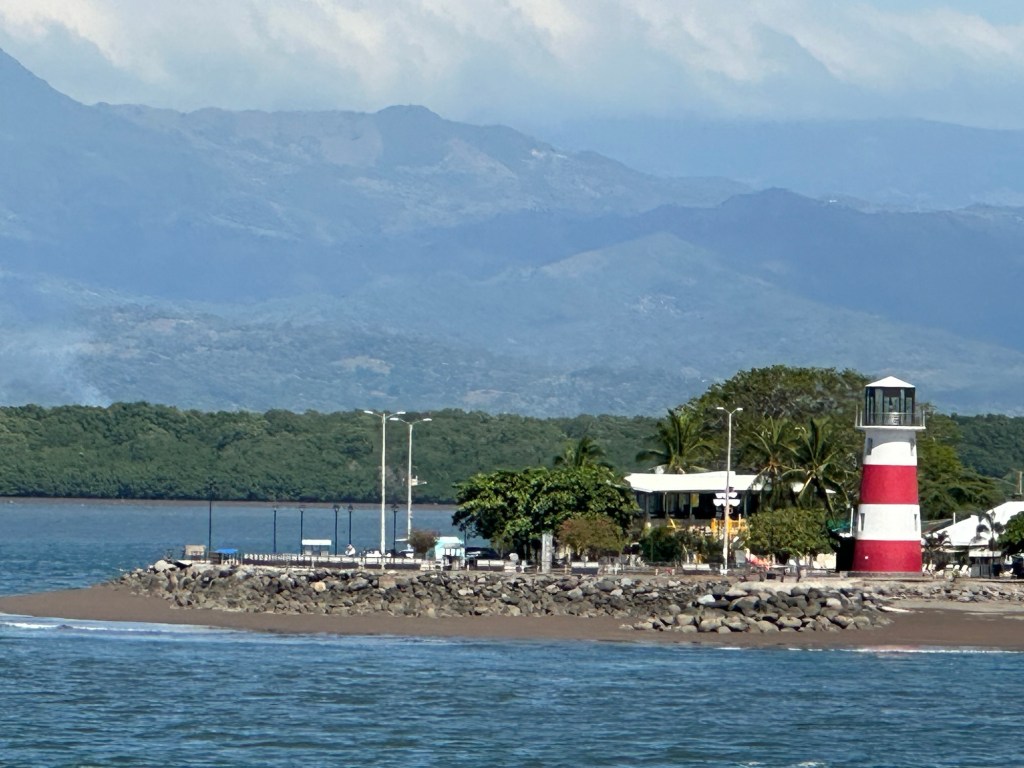
Puntarenas
Back at Puntarenas, I tried to find where to catch the bus to Jaco. According to the guidebook, it was on a corner a block away from the terminal. Which corner and in which direction was not provided so I decided to ask around. The first hombre I asked said no, I had to take a taxi into Centro to the bus terminal. The second hombre said nah, just wait on that corner there and it will turn up. I decided to check at the little shop on the corner and that hombre gave me the same information as the first. I bit the bullet and decided I might as well walk the 2.5kms into town and hope for the best.
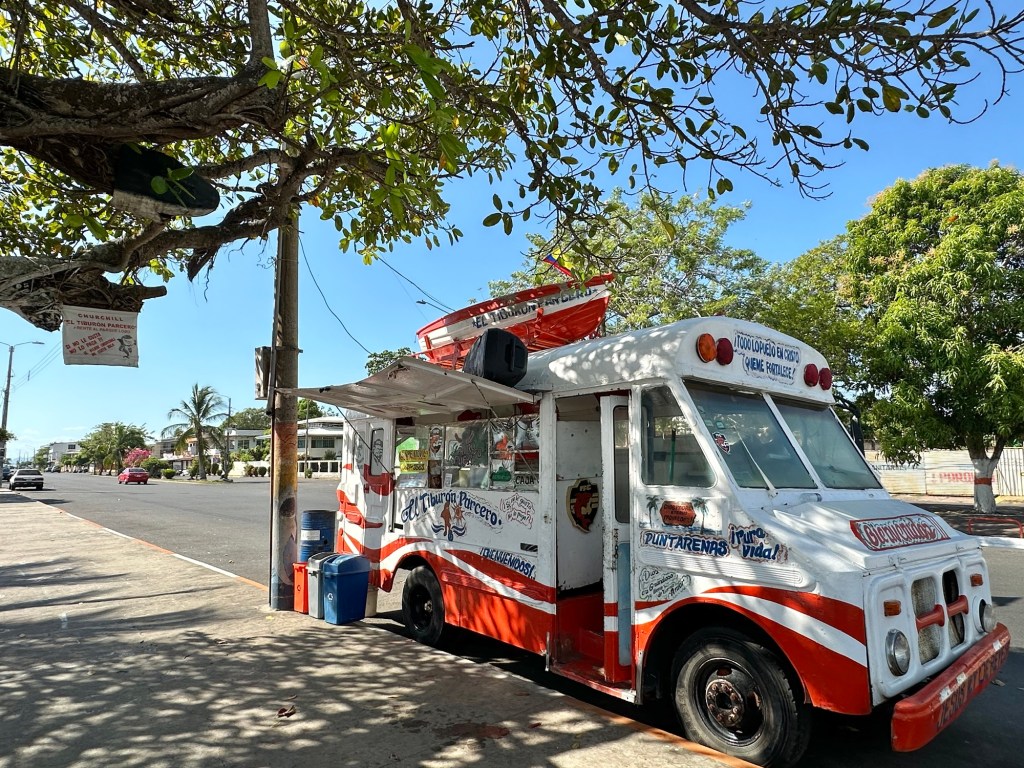
Churchill truck, Puntarenas
As I had already walked straight through the middle of the little peninsula Puentarenas is situated on, I thought I would walk on the ocean side this time. I passed an ice cream truck selling Puentarenas’ premier dessert – The Churchill and decided to try one. Evidently, it was named after the man who ‘invented’ it who allegedly looked like Winston Churchill. Personally, I think our Churchill lookalike had his in-laws coming over for dinner and chucked whatever he had in the fridge/pantry in a glass bowl. A base of shaved ice, with every conceivable topping and additional dessert option combined, the Churchill was a delicious, albeit bilious, affair.
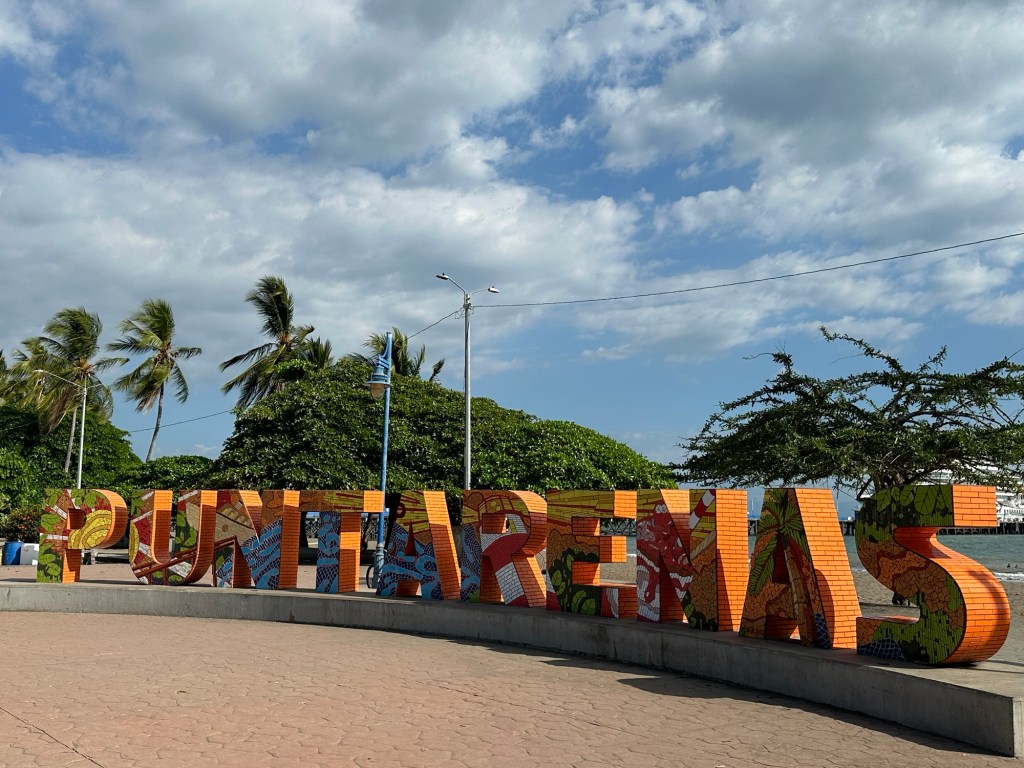
Puntarenas
After watching a couple of iguanas having a face off on the median strip while I was consuming my Churchill, I set off in the searing Puentarenas heat. I had directions for the bus terminal and found it easily enough. I had about a half hour’s wait for the next bus heading where I wanted to go, so sat down to cool down a bit while awaiting its arrival.
Casa, Puntarenas
The journey to Jaco headed south inland from the Pacific coast, weaving in and out of small towns and settlements. It was very pleasant sitting in the air cooled bus as it rumbled its way towards its destination. I had no concept of what Jaco was like and even if I had, nothing could have prepared me for the mainstream US coastal tourist town vibe of the place. There was nothing Costa Rican about this place apart from the souvenirs. And it was teeming with tourists. I checked into my hostel and went out in search of a soothing cerveza and something to eat.
Hostel Hacienda Garcia, Jaco
I had decided to do a walk to a lookout the next morning but hated the place so much, I decided to hightail it out of there first opportunity in the morning. So it was back to the hostel after dinner for an early night.
This little hostel provided breakfast so I was up early to partake of coffee beforehand. After a generous serving of pancakes and fresh fruit, I wandered down to the tour office to wait for departure.
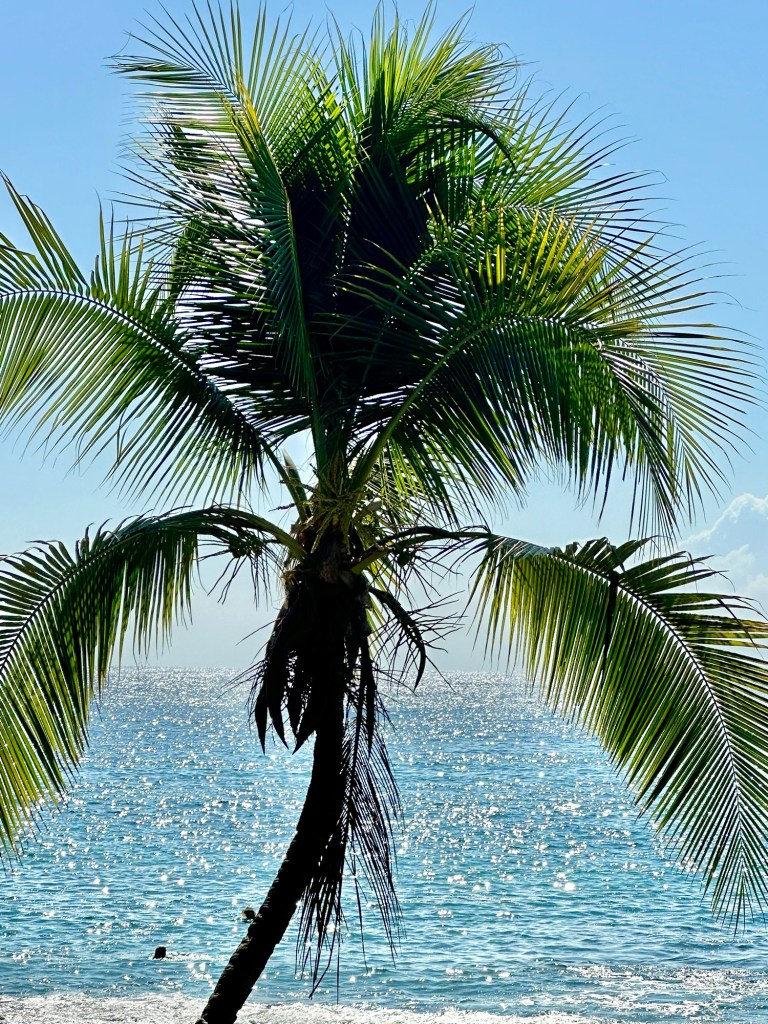
Playa Montezuma
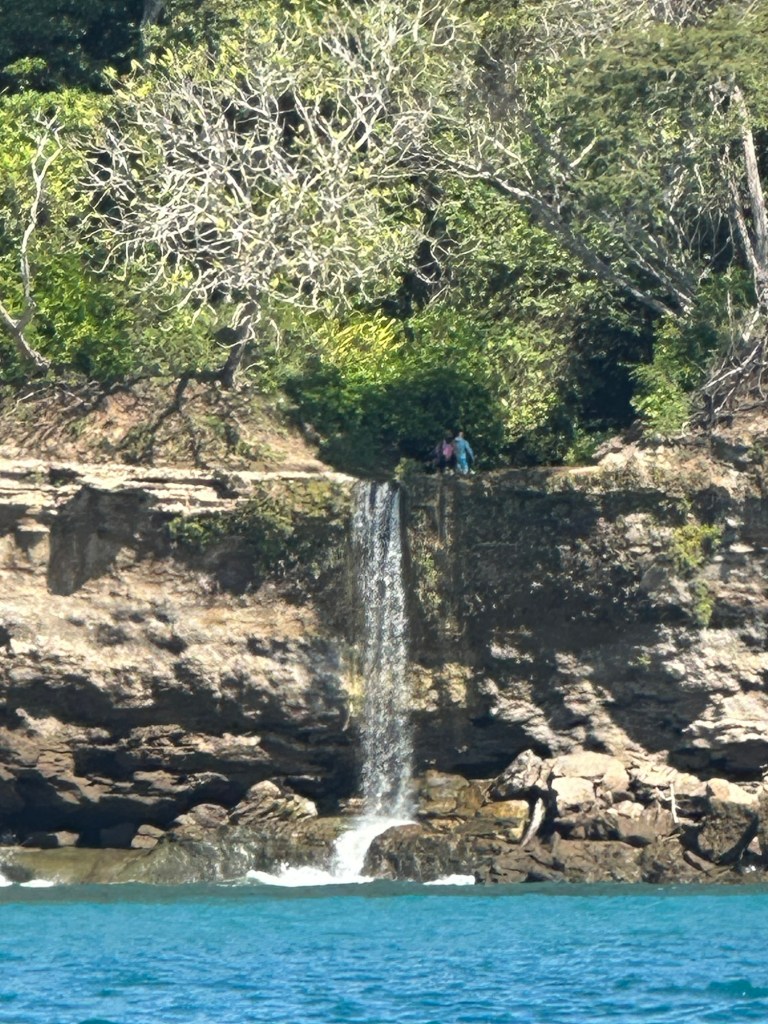
We walked down to the beach and piled onto the awaiting boat. Then, we were off zipping along the pristine, palm-clad coastline at a good rate of knots. We stopped midway to see the El Chorro waterfall, one of only seven waterfalls in the world that plunge directly into the sea. As it was dry season, the flow wasn’t immense, but it was still pretty impressive to see from our little boat out at sea.
Cascada El Chorro
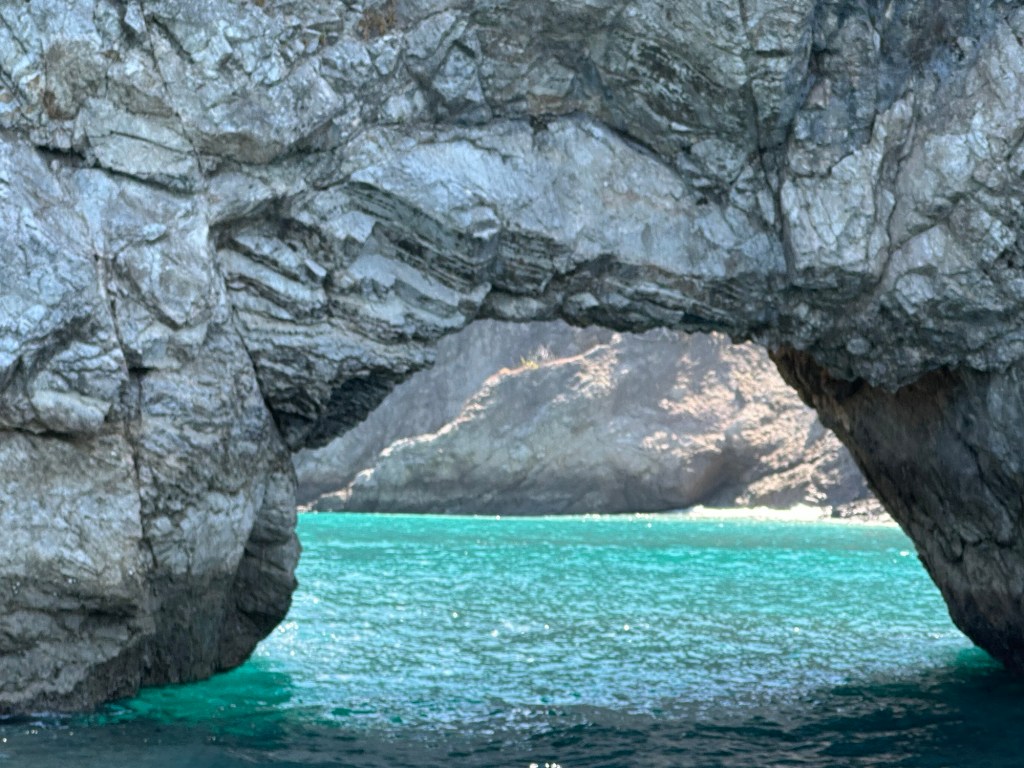
We continued on until reaching a jungle clad islet with a little rocky outcrop next door which was sporting an archway. This being a cool tourist stunt of driving the boat through before continuing along further to Isla Tortuga.
Rocky outcrop near Isla Tortuga
Isla Tortuga, contrary to popular opinion, does not derive its name from having anything to do with turtles, other than it is shaped roughly like one. Still, it is a popular tourist destination for snorkeling or just chilling on the beach. I had booked a snorkeling tour, so we were dropped off at a nearby rocky outcrop with strict instructions of where we could and couldn’t go. Unfortunately, the coral here is sporadic and badly bleached, however, the brightly coloured fish provided sufficient entertainment. At the second snorkeling site, I even saw a large spotted ray swimming past.
Playa Isla Tortuga
It was lovely swimming in the cool, turquoise water, but eventually our time was up and we putted over to the island for lunch. Fresh, panfried fish, accompanying by traditional rice and beans and salad, washed down with not so icy beer was just the ticket after a couple of hours in the water. Afterwards, one of the other girls and I decided to be most decadent and ordered Pina Coladas in pineapples to drink in the sea after our lunch. It was nice and cool in the water and hot out so it really was a no-brainer to just stay there until we got the call to get back on board the boat for departure.
Playa Montezuma
A nice, brisk pace back to Montezuma had us back late afternoon when it was time to clean up and change for dinner. I found a little local bar some Canadian ex-pats were drinking at, so joined them and had a great time learning about their time living in Montezuma and the changes they had seen over the years. One of the girls from the snorkeling tour and another girl from her hostel popped in and I ended up going out with them to a lovely restaurant for dinner. After a big day, it was not a late night.
I had booked my accommodation using my usual method of finding the cheapest on line and hoping for the best. These digs in Puentarenas were certainly cheap – at USD10, it was an absolute bargain! However, that price came at a price. Situated in an old, dilapidated, former market, its three-stories had been converted into as many tiny rooms that could be crammed on each floor. This was supplemented by a couple of dirty, dishevelled showers and toilets. The whole place had an ‘itchy’ feel about it, but apart from the ablution amenities, it was comfortable enough for the night.
Hotel Rio Puentarenas, Puentarenas
I had noted what times the ferry left in the morning so gave myself sufficient time to walk to the terminal. Ticket purchased and I still had time to grab coffee and something to eat before jumping on board and getting a seat on the top deck. This time it was much more crowded, but I managed to get a seat on the side overlooking the Golfo de Nicoya. It was then a very pleasant hour and a half passing the jungle clad rocky islands that dotted the Gulf in the fresh breezes cooled by the water.
Paquera
At Paquera, the ferry docked and I found the bus I needed to take me the rest of the way to Montezuma. Unfortunately, I again didn’t take the direction of travel into account and spent the whole trip in the searing sun. Still the vista was most impressive as I viewed it from under the brim of my hat. After a short stop in Cobano, we finally pulled up in Montezuma; two buses and two ferries, an overnight stay in Puntarenas, and six and a half travel hours from Nicoya later.
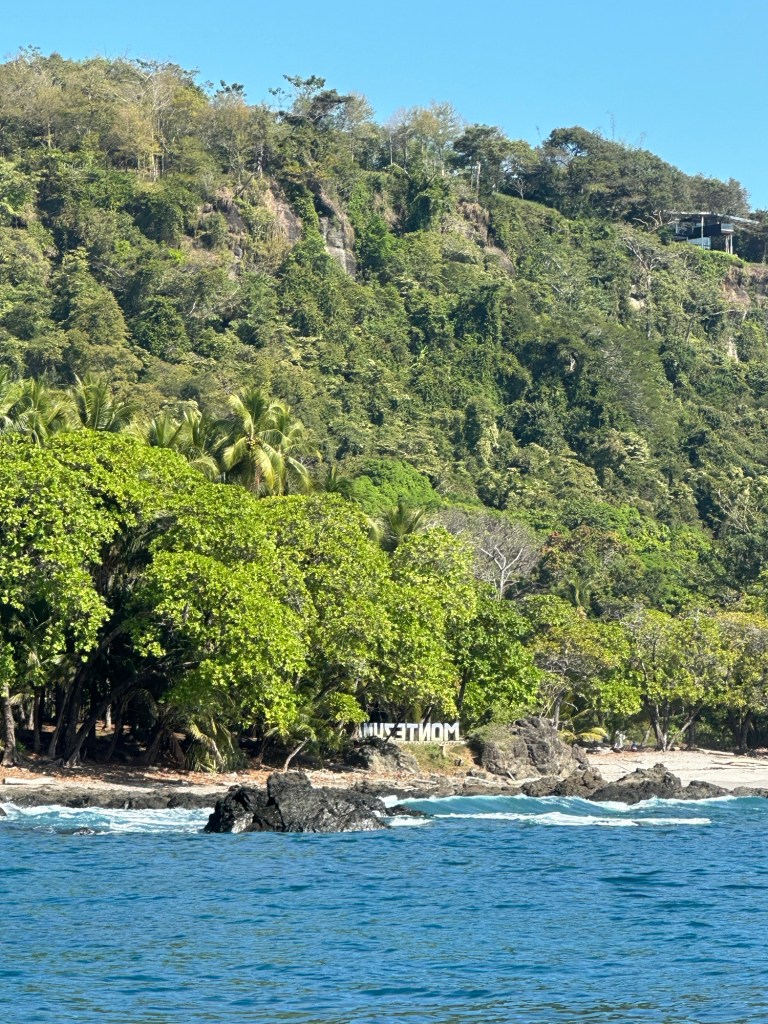
Montezuma
Montezuma, while clearly developed for touristic intent still had a chill vibe to it. Smaller and less intense than neighbouring Santa Teresa, I decided to spend my time here rather than moving on. After completing my laundry chores for the week, I went for a wander around this tiny community.
Playa Montezuma
I particularly wanted to do a day snorkeling tour to Isla Tortuga so went in search of the best deal. Tour booked, it was then in search of cost effective Happy Hour cocktails which I eventually found after trawling the entire village. Watching the sun set at my little beachfront restaurant, listening to the waves crash on the sand, was mesmerising. A perfect end to day of travel.























 Wild Woman Wandering