Bocas

I got some information about a couple of small caves in the middle of Isla Colon, the island I am staying on, so of course I had to check them out. The New Year had good news for me as well – a bed for the next two nights! No more couch surfing for this Wild Woman. At least not for now.

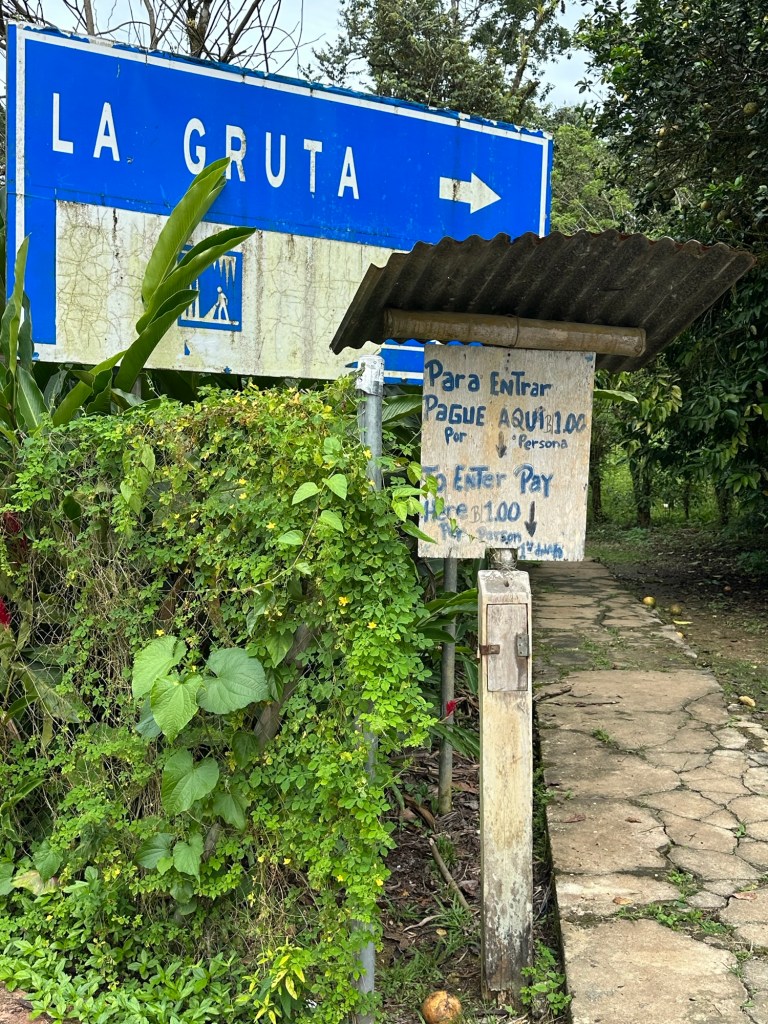
This way to the cave! US1 please.

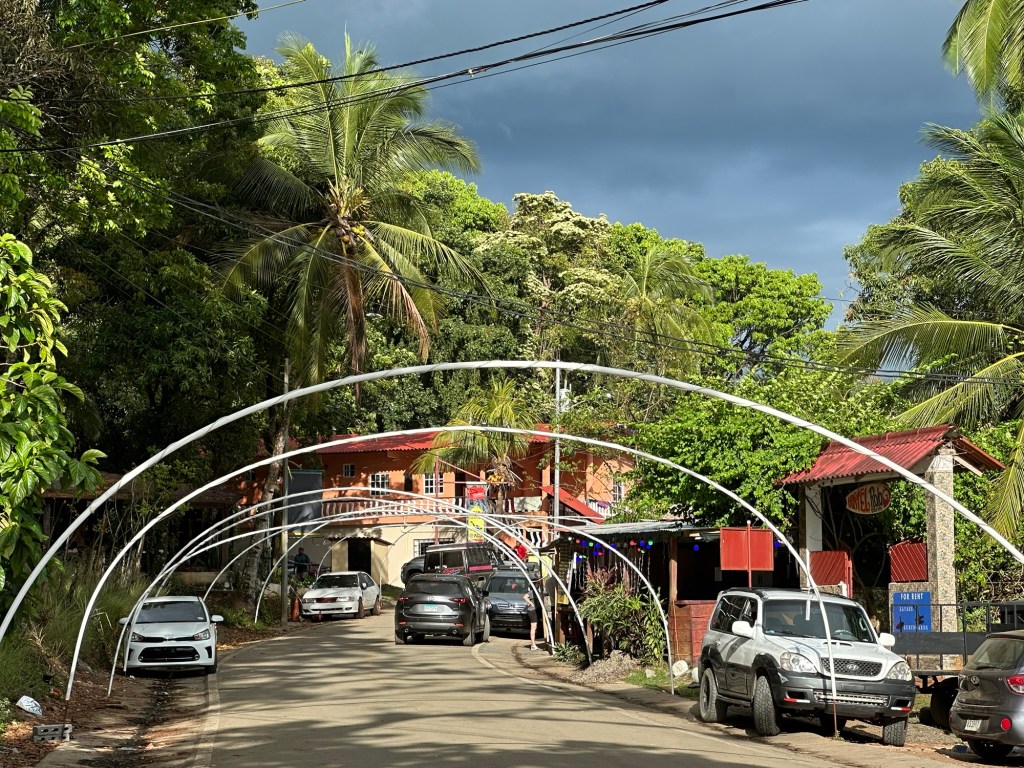
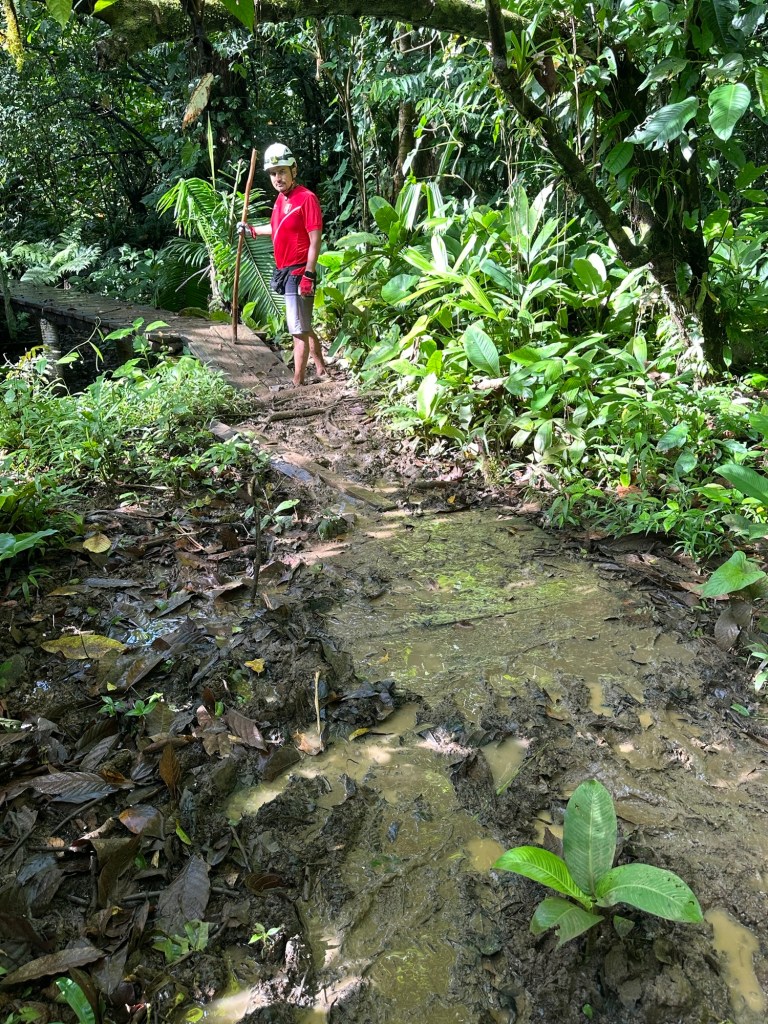
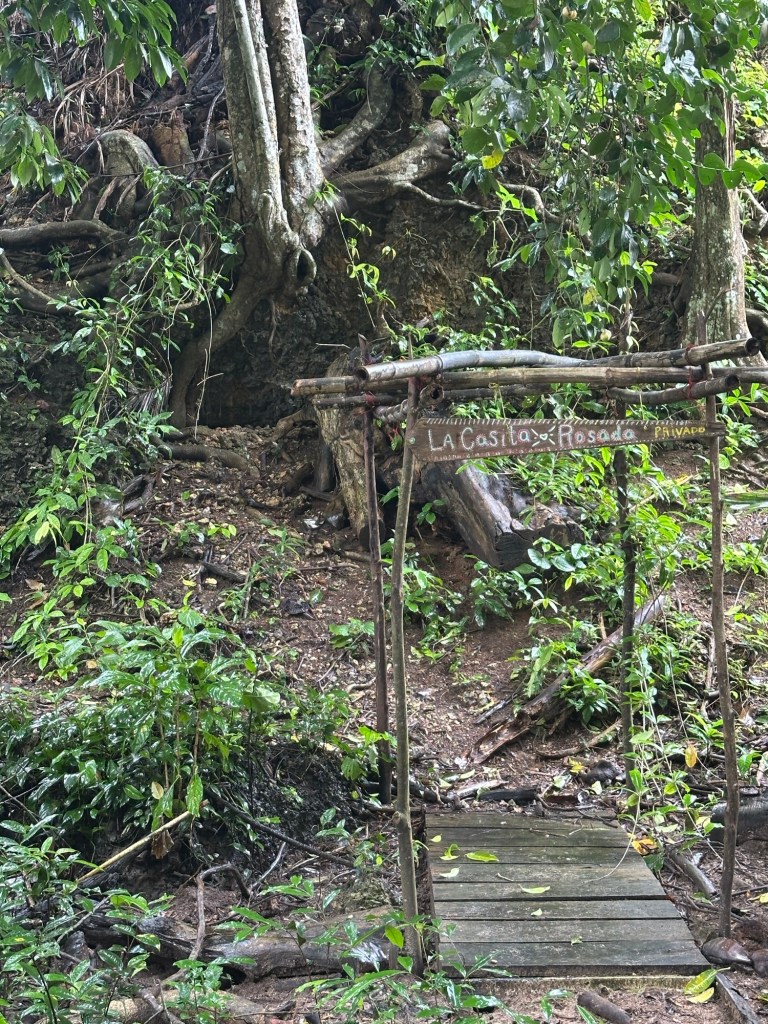
I found where the buses were leaving from to head north to a popular tourist beach. Instead of lounging in the sun with the beautiful peeps, I would be getting down and dirty in some muddy holes. That, my friends, is just the way I like it! After getting dropped off on the side of the road next to a sign pointing the way, I walked the few hundred meters to where the cave entrance lay and paid the US1 tithe.

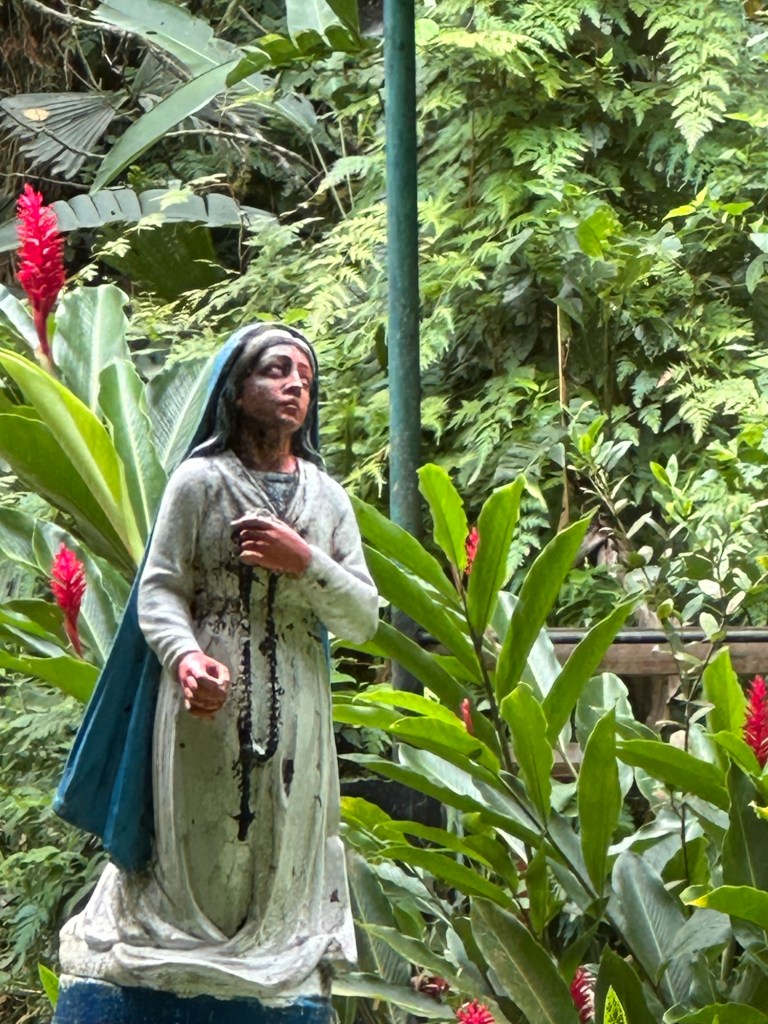
Mary says, “Do whatever.”

As is fairly common in many conservative Catholic communities, entrances to small caves often have statues of Mary and a place to worship and this little cave was no exception. The first thing that greeted me upon approach was a covered altar facing seating built into the slope which led down to it. A somewhat haughty looking Mary was disdainfully averting her eyes from the entrance.

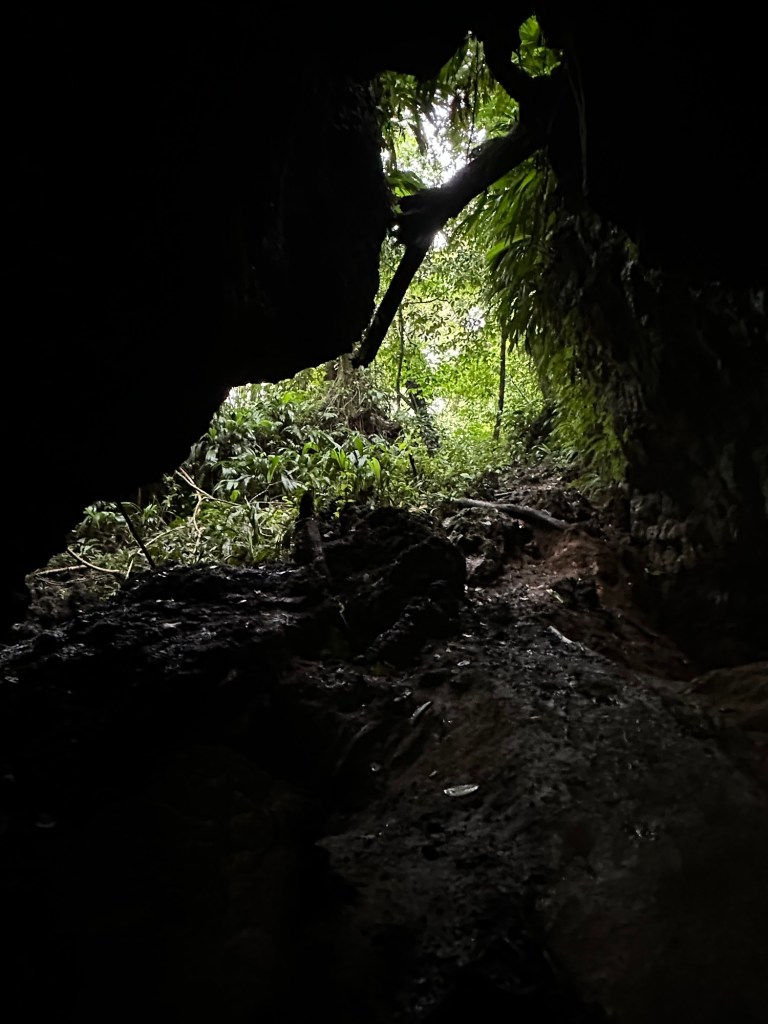
Cave entrance.

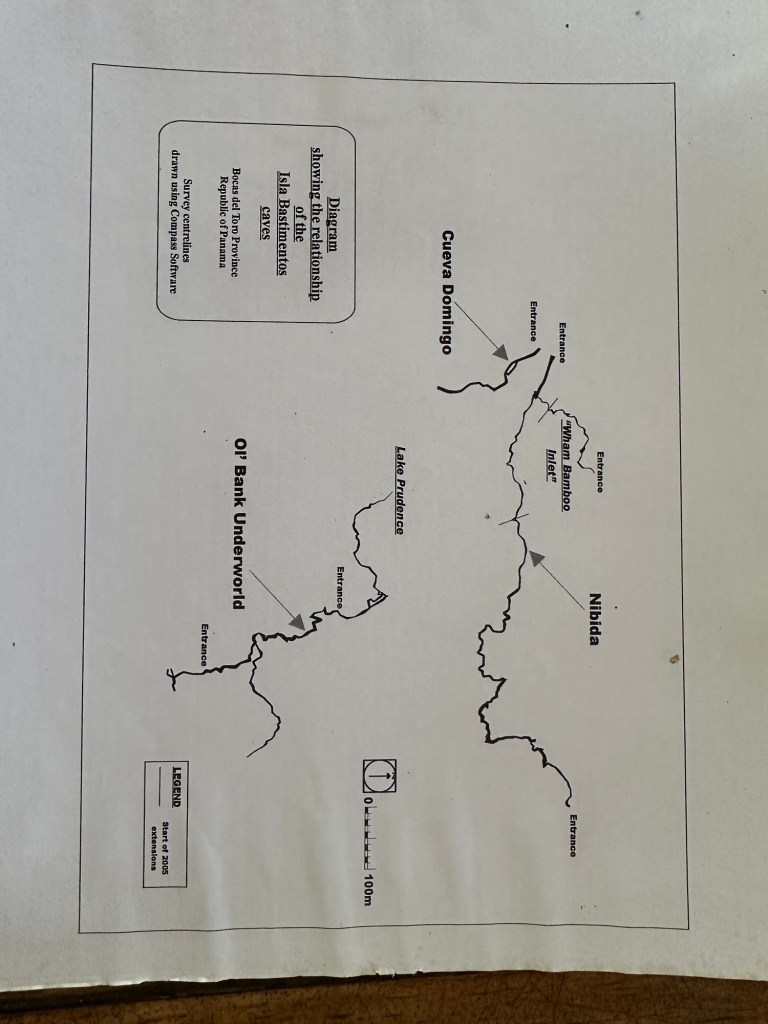
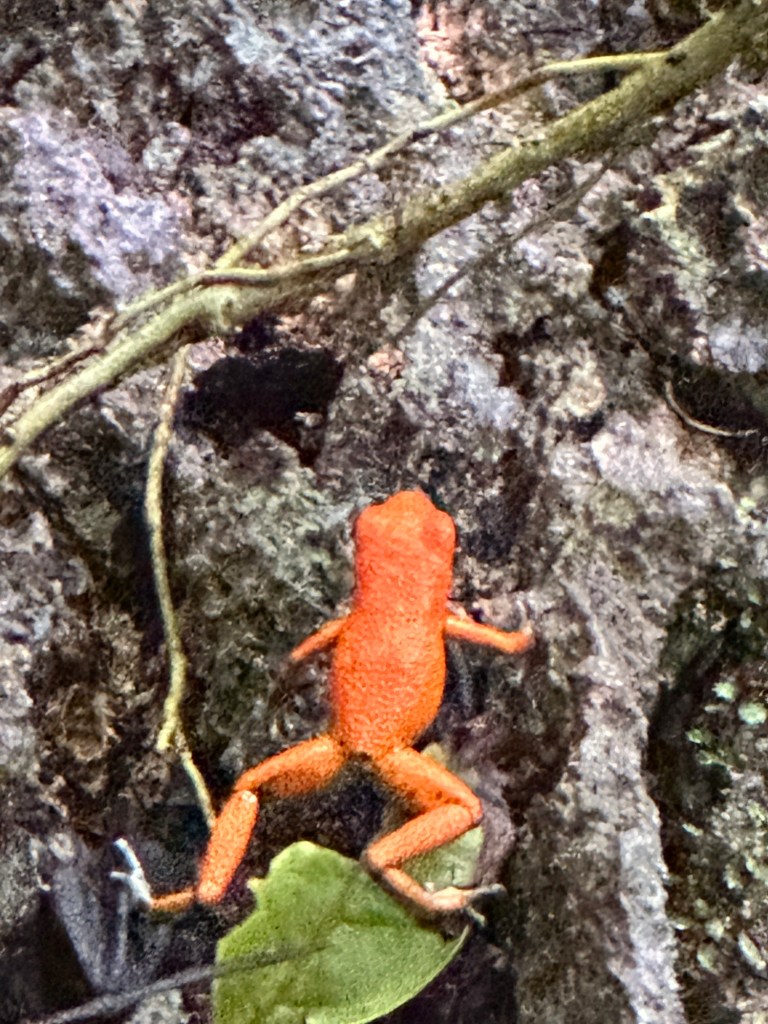
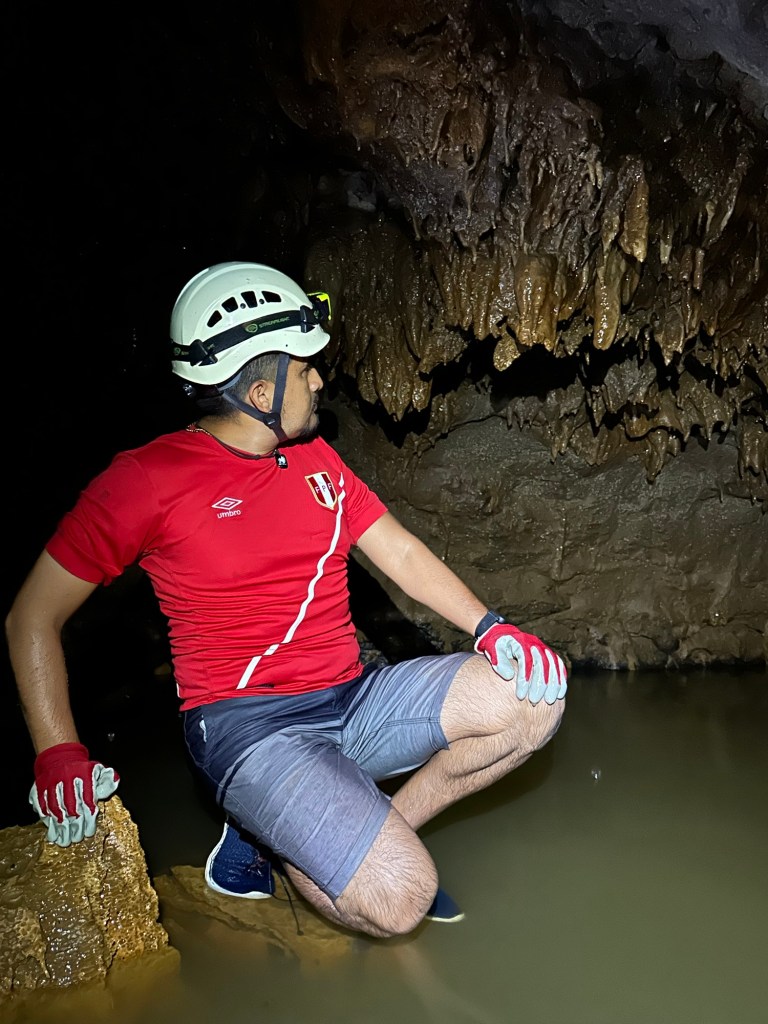
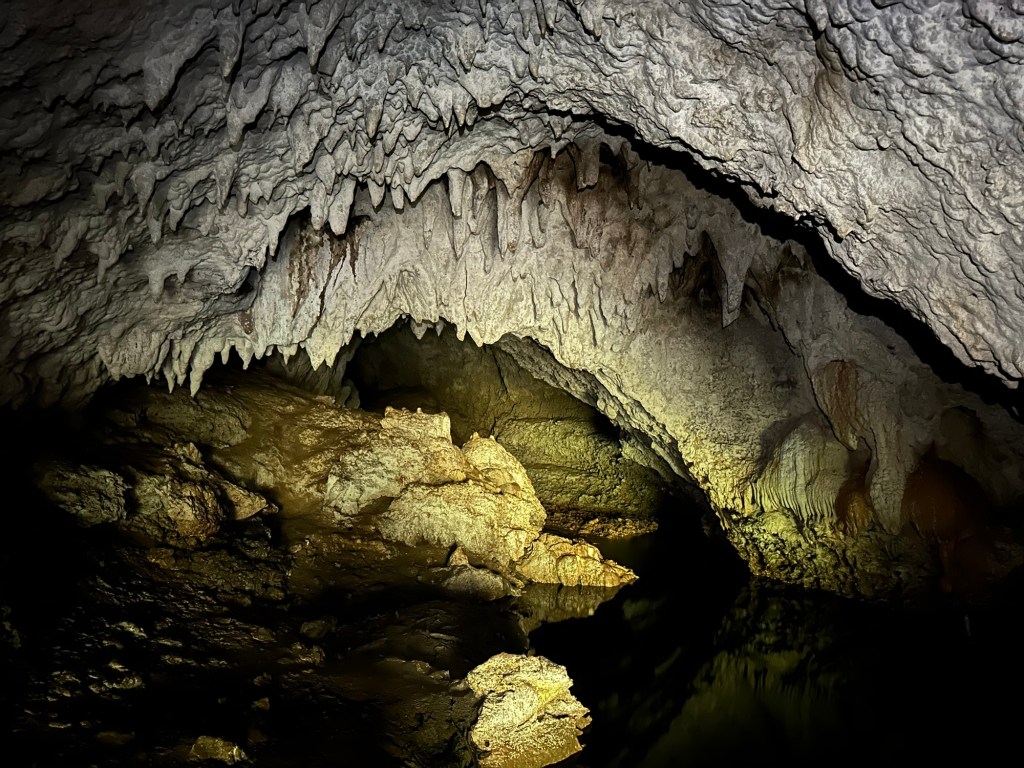
The first cave was only about 100m long and followed the stream which ran through it. It was necessary to wade through the stream most of the way but it wasn’t deep. There was a large colony of bats in the cave and I sighted numerous cave crickets and a few spiders. The second cave was about 200m long and here the water reached hip level. There were several large, active crystal formations in both caves and I spent a very pleasant hour exploring them, as well as venturing further upstream to see if there were any other caves along the same stream way.
Inside the first cave.

When coming back through the first cave, I came across a large group coming out. It turned out to be a group of about 15 students from University of Wisconsin with associated professors on a study tour of Panama looking at tropical biology. I was alarmed to learn only one student (and none of the professors) had scant knowledge about the fungal disease White Nose Syndrome which is wiping out bat populations worldwide. The disease is most definitely in Wisconsin and doing a lot of damage. To my knowledge Panama remains free of the disease at the moment but it can easily be transferred via contaminated clothing and/or equipment. The group assured me none of the clothing or equipment they had with them had been in a cave back home and welcomed learning more about the disease and its impacts.

Another cave entrance.

I joined the university group for a while as they explored the jungle between the two caves. The group is staying at a Smithsonian Institute outstation in Panama and using that as its base for their tours of the region. It was interesting learning a bit more about the jungle and I was able to answer questions in relation to the caves and bats in general.

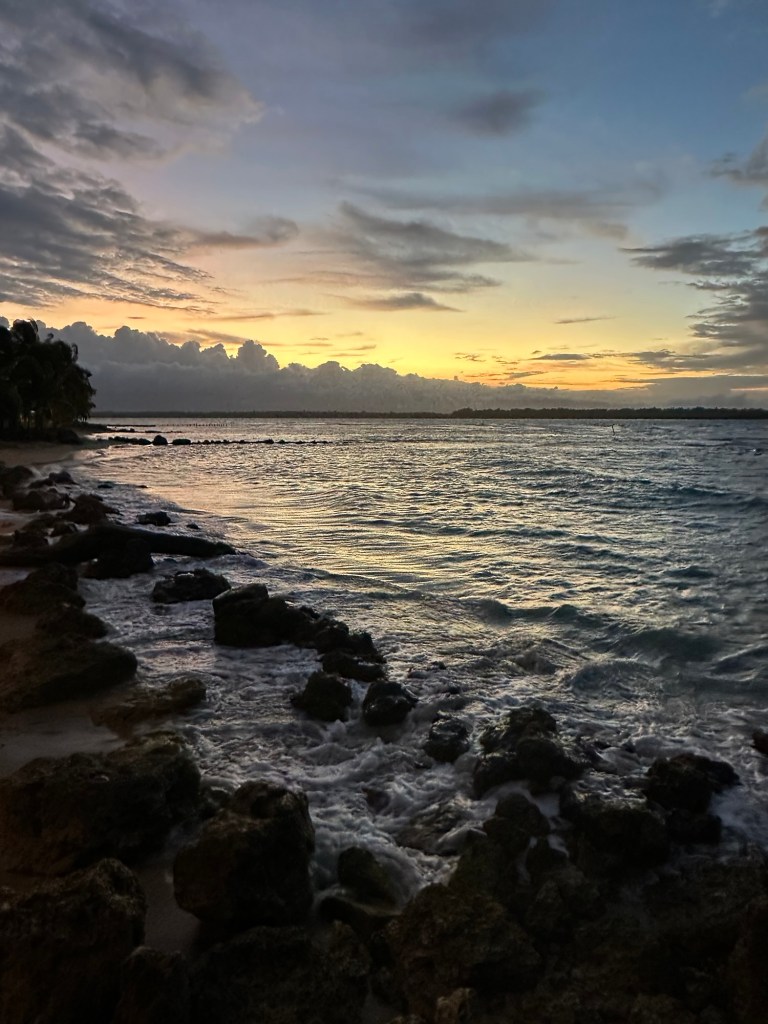
After leaving the university group, I wandered back to the main road to pick up a bus that would take me on to Playa Boca Del Drago. There was no point trying to get a bus back to Bocas as any bus coming from the popular tourist beach would be crammed and not picking up. Plus, I would get to see a little more of the island. I reached the beach on sunset and found a little local restaurant to have dinner at while the sun went down.

Sunset at Playa Boca Del Drago.

The last bus left Del Drago at 7pm which was perfect timing. Back at the hostal, I checked back in and was shown to my bed for the next two nights. This time I made sure I got a key.

Bocas

Still no cancellations on dorm beds and I needed to check out of the dorm room I was staying in. Fortunately, the owner said I could sleep on one of the couches for half the price of a dorm bed and still have full use of all facilities, including breakfast. I wasn’t overly fazed as I could secure my things in a locker and the compound itself was secure. The first night of the New Year would see me couch surfing in a Panamanian Hostal!

Isla Carenero

For the last day of 2025, I decided to check out the neighbouring island of Carenero; it’s Spanish name coming from the naval tradition of tilting a boat to one side to clean and/or repair. Evidently, Christopher Columbus’ fleet did exactly that back in 1502 when you couldn’t find a cerveza for love or money. Fortunately, times have changed and there are now multiple cerveza options in the southern end of the island. Sometimes it just doesn’t pay to be the first to discover somewhere.

Isla Carenero

I caught a water taxi the short distance over to Carenero and was deposited onto one of the many little wooden jetties poking out into the Caribbean. From there, I decided to walk north. There is supposedly a hike around the entire island but the information I had received from a fellow traveller was that you can only get about half way around. I thought I would give it a go and see how far I could get.

Isla Carenero

Almost straight away the trail deteriorated into a patchy mishmash of concrete path, sandy track, rickety bridge, wooden ‘plank’, dodge-the-waves beach walk, and muddy jungle trek. Most of it wasn’t too challenging and there wasn’t a lot of clambering over obstacles needed. The hardest part was finding the trail after it seemingly disappeared on multiple occasions.

Mangrove roots, Isla Carenero.

I ended up having to go slightly inland at one point which was where the trail deteriorated significantly. It had been drizzling most of the day and the trail was now a muddy quagmire weaving its way through the jungle. More so, there were obstacles to be negotiated and undulation of said quagmire. I only had my Treva travel sandals on fastened as tight as I could manage, but still finding the going somewhat difficult under the circumstances.

Isla Carenero.

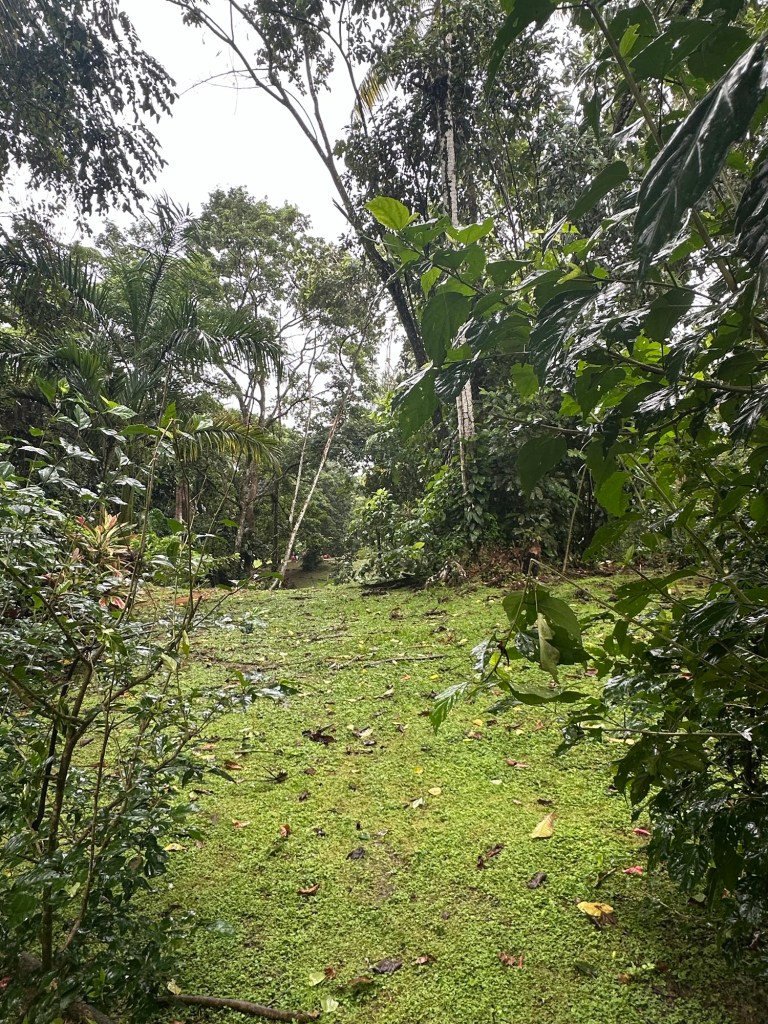
The track forked at a point where going down a slippery dip was looking likely, so I took the other option. To my amazement, after only a few short metres I popped out into an expansive, beautifully manicured, grassy estate of some kind. There were no signs indicating private property although I knew it would be, so I walked through it as I had nearly come to the northern end of the island anyway so was hoping for a shortcut to the other side which was of less peril than my current path.

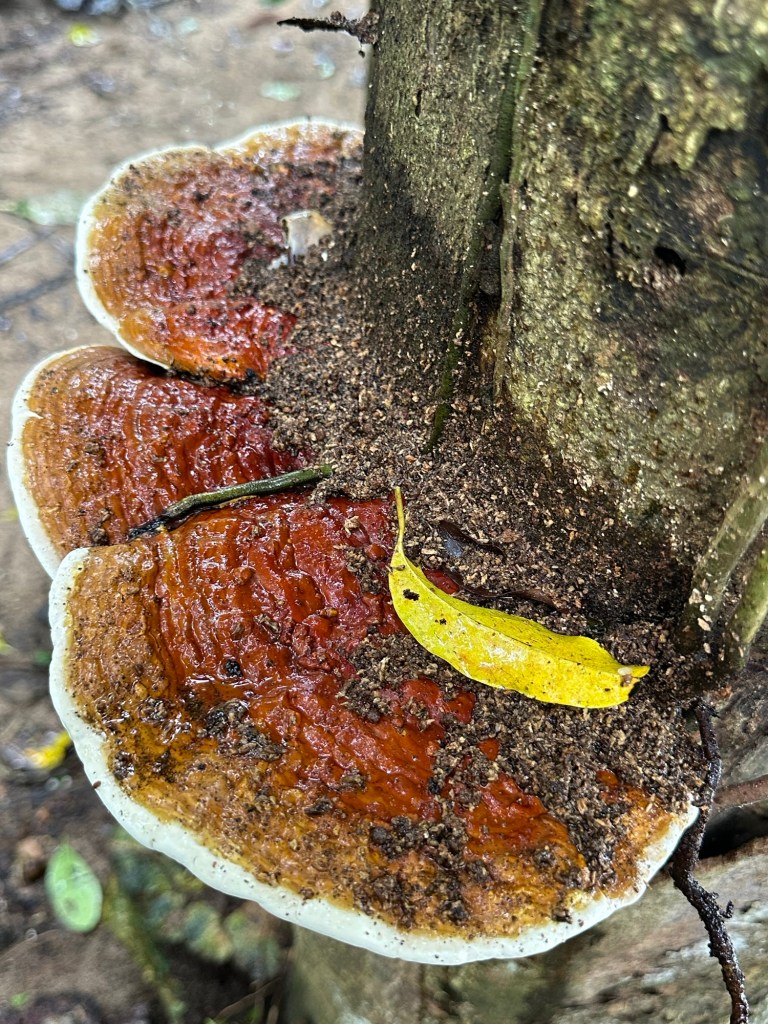
Fungí, Isla Carenero.

After exploring all options, I ended up popping out on the western side of the island, down someone’s driveway and out their gate which left no debate as to the fact it was indeed private property. From there, I was able to make it along the edge of the narrow, mangrove encroaching beach until eventually I encountered the path which lead back down the island again.

My clandestine trespass. Isla Carenero.

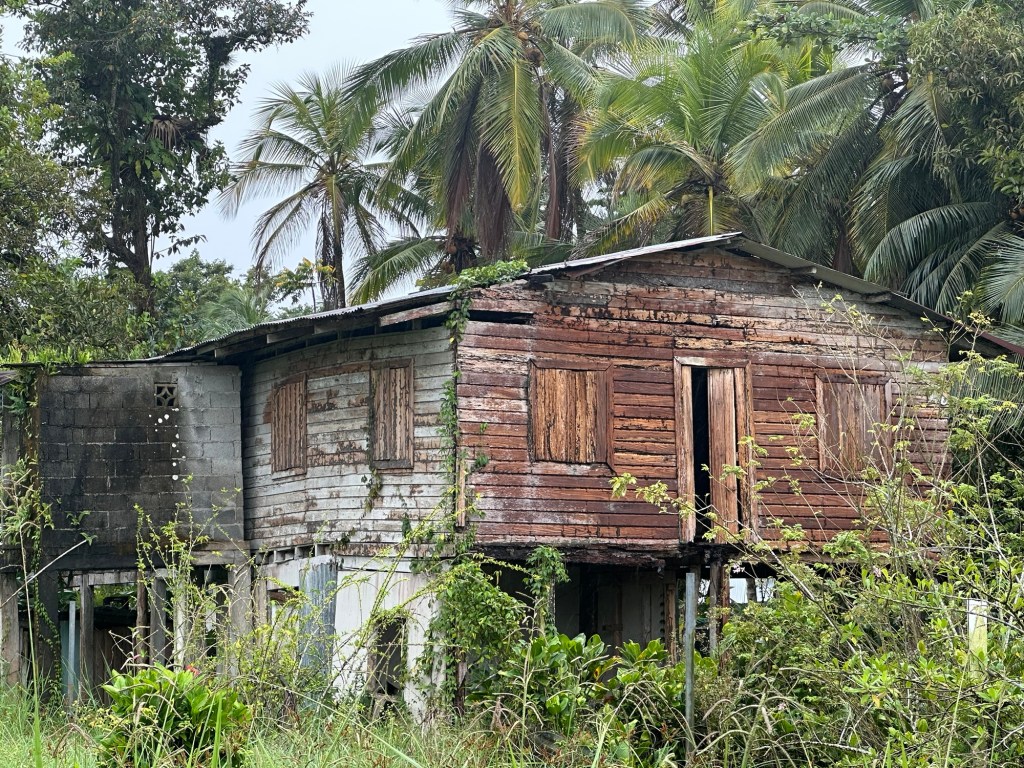
As I neared the South-western end of the island, I stumbled upon where the local indigenous population of the island live. Namely in poverty stricken shanties clustered in one tiny corner. It contrasted starkly with the massive, splendid estates I had just trespassed on.

Shanty Town. Isla Carenero.

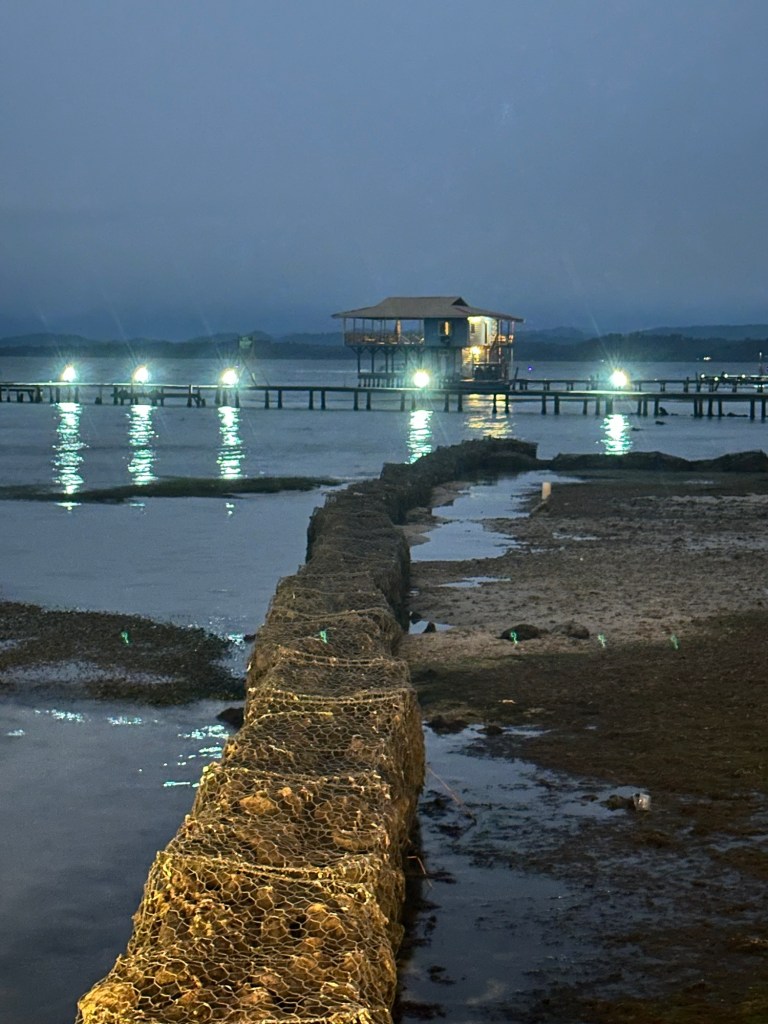
Island all but circumnavigated, I decided it was time to avail myself of cocktail Happy Hour at one of the local establishments perched over the water on the eastern side. I had some time to kill so killed it with USD4 Pina Coladas as the sun slowly set behind the island.

Evening on Isla Carenero.

A water taxi back to Bocas then I sorted myself out for a night of couch surfing after New Years celebrations. Unfortunately, it wasn’t until the staff had left for the evening that I realised they hadn’t given me a key to get back into the compound. I wandered out to see if I could find any of the other travellers I had met at the hostal to hang with so I could get back in again later on. As luck would have it, a German couple I had spent a bit of time with were on their way back to the hostal and were more than happy for me to tag along. We went back out again after a game of Uno and met up with some Portuguese-Canadians they had previously met.

Tha gang. NYE Bocas.

On a narrow street a block from where we were, boxes of fireworks were placed in close concentration with plastic tape less than a meter from them warding off the general public. People stood around smoking and letting off their own supplies of crackers. When the fireworks did detonate at midnight, it was perilously close to surrounding buildings and you could actually see bits of burning debris bounce off the sides of some. For a town whose main street burned to the ground less than two years previously, I thought their fire risk policy somewhat lax. But it was a great display lasting nearly 45 minutes. And a wonderful way to ring in 2026.

Bocas

Over the free breakfast of pancakes, fruit and coffee, the hostal’s señorita informed me there had been a cancellation, and hence now a vacancy for the nights I had been looking for. Although I had booked elsewhere, that accommodation was significantly more expensive than the one I was staying at. Plus I didn’t need to pack up and move! I jumped at the offer and quickly cancelled the existing bookings. Unfortunately, the hostal’s computer chose that precise moment to freeze and by the time the señorita got it back up running again, someone else had booked the bed on-line. Now I had nothing. I told the señorita I would be happy sleeping on a couch if no further cancellation came up and promptly left to go on a tour I had booked the previous evening.

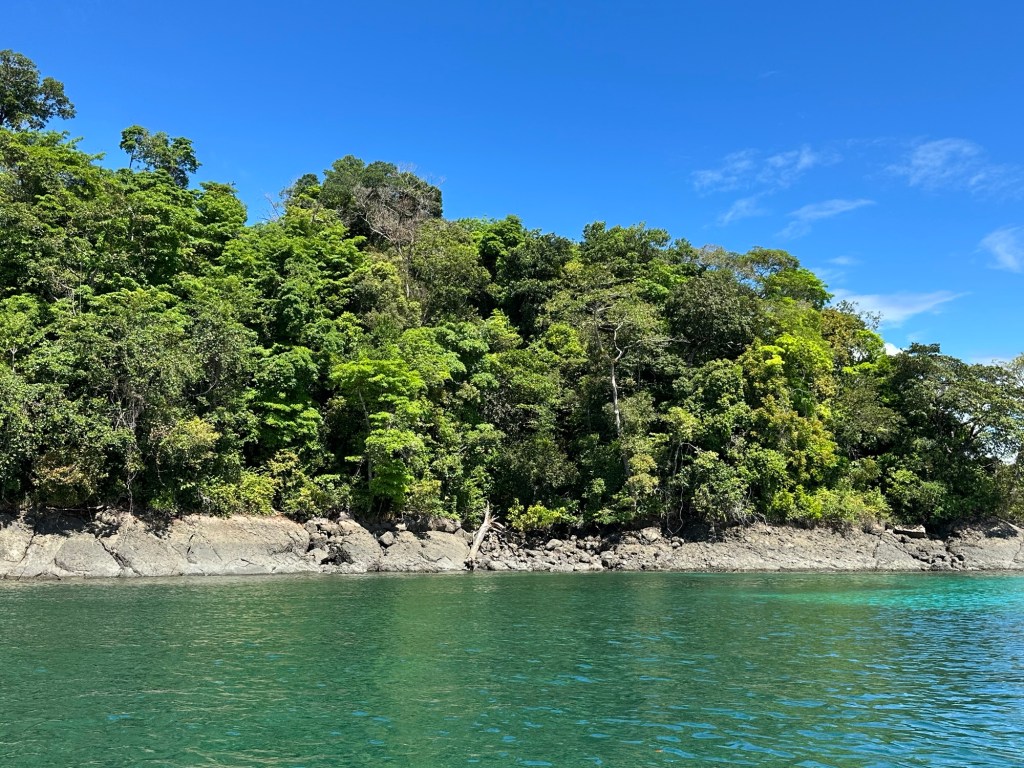
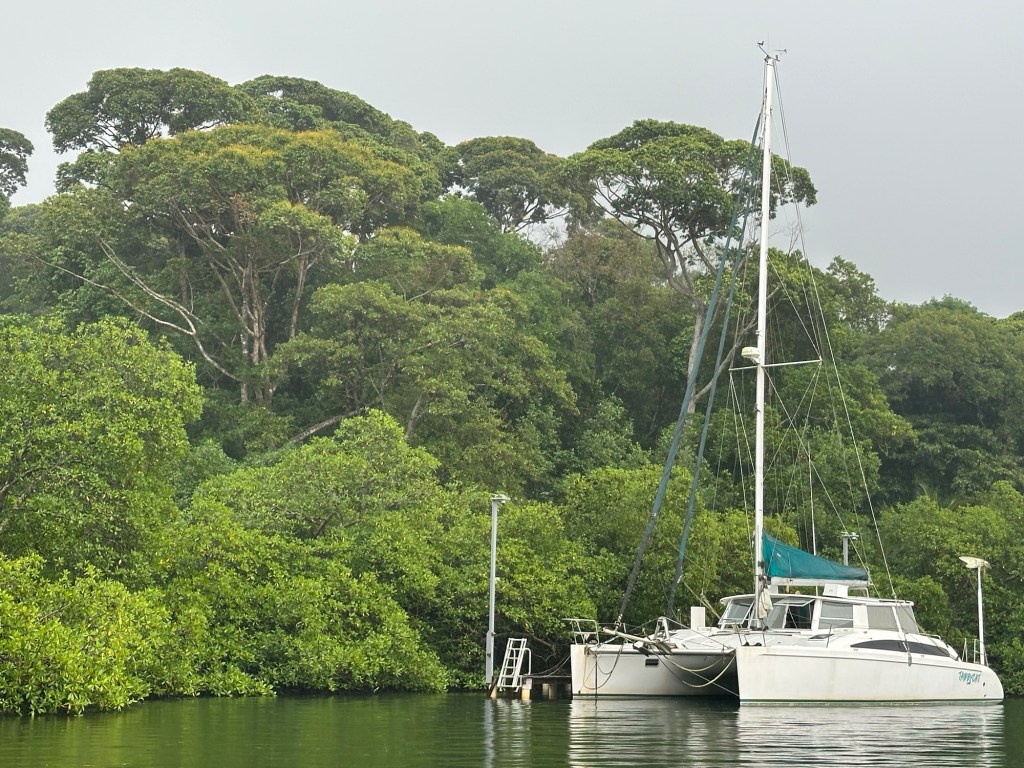
One of the many jungle-clad islets in the archipelago.

The tour sounded like a great allrounder for the area, including dolphin and sloth spotting, snorkeling a coral cay, and exploring an uninhabited island surrounded by a national marine park. All in the balmy embrace of tropical bliss. Except for the weather. Right from the beginning, the weather gods decided the sun was a nuisance and did their best to obstruct its work. Apart from a brief respite while we were at the island, it was drizzling most of the day.

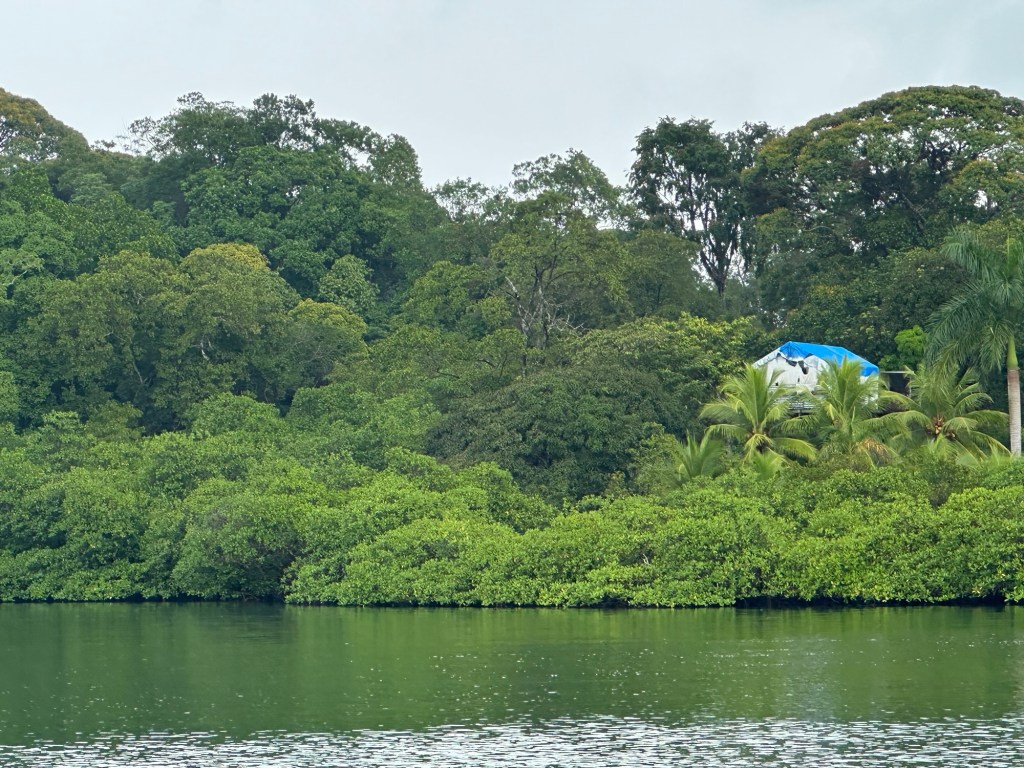
Mangrove outcrop.

We sped off through the archipelago, weaving through channels that passed jungle-like mangrove outcrops, trying to find dolphins. About a dozen boats were already in the area with the same goal when we got to ‘The Spot’. Eventually, one poor dolphin decided to break the surface and all boats immediately pointed their bows in its direction trying to track it down. We did see a few more the short time we were there, however, it was pretty miserable under the slate sky with rain driving in sideways.

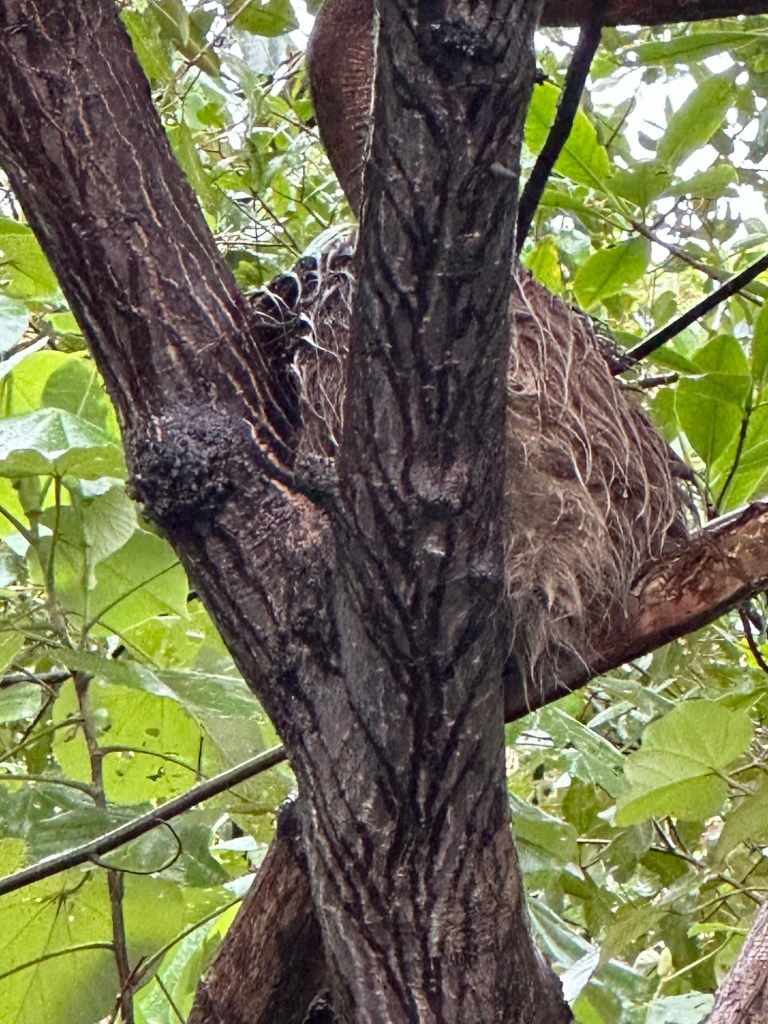
Soggy sloth snoozing.

Next it was off to see the sloths and again, not much to show for the effort. We found a soggy sloth snoozing in a tree on the edge of a mangrove swamp and another couple dispersed high up in another tree. None of which had any inclination of moving a single waterlogged hair. From there, it was further on to snorkel the coral cay. I thought this too would be a disappointment, but was surprised to find some coral in reasonable nick with fish swimming around. The water was gloriously warm and the rain had eased to a sprinkle.

Freshly caught lobster.

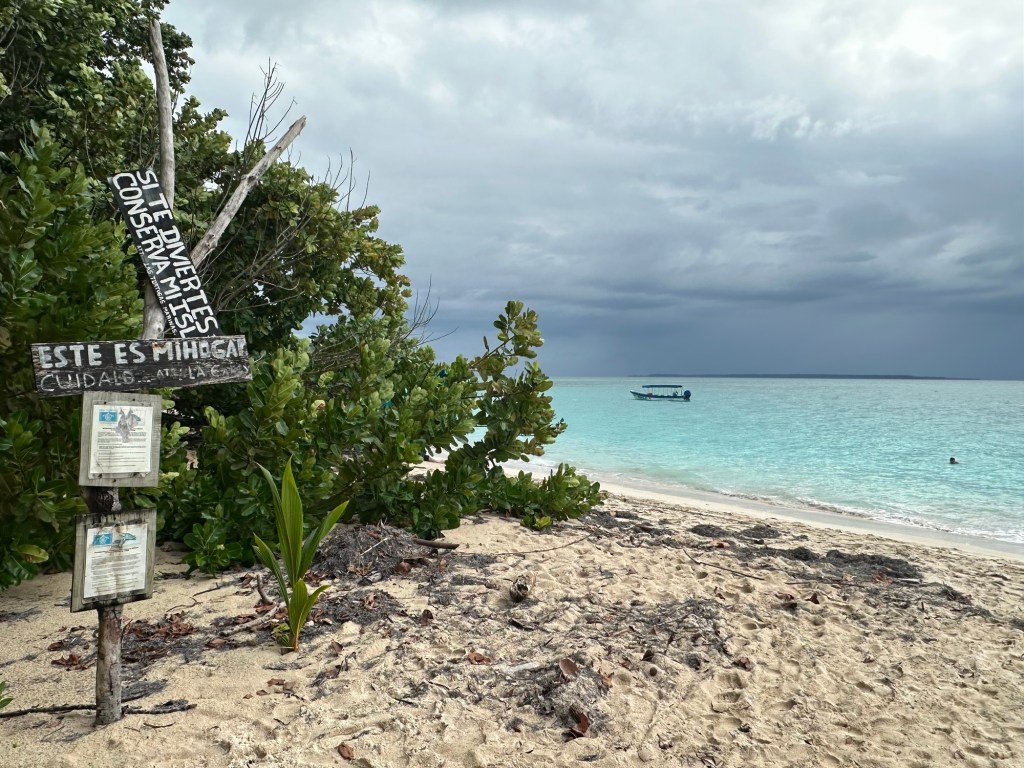
On to lunch at a little restaurant built out over the water and later we were deposited on a picture postcard stretch of beach with the aquamarine waters of the Caribbean gently lapping at its edges. Here the rain finally eased off and we were able to enjoy this little piece of paradise. Cayos Zapatillas are two pristine tropical islets poking out of the Parque Nacional Marino Isla Bastimentos (National Marine Park of Bastimentos Island). A perfect place to decompress in the gloriously warm water and an interesting little spot to explore.

Cayos Zapatillas.

Eventually, we were summoned back on board to continue the tour. And of course, the rain picked up again. Puttering around a shallow sandy-bottomed lagoon bordered by mangrove swamps, we tried peering into the rain-splattered water to sight orange starfish wallowing on the sea floor.

Finally, we were on our way back to Bocas; the boat driver having fun weaving through the mangrove outcrops at a speed to ensure anyone who wasn’t already soaked got with the program. It was a somewhat bedraggled wild woman who wandered back to the hostal in search of a shower and warm, dry clothes. Still no cancellations, but at least I had a bed for one more night.

Almirante – Bocas

The morning revealed a lovely surprise at Axel’s hostel. You could see there was water under the decking the previous night, illuminated by a string of coloured lighting. But it wasn’t apparent that the house was built next to and on top of a picturesque mangrove swamp. A very pleasant spot to have one’s morning brew prior to farewelling the hostel.

Axel’s across-the-mangrove-swamp neighbour, Almirante.

Axel showed the way to a local cafe where I could get some breakfast, then left me to tuck in. From there it was a very short walk to the ferry terminal to catch the boat to Bocas. As I was walking, a señor called out to me that I had missed the ferry and I would need to take a water taxi instead. I thought him mistaken, or at the very least trying to drum up business for the water taxis. Unfortunately, he was entirely correct as the scheduled ferry left nearly an hour early and I had indeed missed it. Not wanting to hang around Almirante another four hours, I relented to taking a water taxi.

Water taxis, Bocas.

Isla Colón is the largest and most developed island in the Bocas del Toro archipiélago; a string of emerald gems strewn off the coastline in the Caribbean Sea. Bocas Town, or Bocas as it is better known, is the main town in the island chain and forms a hub for the other islands. I had found a hostel I liked the sound of and booked a couple of nights to see how I went.

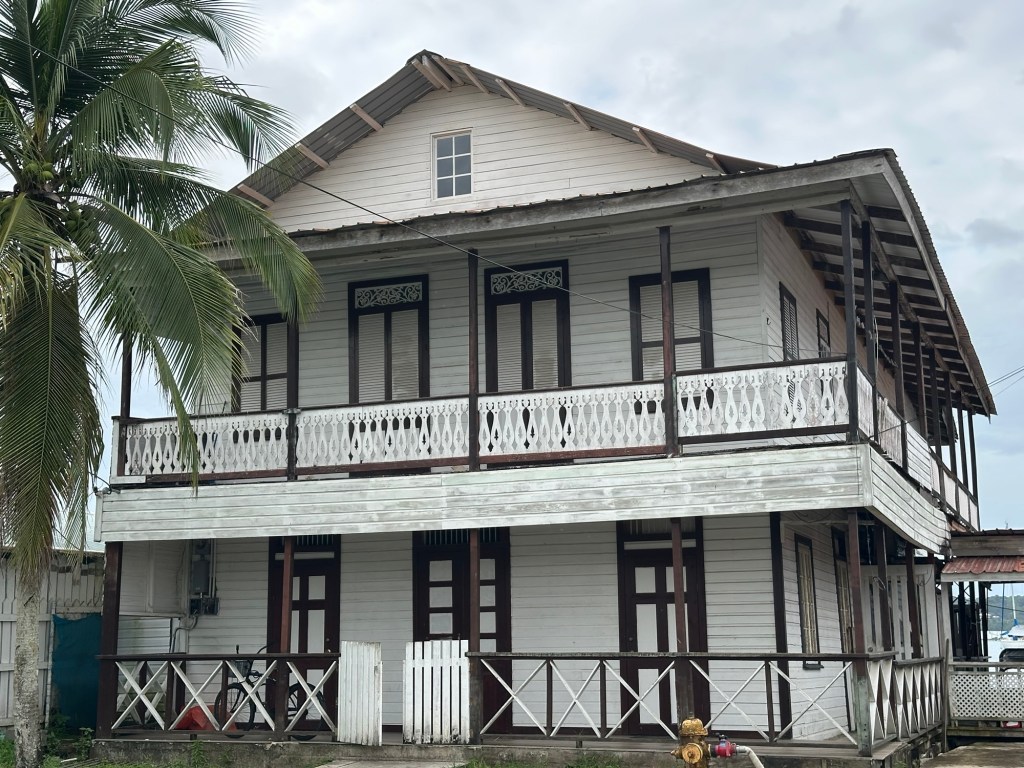
Caribbean charm, Bocas.

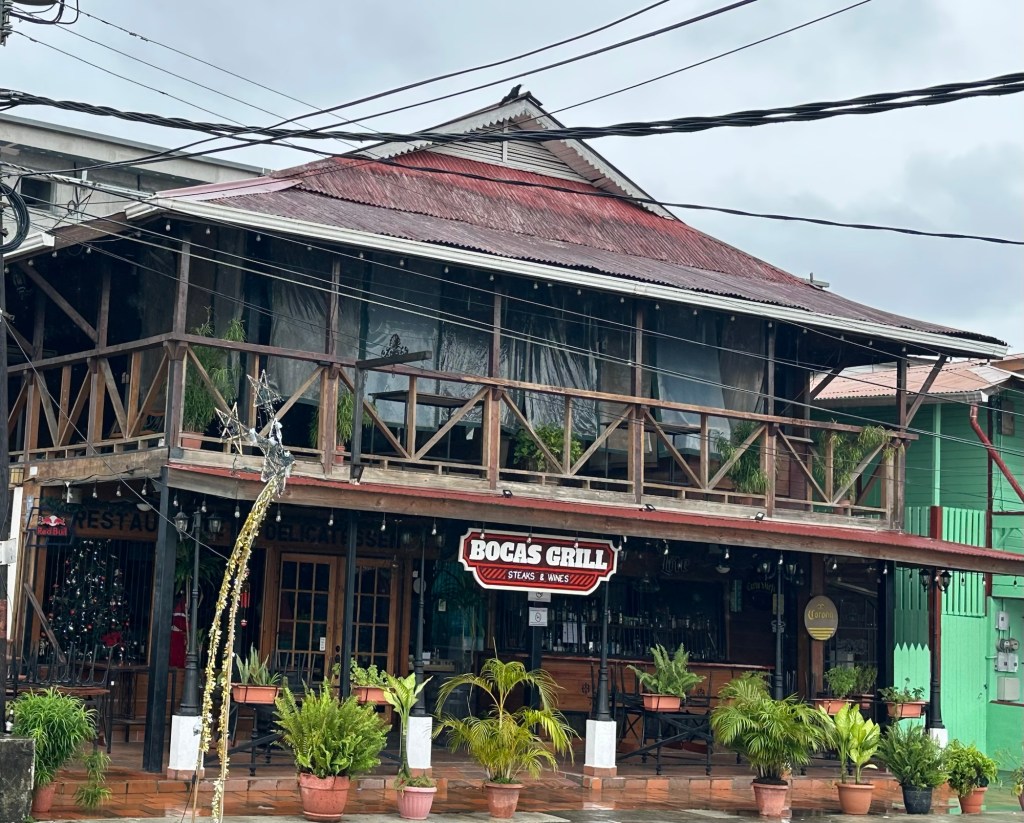
After checking in, I had a wander around town to get my bearings. Bocas is situated on a spit of land jutting out from Isla Colon’s south-eastern corner. Primarily Caribbean in its roots, it exudes coastal charm by way of its pastel hued clapboard buildings and all manner of palms and other tropical plants squeezed into as many spaces as possible. Although clearly catering to the burgeoning tourist market, it still manages to have a laid back charm about it.

One of the many restaurants in Bocas.

Suitably impressed and with a range of options for day trips from Bocas, I asked if I could extend a couple of nights. Alas, the inn was full so I booked accommodation on other islands planning on making my way across the archipelago over the next few days.

David – Almirante

The guidebook mentioned an historic centre in David worth checking out. Which was why I decided to overnight there in the first place. After a fortifying breakfast provided by my hostel host, I ventured out into the searing heat to see for myself.

Parque Miguel de Cervantes Saavedra, David.

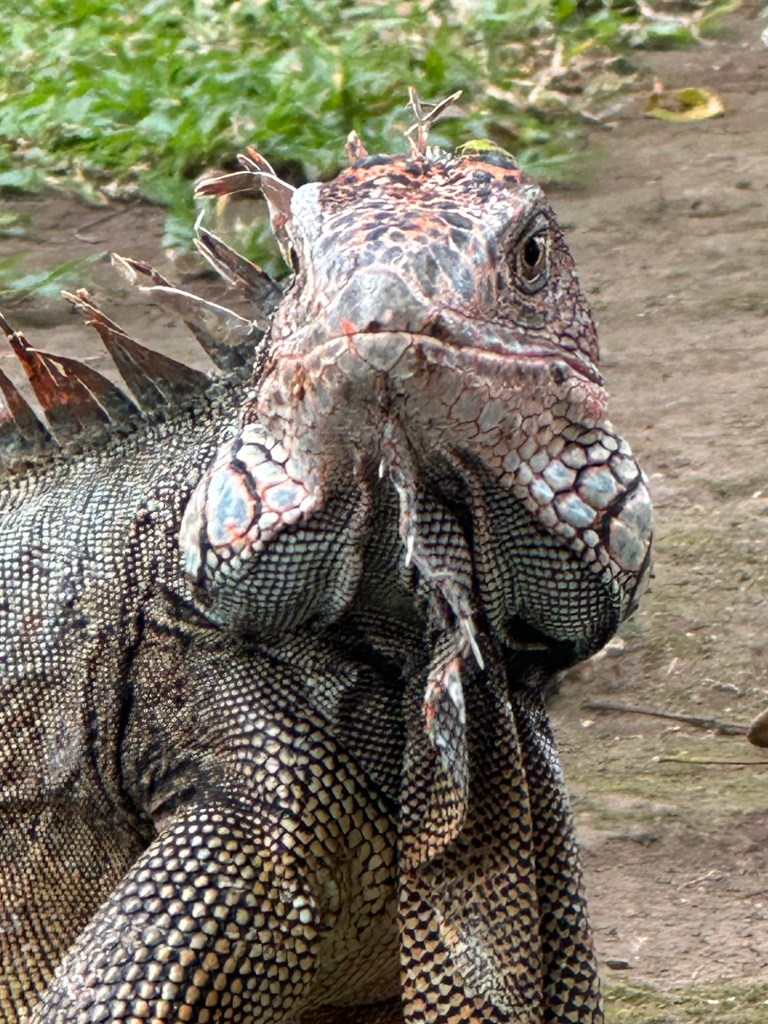
A somewhat underwhelming town square bedecked in Christmas fare and a church in full congregational swing, ended up being the sum total of my discoveries. There were several iguanas in the square though which were quite entertaining; especially when a large male had a squabble with a female and fell out of one of the trees onto the grass below. He composed himself, looking quite indignant, then made his way back up the tree to finish what he started.

Indignant iguana, David.

I returned to the hostel to retrieve my pack, then made my way to the bus terminal. Normally, I make my way around a country either clockwise or anti-clockwise. However, Panama doesn’t really lend itself to that option due to it being largely uninhabited on a good part of the Caribbean side, then narrowing at the eastern end of the isthmus before finally moving into the highly dangerous Darién Gap. Thus, I’ve decided to travel across the country from west to east as far as possible, then return to Panama City to fly back to San Jose to pick up the first of my three flights home.

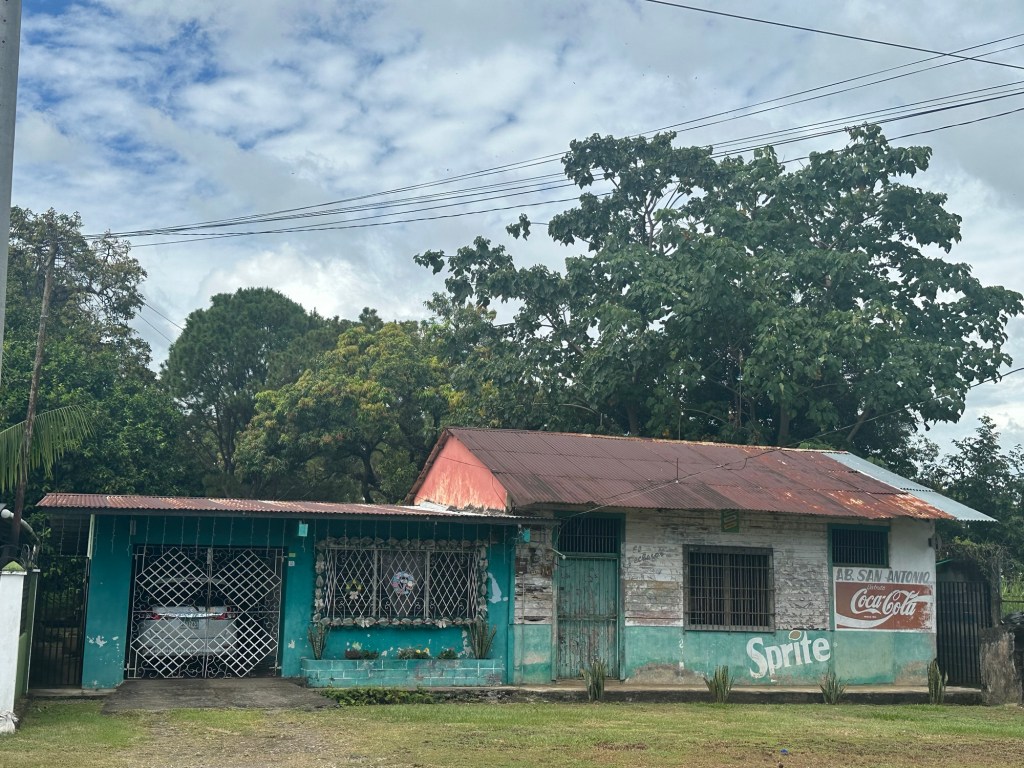
This casa has seen better day. David.

But first, it was north through the mountains to visit the Bocas del Toro Province. The islands off the coast here are one of Panama’s biggest party places and a popular tourist destination. Not usually my vibe, but I wanted to go and check it out. I located the bus and waited in a long line to purchase a ticket.

Casa, David.

The Cordillera Central is the collective name given to the mountain range running down the spine of Panama; delineating watershed to either the Caribbean or the Pacific. And also the only route from the Pacific to Bocas del Toro. I had managed to get a seat behind the driver so had pretty good views the whole way there. As the road wound around the sides of the mountains, the picturesque valleys opened up to reveal verdant grazing fields carved out of the emerging cloud forest. A highlight of the journey was crossing the dam wall of Panama’s largest hydroelectric power plant. The damming of the Rio Brazo de Hornito now meets around 12% of Panama’s energy needs.

Axel, the marvellous muso, Almirante.

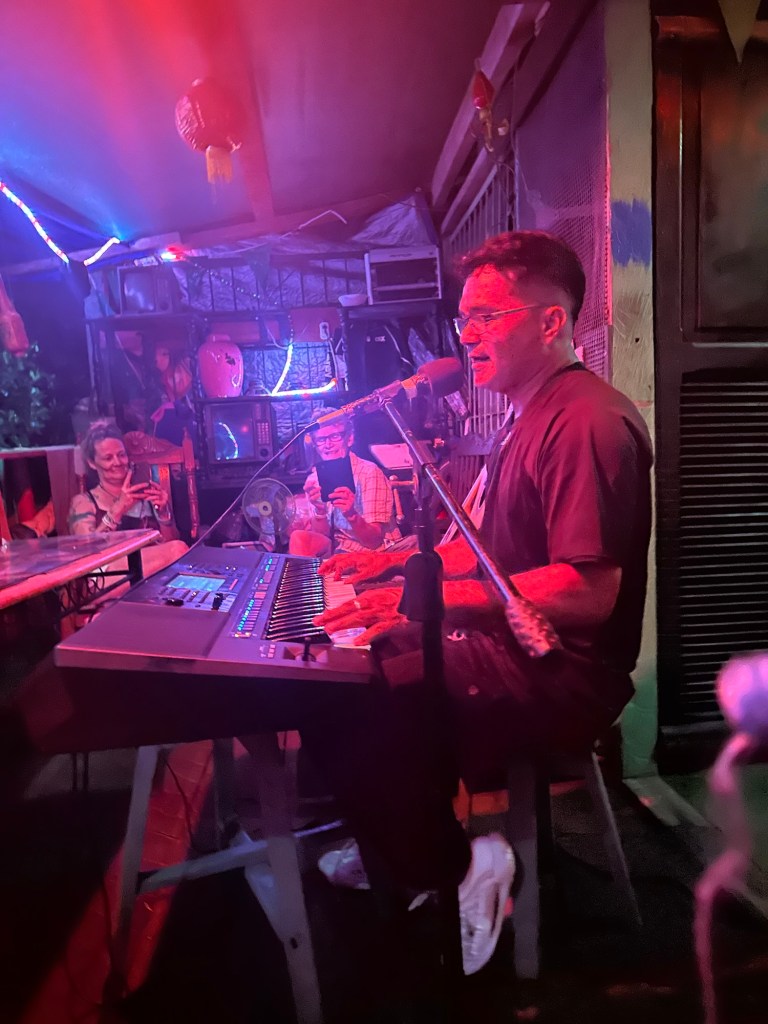
I didn’t arrive in Almirante until dusk, so found a local hostel to stay in overnight. Hostel Cafe Axi was more of a home than a hostel and run by the most amiable hosts one could imagine. Axel is also a professional musician and gave myself and the other two travellers staying overnight an impromptu performance on his keyboard, which rested on a stool on the rustic boards of the outside deck. A truly memorable evening created by a truly talented hombre.

Boquete – David

Not content with ignoring the road beyond Boquete completely, I left my pack at the hostel after checking out and caught one of the local minivans that service that area. I explained to the driver that I didn’t want to be dropped off at any of the trail heads, rather just do the loop and return to Boquete. He was more than happy for that and let me sit in the front seat so I had a panoramic view of the countryside.

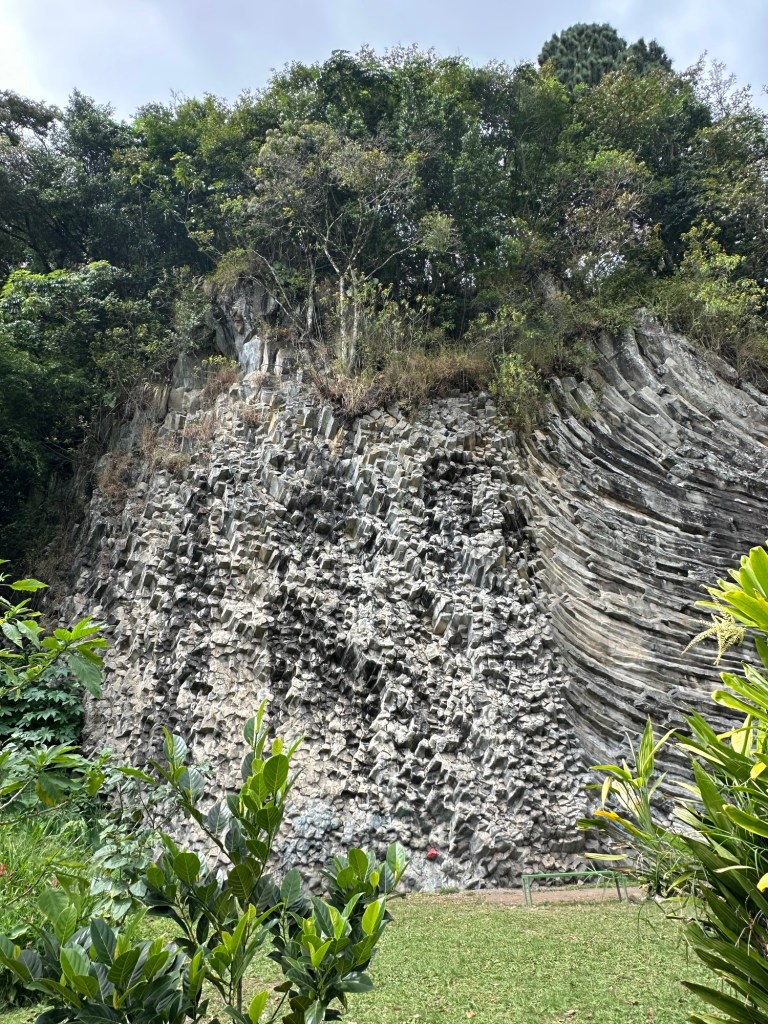
Exposed volcanic rock, Bajo Mono.

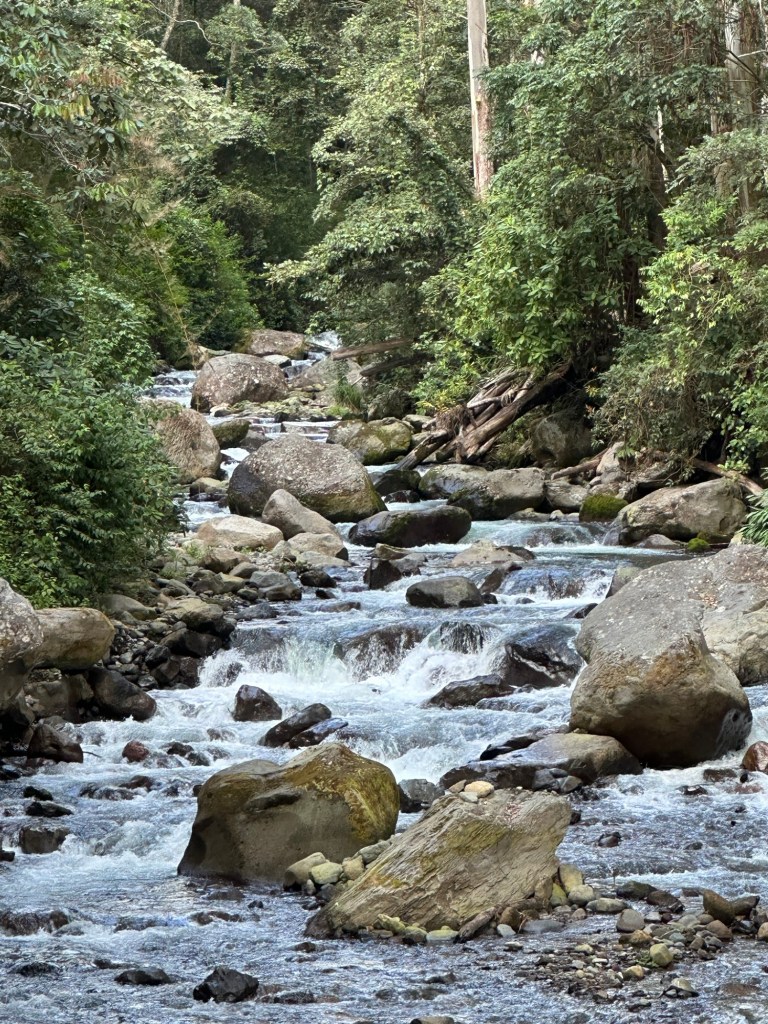
Almost immediately, I was happy I had decided to venture up the mountain road. The terrain altered to reflect the high altitude landscape that depicts this region. Cloud forest enveloped the steep slopes. Strawberry farms in protected plastic tunnels filled some of the valleys. High altitude coffee plantations completed the vista; the red coffee ‘cherries’ peaking through glossy green foliage. And pristine rivers cascaded down sheer drops or rumbled noisily down rocky river beds.

Waterfall, Bajo Mono.

My driver decided he would be my ‘tour guide’ and stopped for me to take photos as well as explaining aspects of the region to me. What became apparent as we traversed through the countryside though, which needed no words, was the disproportion between expat foreign or wealthy national owned enterprises and the indigenous communities living on the fringes; the latter living in crude wooden huts with limited facilities.

Rio Caldera, Bajo Mono.

Back in Boquete, I gathered my pack and wandered down to catch a bus back to David. David is Panama’s second largest city, outside of Panama City, and has little to recommend it to the average tourist. The guidebook did mention an historic centre that was worth a look so I decided to book a dorm room overnight so I could check it out before pushing further afield. Before leaving Boquete, the owner of the hostel contacted me and asked if I was interested in going with him to release some turtle hatchlings down on a beach just south of David. I had seen turtle hatchlings released before in Nicaragua but it didn’t cost much and I could check out another little part of Panama.

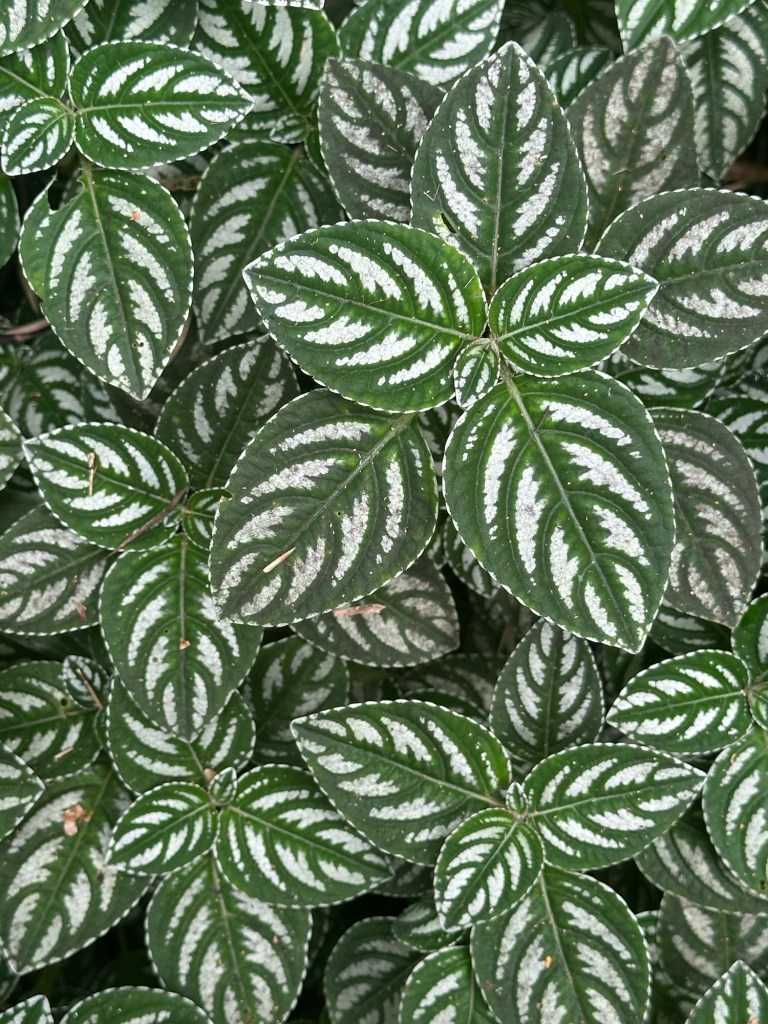
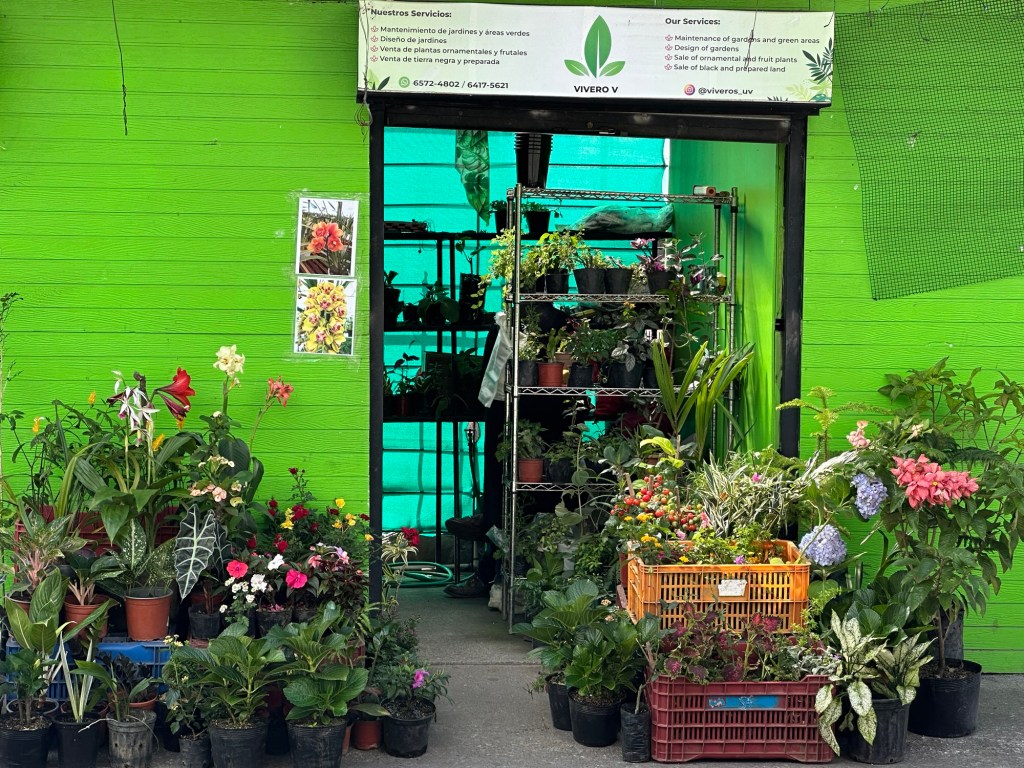
Plant Nursery, Boquete.

Roger, a Samoan-Spanish-American born in Panama, picked me up from the bus terminal and we just had time for me to drop off my pack and change shoes before heading out again for Playa Barqueta, about 40 mins south of David. Roger explained the conservation issues with this particular stretch of coastline with land owners wanting to sell to consortiums to build high rise apartments for expat foreigners with scant regard for the plight of the sea turtles who would be effected by such a move. It is an issue deep in his core.

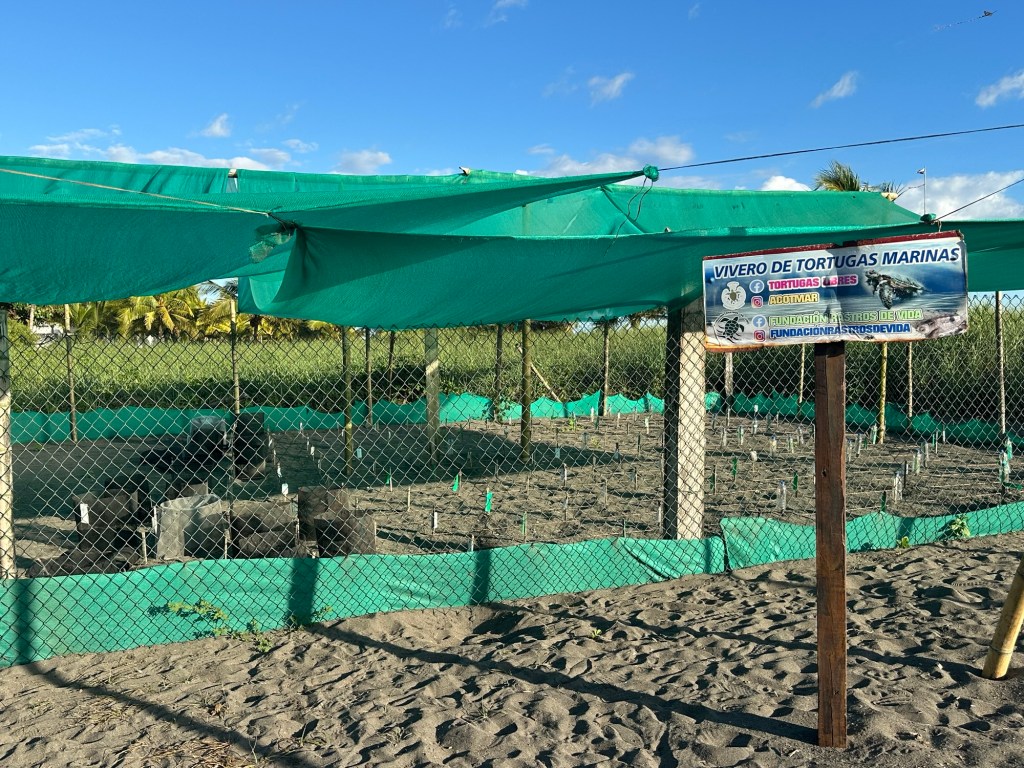
Turtle Refuge, Playa Barqueta.

Down at the beach, Roger introduced me to Alexis who runs the small turtle refuge situated between his beachside cafe and a run-down high-rise block of apartments. Eggs are collected prior to poachers nabbing them and reburied in numbered and dated pits at the refuge. When the turtles start to hatch, they are collected to await the next possible mass release on the beach. Late this afternoon was one of those occasions.

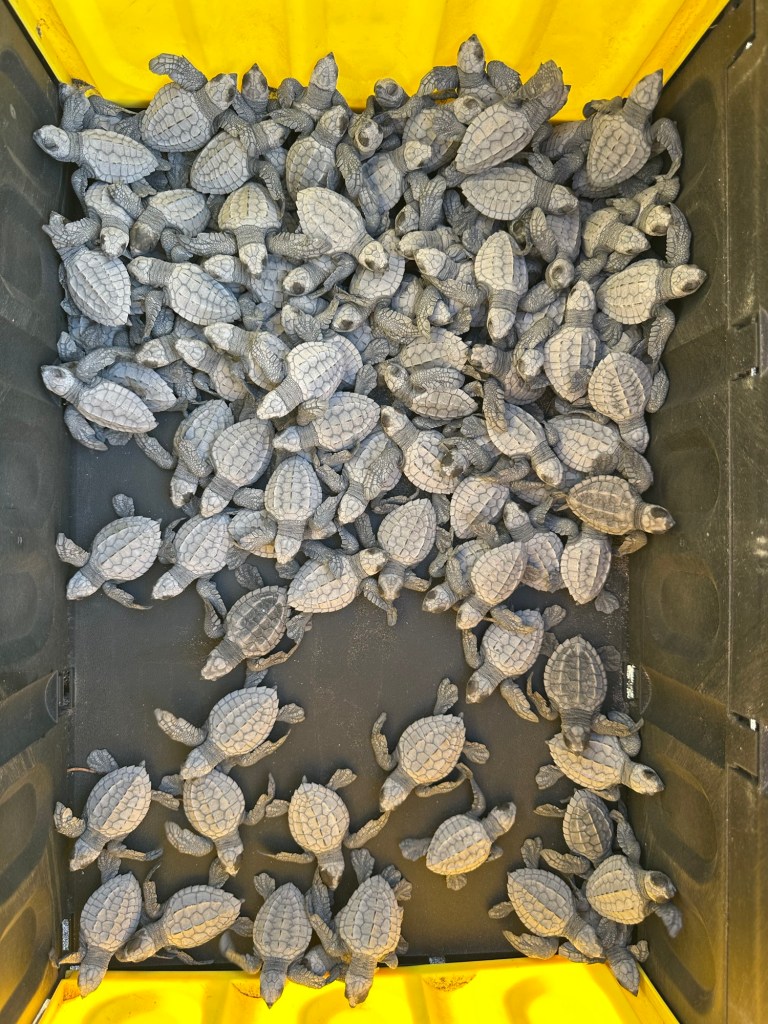
Parrot Turtle hatchlings prior to being released into the ocean.

I helped with transferring the hatchlings into special containers used for their release. Then the containers were carried down to the beach and placed inside a roped off area prior to the relapse. Finally, a section of the container was removed so the hatchlings had free access to the beach. Then, following natural instinct born over millennia, the hatchlings made their way down to the water; the waves collecting them in its embrace and taking them out to sea.

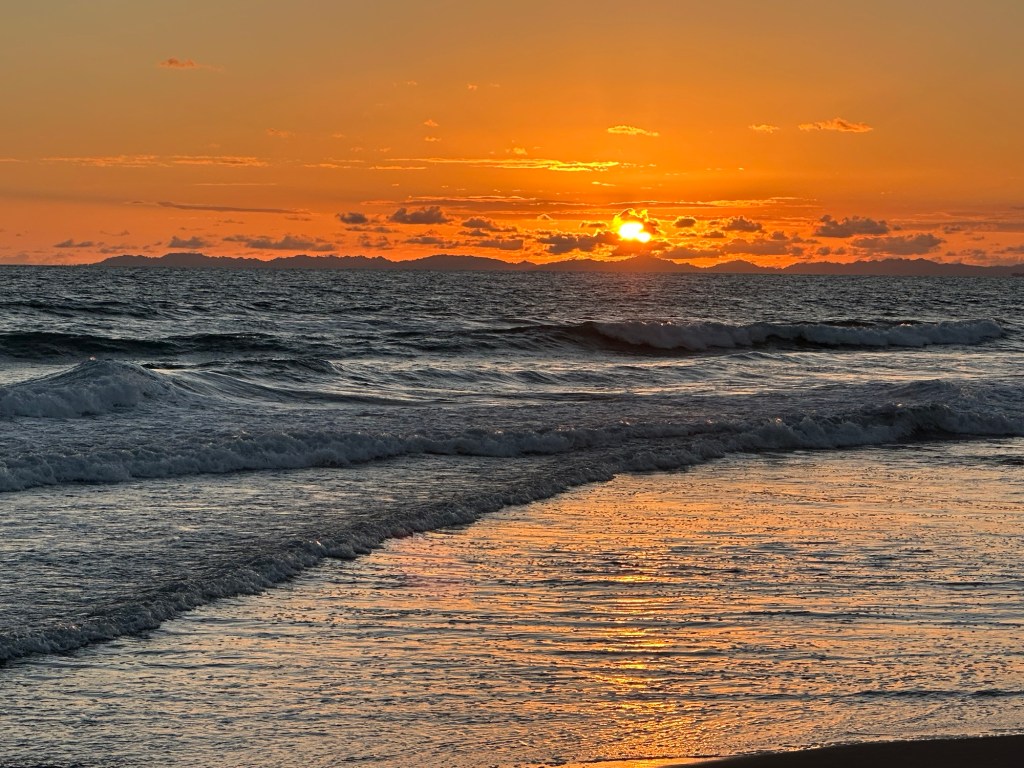
Sunset at Playa Barqueta

By now it was close to sundown and we had time to watch as a glorious ball of light melted into the horizon; the ocean reflecting its fiery descent. A beautiful end to a lovely day and a beautiful start for a couple of hundred little parrot turtle hatchlings.