
The guidebook mentioned an historic centre in David worth checking out. Which was why I decided to overnight there in the first place. After a fortifying breakfast provided by my hostel host, I ventured out into the searing heat to see for myself.

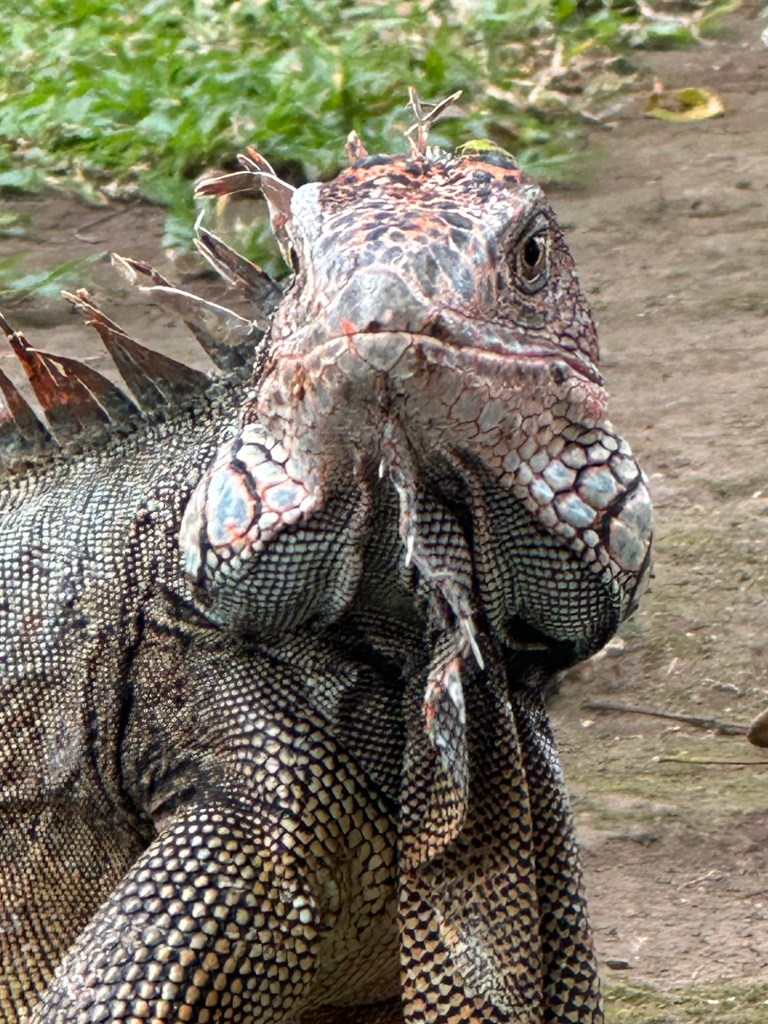
A somewhat underwhelming town square bedecked in Christmas fare and a church in full congregational swing, ended up being the sum total of my discoveries. There were several iguanas in the square though which were quite entertaining; especially when a large male had a squabble with a female and fell out of one of the trees onto the grass below. He composed himself, looking quite indignant, then made his way back up the tree to finish what he started.
I returned to the hostel to retrieve my pack, then made my way to the bus terminal. Normally, I make my way around a country either clockwise or anti-clockwise. However, Panama doesn’t really lend itself to that option due to it being largely uninhabited on a good part of the Caribbean side, then narrowing at the eastern end of the isthmus before finally moving into the highly dangerous Darién Gap. Thus, I’ve decided to travel across the country from west to east as far as possible, then return to Panama City to fly back to San Jose to pick up the first of my three flights home.

But first, it was north through the mountains to visit the Bocas del Toro Province. The islands off the coast here are one of Panama’s biggest party places and a popular tourist destination. Not usually my vibe, but I wanted to go and check it out. I located the bus and waited in a long line to purchase a ticket.

The Cordillera Central is the collective name given to the mountain range running down the spine of Panama; delineating watershed to either the Caribbean or the Pacific. And also the only route from the Pacific to Bocas del Toro. I had managed to get a seat behind the driver so had pretty good views the whole way there. As the road wound around the sides of the mountains, the picturesque valleys opened up to reveal verdant grazing fields carved out of the emerging cloud forest. A highlight of the journey was crossing the dam wall of Panama’s largest hydroelectric power plant. The damming of the Rio Brazo de Hornito now meets around 12% of Panama’s energy needs.

I didn’t arrive in Almirante until dusk, so found a local hostel to stay in overnight. Hostel Cafe Axi was more of a home than a hostel and run by the most amiable hosts one could imagine. Axel is also a professional musician and gave myself and the other two travellers staying overnight an impromptu performance on his keyboard, which rested on a stool on the rustic boards of the outside deck. A truly memorable evening created by a truly talented hombre.
 Wild Woman Wandering