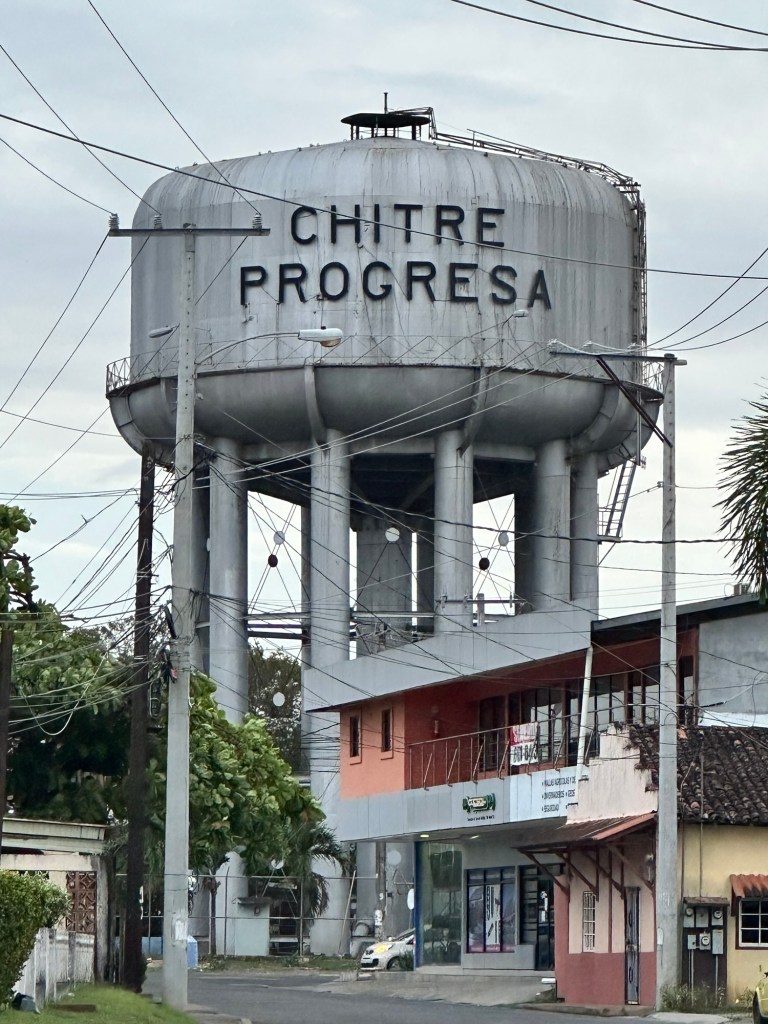
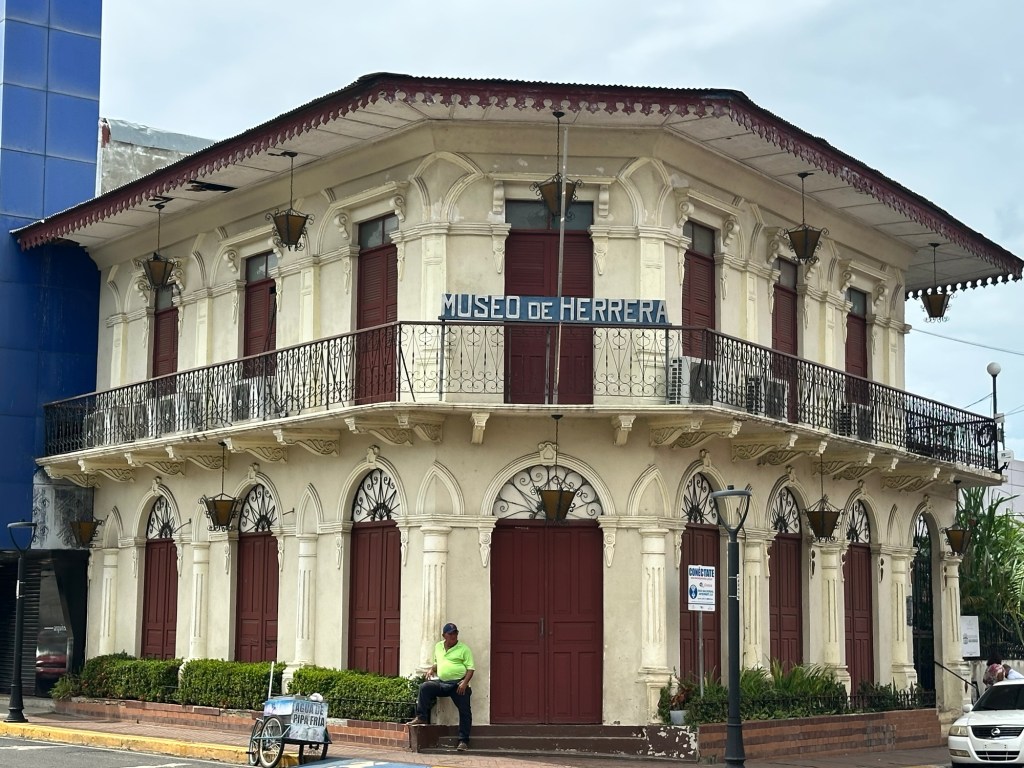
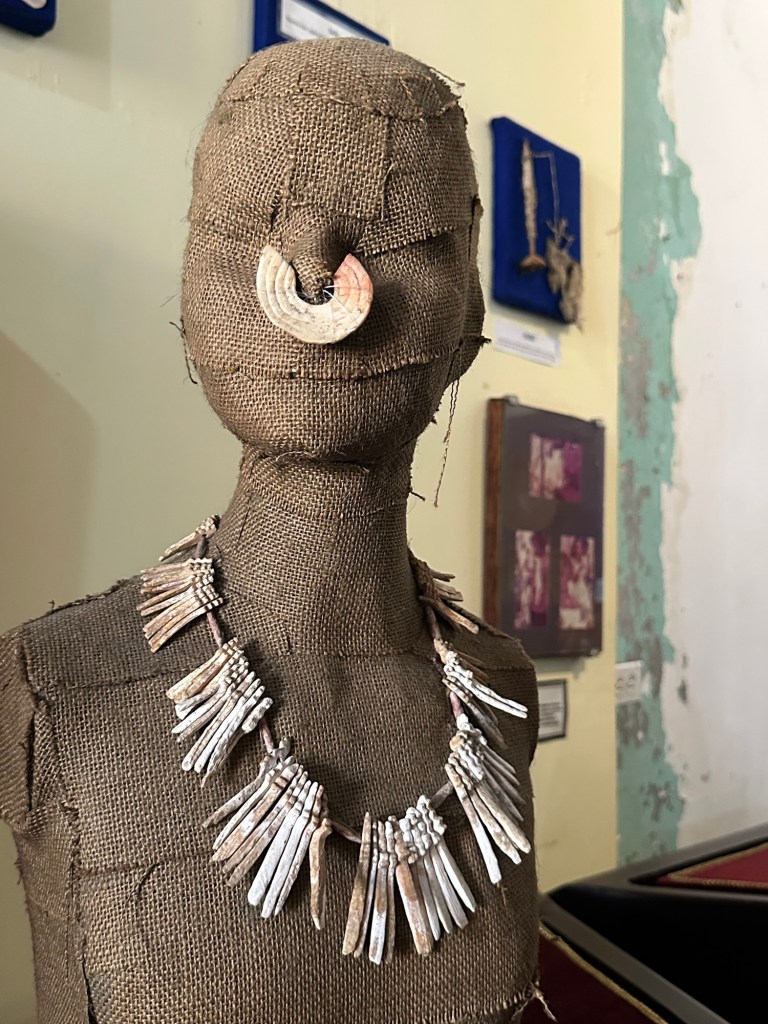
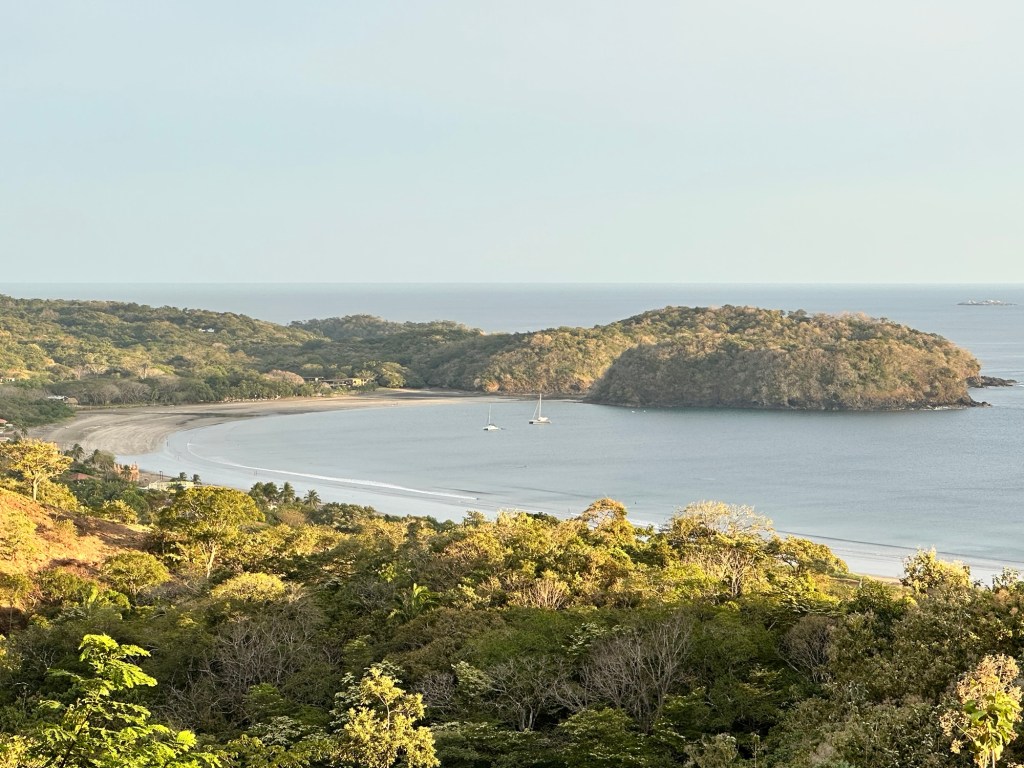
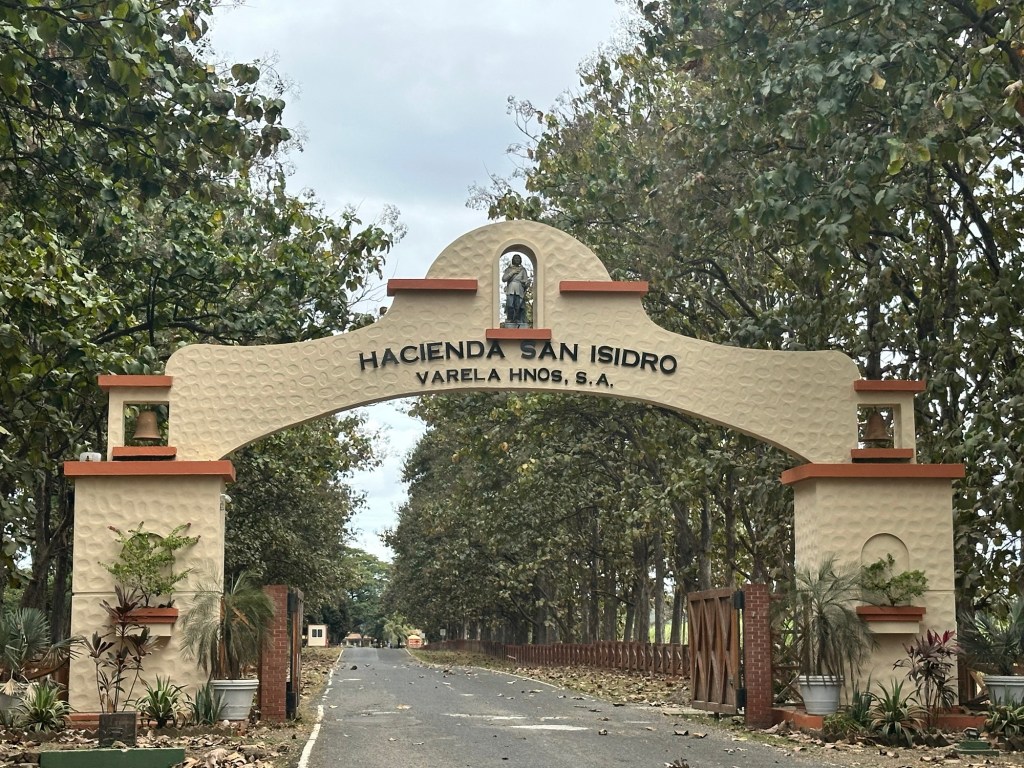
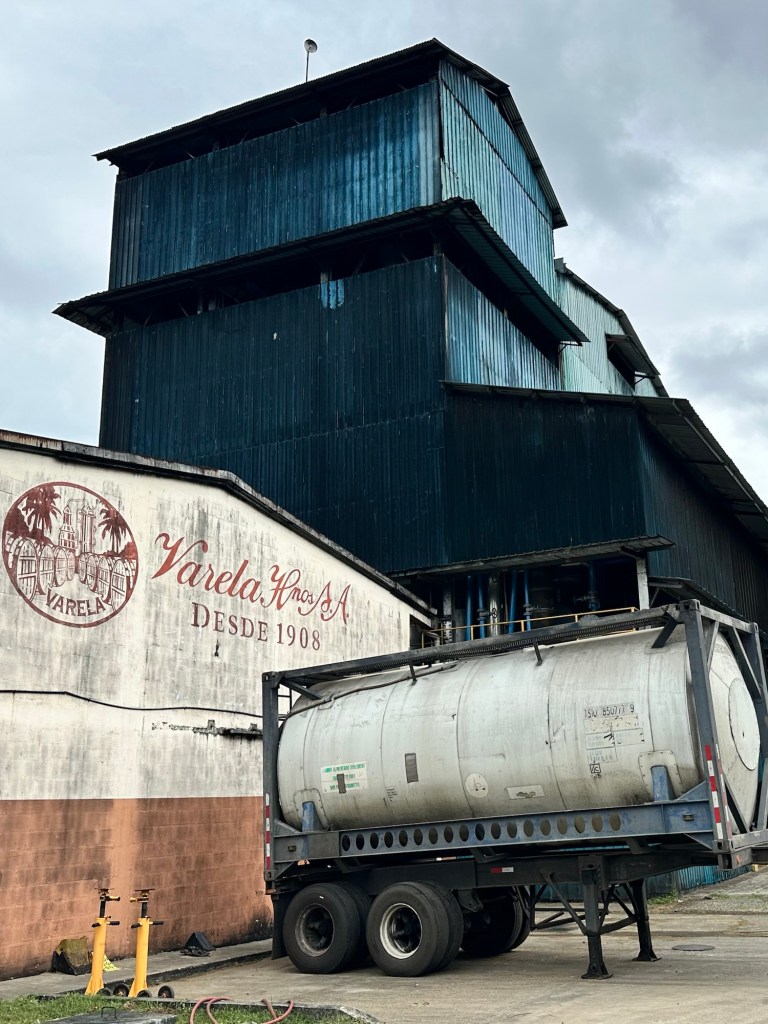
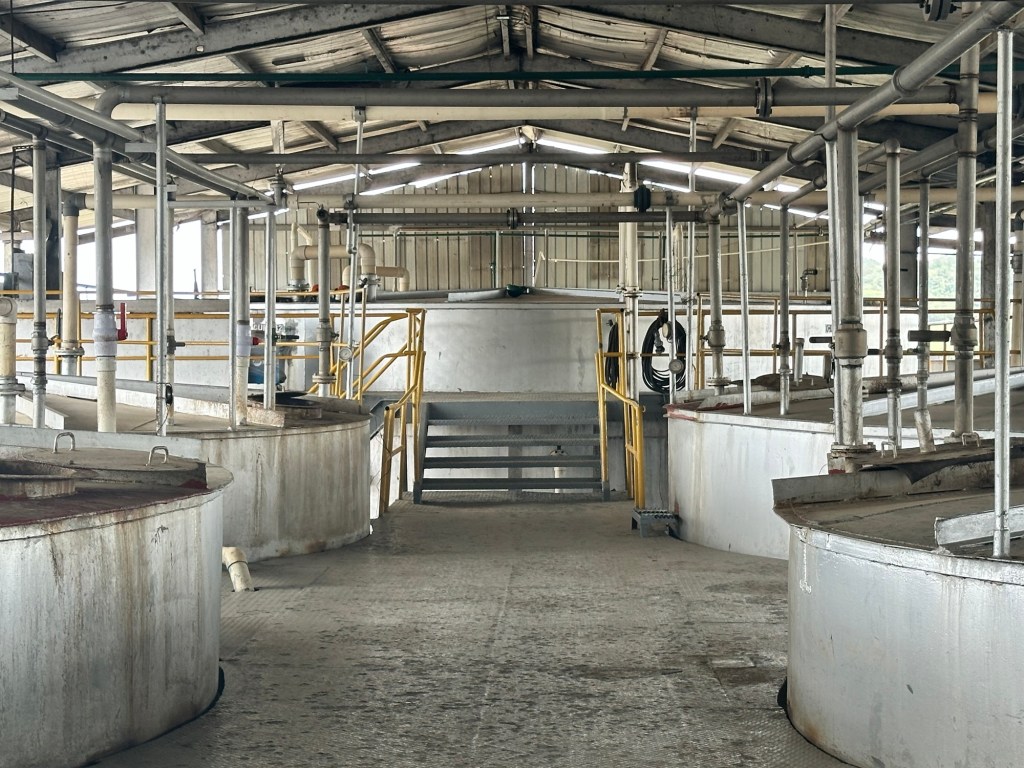
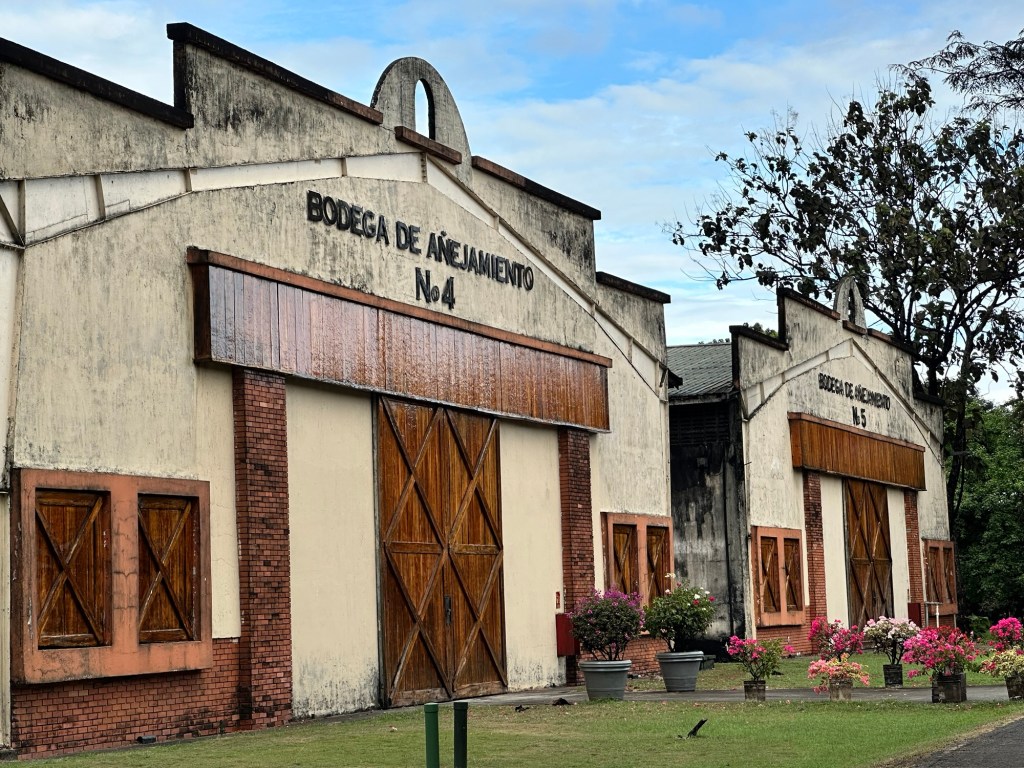
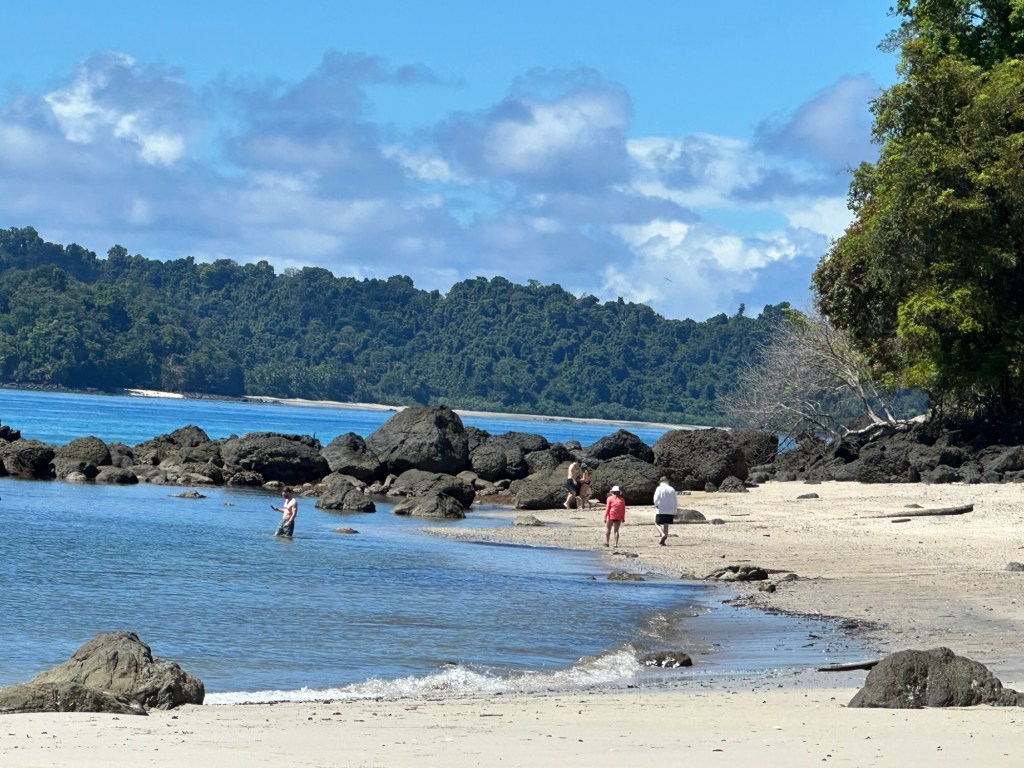
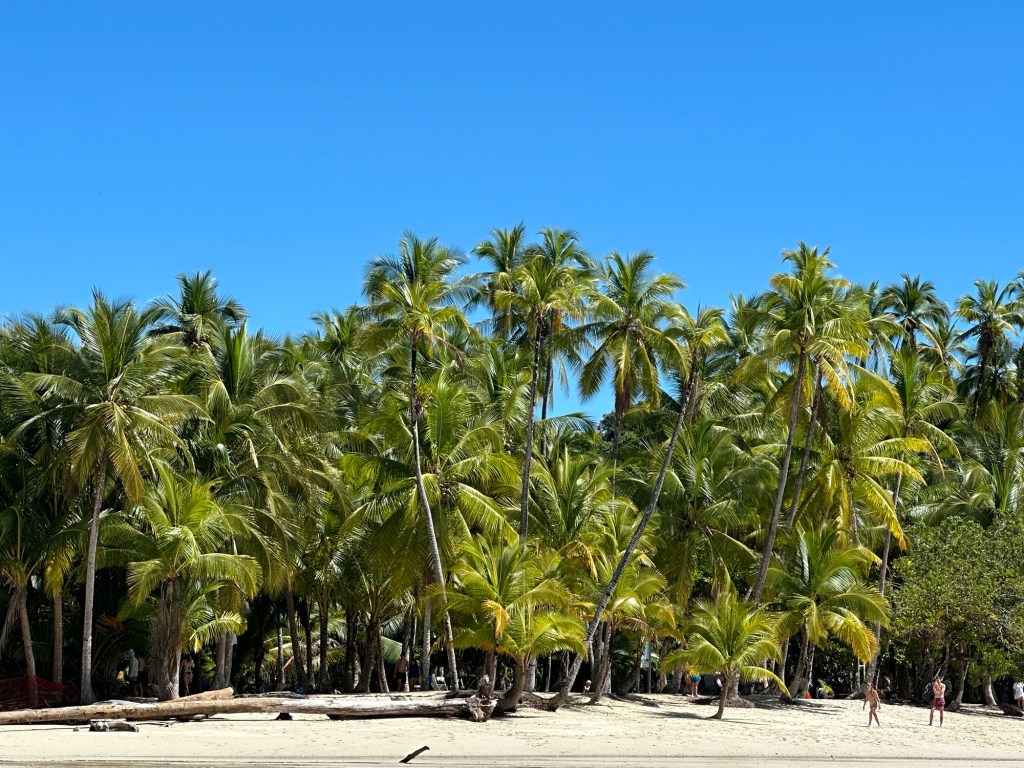
When I booked into Chitre, I was keen to spend the day visiting the little museum there. Alas, it was closed over the weekend. Then there was a rum distillery in nearby Pese that sounded interesting. That was also closed. My last option was visiting the little traditional town of Parita just north of Chitre.
Parita
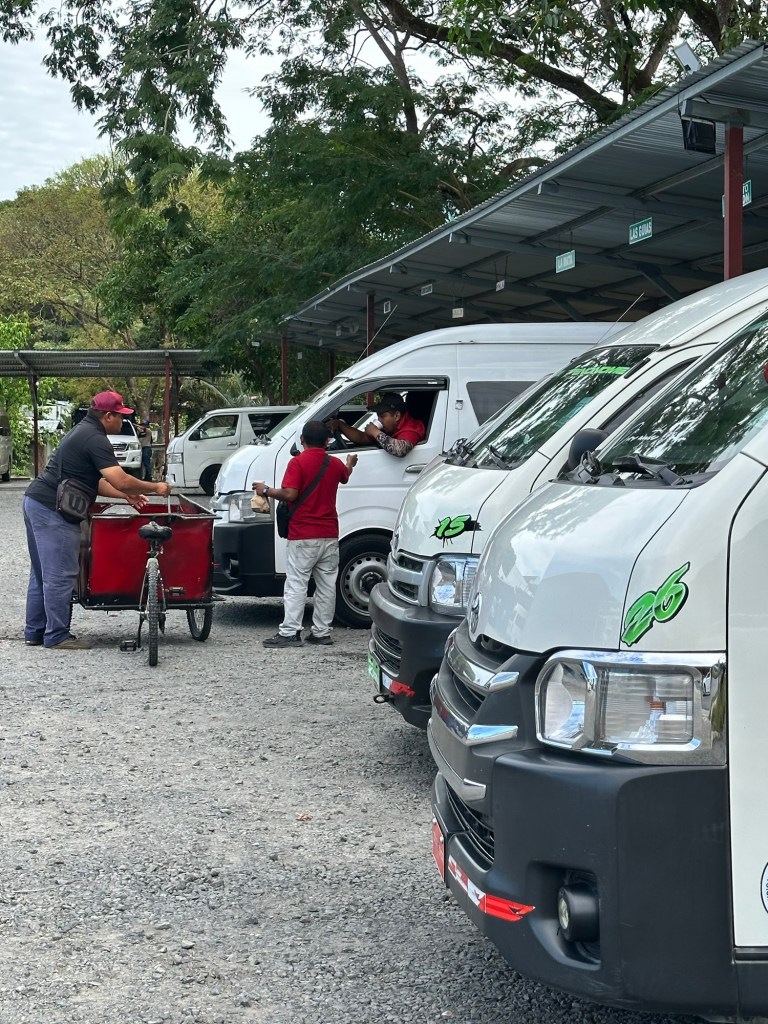
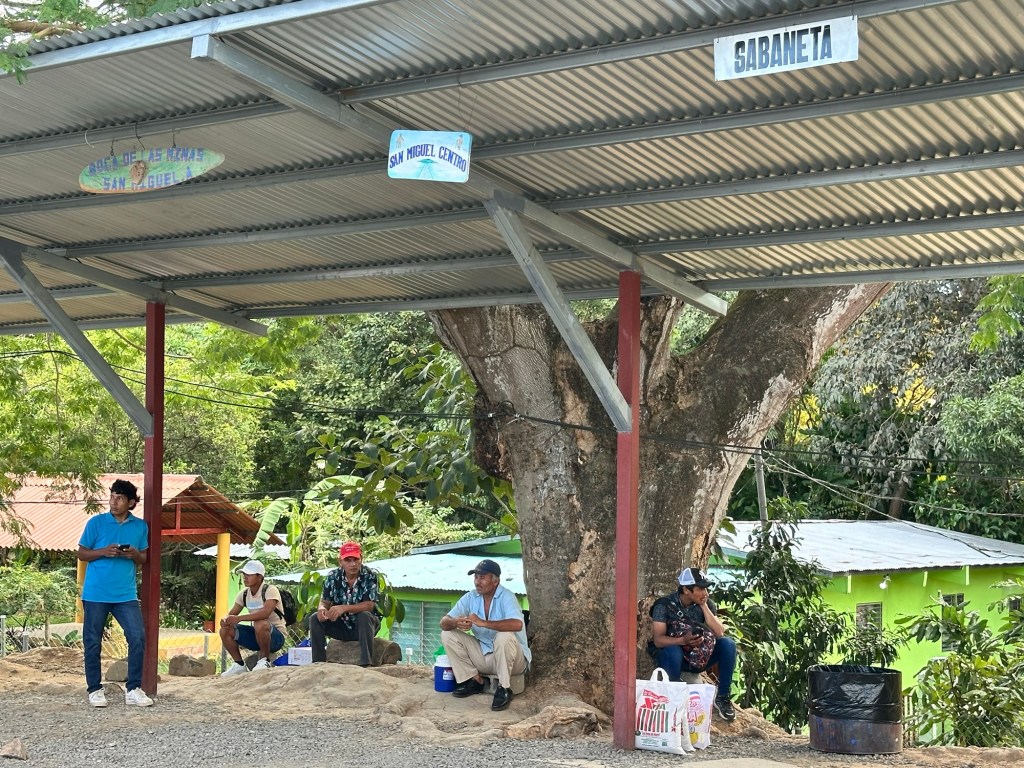
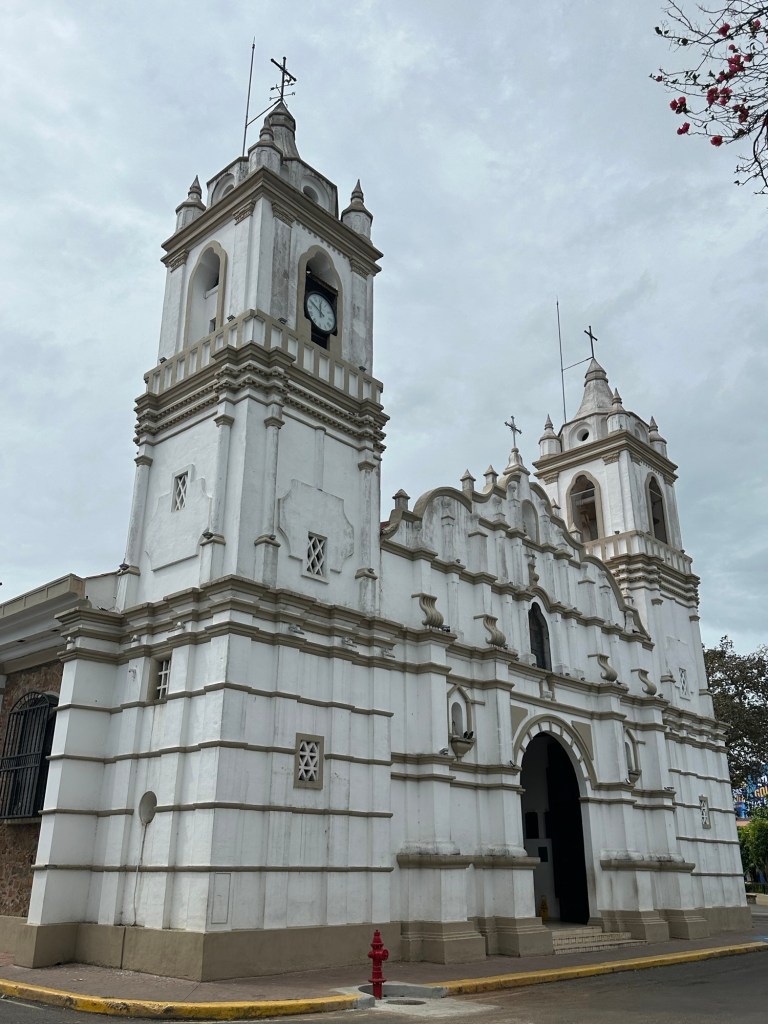
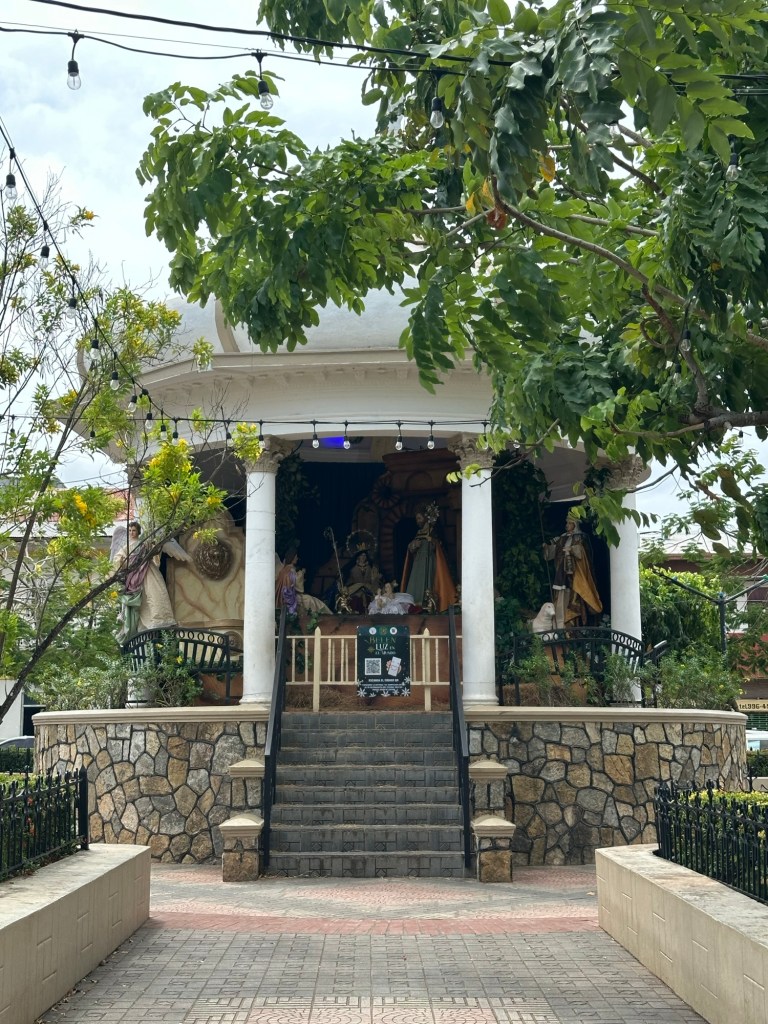
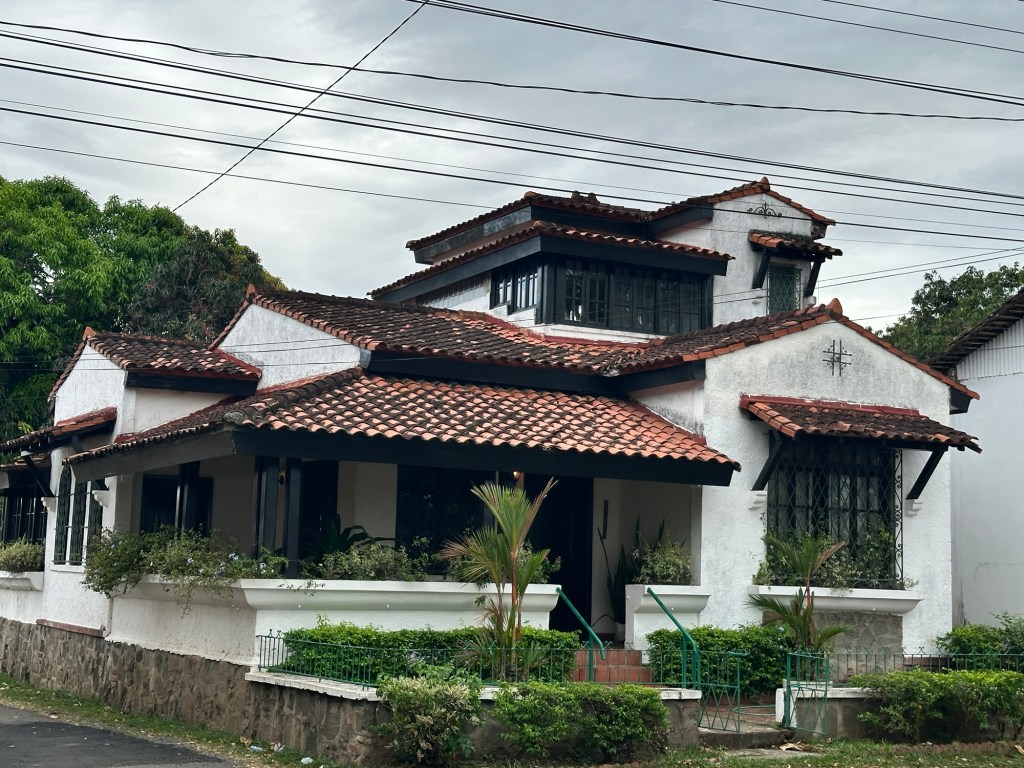
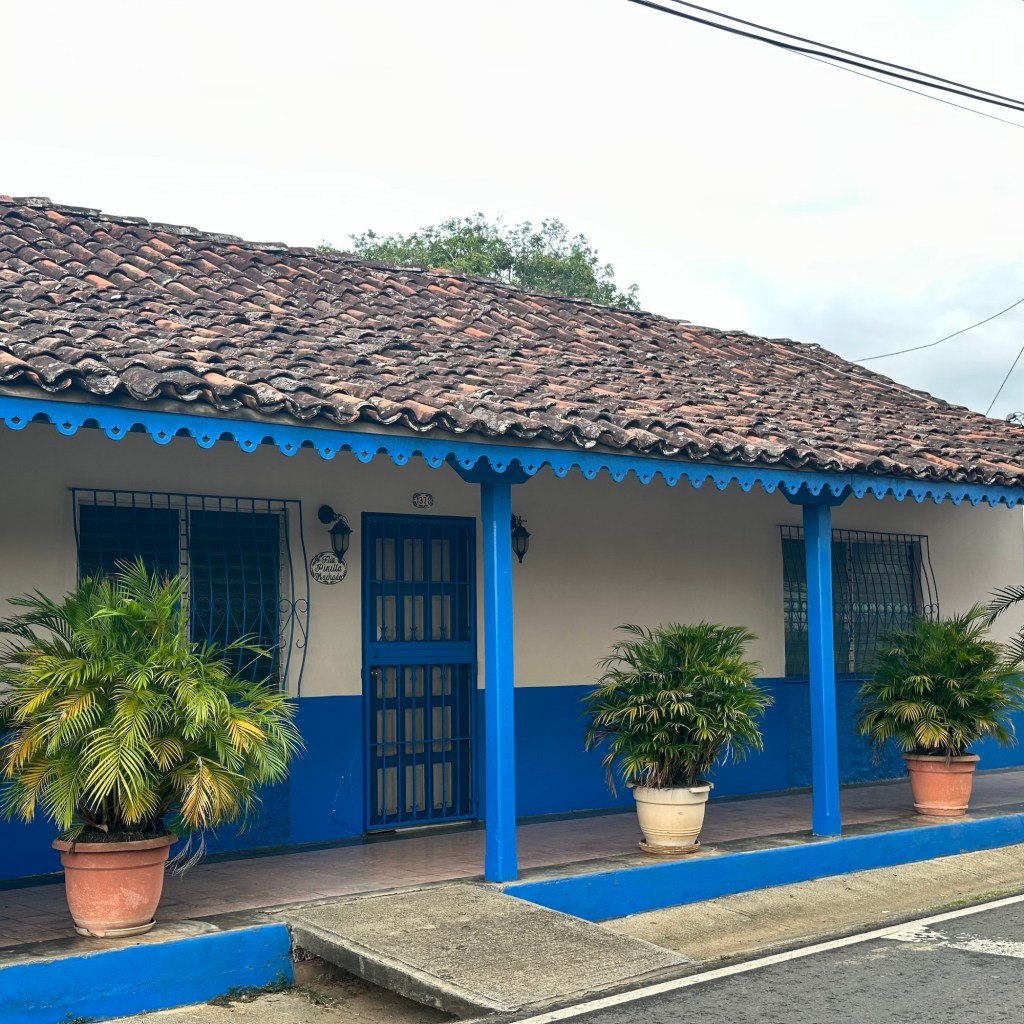
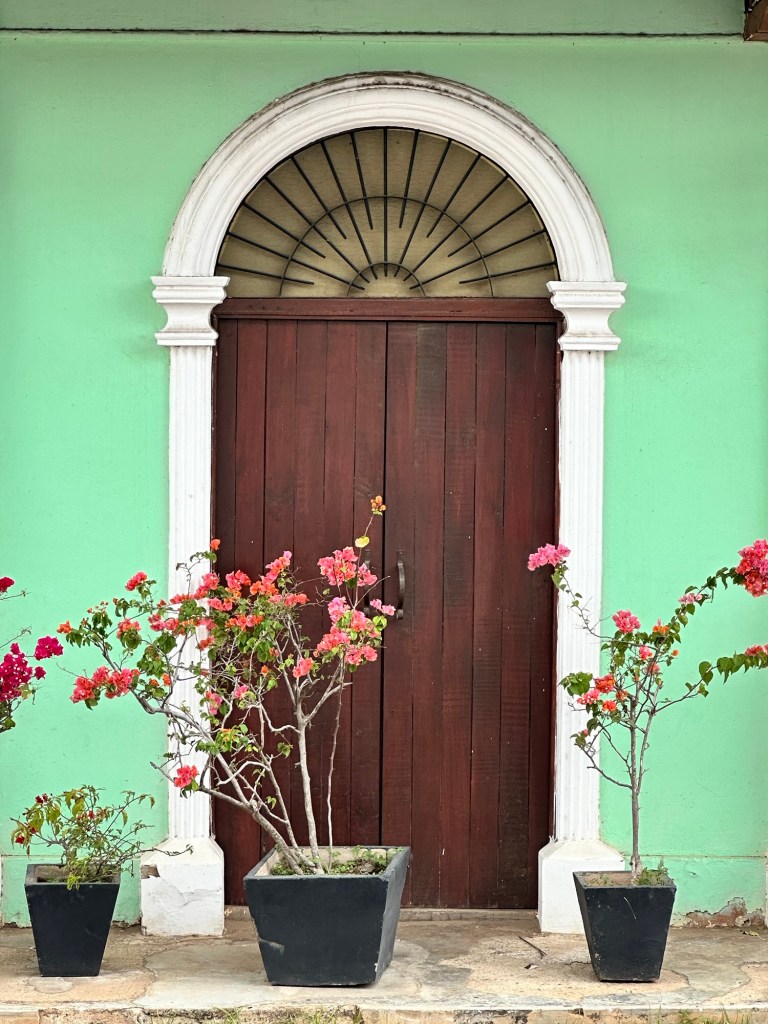
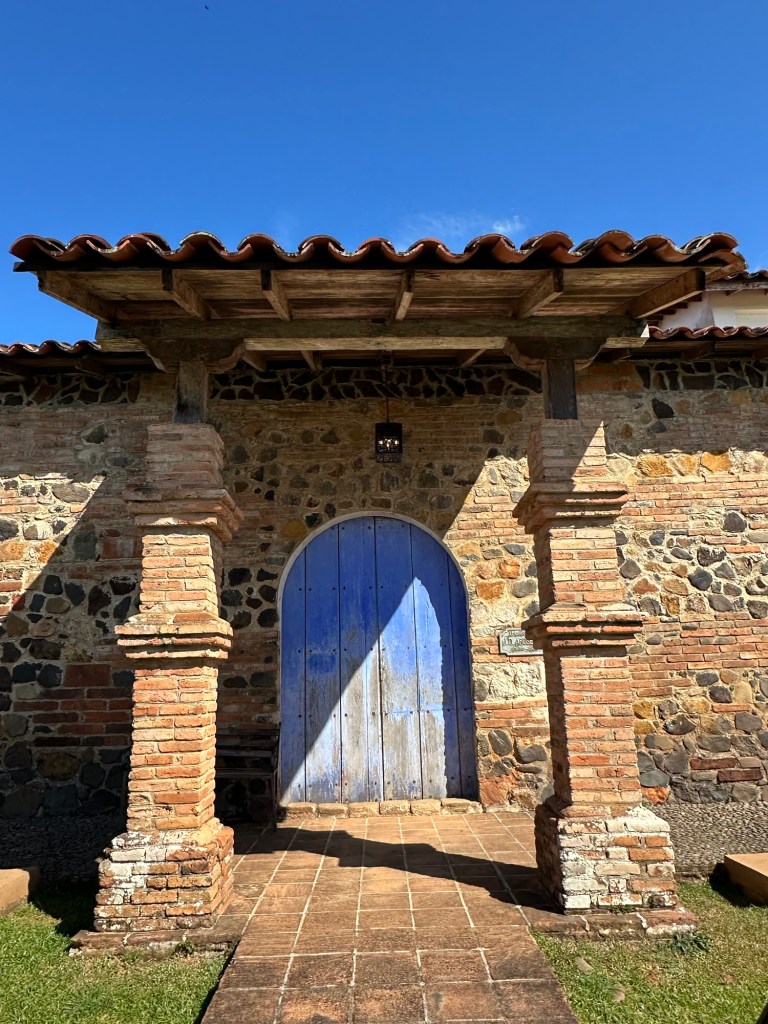
I walked down to the bus terminal and found the bus that would take me there. Parita is one of those little towns that make you feel you should be wandering its streets in voluminous skirts with hair drawn back at the nape, such is its Spanish colonial authenticity. Parita’s baroque style church has been overlooking its traditional grassy town square and surrounding low, red-clay roofed casas since 1723. Vibrant, flowering plants and wooden rocking chairs adorn the tiled porches set just off the narrow streets.
Parita
I had a pleasant time wandering around the main town centre before deciding to take a road which led out of town and down to the river. Once there, I found three hombres fishing on the bank. I chatted with them for a while, before returning back to town using a different route.
Parita.
By now it was time to return to Chitre. I bid pretty little Parita adios and caught the bus back to Chitre. Sometimes, the Universe throws you curve balls and just rolling with it gives you an unexpected experience. As was my day.
It was now time to leave the mountains again to head to the coast. This creeping ever eastwards, heading north before retracing my steps to head south, makes for slow going. However, I haven’t let it deter me and am seeing a good portion of the country regardless. I wanted to check out the western side of Peninsula de Azuero before heading further east again to work my way down the eastern side of the Peninsula. Unfortunately, this was another instance where it was necessary retrace one’s tracks or skip it altogether as there is no connecting roads between west and east.
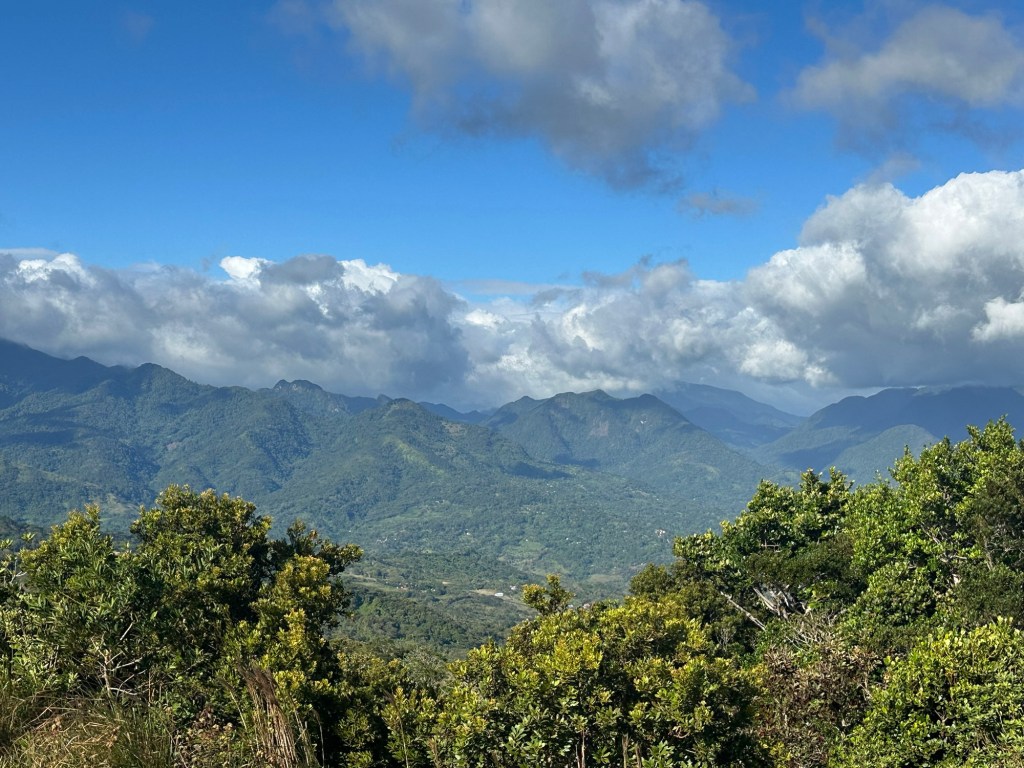
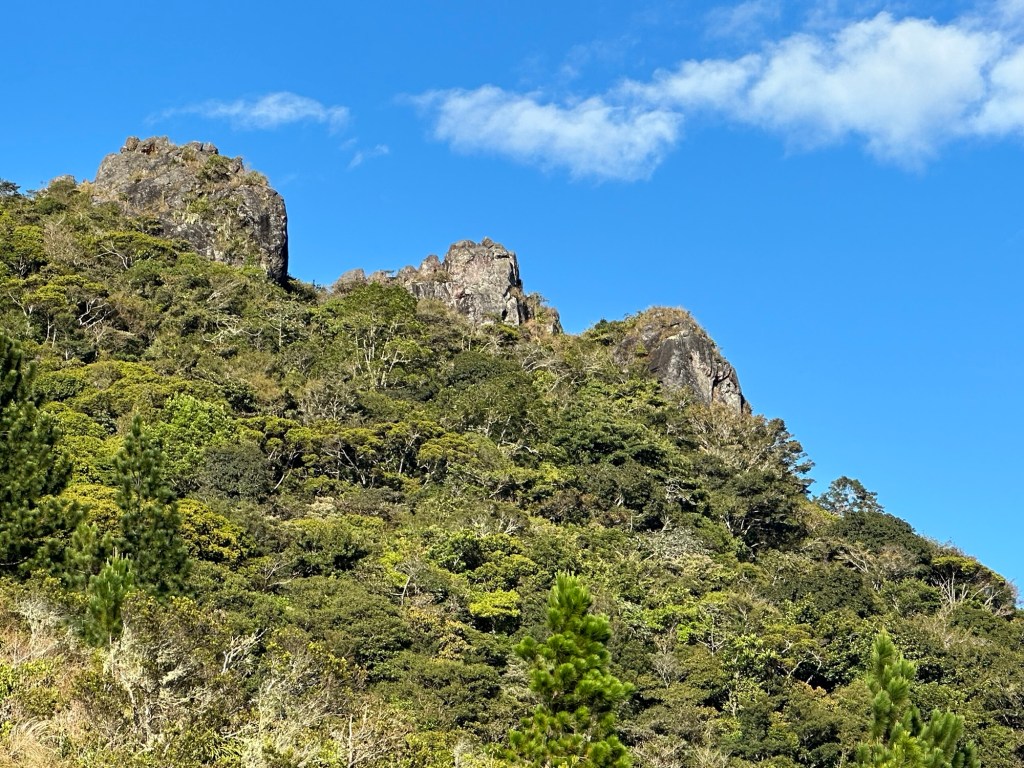
Fonda Santa Fe, Santa Fe.
Once back in Santiago, I found where the bus to Torio left and fortunately didn’t have to wait long before it left. It was a pretty drive down to Torio which was about half way down the coast. I could have gotten further down the coast on another bus, but didn’t have time to wait for it to leave. I had the annual Council meeting for the Australian Speleological Federation which I needed to zoom into by 6pm so wanted to be in the hotel room I had booked in Chitre before then.
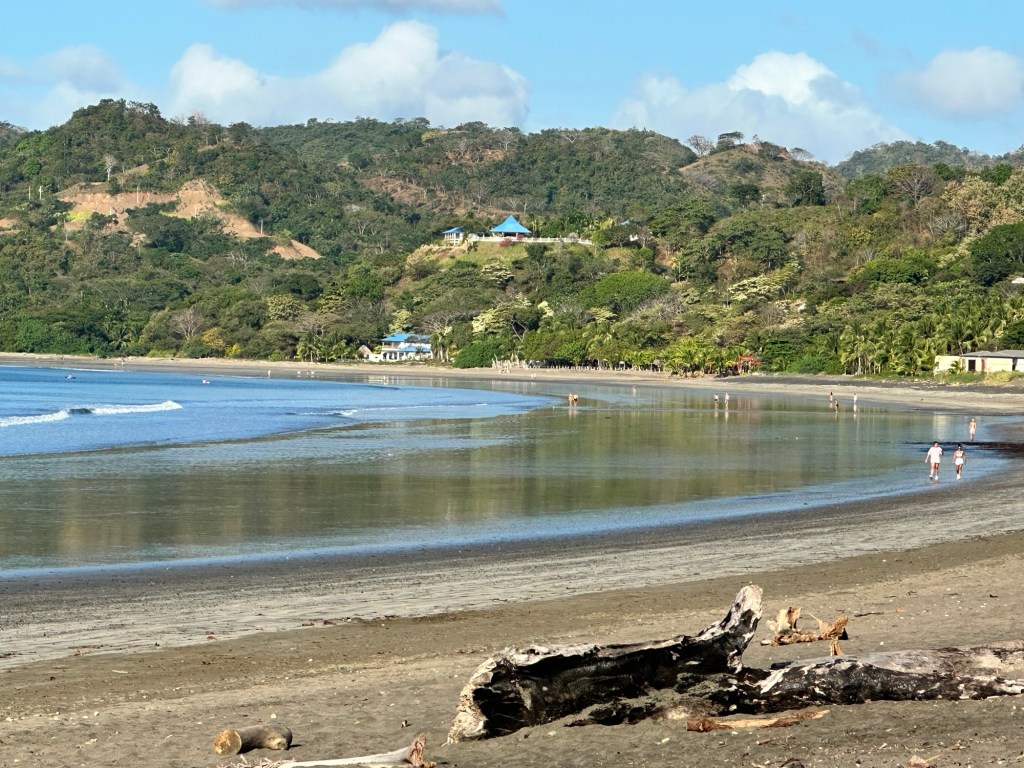
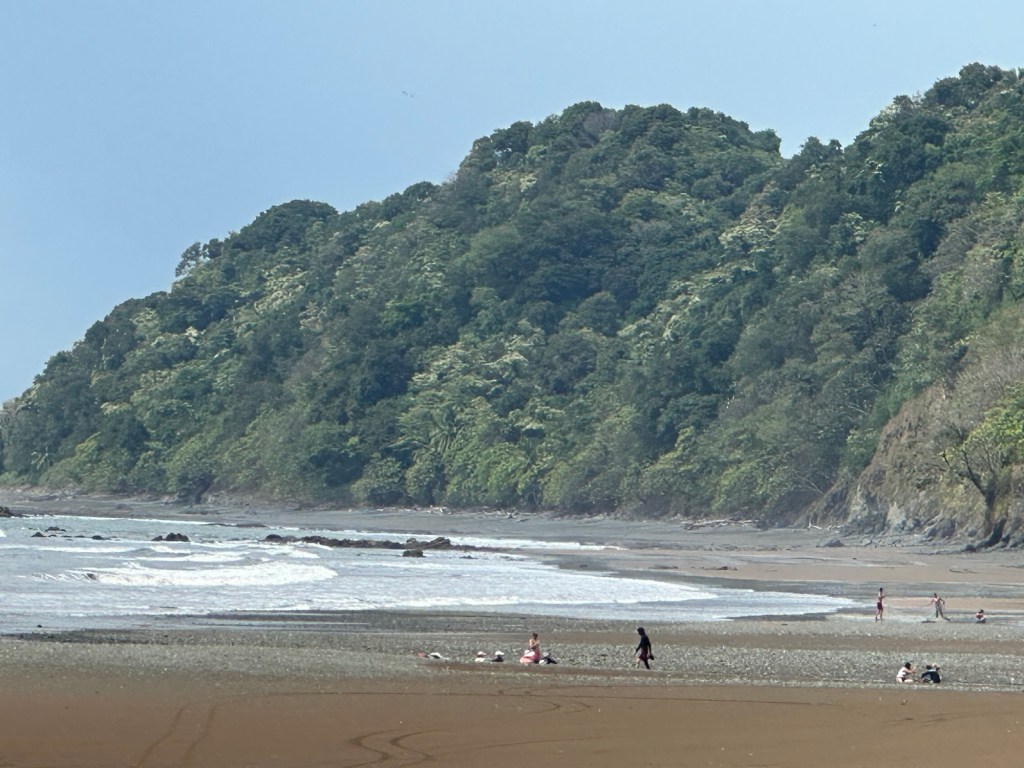
Playa Torio
I thought I would just get dropped off where the bus stopped in Torio, have a quick look around, maybe grab a cerveza, then jump on another bus back to Santiago. A whistlestop little detour of the area. Of course, it wasn’t as simple as that. The bus driver wanted to know where I wanted to get dropped off and when I told him just in the centre, he wanted to drop me off on the side of the road which didn’t consist of much at all. As there were other passengers on the bus not getting off and knowing that the bus terminated at Torio, I was somewhat puzzled. They said they were going down to the beach, so I decided to stay on board until the bus rumbled to a stop at a crowded, black sand beach. I asked when the bus left again and was told in 20 minutes time, so decided I would have a quick look then return on that bus.
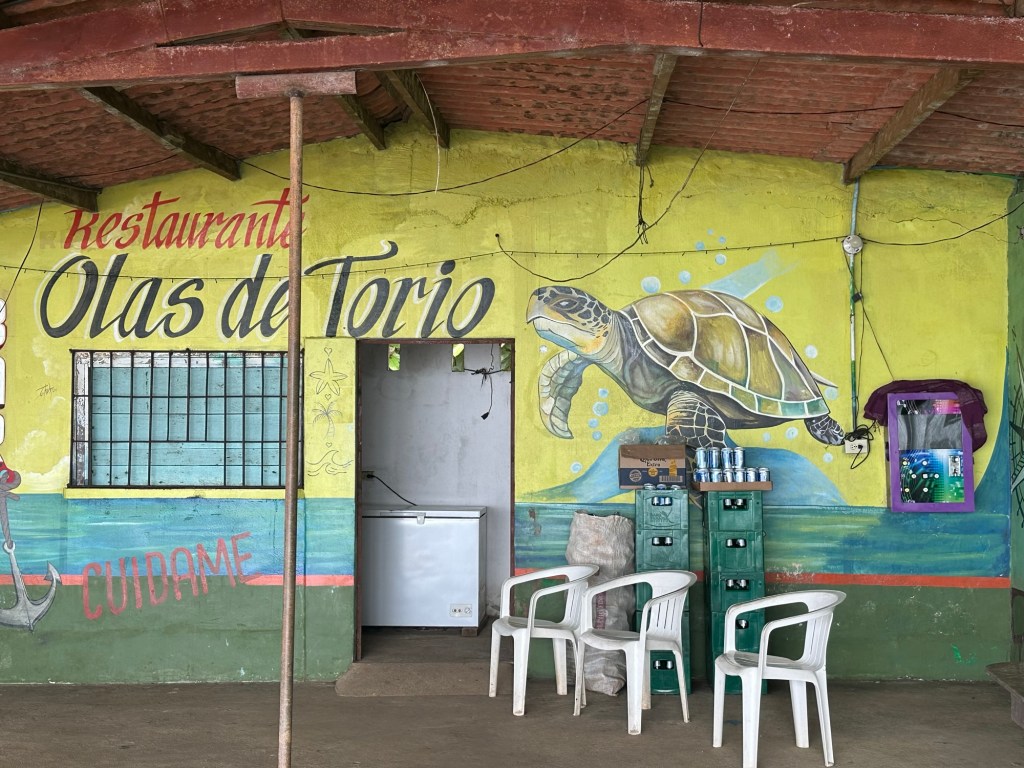
Bar at Playa Torio
As luck would have it, I soon stumbled on a beachside bar with icy cervezas which ticked that box. I had just enough time to down one and grab a couple of photos before heading off back to Santiago. By now I was most familiar with Santiago Bus Terminal as I had used it to transfer to Santa Catalina, Santa Fe, Torio and now Chitre. Such is the complexities of travelling through Panama. Fortunately, I managed to find a bus that went directly to Chitre, which saved me much needed time as the detour down to Torio had taken me much longer than anticipated.
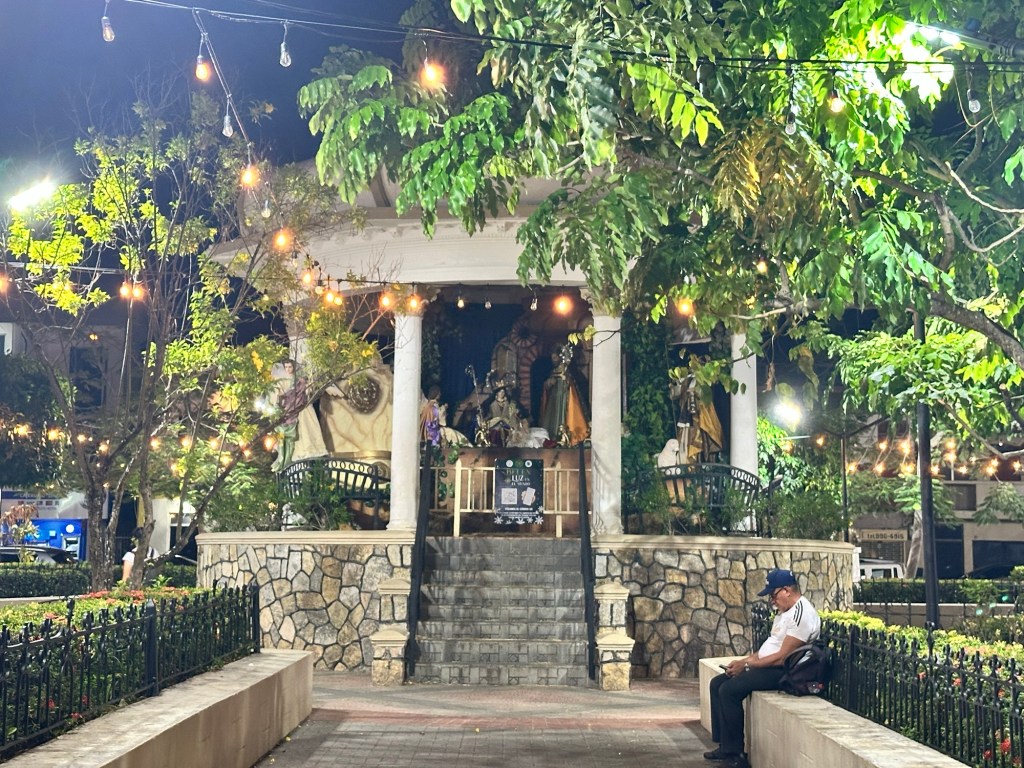
Parque Unión, Chitre
The bus pulled into Chitre just prior to my meeting starting so I just had time to register. Then it was a matter of listening on while I bought some beers and walked the 1.5kms to my hotel. Checked in, I could finally relax and participate a little more fully until my bit had finished and I crashed for the last hour, waking up just before 1am when it was finishing up.
As many of you know, this Wild Woman likes to go wandering off the beaten track and that’s exactly what the day was beckoning. I decided to check out the indigenous community at Calovebora on the Caribbean coast. The road to Calovebora was only completed a few years ago, finally connecting the indigenous communities that live on the Caribbean side of the province with the rest of the country. Prior to this, community members had to take their chances by paddling up the Rio Calovebora, then traversing muddy tracks to get to civilisation. Now they have a sealed road which is regularly plied by local buses from Santa Fe.
Parque Nacional Santa Fe
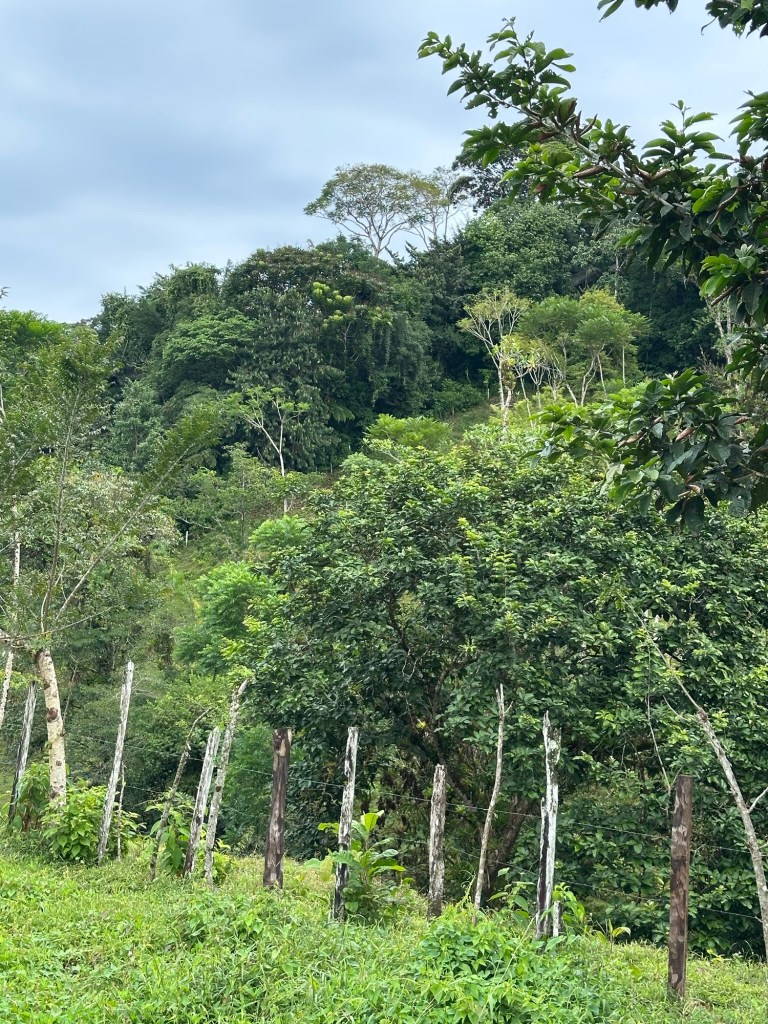
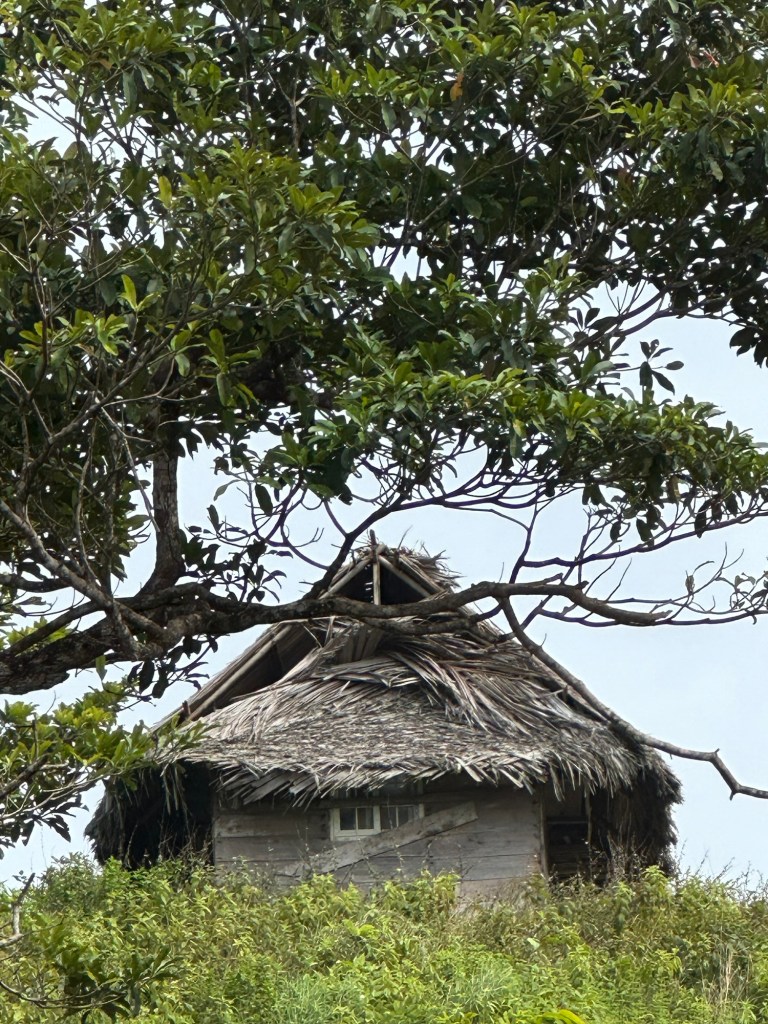
The road to Calovebora heads north through Parque Nacional Santa Fe, threading through mountain passes and skating past small rivers cascading down heavily forested cliffs. The way is slow due in part to the numerous tight turns and steep climbs, as much as to the constant exchange of passengers along the road. Tiny, wooden shacks with thatched roofs house the indigenous families that live along the route. The women in traditional dress of simple, brightly hued smocks with contrast braid, usher their offspring on and off the bus.
Indigenous house, Calovebora.
After a couple of hours, the bus pulled up in a small community at the end of the road. The Caribbean Sea was just before us; its turquoise waters gently lapping the coffee coloured sand. I decided to have something to eat at the little fonda behind the bus stop and was served the tastiest fried fish I had had in a long time, washed down with freshly squeezed orange juice. There wasn’t anything else on the menu, but you couldn’t get any fresher than what I was given. I got chatting with the owner who told me about the impact the road has had on the community. He also confirmed what I suspected – very few foreigners venture out to these parts.
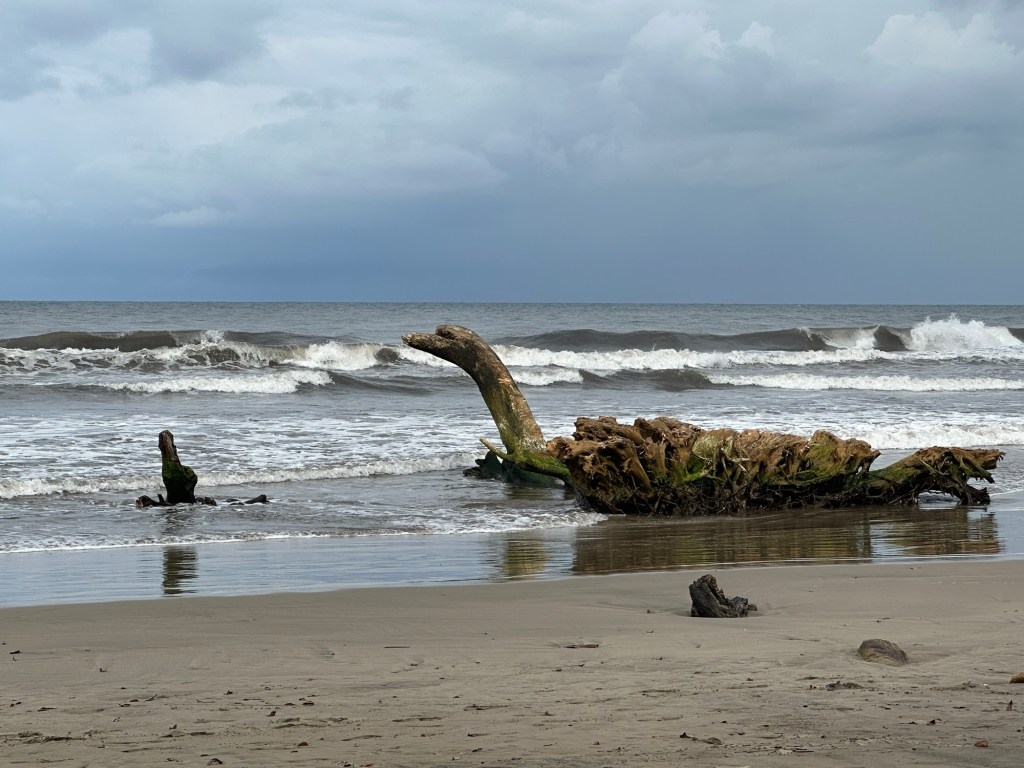
The Loch Ness Monster on vay-cay in Panama.
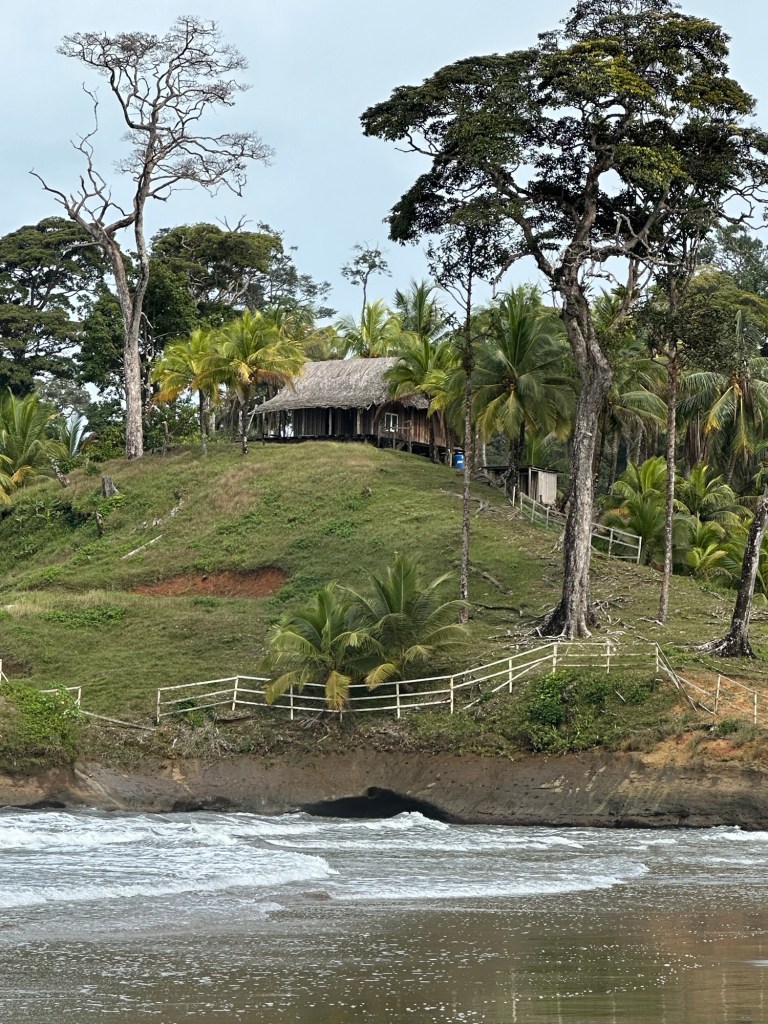
After lunch, there was time for a walk along the beach. Calovebora is situated at the mouth of the Rio Calovebora so it was only possible to go in one direction. Crossing a small stream which was disgorging its waters into the Caribbean, it was possible to walk about a kilometre along the beach before coming to impassable sea cliffs.
Calovebora
Catching the bus back to Santa Fe was just as enjoyable the second time around as I kicked back and watched the various lush scenes unfold before me. On arrival back in Santa Fe, I had planned on grabbing a couple of cervezas to take back to the hostal to sustain me while I wrote a long overdue report for the Australian Speleological Federation, but was startled to learn that no alcohol could be sold that day. On enquiring, I discovered it was because it was the Day of Martyrs. I could fully appreciated a day of mourning, recognition and remembrance for the poor souls who lost their lives fighting for a cause deep in their nationalistic soul, but was unsure why it was necessary to be made to feel a martyr myself. Fortunately, back in the hostal, upon hearing of my plight, a kindly visiting señora gave me a cerveza from her own personal stash. And so the report could then be written.
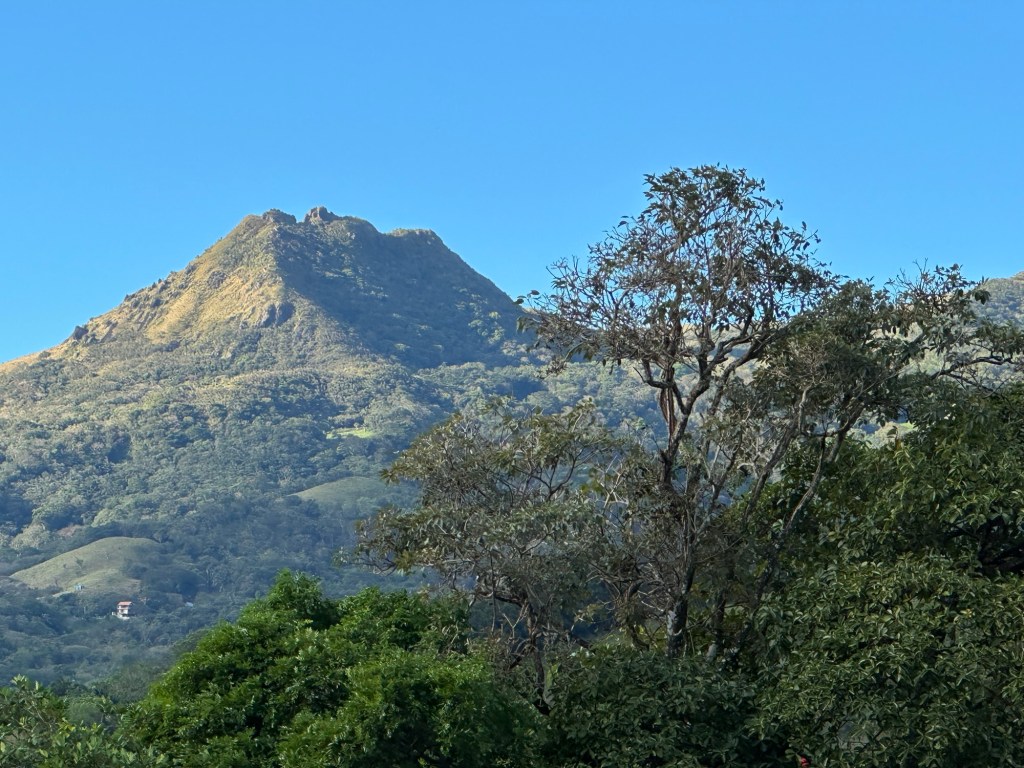
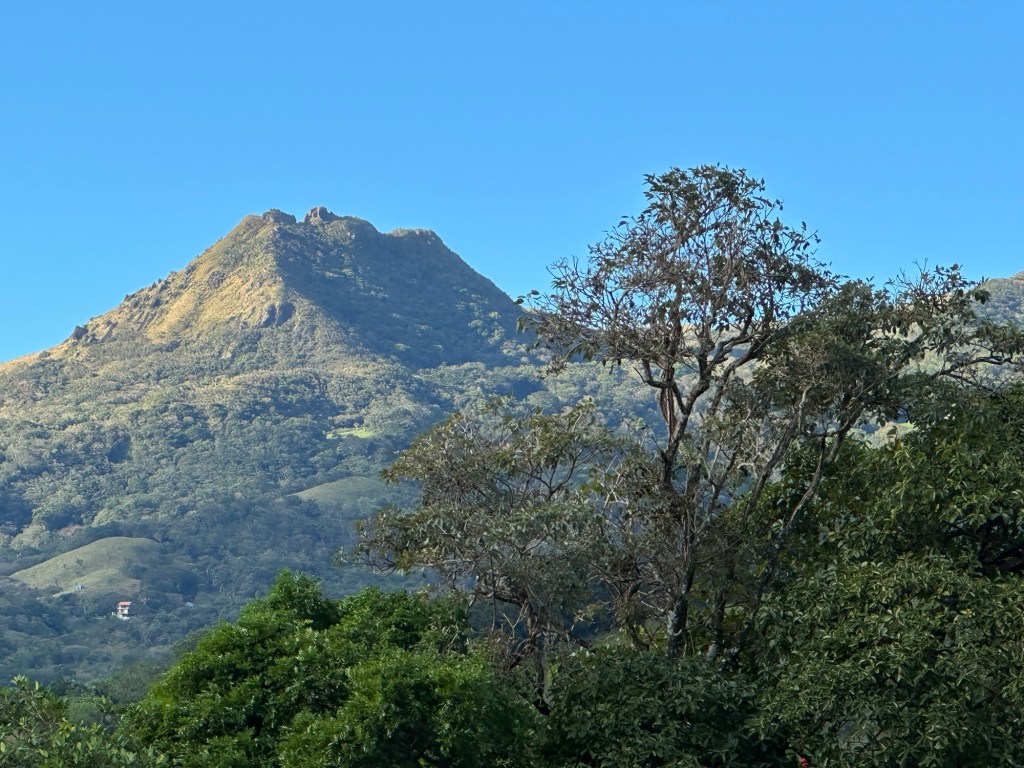
Inspiration for the day’s activity took only a glance out of my window. My room had an excellent view of Cerro Tute jutting above the valley floor; its misty peak beckoning a visit. I opened my Komoot app and found a suitably interesting hike to its lofty summit whilst exploring its fertile environs.
Cerro Tute, Santa Fe.
After a quick repast at one of Santa Fe’s more basic fondas, I started up and out of town on one of the roads that snake away from its centre. The trail quickly left the tarmac and continued on a steeply inclined dirt road which wound its way up and out of the valley. Every now and then, humble casas were passed; their tiny yards harbouring a mottled variety of dogs and chickens. Less modest casas were situated on land carved out of the side of the mountain to guarantee magnificent views of all that lay below them.
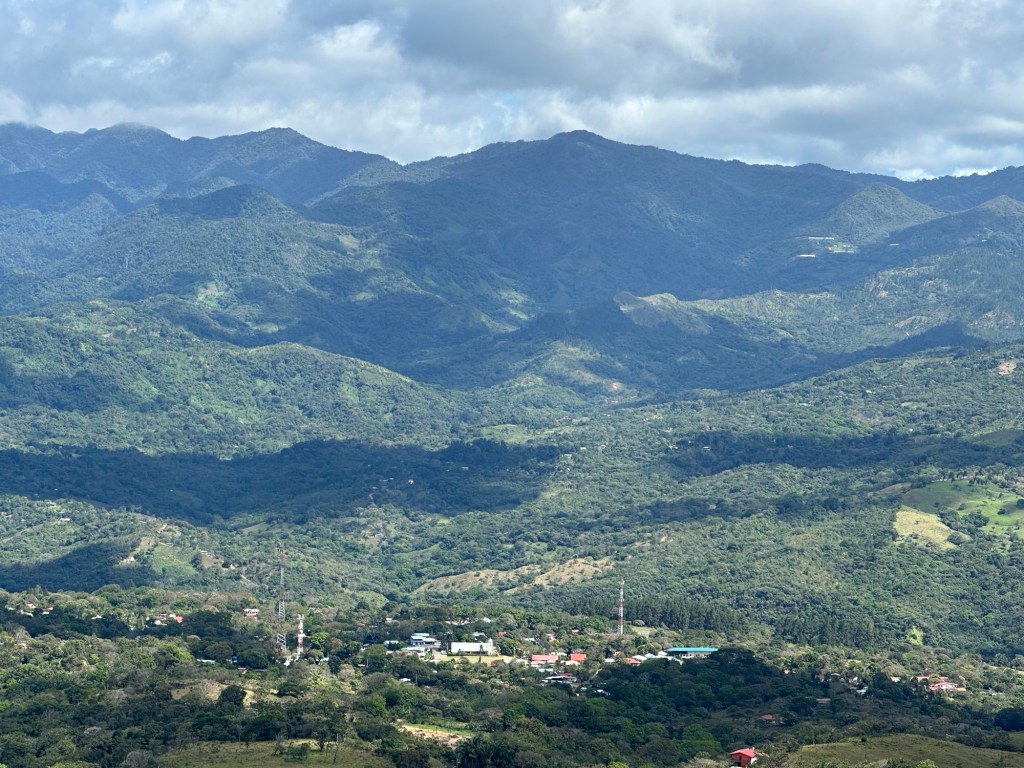
Santa Fe from mountain.
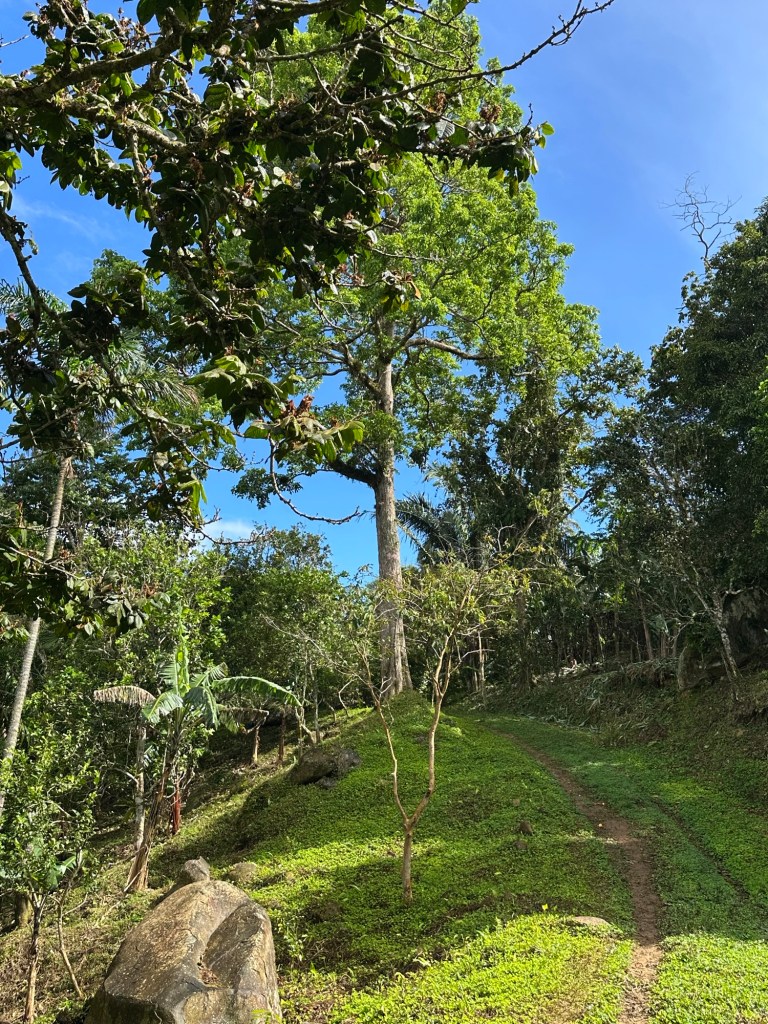
Eventually the road came to an end at the edge of the Parque Nacional Santa Fe within which Cerro Tute was situated. The way on was now a wide, rocky path which started undulating steeply, heading towards the cerro. Small cascading streams needed fording, however, their flow in the dry season was pitiful compared to what would normally be a raging torrent in the wet.
Parque Nacional Santa Fe.
I had saved the map with marked route offline so had access to it throughout the hike. At one stage, I lost the trail and didn’t realise until I came to a track intersection and went to check which way to go. The map indicated I had missed a track junction which I didn’t recall passing. As I turned to retrace my steps, a farmer came ambling up the path. With the most bemused expression he could muster he enquired into my activities in this remote part of the mountain. I explained I was on a hike and that I had a map so was ok. He told me to be safe and continued on his way.
Parque Nacional Santa Fe
As I continued on mine, I came to where the map indicated I needed to turn. Finding nothing at first, after further investigation, I located an unformed ‘goat track’ going straight up the side of the mountain. No wonder I had missed it! This was the start of the 2.78km of ‘hiking trail’ referred to in the trail information. It was basically a narrow track straight through the jungle cleared of vegetation purely due to generations of farmers treading its path over many, many years.
‘Hiking trail’, Parque National Santa Fe.
I climbed up for over a kilometre before coming to a steep decline down to a stream way. The trail wasn’t as clearly defined here and I was using the map positioning to clarify which way to go. Having decided down was definitely the correct route, I was startled to see another farmer at the stream way looking up at me. He wasn’t there before and I wasn’t sure where he had came from. I explained I was hiking and had a map and was fine but he insisted on accompanying me as I continued climbing the mountain again.
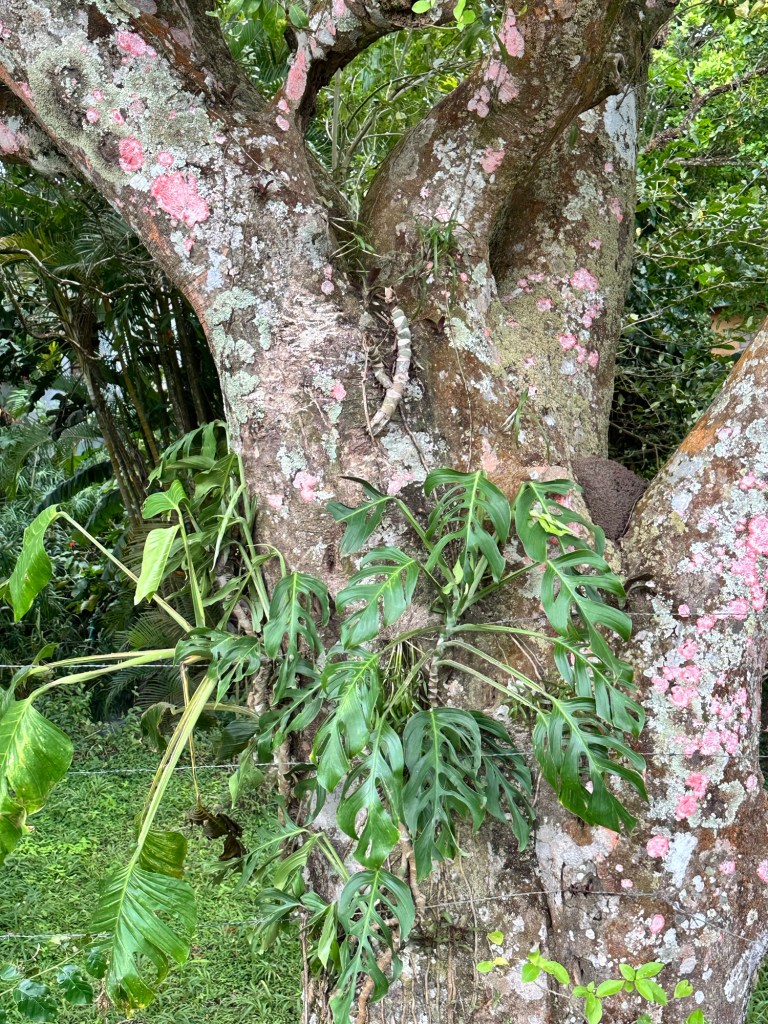
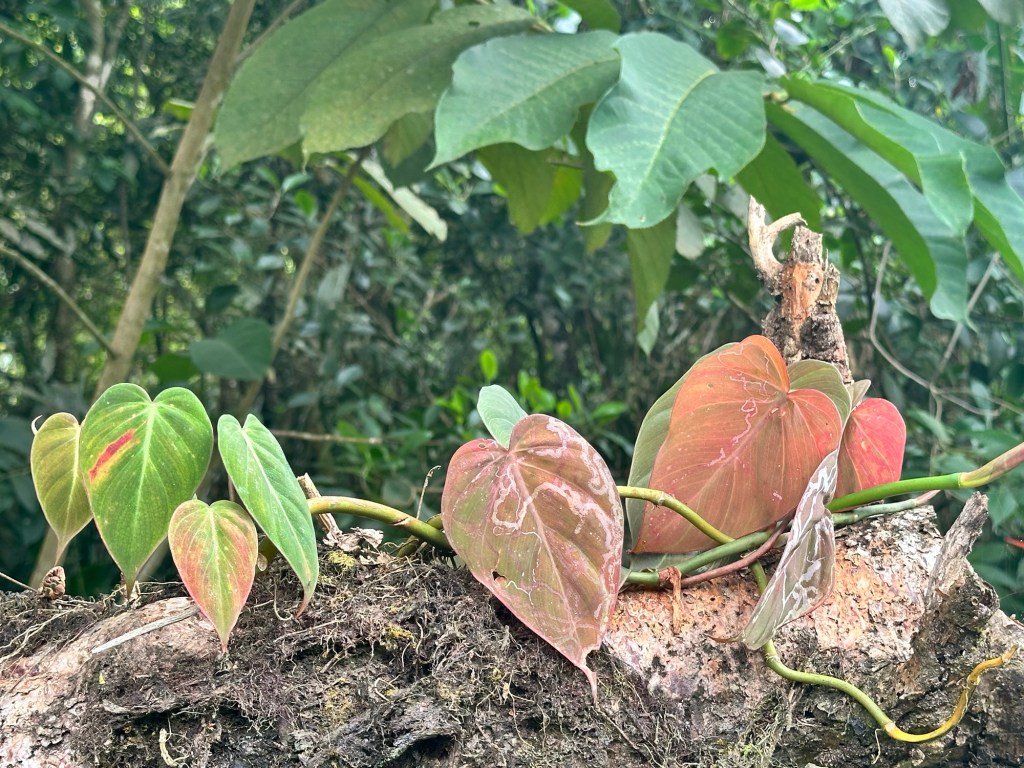
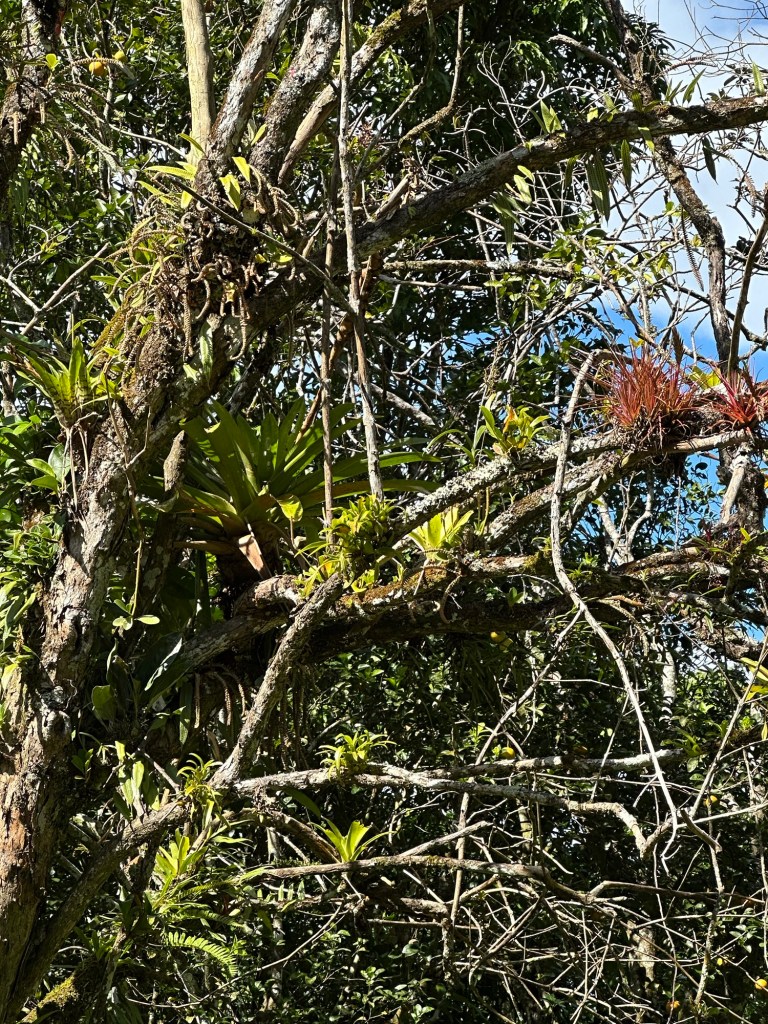
Epiphytes. Parque Nacional Santa Fe.
My helpful hombre spoke with such a thick accent, I couldn’t understand a word he was saying. I understood him to point out it was getting late in the day and that I needed to be careful not to be caught out in the dark. Coincidentally, the sun must have gone behind thick cloud at that point and it felt like someone had just dimmed the lights.
Parque Nacional Santa Fe
We continued on up the mountain until it plateaued where a small orange orchard nestled in its folds. I was keen to push on, but the farmer put a kindly hand in my shoulder and gestured to Cerro Tute, its summit peeking through the jungle foliage. He felt like he wanted me to stop and revere the mountain for a moment. He then plucked two oranges from a tree and passed them to me before setting off again.
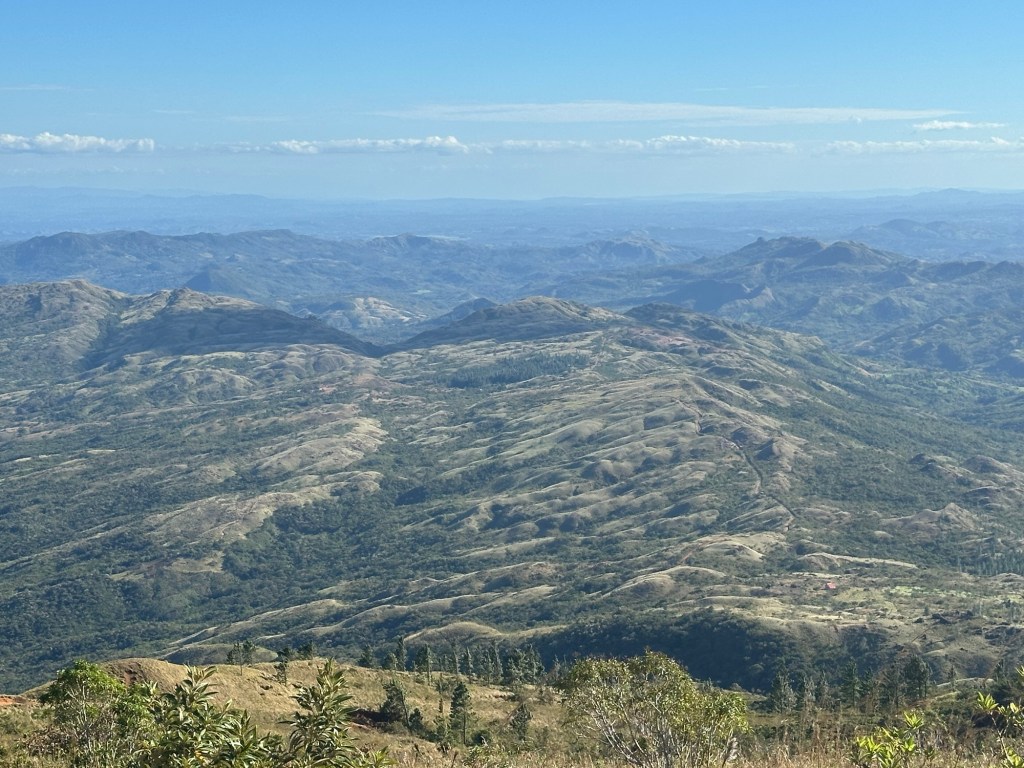
From grassy saddle just below summit Cerro Tute.
Another steep climb and I popped up on a grassy saddle just under Cerro Tute’s summit. The farmer had only just been a few metres in front of me on the path, however, when I reached the top he was nowhere to be found. I could see on all sides and looked for him as I thought it strange he would just up and leave after being so attentive for the last half an hour. But he was nowhere to be found. I absentmindedly felt for the oranges he had given me to remind myself he had existed and wasn’t just a figment of my imagination, however, the situation quite confounded me.
Summit Cerro Tute
The wind had picked up significantly on top of the saddle and I was having difficulties staying upright in it. Although, the summit was just ahead, I decided to skip it as it was already quite late and I would probably be walking at least part of the way back in the dark. I could see pretty much as much from where I was at the time and that vista was one of humbling magnificence.
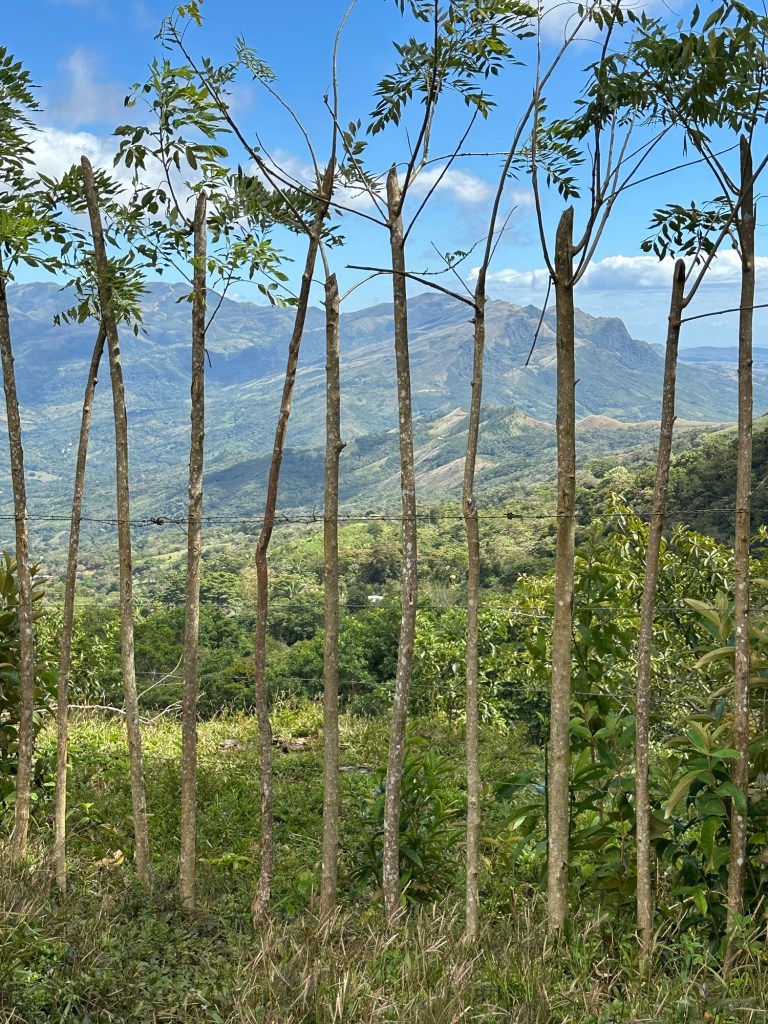
From grassy saddle just below summit Cerro Tute.
The way back down the other side of the Cerro Tute was via a treacherously steep, rocky road with numerous wash outs and scree covering it. It was slow going and I was glad to finally reach the dirt road at the bottom which I followed until reaching the main road which took me back to town.
Hut start of trail to Cerro Tute.
By now it was dark and I had to rely on my iPhone torch to provide light as I made my way uphill again. In the end, I managed to cover 16km of trail with a height elevation of 820m (up and down). And also had another amazing Panamian adventure to file away.
Hostal Un Mundo is owned by an expat Austrian, Thomas, and his Colombian wife, Iris. After chatting with them over coffee, they offered me a lift to Santiago as they were heading that way themselves. I gratefully accepted as it saved catching two buses and an extra hour of travel.
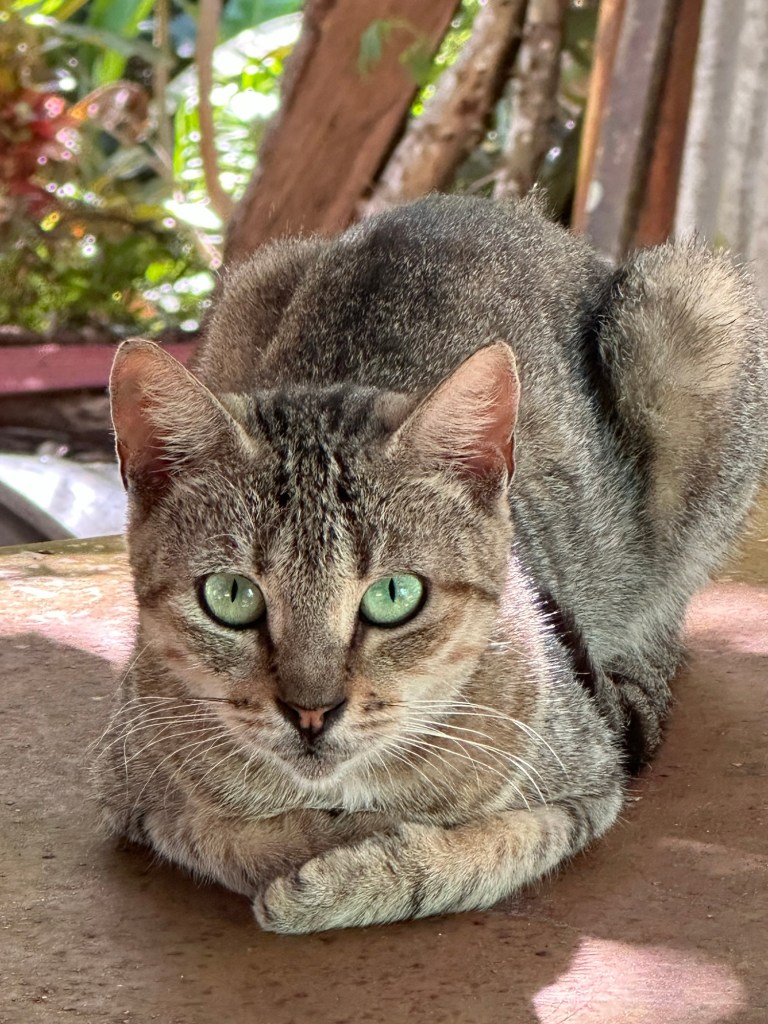
Hostal cat
On approach to Santiago, Thomas asked if I would like to join him and Iris for lunch at a favourite Turkish restaurant of theirs. I was happy to as I enjoyed their company and was learning more about Panama.
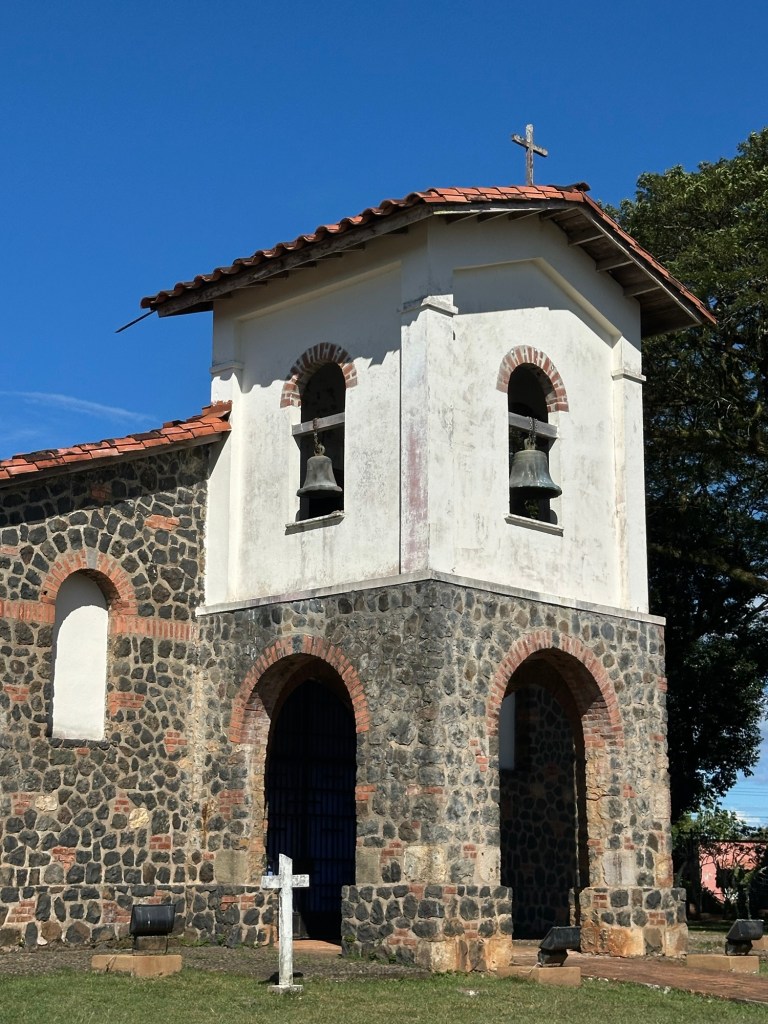
Iglesia de San Francisco de la Montaña, San Francisco.
After lunch, I bid my new friends goodbye and caught a bus to San Francisco. I thought I might stay at this off-the-grid little place overnight, however, soon found out there was no accommodation in town. Still, I decided to explore a little and ventured up to see Iglesia de San Francisco de la Montaña, a stone church built in 1727. Evidently the local artisans who built this church inserted their own faces into religious scenes and onto cherubs’ faces. Unfortunately, the church was locked up, however, I was treated to a bell ringing on each of the church’s three bells by an hombre in the church’s belfry.
Iglesia de San Francisco de la Montaña, San Francisco.
Another church, which appears to be the ones the locals are now using, stood loftily behind its ancient counterpart. A group of señoras were quietly chatting in the shade as I entered it. An hombre was practising a song on a guitar high up above the nave. I sat in the cool of the church enjoying the music until I noticed a gathering at the main door. It soon became apparent a funeral service was about to commence. Not wanting to gate crash a funeral, I left the mourners in peace and walked back to the man road to catch a bus to Santa Fe.
Cerro Tute, Santa Fe.
Climbing from the sultry flats up into the mountains, the air became fresher and less dense. The bus groaned its way up steep inclines and rushed along when unencumbered. Passengers boarding and alighting at frequent intervals slow down the journey but gives opportunity to glimpse into everyday rural Panamanian life.
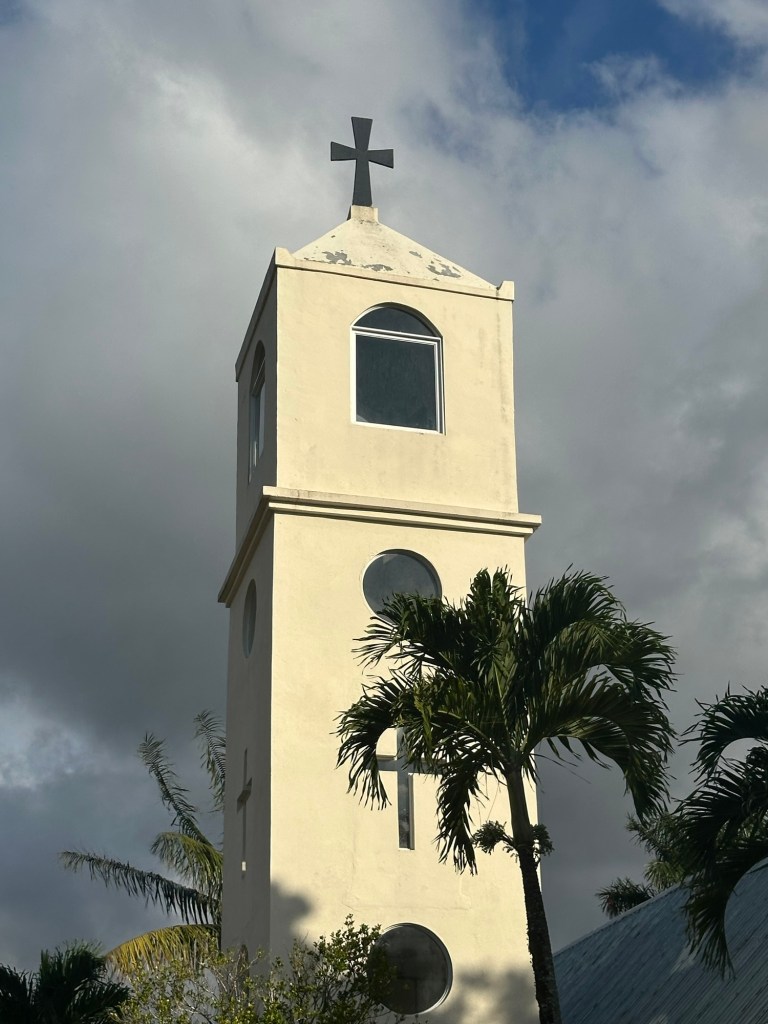
Iglesia de Santa Fe.
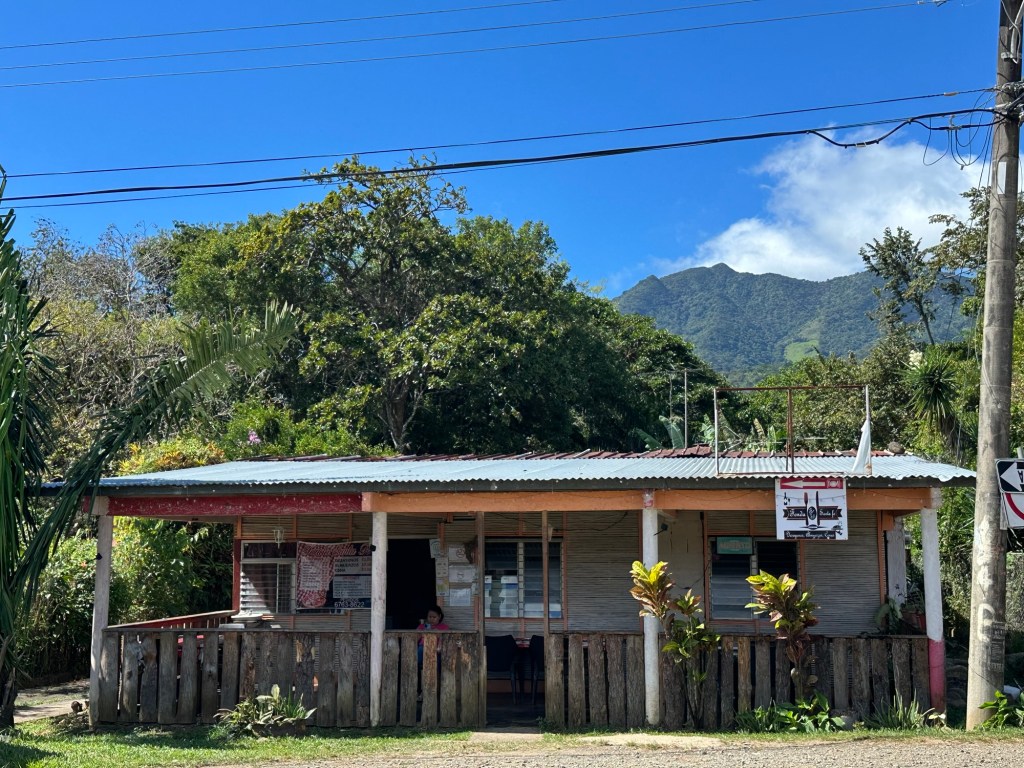
The hostal ended up being only a block away from where the bus dropped me off in the centre of the little town that is Santa Fe. Primarily, the obligatory church and town square and little more other than a small covered market, a supermarket, a handful of fondas (local eating places) and roads leading in a multitude of directions further into the countryside.
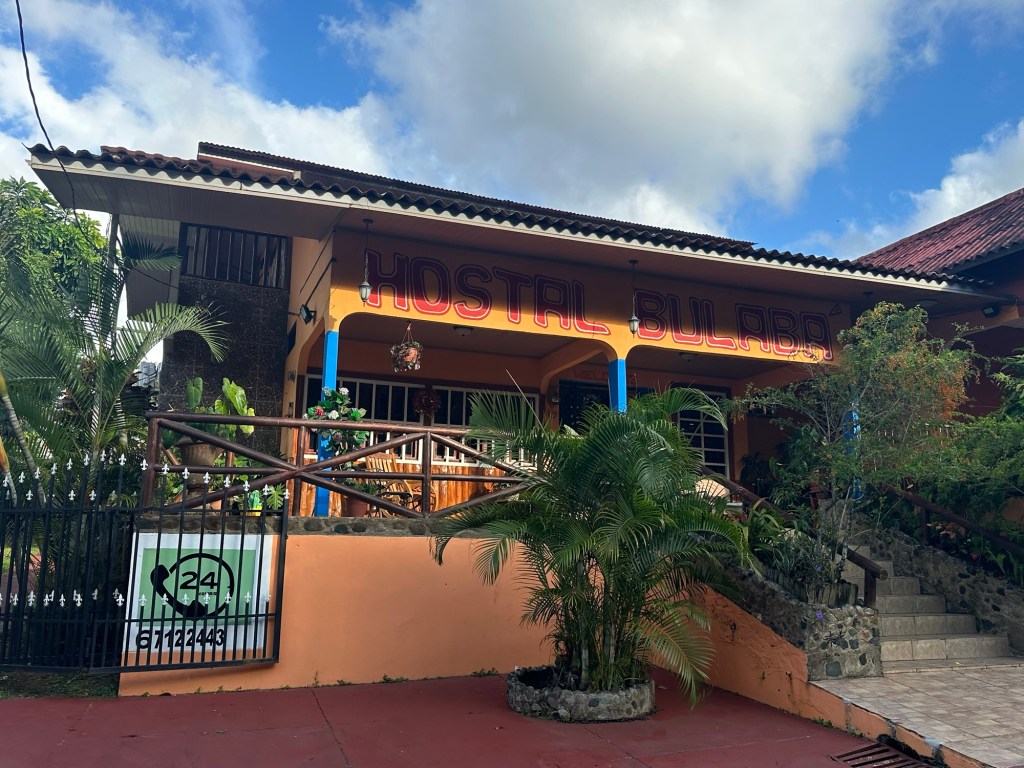
Hostel Bulaba, Santa Fe.
The hostal señora greeted me at the entrance and showed me to the back of the property where a concrete building was situated. This was divided into two dorm rooms, one of which was currently being used by a French backpacker. I assumed I would be sharing this room, however, the señora had other ideas. Her husband cleaned out the other dorm room which had four bunk beds crammed into it, leaving only a narrow space to access the bunk closest to the door. There were no windows, only a few high, unmeshed concrete vents giving the whole room a cell-like feeling. To top it all off, an entire can of insect spray had been emptied into the space rendering breathing impossible. I asked to see other options and settled on a lovely private room upstairs in the main hotel for only $10 a night more.
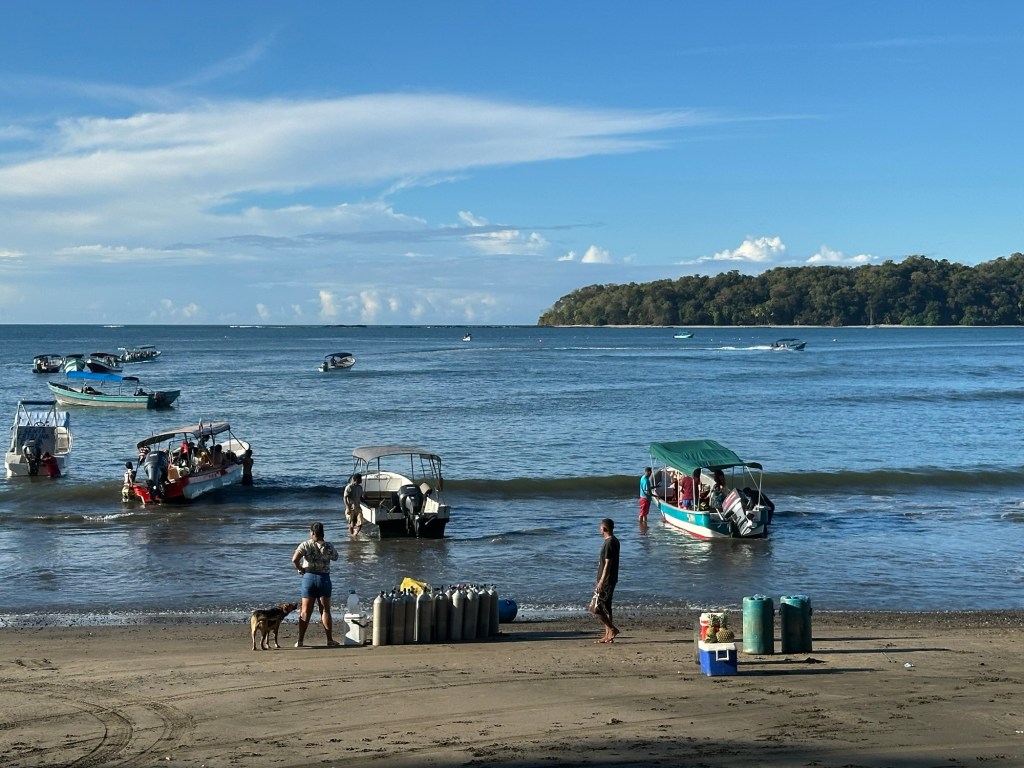
It was an early start, but a pleasant walk in the cool of the morning down to the village for my snorkeling tour of Parque Nacional Coiba. The tranquil soundtrack of birds chirping and the occasional dog barking were quickly drowned out, however, by the crowd that had amassed onshore with the same aim as myself. Numerous little boats bobbed in the surf just offshore, waiting their turn to beach and collect their passengers for the day. Other boats, having already completed that task were already speeding off.
Tour boats waiting to load passengers. Santa Catalina.
It takes about an hour by boat to get from Santa Catalina to the main island, Coiba, where the ranger station is situated. There were only five people on my tour; myself, a Hungarian couple and a Czech couple. We relaxed into the trip, watching the coastline zip away, stopping occasionally to take a closer look at the numerous turtles swimming in the open sea along our route.
Parque Nacional Coiba
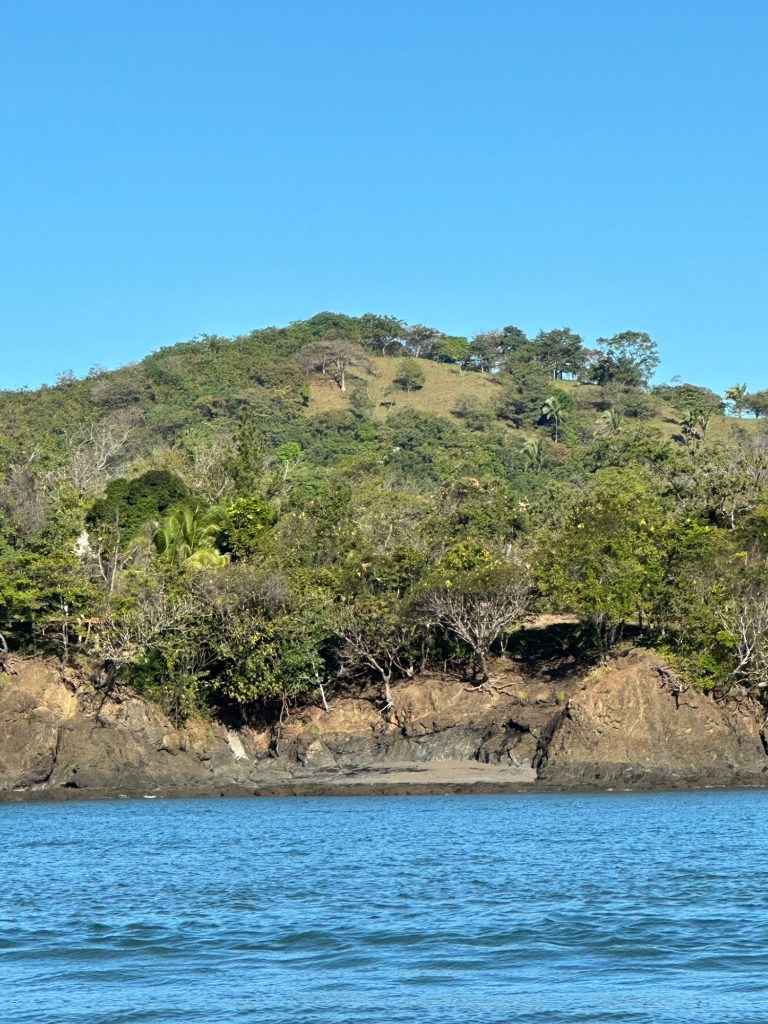
Pulling into the section of Coiba where the ranger station was located, we first registered then were taken up a small hill to a lookout. From here one could see three tiny islands, dripping with verdant jungle, immediately in front of us. A small cruise ship was anchored just below. Back at the ranger station, an inquisitive agouti frolicked on the edge of the vegetation.
Isla Coiba
Back on board, we zoomed off to our first snorkelling destination; just off one of the islands we could see from the look out. The Hungarians had no interest in snorkelling, which I found odd as this was primarily a snorkelling tour, so were dropped off at a beach on the island. I just missed seeing a white tip reef shark, but the aquatic wonderland more than made up for it with an abundance of brightly coloured, tropical fish teaming in the reef surrounding the island. The current took us at a leisurely pace around the outer edge of the island to where the boat had relocated to pick us up. A quick burst of the engines and we were at one of the other islands to repeat the exercise.
Parque Nacional Coiba
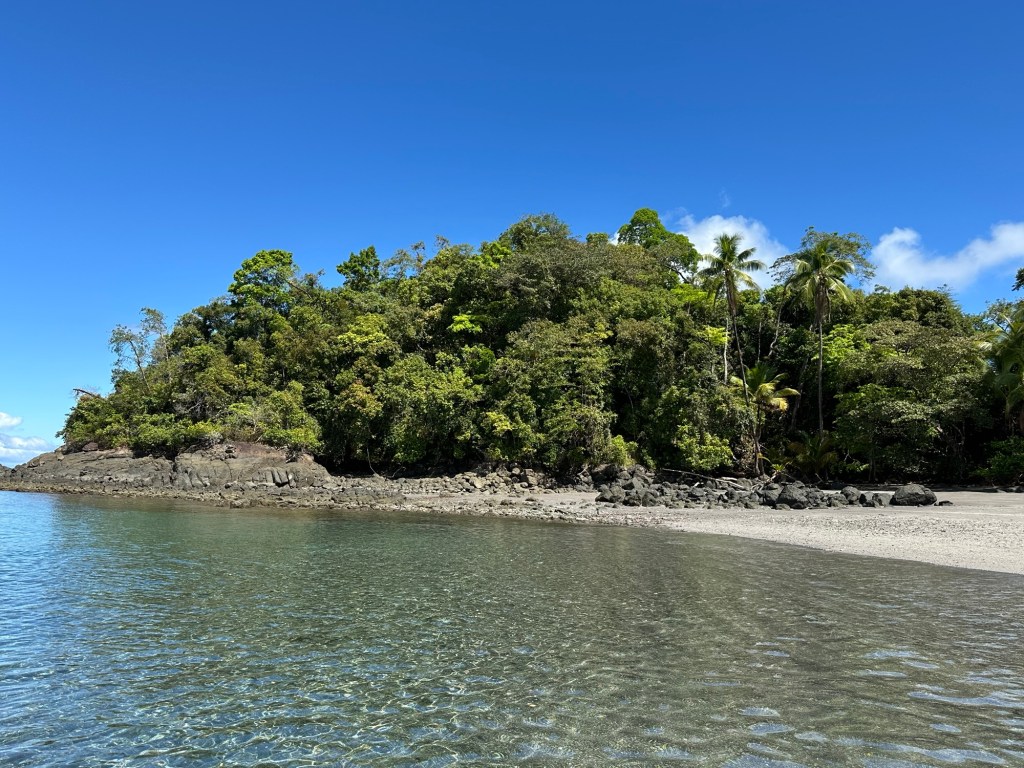
Then it was time to collect the Hungarians and zoom off to Isla Ranchería. A simple lunch of pasta and tuna, and fresh watermelon hit the spot. Whilst we munched away, hundreds of hermit crabs frolicked in the sand. A coconut fell from its lofty height only a metre away from where I was standing and I was reminded of the now disproven statistics of coconut fatalities. We had plenty of time to kill on the island, so I filled it with a beach walk and swim in the tepidly warm, clear water.
Isla Ranchería
Then it was back on board and short zoom to a tiny islet just off the coast from Isla Ranchería. Shortly after entering the water, we came across a large, critically endangered Hawksbill turtle feeding on the bottom of the reef. I noticed it had tag attached to one of its fore flippers. The turtle was pulling sections of coral off the reef to feed on the sea sponges growing within it. Nearby was a giant, untagged Hawksbill turtle feeding in the same manner. It was truly magical observing these magnificent creatures in their natural environment and we spent some time watching them in awe. All too soon, we needed to leave, so reluctantly left our new aquatic friends to return to the boat. On the way back, I saw another large Hawksbill feeding, then slowly swimming off. Back at the boat, the Hungarians reported seeing turtles swimming as well.
Isla Ranchería
By now, it was time to return to Santa Catalina. We saw even more sea turtles swimming along the way, stopping every now and then to take photos. The boat pulled in at the river mouth and we disembarked from there. I stopped at the little beachside restaurant I had lunch at the previous day for a cleansing cerveza; gazing at the pristine bay and reflecting on the incredible experiences of the day.
Over breakfast I got chatting with the hostel owner. Turns out she is an ex-teacher and university lecturer, now retired, so we had a bit to chat about. This hostel is her retirement project. I would have loved to have stayed and chatted longer but this Wild Woman needed to continue wandering.
Hostel & Cafe Travelers
I walked back up to the bus terminal but needed directions to where the bus to Sona, my next destination, left from. Then it was off into the countryside again, leaving the busy town behind. No matter where I travel in Panama, once outside the cities and major towns, the vista is one of tranquil rural properties interrupted occasionally by tiny villages lining the main road for short distances. The pace of life is slower here and there is a measured sense of community.
Hostel & Cafe Travelers
As we were approaching Sona, the bus suddenly pulled over and the bus assistant asked if I was going to Santa Catalina. Naturally, the only gringa in the bus would of course be heading down that tourist trail! Alas, I actually was so meekly followed the hombre out of the bus to collect my pack to put on another bus heading in the opposite direction. This second bus had stopped and was waiting for me; clearly this wasn’t the first time such highway heists had been undertaken.
Happy horsie.
We headed south on a road which threaded through forest and farmland. The warm breeze and gentle rocking of the bus was doing its best to lull me into slumber, but I did my best to resist its temptation. The unfolding scene was not one I wanted to miss. Dogs lazily ambling alongside the road in front of tiny casas where children could be seen amicably playing. Señoras hanging out the household laundry along fence lines while the señors worked in their yards or in the fields. Cattle quietly grazing while horses placidly foraged in their enclosures.
Hostal El Mundo Homestay
The hostal I was staying at was just out of town, so I got dropped off close by. Hostal El Mondo Homestay was brand new and a rustic retreat. Built by its Austrian expat owner with screen walls to let in cooling breezes, its humble, no frills charm made for a very pleasant choice. Plus it had five gorgeous doggies lining up for cuddles!
Santa Catalina
I dropped my pack and walked into the little village that is Santa Catalina. Basically a fishing village at its core, with a tourist expansion to cater for tours to the UNESCO World Heritage Site, Parque Nacional Coiba. This renown volcanic-formed site is Central America’s answer to the Galapagos and is part of the same under water volcanic chain, as well as the Eastern Tropical Pacific Marine Corridor. Over 500 square kilometres of pristine jungle on a number of islands and islets, all surrounded by reef teeming with life.
Santa Catalina
A number of tour companies line the main road which leads down to the beach and it is a just matter of picking one. I started the tedious process of checking them out, but stopped when I found some people who had just returned from a tour and asked them who they used and would they recommend them. Positive review and location advice in hand, I sauntered back down to the beach to find the office closed. A quick phone call, however, had me booked on a tour for the following day. There was nothing left to do then but find a bar with cheap, tasty cocktails and chill.
I woke with a stiff neck a few days ago and it had been steadily getting worse to the point that I was very uncomfortable the previous evening. Roger rang his sister-friend who happens to be a physiotherapist to see if she would come over and help me out. The señora was happy to do so and since it was a Sunday, I was very relieved to be able to get it seen to. I had to wait until midday but eventually, she arrived and worked her magic.
David
Neck feeling much better, I walked the 2kms to the bus terminal to catch a bus to Santiago. I was heading down to the coast to Santa Catalina, but due to getting neck seen to, I wasn’t going to make it in one day now so broke my trip up in Santiago.
David
The property I booked had a reasonably priced dorm room and was only a short walk from the bus station. I was suitably impressed when I arrived. The property was set in pretty gardens with lots of outdoor seating. Best of all, they did dinners and breakfast so no need to go out. It was an early night to try catch up on some much needed sleep.
I woke to my pillow vibrating like mad at 6.30 am. It was my brother telling me about the US attacking Venezuela and kidnapping their President, and begging me to come home or at least leave the region. I scrambled to get on top of the situation and gather as much information as I could. I knew prior to leaving Australia that Venezuela was at risk of being attacked but like so many, didn’t believe the US would actually do it. I also felt I would be ok even if they did as I had Colombia as a buffer. Cold reality sinks in though as the world is plunged into even more uncertainty. Trump’s threats to take back the Panama Canal can no longer just be written off as bluster. I had to think fast and make some decisions.
But first I had a boat to catch to Chirique Grande. I hurriedly packed my stuff and checked out of my hostel. Walking to where the boat left from, I heard my name being called out. It was some of the students and one of the professors from the University of Wisconsin I had met a couple of days ago. We caught up with what we had each been doing and I took the opportunity to ask if they had received any advice from the University in light of the Venezuela attack. They said they hadn’t heard anything as yet and were pretty much in the same position as me – in the dark.
Chirique Grande
The boat ride to Chirique Grande took just under an hour and travelled through the south-eastern part of the archipelago. Unfortunately, my friend the rain decided to accompany us the majority of the way which meant the side covers were down on the boat. There were clear plastic panels to look through but it certainly wasn’t the same. What I could see was still simply beautiful.
Los Planes.
At Chirique Grande I found a cafeteria near the boat terminal that had a TV. Over coffee and something to eat, I caught up with events unfolding in Venezuela. Locals were popping in and out to watch the news and I got a sense that most were happy that Maduro had been ousted, but uneasy for what it would mean for the region given the manner in which it happened. The news was fairly factually presented with little in the way of opinion offered during the time I was watching.
Los Planes.
I decided to continue on with my journey which involved heading back down to David to be able to continue further east. The owner of the hostel I stayed at in David when I was there overnight the previous week seemed to have his finger on the pulse with geopolitical issues and I was hoping to have a chat to get his take on current developments. But first, I needed transport back to David. A kindly señor took me to where the local bus ran from Chirique Grande to the main road which runs from David to the northern coast. I recognised the transport hub and rest point of Rombala immediately as we had stopped there on the way to Almirante. From there I was able to pick up a bus running down to David.
Los Planes.
We drove back through the beautiful mountain range and I enjoyed just as much the second time around. Back in David, Roger collected me from the bus station and we had long conversations about the Venezuela attack and what it meant for the entire region, including Panama. Roger was fairly confident Panama would be ok as the Panamanian government had capitulated to most of the US’s demands whilst still retaining overall ownership of the canal. US companies now control the ports due to a deal which saw the previous Hong Kong based entity selling their interest. Moreover, Panama had recently been facilitating US military to train on their soil; a move seen to strengthen bilateral ties between the two countries. Even though it is early days and anything could still happen, I felt more confident continuing my journey with constant monitoring of the situation as best I can.
My last day in Bocas was a big one. The guidebook mentioned a large cave on Isla Bastimentos that had tours. I had made enquires about the tour, but it seemed it wasn’t a particularly popular option. The señora who ran the hostal made some phone calls and found someone prepared to take me. Another traveller staying at the hostel was keen to go too so we were each quoted USD25 for transport and USD20 for the cave tour itself. A very reasonable price. Or so we thought…
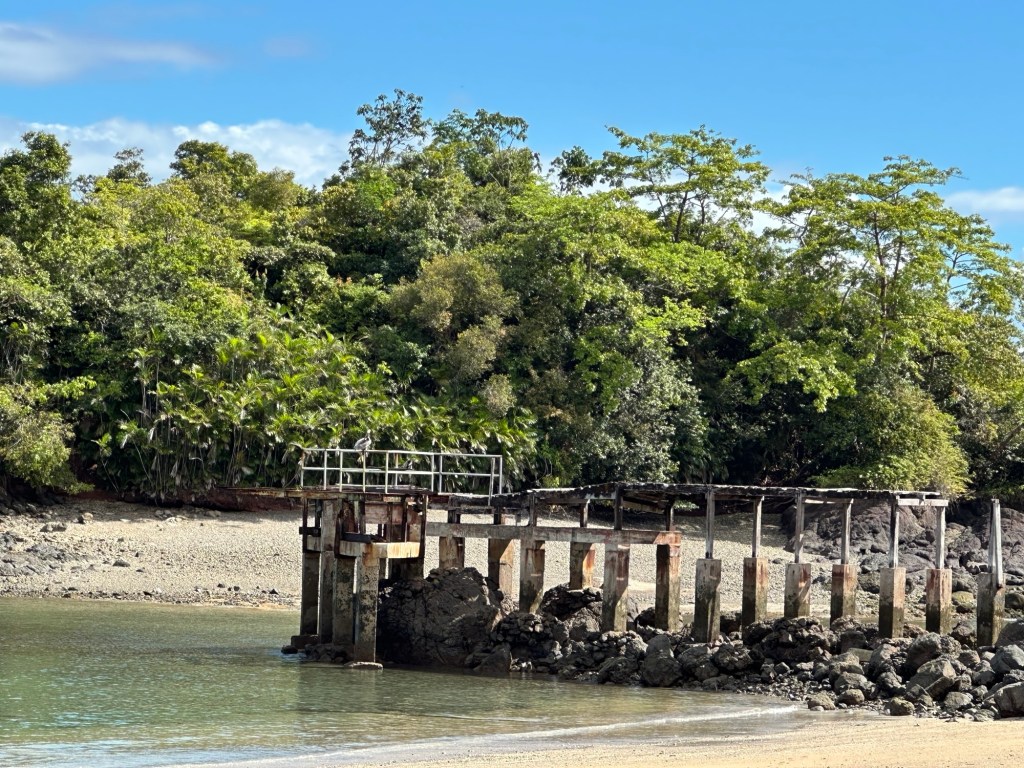
Boat dock. Isla Bastimentos.
We were picked up and escorted down to the boat dock where we were eventually told it was now going to be USD50 each for transport as there were only two of us going. I misunderstood and thought he meant USD50 all up, but it ended up being on top of the original USD20 for the tour which made it USD70 all up. Nearly double what we were originally quoted! We decided we would still go though and eventually were hustled onto a boat to head over to the island.
Mangrove forest. Isla Bastimentos.
We first dropped off some tourists at a dock which led to a popular beach on the northern side of Bastimentos. Then we continued down the island before slowing to a halt in front of a narrow channel leading into the mangrove forest. We waited for a short time for another boat to come out of the channel, then slowly made our way down the serpentine waterway to where we disembarked to start our cave tour.
A well organised cave tour.
A large, covered, wooden deck was where groups assembled and information given. The tours are run by local indigenous men who have intimate knowledge of the cave and environs. I explained I was an Australian caver and that I was keen to see as much of the cave as possible. I also asked if there was a map of the cave. To my surprise, one of the guides produced a thin booklet covering a 2005 mini-expedition to the area. On the very last page was a map of the cave.
Map of Cuava Nivida. Isla Bastimentos.
We were provided with a helmet and light and a pair of reef shoes. I was quite surprised at the quality of the equipment – I was expecting much less. Of course, the rain which had been my constant companion since arriving in the archipelago, had been steadily doing its thing, rendering the trail to the cave a treacherous, muddy mess. Planks and boards were placed in some sections, but in others it was just a case of one foot in front of the other and hoping not to come a cropper. The mud was ankle deep in places and I was glad of the reef shoes.
Strawberry Poison Dart Frog.
We eventually reached the cave entrance and instead of taking the usual left hand passage which led to the large pool and a jump-off rock most tourists are taken to, we were taken on the longer, sportier right hand passage. This was exactly what I was looking for. Roughly one kilometre of active stream passage incorporating all the aspects one would expect from wild caving in these parts. Duck unders, climbing, wading, swimming – I was in my element. It was the first time my poor Peruvian travel buddy had ever been in a cave, but he loved it. Rivulets of water cascaded down into the main stream passage at intervals which all added to a magical experience.
Cave entrance
The guide knew I was an experienced caver and let me take the lead until I wanted to check out a small converging stream passage. At that point, he decided it best to take control or we would be in there all day. We went to the known end of the cave in that direction and popped out another entrance. Then it was time to return back the way we came.
Andre’s first cave experience.
At various intervals, our guide would stop and sift through the stream sediment to look for shark tooth fossils. These were in abundance in this cave. He gave one to Andres, however, I declined as I thought Australian Border Security would be most displeased on a number of levels with my exotic souvenir should I choose to take one.
Some of the many active crystal formations.
I realised shortly after starting down the right hand passage, the guide had left his dry bag, which contained my phone, on a ledge near the entrance. Thus I could only take photos when I was reunited with it almost at the end. In some ways it was a good thing so I could be totally immersed in the experience. On the other hand, I missed an opportunity to record how amazing this little cave was. We exited the cave and were told to make our own way back. By now, the trail was in an even worse condition and we carefully made our way back to the wooden pergola.
Muddy mess makes for treacherous trekking.
Our boat was waiting for us and we slowly made our way back out of the mangrove channel, then out into open water back to Bocas. By now I had been caving for two days in the same gear so washing was in order before leaving in the morning. Then it was a matter of draping everything in front of fans in the hope I could get as much dry as possible overnight.