
After the chaos of the previous day, it was time to decompress. And a nice wander in the countryside works wonders in that department. I had found mention of an archeological site in the guidebook which sounded interesting so decided on that. The site was only 7kms away on a road which wound through a valley leading out of town.

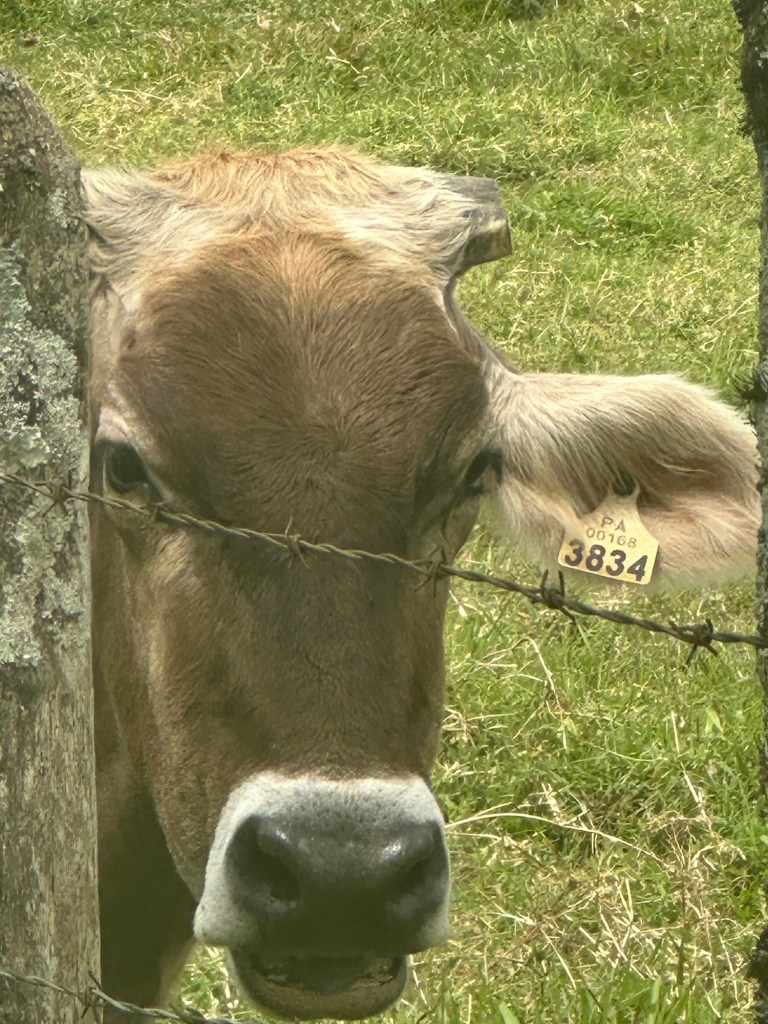
Volcan is not a large town so it didn’t take long to leave its bustle behind and embrace the relative quiet of the countryside. The road out to Sitio Barriles meanders through a verdant valley, resplendent with dairy cows and the occasional horse tranquilly grazing. At approximately 1400m above sea level, Volcan is firmly positioned in the Cloud Forest zone. Soft green mosses and lichen layer themselves upon every wooden surface, while vibrant bromeliads and other epiphytes jostle for position to nestle in the embrace of a tree. The air mists and dense clouds cloak the surrounding peaks. Tiny hummingbirds flutter in the bushes while the ubiquitous black vultures peruse all from above.

Walking on rural Central American back roads is not for the faint-hearted. The narrow lanes are marked almost to the edge of the tarmac leaving 15-20 cms max for the ‘shoulder’. From there, it’s usually a steepish drop down to a drain which may or may not be heavily vegetated. Fortunately, you can hear oncoming traffic early enough to find somewhere to place yourself just out of harm’s way. The locals are used to encountering the occasional pedestrian on the road so all-in-all it’s a relatively safe practice so long as you have your wits about you.
Sitio Barriles is one of only a few important archeologist sites in Panama. Unlike its northern Central American neighbours, Panama has relatively little to show from its early inhabitation. While the Aztecs and Mayan used stone to build their monoliths, the pre-Colombian indigenous chose the more ephemeral option of wood and other vegetative matter which did not stand the test of time; especially when exposed to the advancing jungle. That, and the fact that anything of any major significance was quickly whisked out of the country by the foreign entities who ‘discovered’ it, led to a dearth of remaining artefacts. Such was also the case with Sitio Barriles, however a few significant artefacts now grace the property and the excavation block from the last investigation in 2001 has been left open for the public to view.
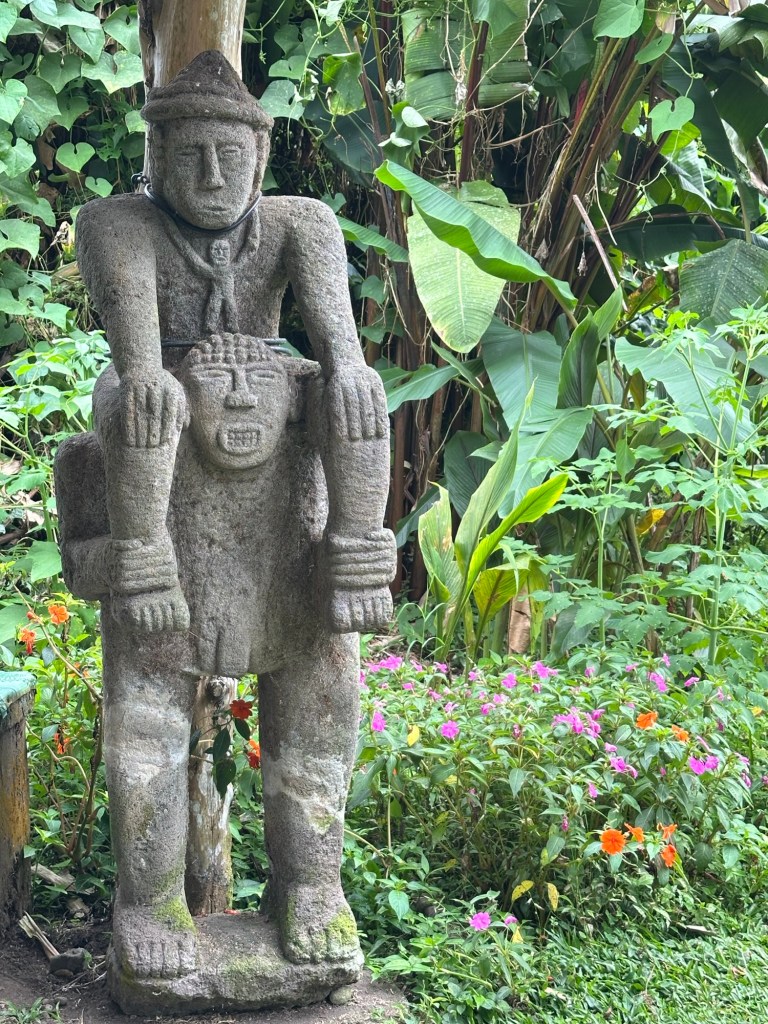
Though there was little to see from an archaeological perspective, the property had been transformed into a lush botanical garden with a riot of colourful vegetation. Little paths meandered through the jungle on both sides of a stream bank and I managed to spend a very pleasant hour exploring the grounds. Unfortunately, I had come on a day when there was not a guide available to interpret the site and open the tiny museum, however, I still relished the experience. And the discounted entry fee for having to ‘self guide’.

Upon arrival back in town, I decided to check out a local ‘hole-in-the-wall’ kitchen recommended in the guidebook. ‘El Tamalito’ did not disappoint and I paid only USD7 for a very filling and exceptionally tasty plate of traditional fare consisting of pork, rice, beans, plantains and salad. That, and the half price mojitos at USD2.50 rounded off a highly enjoyable day.
 Wild Woman Wandering