San José

Another bad night saw me shivering uncontrollably with fever so decided to sleep in until midday again. Had coffee at the hostel before heading out to wander a bit in another barrio of San José.

Blooming marvellous

Barrio Escalante is a neighbouring barrio to Barrio California where I was staying so I didn’t need to wander too far. It would seem that this barrio is for the well heeled; although anyone trying to traverse it a la Carrie Bradshaw would probably want to rethink that considering the state of the pavement… I was far from well, but couldn’t just stay at the hostel. I knew I needed to get something to eat to take my magic meds with, so wandered out to find somewhere reasonably priced.

Street Mural

I thought I would be able to find a soda, which is where the locals eat and are fairly cheap, however, it would appear that Barrio Escalante snubbed its nose at that and the only places I could find were upmarket bars and restaurants. Undefeated, I spluttered my way along the main drag until I found a cozy, little, not too overpriced offering where I gratefully slumped into a chair. The frijol empañando was tasty and hit the spot.

Museo Calderon Guardia

Afterwards, I walked the few blocks over to the Museo Calderon Guardia. Dr. Rafael Calderon Garcia was president of Costa Rica 1940-1944 and is credited with implementing many of the social reforms which form the basis of modern day Costa Rica. Despite his absolute humanitarian bent, the Calderon Garcia’s were not short a colones or two as the museum is located in the former family home/mansion. Though to be fair, to further oneself (or even get an education in those days) was restricted to the wealthy and society elite. Calderon Garcia looked to changing that and implemented far reaching reforms to better the lives of all Costa Ricans.
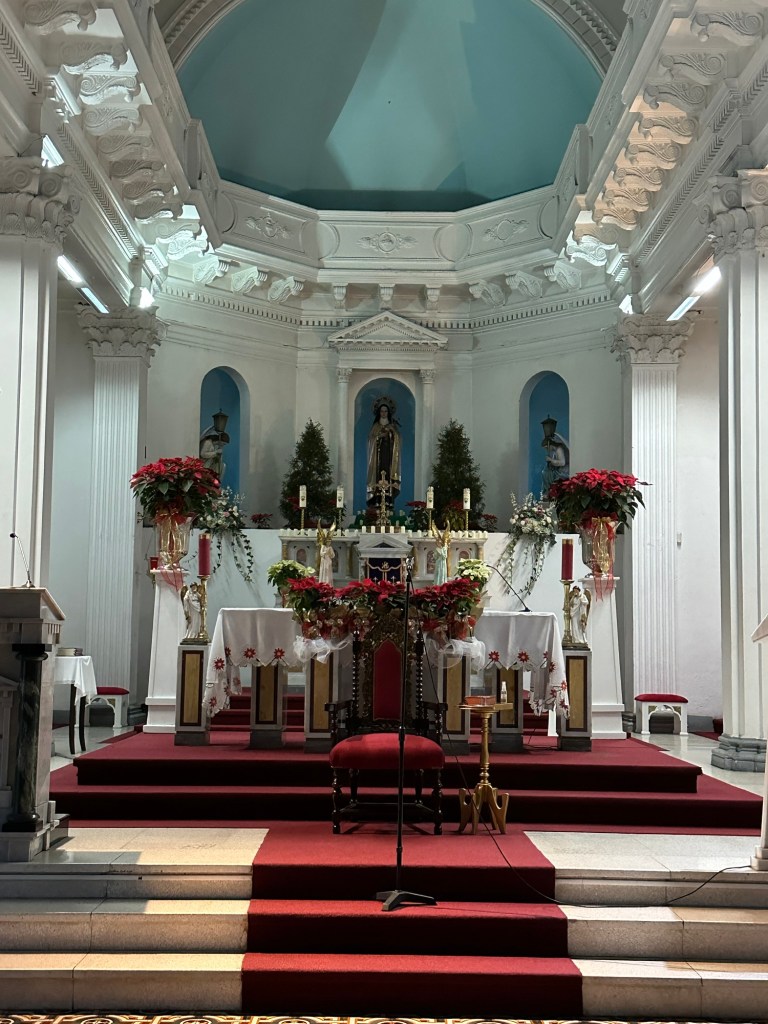
Iglesia Santa Teresita

My next stop was a quick peek inside Iglesia Santa Teresita. This sweet little church, with its duck egg blue and crisp white interior, is fairly well a newcomer to the Barrio Escalante streets. Built in 1941, it’s design would suggest a much older building. Nonetheless, it’s an enchanting addition to the local streetscape.

Iglesia Santa Teresita

By this stage, the sun had well and truly set and I was well and truly done for the day. Last stop was to check the timetable for the following day’s train and back to the hostel with my 1L bottle of beer. Well, one does have to keep hydrated in times like these.
San José

Alarm went off at 6am and I was up ready to make the most of the day. I had had a better night’s sleep, though still feverish at times. I wasn’t confident my little bottle of elixir was doing much so wanted to try find something else. After a pretty average breakfast, I headed out to source different pharmaceuticals and see some sights.

Parque Morazan

I found another pharmacy downtown which looked a bit more the part than my previous experience and was greeted by an hombre in a white medical jacket. Good start. He even asked the right sort of questions, so I put my faith in his ability to sort me out. I showed him my little bottle of elixir and he confirmed what I had already worked out – it was only for the cough. An array of pharmaceuticals were produced and I managed to get it down to three different tablets which evidently all did something different. Where were Codral Night and Days when you needed them! In Costa Rica, you don’t buy whole packets of tablets, you pay by the pill. I decided to go with three days worth which cost me an eye-watering AUD30. When I think about doing Costa Rica on $10 a day, I wasn’t thinking about that being the cost of my medications!!

Parque Morazan

I went to a little cafeteria above one of the more upmarket supermarkets for coffee and something to eat so I could start my course of wallet-draining substances. While I was there, I took the opportunity to check out the prices of some things I would need to replace eventually during my stay here. I needed something stronger than coffee to get my head around some of the prices: AUD8.50 for the same brand of deodorant I use back home with the local offering not much cheaper. At least the beer was reasonably priced. Silver linings…

Teatro Nacional

The two places I wanted to check out were close by, so I took a stroll through the throng to find the Teatro Nacional. This amazing theatre was built in 1897 and features all the European architectural features that were the rage of the day. Not a place to see with a hangover, as the gilt and ornate trimmings really are quite over the top. Still, it is very impressive. I took a tour with an enthusiastic señorita who effused about the many and varied aspects of the theatre. My favourite was the very expensively commissioned main painting on the ceiling in the main foyer which was painted by an Italian artist who clearly had never been to Costa Rica. Nor seen a banana. The artwork was to depict a local scene representing daily life of Costa Ricans. El Señor had coffee plantains alongside the beach and depicted an hombre carrying a bunch of bananas upside down. Wonder if his cheque cleared.

Gilt, gilt, gilt

The second place I wanted to visit was right next door and situated in a very modern, high tech building. The Museo del Oro Precolombino is owned and curated by the Banco Central de Costa Rica. It’s actually an underground museum with the entrance below street level under the Plaza de la Cultura. You go down a wide, sweeping staircase to a gallery space, then further down to the Museo del Ora Precolombino. The collection features some pretty spectacular pieces and interpretation panels in Spanish and English give insight as to how they were used in pre-Colombian times. Back up at entrance level was an interesting exhibition on the development of Costa Rican currency.

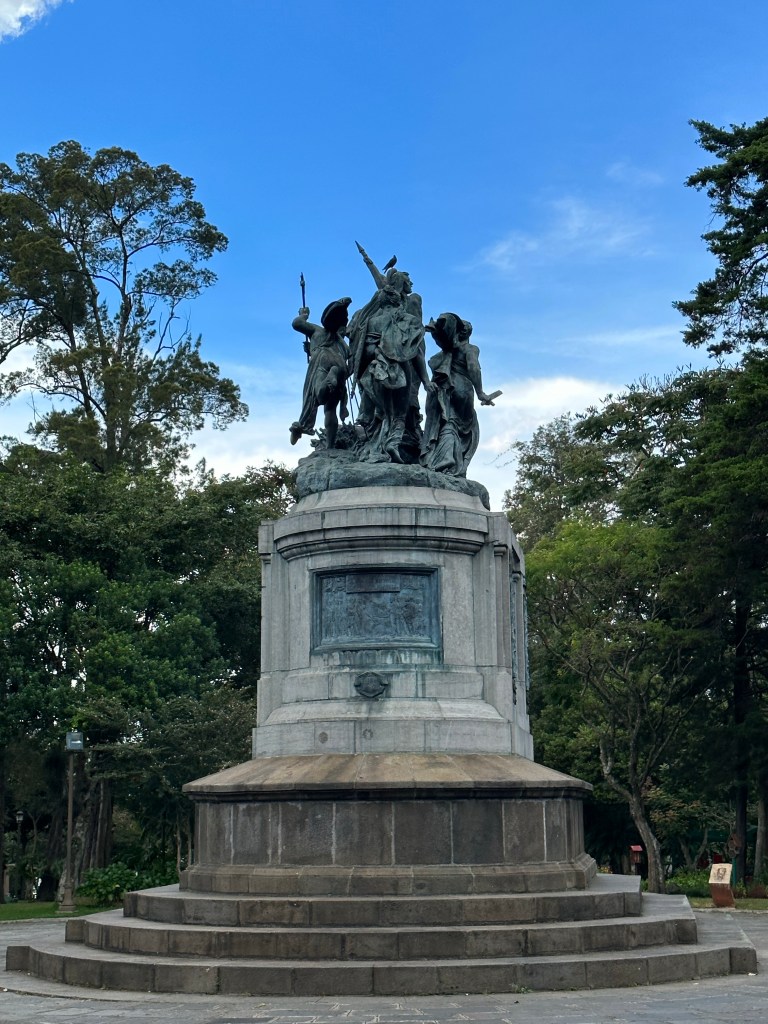
Sculpture outside Iglesia Nuestra Señora de la Merced

I headed back to the hostel afterwards as I was starting to run out of steam. I’m hoping my super expensive meds will start to kick in so I can get over this lurgy sooner rather than later.

San José

Wee hours of the morning saw me shivering with fever and feeling pretty damn shit. I sought out extra linen and another blanket, then spent a fairly uncomfortable night trying not to throw up. Ignored alarm in the morning and dozed on and off until midday. By then, I forced myself to get up, shower and go out to source pharmaceuticals to get me through the day.

Edificio de Correas

Looking on Maps.Me, it looked like there were a couple of pharmacies only a few blocks away so I headed in that general direction. After finding neither, I resorted to asking locals with little success. Eventually, I had it confirmed that I would need to go back into the city centre for what I was after. Zombie like, I negotiated San José’s hectic traffic and succeeded in not becoming roadkill en route. I stumbled upon the local train station I would need when moving on out of here so one objective was met.

Railway crossing San José

First pharmacy I came to, I stopped and tried in halting Spanish to explain what I needed. Words in any language were becoming challenging, however, the hombre behind the counter spoke reasonable English so I reverted to that to make life easier. He presented me with a little bottle of elixir which I was quite dubious about, but assured me it would do the trick.

Parque Nacional

After throwing some of the mixture down my throat, I decided I would walk around a bit before going back to the hostel. San José is definitely a very walkable city so long as you are aware of what the traffic is doing at intersections. I always find watching how the locals engage with the traffic is your best gauge on how to go about it.

Parque Nacional

Back at the hostel, I finally collapsed and decided an early night was in order.

San José

The little restaurant at the hostel wasn’t open this morning, but fortunately there were lashings of free, good quality coffee. Suitably fuelled up, I headed the few blocks over to the National Museum.

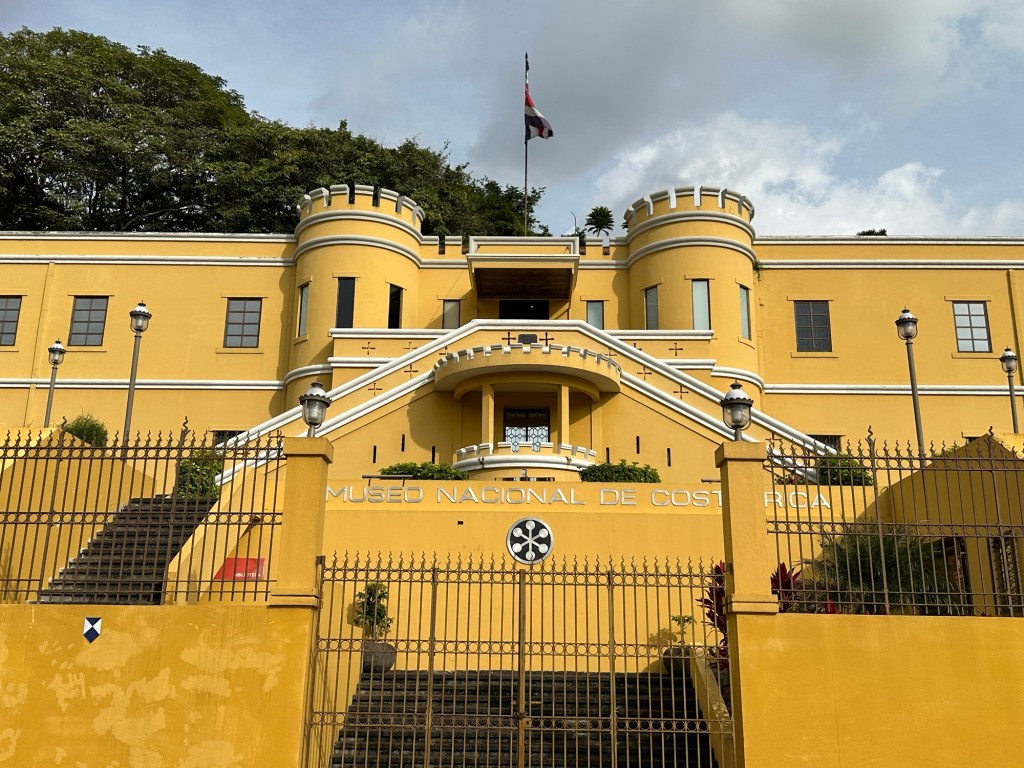
Bullet holes from revolution fighting prior to disbandment of army are left as a reminder.

This remarkable and extensive museum is housed in the former barracks and headquarters of the Costa Rican army, Cuartel Bellavista. Apparently, when the government of the day disbanded the country’s army in the late 1940s, the Museum Director proved most savvy in requesting the barracks to house its collection ‘in the spirit of community building’. He read the play book and was granted his wish. Museum staff must have been dancing in the street with the news as it meant they finally had decent digs to set up in and spread out. The work over the past 70 years has resulted in a world class institution.

Museo Nacional de Costa Rica

Immediately entering the museum, you pass through double glass doors into a butterfly filled, glass covered atrium resplendent with lush, tropical gardens. With clouds of large, brilliantly coloured butterflies swooshing through the air, and occasionally landing for an obligatory photo opportunity, this place rates up there for enchantment value.

Jardín de Mariposas

From a corner on the lower level of the atrium, you can climb up inside one of the original barrack towers to emerge onto the rooftop with brilliant vistas of San Jose and the surrounding mountains. It’s easy to see why the cuartel was built there in the first place. The upper part of this particular tower was demolished when the army was disbanded to prevent it being used for attacks on the city again.

View from top of Museum overlooking San Jose towards surrounding mountain range.

From this point, you go back inside at the same level to explore the old barrack kitchen area, bathrooms and even the solitary confinement area. Interpretation panels in Spanish and English are accompanied by historic photos of when the building was a military emplacement. Reading the personal accounts of former soldiers based there, you have to think they would rather have had the place burned to the ground themselves. It was a particularly harsh life for a sentry during that time.

Outer wall of barracks

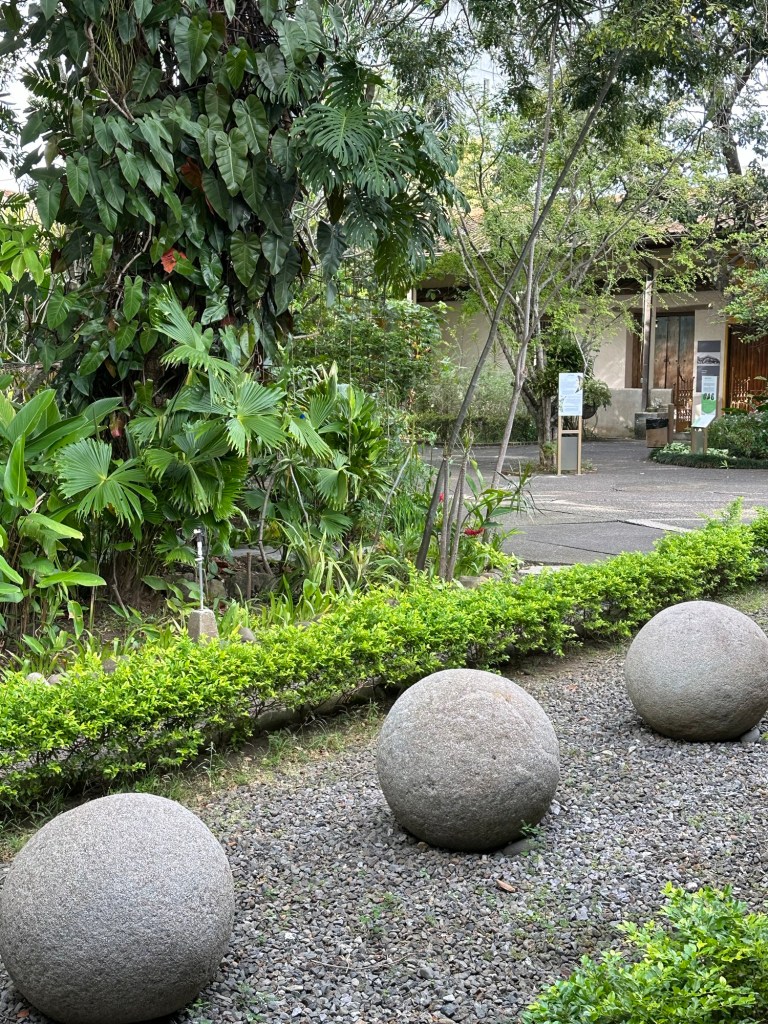
Once through this section you climb a set of stairs to pop back up into bright sunlight and a gorgeous central patio filled with immaculately landscaped gardens. The buildings surrounding the patio is where the Museum’s permanent collection is displayed and well worth a visit to get your head around Costa Rican history from pre-Columbian to present. All interpretation panels are in Spanish and English and exhibits are well presented.

Central patio

Having not eaten since the previous day, I eyed a cute little restaurant over the road from the museum. Upon being ushered in and presented with a menu, I discovered prices were not to my liking but I had made the cardinal error of not checking the menu first so felt obliged to suck it up and just order something. I chose one of the cheapest things on the menu, rice with shrimps, and a beer. When presented with the bill, it was even more than I had anticipated with taxes and charges added on. For AUD65 I expect a pretty amazing meal but amazingly, this was not. I’m going to have to be on guard here a bit more it would seem.

Glass sculpture out front of Museo Nacional de Costa Rica

Back at the hostel, I partook of Happy Hour/s at the hostel bar, chatting to fellow travellers and whiling away the time with tasty rum cocktails in hand.

San José

Arrived at my hostel wee hours of the morning after travelling for 30+ hrs to find I had unwittingly booked my bed a night out!!Thankfully, the lovely receptionist found me an emergency bed for the night after I made noises about just crashing in a hammock or on a couch. Even after a shower and clean clothes I was too wired to sleep for a bit so didn’t start my day until mid morning.

I wanted to just walk around this remarkable city for a bit to get the vibe of the place. It had been five years since I had last been in Central America and that was in Nicaragua, one of the poorest countries in the region. Costa Rica, by comparison, is very much the showy, wealthier relative with support from its rich benefactor, the US. The city is relatively clean and well organised, and it has a veneer of respectability about it. The absence of an army is very apparent as that’s one of the things that is usually very much in your face in other Central American countries. That said, there is a very strong police presence as it was to them the role fell to keep the peace after the army was disbanded in 1949.

San José has many small, immaculately maintained parks which provide a welcome change from the hustle and bustle of city life. I meandered my way through crowded streets which were being cordoned off for a street festival later that evening. Families were setting up along the parade route in order to claim prime position and there was definitely a festive atmosphere in the air.

I left the crowds behind and started exploring the various barrios surrounding downtown San José. The terrain is hilly which allows for some superb views from elevated positions. Picking my way through streets with well maintained garden verges; pretty colonial cottages mingled with more modern concrete edifices.

Returning to the hostal after several hours of walking, I bumped into a Chilean woman I had been chatting to earlier in the day. She said that a group from the hostel were going to go watch the Festival of Lights – the festival I had seen the preparations for earlier on my walk. We left together and walked past multitudes of buses lining a back street. We were trying to find a bar we could hang out at prior to watching the parade but it seemed alcohol was off the menu because of the parade. Strolling back, however, it seemed the parade had started so we stopped to watch.

As luck would have it, this bar didn’t seem to get the memo about the no alcohol ruling, so I plonked myself at the bar and ordered a cerveza. Almost immediately, I was accosted by a more than slightly inebriated Colombian hombre who kept trying to hug and kiss me. Fortunately, he left shortly afterwards with the assurance of a security escort. In his place came along a really interesting, local hombre who was producing music. The bar was playing some great local music and his latest offering, which was filmed in Nicaragua, was on the DJ’s play list.

After I left the bar, I walked back past the buses strung out along the street which were now surrounded by performers in their hundreds in magnificent costumes packing up to go to their relative homes in Costa Rica. I felt of brief pang of regret for not waiting it out to see it, but choices had to be made.